







Gjør som tusenvis av andre bokelskere
Abonner på vårt nyhetsbrev og få rabatter og inspirasjon til din neste leseopplevelse.
Ved å abonnere godtar du vår personvernerklæring.Du kan når som helst melde deg av våre nyhetsbrev.

The Western musical tradition has produced not only music, but also countless writings about music that remain in continuous - and enormously influential - dialogue with their subject. This book argues that the indispensable relationship between intellectual production and musical creation gave rise to the Western conception of music.
A love story, a translation of an Indian sex manual, an erotic farce and a murder mystery. The hero of the comedy, Leopold Roth, complains that he has never made love to an Indian woman. Married Roth becomes obsessed with Lalita Gupta and sets out to seduce her whilst translating the "Kama sutra".
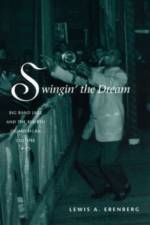
Long before organized baseball or the armed forces experienced racial integration, the big band jazz and swing culture of the depression years was breaking down barriers. This book explores the fan culture and how the music served as a bridge between white American identity and a national culture.
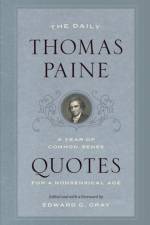
"We can call Thomas Paine-eminent Founder, verbal bomb-thrower, Deist, revolutionary, and rationalist-the spark of the American Revolution. In his influential pamphlets, Paine codified both colonial outrage and the intellectual justification for independence, arguing consistently and convincingly for Enlightenment values and the power of the people. He was a master of political rhetoric, from the sarcastic insult to the diplomatic aperðcu. Today, we are living in times that, as Paine said, try men's souls. Whatever your politics, if you're seeking a new Paine-with rhetoric to ignite social and political transformations-where better to start than at the source? This is a work that provides quotes from Thomas Paine's writings"--
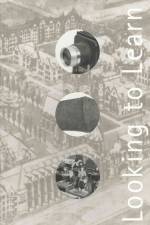
This text presents an exhibition held at the the University of Chicago. The exhibition challenges the decontextualized approach to images and learning by setting ritual, functional and intentionally aesthetic objects side by side, together with inventories and technical viewing devices.
"In his gripping memoir, Ross Slotten-one of the earliest doctors to treat AIDS in Chicago-documents how Chicago's gay communities were decimated by confusion, fear, and ultimately despair over the ravaging disease. This tragedy was especially painful for Slotten who, as a gay man himself, treated-and buried-scores of acquaintances, friends, and lovers. Limning powerful portraits of the period, the hospitals, and the community, Slotten is unsentimental about the environment, the brutal treatments, the ghastly suffering, the deaths, and his own uncertainties and fears. He further reminds us that AIDS, while today more easily managed, could all too easily resurge. Slotten's book is both a timely policy warning and a devastating portrait of how a community, a hospital, and a city faced a health crisis of seemingly unmanageable proportions"--
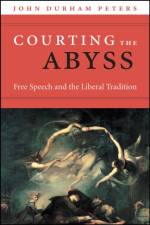
Courting the Abyss updates the philosophy of free expression for a world that is very different from the one in which it originated. The notion that a free society should allow Klansmen, neo-Nazis, sundry extremists, and pornographers to spread their doctrines as freely as everyone else has come increasingly under fire. At the same time, in the wake of 9/11, the Right and the Left continue to wage war over the utility of an absolute vision of free speech in a time of increased anxieties about national security. Courting the Abyss revisits the tangled history of free speech, finding resolutions to these debates hidden at the very roots of the liberal tradition. A mesmerizing account of the role of public communication in the Anglo-American world, Courting the Abyss shows that liberty's earliest advocates recognized its fraternal relationship with wickedness and evil. While we understand freedom of expression to mean "anything goes," John Durham Peters asks why its advocates so often celebrate a sojourn in hell and the overcoming of suffering. He directs us to such well-known sources as the prose and poetry of John Milton and the political and philosophical theory of John Locke, Adam Smith, John Stuart Mill, and Oliver Wendell Holmes Jr., as well as lesser-known sources such as the theology of Paul of Tarsus. In various ways they all, he shows, envisioned an attitude of self-mastery or self-transcendence as a response to the inevitable dangers of free speech, a troubled legacy that continues to inform ruling norms about knowledge, ethical responsibility, and democracy today. A world of gigabytes, undiminished religious passion, and relentless scientific discovery calls for a fresh account of liberty that recognizes its risk and its splendor. Instead of celebrating noxious doctrine as proof of society's robustness, Courting the Abyss invites us to rethink public communication today by looking more deeply into the unfathomable mystery of liberty and evil.
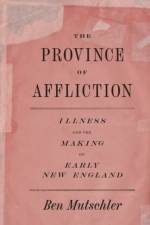
"As the first Europeans settled in America, they found themselves often sick, weak, and likely to die. Here, Ben Mutschler explores how illness shaped society and government in New England from roughly 1690 through 1820. He focuses on the building blocks of society and government-family, household, town, colony-and their multifaceted engagements with the problems that diseases caused. Illness both defined and strained early American institutions, bringing people together in the face of calamity yet also driving them apart when the costs of persevering became too high or were too unequally shared"--
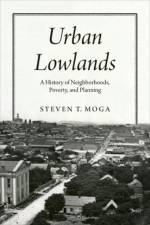
"Steven Moga offers an unprecedented and multidisciplinary tour of urban lowlands, bringing a fresh perspective to the history of urban development in nineteenth- and early twentieth-century America. Looking closely at the Harlem Flats in New York City; Black Bottom in Nashville; Swede Hollow in St. Paul; and The Flats in Los Angeles, Moga compares and contrasts patterns of land use, reactions to disease and public health, the treatment of waste, and social discrimination against immigrants, ethnic groups, and African Americans. He creates an alternative interpretive framework for studying poverty and the urban environment, with implications for the contemporary American city"--
"The circulation of medicine and medical knowledge in Britain was long entangled not simply with the mechanisms of commerce but with those of empire. The same networks that enabled the articulation and defense of imperial priorities also transmitted knowledge and value in ways that ultimately transformed the concept and norms of the field of medicine-and the conception of trade more broadly. From this entanglement gradually arose what we can recognize today as a modern, transnational mode of exchange of money, information, and medical standards. Zachary Dorner's book illuminates the codependence of empire and medical knowledge as they took root around the globe, directly shaping the quality and nature of life itself"--
"For as long as American women have battled for equitable political representation, those battles have been defined by images--whether drawn, etched, photographed, or filmed. Some of these have been flattering, many of them have been condescending, and some have been scabrous. They have drawn upon prevailing cultural tropes about the perceived nature of women's roles and abilities, and they have circulated both with and without conscious political objectives. Allison K. Lange takes a systematic look at American women's efforts to control the production and dissemination of images of them in the long battle for representation, from the mid-nineteenth-century onward"--
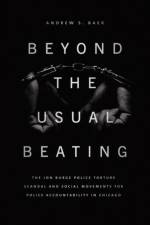
"The malign influence of Chicago police commander Jon Burge cannot be overestimated. While it can scarcely be said that Burge was the only violently racist Chicago cop, he has become the very emblem of police brutality and unequal treatment for nonwhite people, and his actions have had widespread reverberations. During his many years on the force, Burge used barbaric methods, including electric shock, beatings, burnings, and mock executions, to coerce confessions and information from the guilty and the innocent alike. After exposure of his actions in 1989, Burge became a totem for police racism in Chicago and nationwide. Andrew S. Baer here shows that Burge arose from a particular milieu, and his actions fueled resistance that might not otherwise have cohered so powerfully"--
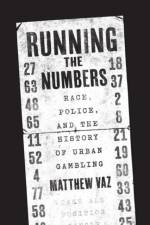
"Strictly and widely illegal, the most common manifestations of urban gambling were once "the numbers game" and "policy," in which people would place daily bets on random numbers, through community institutions, such as newsstands and barbershops. Gambling became one of the largest economic activities and sources of employment in some nonwhite neighborhoods-and therefore it drew intense police interest. Some of the most corrupt and blatantly discriminatory police actions centered on gambling and its practitioners. The state's interest doomed urban gambling, as many states coopted the market with their own hugely lucrative lotteries. A game that first flourished in poor and nonwhite urban communities has become America's game"--
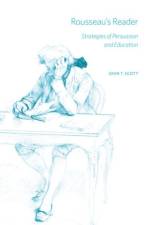
"This book examines the techniques that Rousseau used to engage and persuade his readers. Considering several important works, including Emilie, The Discourse on Inequality, and The Social Contract, John Scott, a well-known scholar of Rousseau, explores the different rhetorical and literary strategies that he uses to interest, draw in, and persuade the reader of his ideas. Keeping in mind that Rousseau was concerned with education, understanding the relationship between his literary and rhetorical techniques and the substance of his thought is necessary to understanding Rousseau's project and who he intended to reach. Most political philosophers focus naturally on his ideas; others argue that the way he conveyed them is itself important. Scott gives us the key to understanding the significance of Rousseau's style"--
"Time Travelers is a book about the different and complex ways in which Victorians approached the past, offering a vivid new picture of the Victorian world and its historical obsessions. Although the nineteenth century was not the first to be fascinated by history, the intensity and range of the Victorian preoccupations with the past was unprecedented and of lasting importance. It gave rise, for example, to many of our modern disciplines, and the accessibility of these new pasts to ever broader social groups gave them unprecedented power to shape culture in ways that continue to structure our own engagements with the past"--
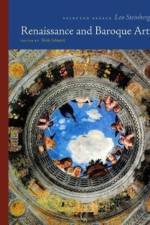
"This is the third and final volume dedicated to Steinberg's writings about early modern art. (There will also be two centered on modern art.) This volume collects Steinberg's best essays and unpublished lectures about early modern artists and sites ranging from his superb, ground-shifting texts on the Spanish painter Diego Velazquez to an amusing essay on his visit to the Basilica of Santa Maria del Popolo in Rome, which houses artistic treasures by such luminaries as Bramante, Sansovino, Raphael, Pinturicchio, Sebastiano del Piombo, Carracci, Caravaggio, and Bernini. The other essays are, with one or two exceptions, mainly about Italian masters. The content is quite diverse, and perhaps for this reason this volume is the most pleasurable so far. Steinberg exercises his wit to good effect, and these essays, though frequently dazzling with insight, read as rather more lightly composed than those surrounding Steinberg's grand obsession, Michelangelo"--
"Wendy Woloson considers seriously the detritus of everyday consumerist Western lives--a category that comprises objects that function as art, jokes, tools, embodiments of fantasies, cultural signifiers, status symbols, and much more; a.k.a. "crap." She seeks to use these possessions to illuminate our society, culture, and economy. Why do we--as individuals and as a culture--have these things? Where do they come from, and why do we want them? In her words, this investigation "brings together material culture, consumer culture, behavioral economics, cultural economics, the histories of industrialization, capitalism and international trade, among other disciplines." Also, there's a Lightning Sausage"--
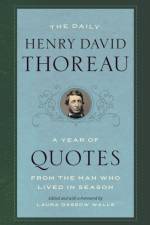
The American transcendental writer's best quotes, charting his classic themes of the self, nature and the passage of the seasons, presented here with a quote given for each day of the year.
Abonner på vårt nyhetsbrev og få rabatter og inspirasjon til din neste leseopplevelse.
Ved å abonnere godtar du vår personvernerklæring.