





















Gjør som tusenvis av andre bokelskere
Abonner på vårt nyhetsbrev og få rabatter og inspirasjon til din neste leseopplevelse.
Ved å abonnere godtar du vår personvernerklæring.Du kan når som helst melde deg av våre nyhetsbrev.

How is it that the nation, a relatively old form of community, has risen to such prominence in an era so strongly identified with the individual? The author argues that it is the inadequacy of our understanding of community - and especially the moral psychology that animates it - that has made this question so difficult to answer.
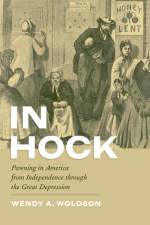
Providing the definitive history of pawnbroking in the United States from the nation's founding through the Great Depression, this title demonstrates that the pawnshop was essential to the rise of capitalism.
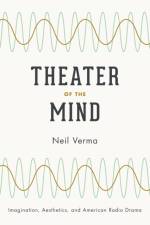
For generations, fans and critics have characterized classic American radio drama as a theater of the mind. This book examines that characterization by recasting the radio play as an aesthetic object within its historical context.
Of all the writings on theory and aesthetics - ancient, medieval, or modern - the most important is indisputably Aristotle's "Poetics", the first philosophical treatise to propound a theory of literature. The author offers a fresh interpretation of the lost second book of Aristotle's "Poetics".
Argues that religion is more complicated than either its defenders or critics think and, indeed, is much more influential than any of us realize. This book redefines religion for our contemporary age. It presents a radical reconceptualization of religion.
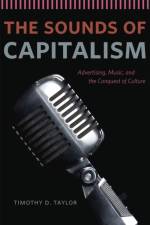
Tracks the use of music in American advertising for nearly a century, from variety shows like "The Clicquot Club Eskimos" to the rise of the jingle, from the postwar growth of consumerism, to the more complete fusion of popular music and consumption in the 1980s and after.
Considering the singular experience of the African American writer, this title argues that African American literature did not develop apart from canonical Western literary traditions but instead grew out of those literatures, even as it adapted and transformed the cultural traditions and religions of Africa and the African diaspora along the way.
Begins with a question: Is beauty destined to end in tragedy? Drawing on extensive fieldwork in Colombia, the author scrutinizes the anxious, audacious, and sometimes destructive attempts people make to transform their bodies through cosmetic surgery and liposuction.
Addresses why Americans invested in public education and explains how an array of reformers subtly transformed schooling into a tool of social governance to address the consequences of industrialization and urbanization. This title presents the study of the history of education.
Popular conceptions hold that capitalism is driven almost entirely by the pursuit of profit and self-interest. This work reveals an unexpected truth about capitalist society: protecting and promoting the profits of its member businesses are only two of the many functions these associations serve.
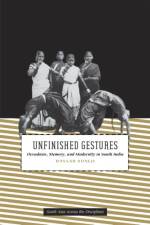
Presents the social and cultural history of courtesans in South India who are generally called devadasis, focusing on their encounters with colonial modernity in the nineteenth and early twentieth centuries. This title charts the historical fissures that lie beneath cultural modernity in South India.
Examining the act of interrogation, the author confronts a host of philosophical and legal issues, from the right to privacy and the privilege against compelled self-incrimination to prisoner rights and the legal consequences of different modes of interrogation for both domestic criminal and foreign terror suspects.
One of the greatest books ever to be written on the United States, "Democracy in America" continues to find new readers who marvel at the lasting insights Alexis de Tocqueville had into our nation and its political culture. This book is written expressly to help general readers and students alike get the most out of this seminal work.
In the nineteenth century, Americans began to use maps in radically new ways. This title charts how maps of epidemic disease, slavery, census statistics, the environment, and the past demonstrated the analytical potential of cartography, and in the process transformed the very meaning of a map.
Examining the transatlantic flow of knowledge from West to East, this book explores how the social and cultural worlds of South America contributed to the production of European scientific knowledge during the Enlightenment.
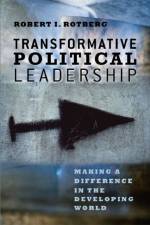
Focuses on the role of leadership in politics and argues that accomplished leaders demonstrate a particular set of skills. Through case studies of leaders who have performed ably in the developing world - among them Nelson Mandela in South Africa and Kemal Ataturk in Turkey, the author examines how these leaders transformed their countries.
Focuses on Herman Boerhaave (1668-1738), a Dutch medical and chemical professor whose work reached a wide, educated audience and became the template for chemical knowledge in the eighteenth century. This title reveals how Boerhaave restructured and reinterpreted various practices from diverse chemical traditions - including craft chemistry.
Provides insights into the possibilities and limitations of collaboration, and diagnoses the micropolitics which effectively constrained the potential for mutual scientific flourishing. This title utilizes a real-world experience as a springboard for reflections on how the human and life sciences can and should transform each other.
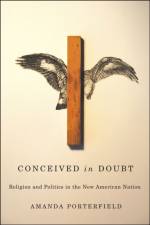
Americans have long acknowledged a deep connection between evangelical religion and democracy in the early days of the republic. This title challenges this standard interpretation and describes the intertwined relationship between religion and partisan politics that emerged in the formative era of the early republic.
The late twentieth century has seen a fantastic expansion of personal, sexual, and domestic liberties in the United States. In this title, the author explores the rise of cohabitation, and the changing social norms that have allowed cohabitation to become the chosen lifestyle of more than fifteen million Americans.
Almost fifty years after Brown v Board of Education, a wealth of research shows that minority students continue to receive an unequal education. This title examines a complex relationship between teachers and civil rights activists, which traces the tensions between the two groups in New York City from the Great Depression to the present.
When we think of segregation, what often comes to mind is apartheid South Africa, or the American South in the age of Jim Crow - two societies fundamentally premised on the concept of the separation of the races. In this title, the author shows us that segregation is everywhere, deforming cities and societies worldwide.
In Cote d'Ivoire, appearing modern is so important for success that many young men deplete their already meager resources to project an illusion of wealth. The author argues that they engage a global hierarchy that is profoundly modern, one that values performance over authenticity - highlighting the counterfeit nature of modernity itself.
Provides a comprehensive account of the energetics of birds and mammals. This title also provides an overview of thermal rates and explains how the basal rate of metabolism drives energy use, especially in extreme environments.
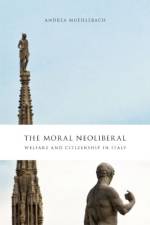
Morality is often imagined to be at odds with capitalism and its focus on the bottom line. In this book, morality is shown as the opposite: an indispensable tool for capitalist transformation. It presents an argument that the neoliberal state nurtures selflessness in order to cement some of its most controversial reforms.
It was only around 1800 that heredity began to enter debates among physicians, breeders, and naturalists. Soon thereafter it evolved into one of the most fundamental concepts of biology. In this book, the authors offer a succinct cultural history of the scientific concept of heredity.
These days, the idea of the cyborg is less the stuff of science fiction and more a reality, as we are all, in one way or another, constantly connected, extended, wired, and dispersed in and through technology. The author focuses on a man who is permanently attached to assemblages of machines, devices, and collectivities of people: Stephen Hawking.
Argues that the distinctiveness of the al Qaeda threat led the international community to change its approach to counterterrorism. This title provides a reinterpretation of the war on terrorism and the role of the United States in leading the fight against al Qaeda and its affiliates.
Jane Austen's lasting appeal to both popular and elite audiences has lifted her to legendary status. This title begins by exploring the most important monuments and portraits of Austen, considering how these artifacts point to an author who is invisible and yet whose image is inseparable from the characters and fictional worlds she created.
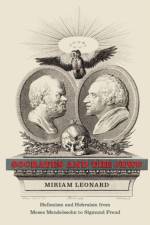
Taking on the question of how the glories of the classical world could be reconciled with the Bible, this book explains how Judaism played a vital role in defining modern philhellenism. It illustrates how the encounter between Athens and Jerusalem became a lightning rod for intellectual concerns.
Abonner på vårt nyhetsbrev og få rabatter og inspirasjon til din neste leseopplevelse.
Ved å abonnere godtar du vår personvernerklæring.