





















Gjør som tusenvis av andre bokelskere
Abonner på vårt nyhetsbrev og få rabatter og inspirasjon til din neste leseopplevelse.
Ved å abonnere godtar du vår personvernerklæring.Du kan når som helst melde deg av våre nyhetsbrev.

Literary scholars often avoid category of aesthetic in discussions of ethics, believing that aesthetic judgments can vitiate analyses of a literary work's sociopolitical heft. This title reveals that aesthetics formal aspects of literary language that make it senseperceptible are indeed inextricable from ethics in writing of medieval literature.
By the late nineteenth century, engineers and experimental scientists generally knew how radio waves behaved, and by 1901 scientists were able to manipulate them to transmit messages across long distances. This title documents this monumental discovery and the advances in radio ionospheric propagation research that occurred in its aftermath.
What, if anything, does this figurative, political slavery have to do with transatlantic slavery? This title explores connections between political and chattel slavery by excavating the tradition of Western political thought that justifies actively opposing tyranny.
The public spaces and buildings of United States are home to many thousands of timepieces - time balls, and clock faces - that tower over urban streets, peek out from lobbies, and gleam in store windows. In this title, the author relates how the American preoccupation with time led people from across social classes to acquire watches and clocks.
"A child is a man in small letter," wrote Bishop John Earle in the seventeenth century. "His father hath writ him as his own little story." In this title, the writer acknowledges the author of his story while simultaneously reminding us that we all confront the blank page of life on our own, as authors of our lives.
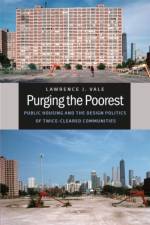
Offers a narrative of the seventy-five-year struggle to house the "deserving poor." This title offers the novel concept of "design politics" to show how issues of architecture and urbanism are intimately bound up in thinking about policy.
The state of Israel is often spoken of as a haven for Jewish people, a place rooted in story of a nation dispersed, wandering earth in search of its homeland. Focusing on histories of Israel's marginalized stakeholders, the author demonstrates how these voices provide urgently needed resources for conflict analysis and peace building.
The subject of murder has always held a particular fascination for us. In this title, the author explores the ways in which the figure of the murderer has been made to signify a specific kind of social subject in Western modernity.
Drawing on more than three years of fieldwork across three continents, the author traces our complex and often contradictory relationship with these versatile animals in public spaces such as Venice's Piazza San Marco and London's Trafalgar Square and in working-class and immigrant communities of pigeon breeders in New York and Berlin.
Set against the backdrop of women's work experiences, friendships, and communities during World War I, this title draws on a substantial body of new archival material to expose the roadblocks still present in practices and imagine new alternatives. It clarifies the ethical value and political purpose of identity history.
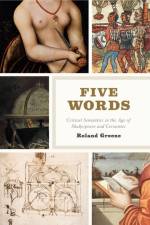
Blood, Invention, Language, Resistance and World these five ordinary words do a great deal of conceptual work in everyday life and literature. In this title, the author considers how these five words changed over the course of the sixteenth century and what their changes indicate about broader forces in science, politics, and other disciplines.
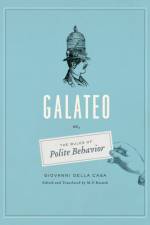
"Galateo", a treatise on polite behavior was written by Giovanni Della Casa (1503-56) for the benefit of his nephew, a young Florentine destined for greatness. In the voice of a cranky yet genial old uncle, the author offers the distillation of what he has learned over a lifetime of public service as diplomat and papal nuncio.
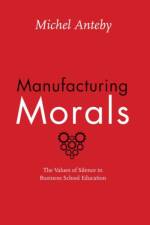
Making unprecedented use of his position as a Harvard Business School faculty member, this title takes readers inside HBS in order to draw vivid parallels between the socialization of faculty and of students. It reveals the role of silence and ambiguity in HBS' process of codifying morals and business values.
Constantin Fasolt explores in this work the idea that history is supremely a political activity. He demonstrates that history presupposes highly political assumptions about free will, responsibility, and the relationship of the past to the present.
Is Leo Strauss truly an intellectual forebear of neoconservatism and a powerful force in shaping Bush administration foreign policy? This title puts this question to rest, revealing how the popular media came to perpetuate an oversimplified view of a complex and wide-ranging philosopher.
Analyzes the justice system's response to sexual misconduct by children and adolescents in the United States. This book discusses our society's failure to consider the developmental status of adolescent sex offenders.
Katharina Schutz Zell (1498 - 1562) was an outspoken religious reformer in sixteenth-century Germany who campaigned for the right of clergy to marry. This book contains the translations of her publications, aiming to offer modern readers an opportunity to understand the important work of women in the formation of the early Protestant church.
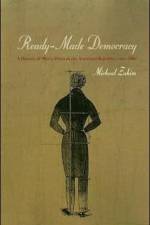
Explores the history of men's dress in America to consider how capitalism and democracy emerged at the center of social life during the century between the Revolution and the Civil War. This book illuminates the critical links among culture, ideology, political economy, and fashion in antebellum America.
In years, a number of European countries have abolished national border controls in favor of Europe's external frontiers. Setting forth an analytic framework informed by constructivism and pragmatism, this title traces the transformation of underlying assumptions and cultural practices guiding European policymakers and postnational Europe.
Adapting Catullus (Latin), Villon (Middle French), Corbiere (French), Hikmet (Turkish), and Orpheus (Greek), and placing them alongside Jagger and Richards, skinheads, and psalms, this book mirrors an old-style hawking of wares, with the charm and absurdity that results when high culture meets pop and when provincialism confronts urbanity.
Since the early 1990s, transnational adoptions have increased at an astonishing rate, not only in the United States, but worldwide. This title explores the consequences and implications of this unprecedented movement of children, usually from poor nations to the affluent West.
American urban ruins have become increasingly prominent, whether in debates about home foreclosures, images of 9/11, or postapocalyptic movies. Recovering numerous scenes of urban desolation, this work argues that this association between American cities and ruins dates back to a much earlier period in the nation's history.
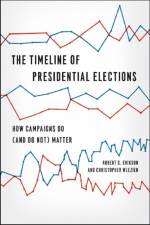
With the 2012 presidential election upon us, will voters cast their ballots for the candidates whose platforms and positions best match their own? Or will the race for the next president of the United States come down largely to who runs the most effective campaigning? This book reveals how both factors come into play.
Picture your twenty-first birthday. Did you have a party? If so, do you remember who was there? Now step back: how clear are those memories? Are they hidden somewhere in your brain, or are they lost forever? This book shows that the answers have changed dramatically in just the past century.
Digital computer simulation helps study phenomena of great complexity, but how much do we know about the limits and possibilities of this new scientific practice? How do simulations compare to traditional experiments? And are they reliable? The author seeks to answer these questions.
Animals lead rich social lives. They care for one another, compete for resources, and mate. This title presents a framework for analyzing social behavior and demonstrates how to put this framework into practice by collecting data on the interactions and associations of individuals so that relationships can be described.
How does a so-called bad neighborhood go about changing its reputation? Is it simply a matter of improving material conditions or picking the savviest marketing strategy? This title examines one neighborhood's fight to erase the stigma of devastation.
Examines literary and historical texts to show how writers have manipulated images and ideas associated with the cattle killing - harvest, sacrifice, rebirth, devastation - to speak to their contemporary predicaments.
The Faustian bargain is perhaps best exemplified by the alliance between world-renowned human geneticists and the Nazi state. This title presents an account of the myriad ways human heredity and Nazi politics reinforced each other before and during the Third Reich.
Abonner på vårt nyhetsbrev og få rabatter og inspirasjon til din neste leseopplevelse.
Ved å abonnere godtar du vår personvernerklæring.