














Gjør som tusenvis av andre bokelskere
Abonner på vårt nyhetsbrev og få rabatter og inspirasjon til din neste leseopplevelse.
Ved å abonnere godtar du vår personvernerklæring.Du kan når som helst melde deg av våre nyhetsbrev.

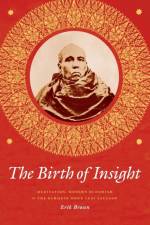
Insight meditation, which claims to offer practitioners a chance to escape all suffering by perceiving the true nature of reality, is one of the most popular forms of meditation today. Offering a narrative of the life and legacy of one of modern Buddhism's most important figures, this book provides an account of the development of mass meditation.
Borrowing from translation and reading studies and weaving together the history of science with intellectual history, this title explores Darwin's global appeal from the perspective of several generations of Arabic readers and shows how Darwin's writings helped alter the social and epistemological landscape of the Arab learned classes.
Today, the moving image is ubiquitous in global contemporary art. This book tells the story of the postwar expanded cinema. It travels back to the 1950s and 1960s when the rise of television caused movie theaters to lose their monopoly over the moving image, leading cinema to be installed directly alongside other forms of modern art.
In his notes on the natural history of Concord, Massachusetts, Henry David Thoreau records the first open flowers of highbush blueberry on May 11, 1853. In the 160 years since his writings, warming temperatures have pushed blueberry flowering three weeks earlier. This book tracks the effects of a warming climate on Concord's plants and animals.
Recounts the experiences of a long-forgotten part of the American expatriate population. In this book, the author details the politics of citizenship, work, and business, and the wealth (and poverty) among the Americans who staked their claim to the City of Light.
The Jazz Age. The phrase conjures images of Louis Armstrong holding court at the Sunset Cafe in Chicago. But the Jazz Age was every bit as much of a Paris phenomenon as it was a Chicago and New York scene. The author provides an alternative history of African American music and musicians in France.
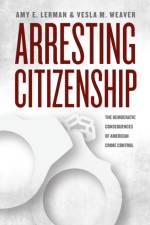
One-third of America's adult population has passed through the criminal justice system and now has a criminal record. This book argues that the broad reach of the criminal justice system has recast the relation between citizen and state, resulting in a sizable - and growing - group of second-class citizens.
Drawing on the conceptual repertoires of Weber, Foucault, and Dewey, among others, the authors reflect on and experiment with how to give form to anthropological inquiry and its aftermath, with special attention to the ethical formation and ramifications of this mode of engagement.
Leo Strauss and his alleged political influence regarding the Iraq War have in recent years been the subject of significant media attention. In this title, the authors turn their attention to a more comprehensive interpretation of Strauss' thought as a whole.
Modern theory needs a history lesson. Neither Marx nor Nietzsche first gave us theory-Hegel did. This book presents an account of the origins and legacy of Hegel's dialectic as theory. It explains how Hegel boldly broke from modern philosophy when he adopted medieval dialectical habits of thought to fashion his own dialectic.
Provides the study of American women's responses to evolutionary theory and illuminates the role science played in the nineteenth-century women's rights movement.
Drawing on deep and sustained contact with students, parents, teachers, and administrators at three iconic secondary schools in the United States, the authors unveil a formidable process of class positioning at the heart of the college admissions process.
NGOs set out to save lives, relieve suffering, and service basic human needs. In this book, the author dives into the intricacies of the decision-making process at NGOs and uncovers a basic truth: It may be the case that relief agencies try to help people but, in practical terms, the main focus of their work is to produce projects.
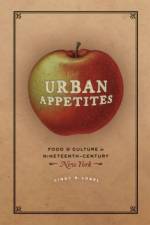
Focuses on the rise of New York as both a metropolis and a food capital, opening a new window onto the intersection of the cultural, social, political, and economic transformations of the nineteenth century. This book offers accounts of public markets and private food shops; and cake and coffee shops.
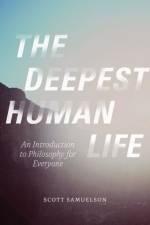
Sometimes it seems like you need a PhD just to open a book of philosophy. Exploring the works of some of history's most important thinkers in the context of the everyday struggles of his students, the author guides us through the most vexing quandaries of our existence - and shows just how enriching the examined life can be.
Jazz was born on the streets, grew up in clubs, and will die-so some fear-at the university. Facing dwindling commercial demand and the gradual disappearance of venues, many aspiring jazz musicians today learn their craft, and find their careers, in one of the many academic programs that now offer jazz degrees. This book tells their story.
How is it that the United States-a country founded on a distrust of standing armies and strong centralized power-came to have the most powerful military in history? This book argues that there are profound relationships among the size and persistence of the American military complex, and the growth in presidential power to launch military actions.
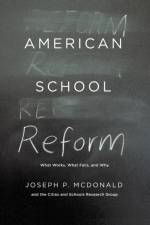
Dissecting twenty years of educational politics in our nation's largest cities, this book evaluates the half-billion-dollar Annenberg Challenge - launched in 1994 - alongside many other large-scale reform efforts that have taken place in New York, Chicago, Philadelphia, and the San Francisco Bay Area.
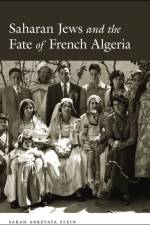
The history of Algerian Jews has thus far been viewed from the perspective of communities on the northern coast, who became, to some extent, beneficiaries of colonialism. This book asks why the Jews of Algeria's south were marginalized by French authorities, and how they negotiated the sometimes brutal results.
Does the concept of natural rights have the natural law as its foundation or are the two ideas, as Leo Strauss argued, profoundly incompatible? The author addresses this controversy, offering an entirely new account of natural morality that compellingly unites the concepts of natural law and natural rights.
In 1921 and 1924, the United States passed laws to sharply reduce the influx of immigrants into the country. This book tells the untold stories of the Jewish migrants and smugglers involved in that underworld, showing how such stories contributed to growing national anxieties about illegal immigration.
Liberalism in San Francisco in the years right after World War II was mostly confined to notions of state welfare and business regulation. It wasn't until the 1950s and 1960s, when new peoples and cultures poured into the city, that San Francisco produced a new liberal politics. The author details this fascinating transition.
With a particular emphasis on Catholic school closures, this book examines the implications of these dramatic shifts in the urban educational landscape. It shows that the closing of Catholic schools harms the very communities they were created to bring together and serve.
Over the years a growing number of middle-class parents have considered sending their children to - and often end up becoming active in - urban public schools. Their presence can bring long-needed material resources to such schools. The author shows that it can also introduce new class and race tensions, and even exacerbate inequalities.
Through detailed studies of two different orphan support organizations in Uganda, the author shows how many Ugandans view material forms of Catholic charity as deeply intertwined with their own ethics of care and exchange. She reassesses the generally assumed paradox of material aid as both promising independence and preventing it.
Visitors to Cuba will notice that Afro-Cuban figures and references are everywhere. The author examines how the animation of Cuba's colonial past and African heritage through such figures and performances not only reflects but also shapes the Cuban experience of Blackness.
"Welcome to the European family!" When East European countries joined the European Union under this banner after 1989, they agreed to the free movement of goods, services, capital, and persons. In this book, the author analyzes an important niche in this imagined European kinship: the traffic in women.
Is Administrative Law Unlawful? The author answers this question in the affirmative, offering a revisionist account of administrative law. Rather than accepting it as a novel power necessitated by modern society, he locates its origins in the medieval and early modern English tradition of royal prerogative.
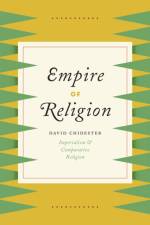
Provides a counterhistory of the academic study of religion, an alternative to standard accounts that have failed to link the field of comparative religion with either the power relations or the historical contingencies of the imperial project.
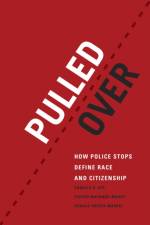
In sheer numbers, no form of government control comes close to the police stop. Police stops are among the most frequently criticized incidences of racial profiling, and studies have shown that minorities are pulled over at higher rates. This book deftly traces the strange history of the investigatory police stop.
Abonner på vårt nyhetsbrev og få rabatter og inspirasjon til din neste leseopplevelse.
Ved å abonnere godtar du vår personvernerklæring.