















Gjør som tusenvis av andre bokelskere
Abonner på vårt nyhetsbrev og få rabatter og inspirasjon til din neste leseopplevelse.
Ved å abonnere godtar du vår personvernerklæring.Du kan når som helst melde deg av våre nyhetsbrev.

In recent years, it has become increasingly clear that emotion plays a central role in global politics. From passionate protests to poignant speeches, this title analyzes high-emotion events with an eye to how they shape public perception and finds that there is no single answer.
In 2011, the United Nations Security Council adopted Resolution 1973, authorizing its member states to take measures to protect Libyan civilians from Muammar Gadhafi's forces. This title traces the relationship between sovereignty and responsibility from the early modern period to the present day, and offers a history with profound implications.
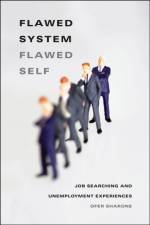
Today 4.7 million Americans have been unemployed for more than six months. In France more than ten percent of the working population is without work. And in Greece and Spain, that number approaches thirty percent. The author delves beneath these staggering numbers to explore the world of job searching and unemployment across class and nation.
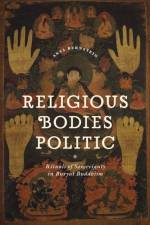
Examines the complex relationship between transnational religion and politics through the lens of one cosmopolitan community in Siberia: Buryats, who live in a semiautonomous republic within Russia with a large Buddhist population. This book illustrates how this community employed Buddhism to adapt to key moments of political change.
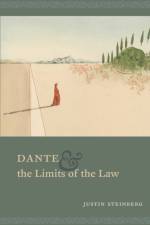
Offers the study of the legal structure crucial to Dante's Divine Comedy. This title makes the compelling case that Dante deliberately exploits this highly structured legal system to explore the phenomenon of exceptions to it, introducing Dante to crucial current debates about literature's relation to law, exceptionality, and sovereignty.
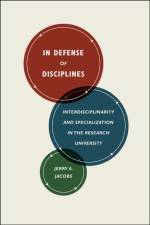
Challenging the belief that blurring the boundaries between traditional academic fields promotes more integrated research and effective teaching, the author contends that the promise of interdisciplinarity is illusory and that critiques of established disciplines are often overstated and misplaced.
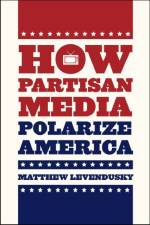
Drawing on experiments and survey data, this title shows that Americans who watch partisan programming do become more certain of their beliefs and less willing to weigh the merits of opposing views or to compromise.
In 2005, Iraq drafted its first constitution and held the country's first democratic election in more than fifty years. The author argues that the terms of the Iraqi Constitution are sufficiently capacious to be interpreted in a variety of ways, allowing it to appeal to the country's three main sects despite their deep disagreements.
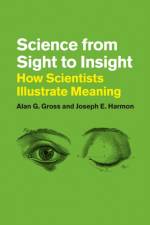
Presents a short history of the scientific visual, and then formulate a theory about the interaction between the visual and textual. This title argues that scientific meaning itself comes from the complex interplay between the verbal and the visual in the form of graphs, diagrams, maps, drawings, and photographs.
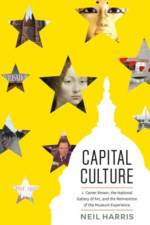
American art museums flourished in the late twentieth century, and the impresario leading much of this growth was J Carter Brown, director of the National Gallery of Art in Washington, DC, from 1969 to 1992. This title provides a look at Brown's achievement and the growth of museum culture during this crucial period.
From both sides of the Atlantic Ocean, the author paints an intimate portrait of how students and teachers actually cope, in real time, with the chronic stress, peer group dynamics, and subtle power politics of urban educational spaces in the perpetual shadow of aggression.
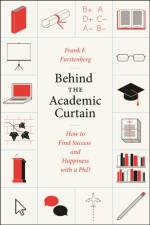
More people than ever are going to graduate school to seek a PhD these days. When they get there, they discover a bewildering environment. The author offers a clear and user-friendly map to this maze. Drawing on decades of experience in academia, he provides a comprehensive, empirically grounded practical guide to academic life.
The United States imprisons far more people, total and per capita, than any other country in the world. Among the more than 1.5 million Americans incarcerated, minorities and the poor are disproportionately represented. The author offers evidence that living in a high-imprisonment neighborhood significantly decreases political participation.
As Archbishop Desmond Tutu has noted, "AIDS is South Africa's new apartheid." This title traces the historical shifts in health policy after apartheid and describes their effects, detailing, in particular, the changing relationship between biomedical and indigenous health care, both at the national and the local level.
On a summer's night in Athens, Patrik Keim stuck a pistol into his mouth and pulled the trigger. Keim was an artist, and the room in which he died was an assemblage of the tools of his particular trade. His body completed the tableau. This is a two-sided ethnography: one from the world of the living and the other from the world of the dead.
With delicacy and insight, this title traces the theme of mortality in the work of a group of authors who wrote during the past century and a half, teasing out and comparing their views of death as they emerged from different cultural contexts.
Called by Heinrich Heine a city of dull and culturally limited merchants where poets only go to die, Hamburg would seem an improbable setting for a major new intellectual movement. This title clarifies the social, political, and economic pressures faced by German-Jewish scholars on the periphery of Germany's intellectual world.
How states cooperate in the absence of a sovereign power is a perennial question in international relations. In this book, the author argues that global governance is more than just the cooperation of states under anarchy: it is the formation and maintenance of collective intentions, or joint commitments among states to address problems together.
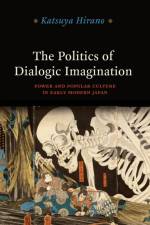
Seeks to understand why, with its seemingly unrivaled power, the Tokugawa shogunate of early modern Japan tried so hard to regulate the ostensibly unimportant popular culture of Edo (present-day Tokyo) - including fashion, leisure activities, prints, and theater.
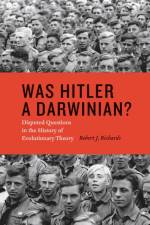
According to the standard interpretation, the principle of survival of the fittest has rendered human behavior, ultimately selfish. Few doubt that Darwinian theory, especially as construed by the master's German disciple, Ernst Haeckel, inspired Hitler and led to Nazi atrocities. The author argues that this orthodox view is wrongheaded.
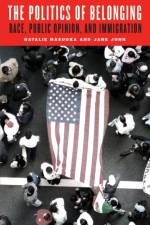
The United States is once again experiencing a major influx of immigrants. Rather than simply characterizing Americans as either nativist or nonnativist, this book argues that controversies over immigration policy are best understood as questions of political membership and belonging to the nation.
Weaves together scientific and historical evidence to demonstrate the vast role the New Madrid earthquakes played in the United States in the early nineteenth century, shaping the settlement patterns of early western Cherokees and other Indians, heightening the credibility of Tecumseh and Tenskwatawa for their Indian League in the War of 1812.
As the economies of China, India, and other Asian nations continue to grow, these countries are seeking greater control over the rules that govern international trade. By placing the current contest within the historical development of the global capitalist system, this book highlights a fascinating interaction of politics and economics.
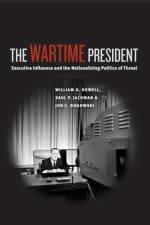
Based on research, this book focuses on the wartime powers presidents wield at home. It shows that congress is more likely to defer to the president's policy preferences when political debates center on national rather than local considerations.
We live in an age of media saturation, where with a few clicks of the remote - or mouse - we can tune in to programming where the facts fit our ideological predispositions. This title demonstrates that the strong effects of media exposure found in past research are simply not applicable in today's more saturated media landscape.
Offers a range of literatures and mythologies such intimate aggression is a source of ultimate terror. This title sketches it as a central ember at the core of human relationships, one brutally revealed in the practice of witchcraft.
In the United States at the height of the Cold War, roughly between the end of World War II and the early 1980s, a new project of redefining rationality commanded the attention of sharp minds, powerful politicians, wealthy foundations, and top military brass. The authors illuminate what it meant to be rational in the age of nuclear brinkmanship.
China's rising status in the global economy alongside recent economic stagnation in Europe and the United States has led to considerable speculation that we are in the early stages of a transition in power relations. The authors take readers through possible scenarios for future relations between China and the United States.
Offers an account of how biologists discover mechanisms. Drawing on examples from across the life sciences and through the centuries, the authors compile a toolbox of strategies that biologists have used and will use again to reveal the mechanisms that produce, underlie, or maintain the phenomena characteristic of living things.
After World War II, the US Atomic Energy Commission (AEC) began mass-producing radioisotopes, sending out nearly 64,000 shipments of radioactive materials to scientists and physicians by 1955. This title tells the story of how these radioisotopes, which were simultaneously scientific tools and political icons, transformed biomedicine and ecology.
Abonner på vårt nyhetsbrev og få rabatter og inspirasjon til din neste leseopplevelse.
Ved å abonnere godtar du vår personvernerklæring.