























Gjør som tusenvis av andre bokelskere
Abonner på vårt nyhetsbrev og få rabatter og inspirasjon til din neste leseopplevelse.
Ved å abonnere godtar du vår personvernerklæring.Du kan når som helst melde deg av våre nyhetsbrev.

Mozambique has been hailed as a success story by the international community. The author examines the role of customary law in Mozambique to ask a larger question: what is the place of law in the neoliberal era, in which the juridical and the economic are deeply intertwined in an ongoing state of structural adjustment?
How is the Internet transforming the relationships between citizens and states? The author combines media studies, ethnography, and African studies to explore this new political paradigm through an analysis of how Eritreans in diaspora have used the Internet to shape the course of Eritrean history.
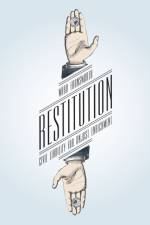
Restitution is the body of law concerned with taking away gains that someone has wrongfully obtained. This book explains restitution doctrines, remedies, and defenses and illustrates them with examples. It demonstrates that the law of restitution is guided by a manageable and coherent set of principles that have remarkable versatility and power.
First published in German in 1804, under the nom de plume "Bonaventura," this is a dark, twisted, and comic novel, in which the narrator and anti-hero is not Bonaventura, but a night watchman named Kreuzgang, a failed poet, actor, and puppeteer who claims to be the spawn of the devil himself.
Helps you chronicle of the journey of the small group of Ayoreo people, the terrifying new world they now face, and the precarious lives they are piecing together against the backdrop of soul - collecting missionaries, humanitarian NGOs, late liberal economic policies, and the highest deforestation rate in the world.
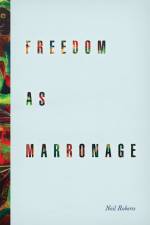
What is the opposite of freedom? The author answers this question with definitive force: slavery. Examining this overlooked phenomenon - one of action from slavery and toward freedom - he deepens our understanding of freedom itself and the origin of our political ideals.
When the author's sister-in-law, Marcella Wagner, was run off the freeway by a hit-and-run driver, she was left paralyzed from the chest down. Like so many Americans, neither Marcella nor her husband, Dave, had health insurance. Using Marcella and Dave's situation as a case in point, the author reveals the system's many shortcomings.
Many people understand urban renewal projects and the power of eminent domain as two of the most widely despised, and even racist, tools for reshaping American cities in the postwar period. Concerned more with winners and losers than with heroes and villains, this book offers a sober assessment of money and power in Jim Crow America.
It whispers, it sings, it rocks, and it howls. It symbolizes the voice of the folk - the open road, freedom, protest and rebellion, youth and love. It is the acoustic guitar. This book introduces us to builders of artisanal guitars, their place in the art world, and the specialized knowledge they've developed.
Immigrants in the United States send more than $20 billion every year back to Mexico - one of the largest flows of such remittances in the world. The author offers the first extended look at what is done with that money, and in particular how the building boom that it has generated has changed Mexican towns and villages.
On this blue planet, long before pterodactyls took to the skies and tyrannosaurs prowled the continents, tiny green organisms populated the ancient oceans. The author traces the history of these verdant organisms, which many would call plants, from their ancient beginnings to the diversity of green life that inhabits the Earth today.
Walking the streets of one of Chicago's most violent neighborhoods - where the local gang has been active for more than fifty years the author talks with people whose lives are irrecoverably damaged, seeking to understand how they cope and how they can be helped.
The central argument of Edward Said's Orientalism is that the relationship between Britain and its colonies was primarily oppositional, based on contrasts between conquest abroad and domestic order at home. This book reveals that romanticism provided a way to resist imperial logic about improvement and moral virtue.
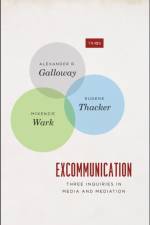
Always connect - that is the imperative of today's media. In this book, the author turns our usual understanding of media on its head by arguing that these moments reveal the ways the impossibility of communication is integral to communication itself - instances they call excommunication.
The environmental movement is plagued by pessimism. And that's not unreasonable: with so many complicated, seemingly intractable problems facing the planet, coupled with a need to convince people of the dangers we face, it's hard not to focus on the negative. But there are success stories. This book deals with ecological restoration.
Reveals in The Democratic Surround, the decades that brought us the Korean War and communist witch hunts also witnessed an extraordinary turn toward explicitly democratic, open, and inclusive ideas of communication and with them new, flexible models of social order.
The average kilometer of tropical rainforest is teeming with life; it contains thousands of species of plants and animals. This title reveals, many of the rainforest inhabitants - toucans, monkeys, leaf-nosed bats, and hummingbirds, to name a few - are an important component of the infrastructure that supports life in the forest.
Ranging from black slaveholders and frontier outlaws to serial killers and gangsta rappers, this title examines the pivotal role of black villains in American society and popular culture. It offers the extensive treatment to date of the black badman and the challenges that this figure has posed for race relations in America.
A little over a century ago, there was no such thing as international justice, and until recently, the idea of permanent international courts and formal war crimes tribunals would have been almost unthinkable. This title tells the story of the long struggle to craft the concept of international justice that we have today.
Looks at America's long tradition of unequal access to health care. This title argues that two main features have characterized the US health system: a refusal to adopt a right to care and a particularly American approach to the rationing of care.
One of the challenges facing education reformers in the US is how to devise a consistent and intelligent framework for instruction that will work across the nation's notoriously fragmented and politically conflicted school systems. This book offers guidance for state and local school systems as they attempt to respond to future reform proposals.
Nearly the whole of America's partisan politics centers on a single question: Can markets solve our social problems? And for years this question has played out ferociously in the debates about how we should educate our children. This title offers evidence to undercut this belief, showing that public schools in fact outperform private ones.
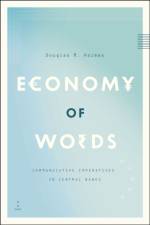
Working at the intersection of anthropology, linguistics, and economics, the author shows how central bankers have been engaging in communicative experiments that predate the financial crisis and continue to be refined amid its unfolding turmoil - experiments that do not merely describe the economy, but actually create its distinctive features.
Eight of the last twelve presidents were millionaires when they took office. Why is it that most politicians in America are so much better off than the people who elect them - and does the social class divide between citizens and their representatives matter? The author answers this question with a resounding - and disturbing - yes.
Public policy in the United States is the product of decisions made by more than 500,000 elected officials, the vast majority of them elected on days other than Election Day. The author systemically addresses the effects of election timing on political outcomes, and her findings are eye-opening.
When we think of composers like Mozart or Beethoven, we usually envision an isolated artist separate from the orchestra. For most of Japan's musical history, however, no such role existed - composition and performance were deeply intertwined. This book offers fresh insights not just into Japanese music but Japanese modernity at large.
Draws on theorists such as Carl Schmitt, Leo Strauss, Walter Benjamin, and Hannah Arendt and their readings of Shakespeare, Hobbes, Machiavelli, and Spinoza to illustrate that the dialogue between these modern and early modern figures can help us rethink the contemporary problem of political theology.
What is poetry? Often it is understood as a largely self-enclosed verbal system - "suspended from any mutual interaction with alien discourse," in the words of Mikhail Bakhtin. In this book, the author reveals modern and contemporary poetry's animated dialogue with other genres and discourses.
Looks inside this landscape of digital scientific work. This title chronicles the emergence of bioinformatics - the mode of working across and between biology, computing, mathematics, and statistics - from the 1960s to the present, seeking to understand how knowledge about life is made in and through virtual spaces.
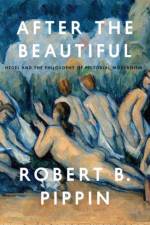
In his Berlin lectures on fine art, Hegel argued that art involves a unique form of aesthetic intelligibility - the expression of a distinct collective self-understanding that develops through historical time. This title offers a sophisticated exploration of Hegel's position.
Abonner på vårt nyhetsbrev og få rabatter og inspirasjon til din neste leseopplevelse.
Ved å abonnere godtar du vår personvernerklæring.