
























Gjør som tusenvis av andre bokelskere
Abonner på vårt nyhetsbrev og få rabatter og inspirasjon til din neste leseopplevelse.
Ved å abonnere godtar du vår personvernerklæring.Du kan når som helst melde deg av våre nyhetsbrev.

For decades, conventional wisdom has held that Americans hate negativity in political advertising. Arguing against this commonly held view, the authors show that some negativity is accepted by voters as part of the political process, but that negative advertising is necessary to convey valuable information that would not otherwise be revealed.
Explores a panoply of films, from M and Rear Window to The Conversation and The Bourne Legacy, to analyze the ways in which cinema has articulated the concept of surveillance. While it has long been a mainstay of the thriller, surveillance, the author argues, speaks to something more foundational in the very work of the camera.
America's education system faces a stark dilemma: it needs governmental oversight, rules and regulations, but it also needs to be adaptable enough to address student needs and the many different problems that can arise at any given school-something that large educational bureaucracies are notoriously bad at. The authors offer a solution.
Even as media in myriad forms increasingly saturate our lives, we nonetheless tend to describe our relationship to it in terms from the twentieth century: we are consumers of media, choosing to engage with it. The author shows that media is no longer separate from us but has become an inescapable part of our very experience of the world.
Examines Senegal's crucial and pragmatic decisions related to its development and how they garnered international favor, decisions such as its opposition to Soviet involvement in African liberation - despite itself being a socialist state - or its support for the US-led war on terror - despite its population being predominately Muslim.
How does the government decide what's a problem and what isn't? In this title, the authors focuses to the problem-detection process itself, showing how the growth or contraction of government is closely related to how it searches for information and how, as an organization, it analyzes its findings.
Built on interviews and detailed surveys of almost a thousand recent college graduates from a diverse range of colleges and universities, this book reveals a generation facing a difficult transition to adulthood. It compels us to re-examine the aims, approaches, and achievements of higher education.
The period of reform, revolution, and reaction that characterized seventeenth - and eighteenth-century Europe also witnessed an intensified interest in lesbians. The author demonstrates how intimacies between women became harbingers of the modern, bringing the sapphic into the mainstream of some of the most significant events in Western Europe.
One of the twentieth century's most controversial sexologists, John Money was considered a trailblazing scientist and sexual libertarian by some, but damned by others as a fraud and a pervert. This book focuses on his three key diagnostic concepts, "hermaphroditism," "transsexualism," and "paraphilia".
Intends to demonstrate that hynotism is an essential aspect of our most significant relationships, an inherent dimension of love, religion, medicine, politics, and literature, a fundamental dynamic between lover and beloved, deity and votary, physician and patient, ruler and subject, and, indeed, reader and listener.
An era of sweeping cultural change in America, the postwar years saw the rise of beatniks and hippies, the birth of feminism, and the release of the first video game. This book examines the rise and fall of the new math as a marker of the period's political and social ferment.
Are judges neutral legal umpires, unaccountable partisan activists, or political actors whose decisions conform to-rather than challenge-the democratic will? The author argues that, despite judges' claims, legal decisions are not the politically neutral products of disembodied legal texts.
Migraine is a disabling, and painful disorder that affects over 36 million Americans. Nevertheless, it is frequently dismissed, ignored, and delegitimized. The author argues that this general dismissal of migraine can be traced back to the gendered social values embedded in the way we talk about, understand, and make policies for people in pain.
Offers a book about Yaya Harouna, a Songhay trader originally from Niger who found a path to America. Combining memoir, ethnography, and philosophy through a series of interconnected narratives, this title tells a story of remarkable friendship and the quest for well-being.
Philosophical esotericism - the practice of communicating one's unorthodox thoughts "between the lines" - was a common practice until the end of the eighteenth century. The author serves as our deeply knowledgeable guide in this capacious and engaging history of philosophical esotericism.
Breaking from previous scholarship that sees Johannes Kepler as the culmination of a long-evolving optical tradition that traced back to Greek antiquity, the author presents Kepler instead as marking a rupture with this tradition, arguing that his theory of retinal imaging, was instrumental in prompting the turn from sight to light.
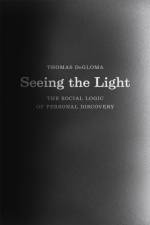
In stories that range from the discovery of a religious truth to remembering a childhood trauma to coming out of the closet, the author reveals a common social pattern: When people escape a place of darkness by discovering a life-changing truth, they typically ally with a new community.
One of the most important avant-garde movements of postwar Paris was Lettrism, which crucially built an interest in the relationship between writing and image into projects in poetry, painting, and especially cinema. This is a monograph in English on the Lettrists.
From fund-raising and owner loans to museum-artist relations to the immense effort involved in safely shipping sixty works from twenty-seven lenders in fourteen cities and five countries, this book illustrates the inner workings of one of Chicago's premier cultural institutions.
The origin of cells remains one of the most fundamental problems in biology, one that over the past two decades has spawned a large body of research and debate. This book offers a comprehensive, impartial take on that research and the controversies that keep the field in turmoil.
The verb "declutter" has not yet made it into the Oxford English Dictionary, but its ever-increasing usage suggests that it's only a matter of time. The author finds that both the idea of organization and the role of the clutterologist are deeply ingrained in our culture, and that there is a fine line between clutter and deviance in America.
George Herbert Mead is a foundational figure in sociology, best known for his book Mind, Self, and Society, which was put together after his death from course notes taken by stenographers and students and from unpublished manuscripts. The author traces the ways in which knowledge has been produced by and about the famed American philosopher.
Christianity, Judaism, and Islam are usually treated as autonomous religions, but in fact across the long course of their histories the three religions have developed in interaction with one another. In this book, the author examines how Muslims, Christians, and Jews lived with and thought about each other during the Middle Ages.
Tells the story of how Chinese medicine was transformed from the antithesis of modernity in the early twentieth century into a potent symbol of and vehicle for China's exploration of its own modernity half a century later.
Explores the overlap and shift between theistic and naturalistic science through a parallel study of two major scientific figures: James Clerk Maxwell, a devout Christian physicist, and Thomas Henry Huxley, the iconoclast biologist who coined the word agnostic.
Draws on a lifetime of sociological research and wisdom to show, in helpful detail, how to use a variety of kinds of cases to build sociological knowledge. The author provides a guide that researchers can use to produce general sociological knowledge through case studies.
Starting in the shallow oceans of ancient Earth and ending in the far reaches of outer space - where, Shaw proposes, insect - like aliens may have achieved similar preeminence. This book spins an account of insects' evolution from humble arthropod ancestors into the bugs we know and love (or fear and hate) today.
Highlights how racial divides limited the life chances of blacks while providing opportunities for whites, and offers an insider's perspective on the social practices that doled out benefits and penalties based on race-despite attempts to integrate.
Nonetheless philosophers have long sought a single, overriding ideal that should guide everyone, always, everywhere, and after centuries of debate we're no closer to an answer. This book argues that ideal theories are abstractions from the realities of everyday life and its problems.
A cruise along the streets of Chennai - or Silicon Valley - filled with professional young Indian men and women, reveals the new face of India. In this book, the author examine one particularly striking group who have taken part in this development.
Abonner på vårt nyhetsbrev og få rabatter og inspirasjon til din neste leseopplevelse.
Ved å abonnere godtar du vår personvernerklæring.