

















Gjør som tusenvis av andre bokelskere
Abonner på vårt nyhetsbrev og få rabatter og inspirasjon til din neste leseopplevelse.
Ved å abonnere godtar du vår personvernerklæring.Du kan når som helst melde deg av våre nyhetsbrev.

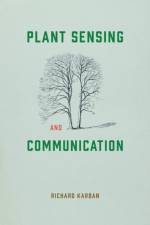
A flowering weed-mousear - can sense the particular chewing noise of its most common caterpillar predator and adjust its chemical defenses. The author provides a comprehensive overview of what is known about how plants perceive their environments, communicate those perceptions, and learn.
Drawing on over years of fieldwork and hundreds of interviews, the authors spotlight a largely hidden world of nighttime pleasures - the dancing, drinking, and socializing going on in dance clubs and bars that have flourished in Shanghai over the last century.
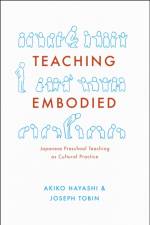
Taking you to the classrooms of Japanese preschools, this book explores the everyday, implicit behaviors that form a crucially important - but grossly understudied-aspect of educational practice. It focusses on how teachers embody their lessons: how they use their hands to gesture, comfort, or discipline; and more.
Long before the age of "Big Data" or the rise of today's "self-quantifiers," American capitalism embraced "risk"- and proceeded to number our days. This book tells a story of corporate culture remaking American culture - a story of intellectuals and professionals in and around insurance companies.
Aging and creativity can have a particularly difficult relationship for artists, who often face age-related problems at a time when their audience's expectations of their talents are at a peak. The authors explore this issue through close looks at those who created some of the world's most beloved and influential operas.
The Supreme Court ruled that the city of New London, Connecticut, could condemn fifteen residential properties in the Fort Trumbull area and transfer them to a new private owner. This book offers an analysis of the case alongside a history of the meaning of public use and the use of eminent domain and an evaluation of options for reform.
Offers a way to think about how the power of poetry, art, and the lyrical imagination illuminate history, trauma, and memory.
Proceeding from the bold and provocative claim that there never has been a comprehensive and systematic theory of race, the authors set out to reformulate how we think about one of the most vexing and central aspects of American life. It presents a social theory that engages with fundamental problems of order, agency, power, and justice.
Shows how media lie at the very heart of our interactions with the world around us. The author argues that though we often think of media as environments, the reverse is just as true-environments are media. It provides a fresh appreciation for the day-to-day foundations of life on earth we so often take for granted.
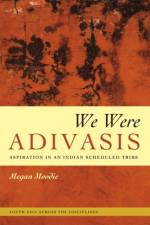
Through an ethnography of the Dhanka in Jaipur, this book brings you inside an imaginative work of these long-marginalized tribal communities. It shows how they must affirm and refute their tribal status on a range of levels, from domestic interactions to historical representation, by relegating their status to the past.
The field of natural history in Japan separated itself from the discipline of medicine, produced knowledge that questioned the traditional and philosophical understandings of the world. The author recounts how Japanese scholars developed a discipline of natural history analogous to Europe's but created independently, without direct influence.
Provides an approach to meeting the challenges faced by philosophical hermeneutics in interpreting an ever-changing and multicultural world. The author shows that a crucial task of hermeneutical critique is to establish priorities among the contexts that may be brought to bear on the interpretation of history and culture.
On May 26, 1889, four thousand mourners proceeded down Michigan Avenue, followed by a crowd forty thousand strong, in a howl of protest at what commentators called one of the ghastliest and most curious crimes in civilized history.
What does diversity mean in contemporary America, and what are the effects of efforts to support it? The author explores the complicated, contradictory, and troubling meanings and uses of diversity as it is invoked by different groups for different, often symbolic ends.
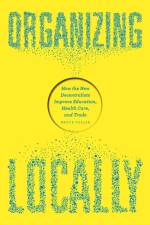
From the cherries we buy, to the grocer who sells them, to the school where our child unpacks them for lunch, we express resurgent faith in decentralizing the institutions and businesses that arrange our daily lives. The author reveals the key cornerstones of social organization on which effective decentralization depends.
Examining a wide array of cultures, this book reveals how the inherent tensions between these two modes of transmission generate many of the features of human society, such as marriage rules, initiation rituals, gender asymmetry, and sexual symbolism.
Placing sensibility in dialogue with classical and early-modern antecedents as well as contemporary animal studies, this book uncovers crucial connections between eighteenth-century poetry; theories of communication; and post-absolutist, rights-based politics.
Does the fact that fifty percent of our waking hours find us failing to focus on the task at hand represent a problem? This book shows you why, rehabilitating, woolgathering and revealing its incredibly useful effects and how mind-wandering not only frees you from moment-to-moment drudgery, but also from the limitations of our immediate selves.
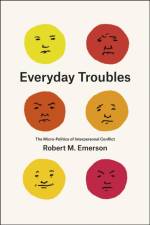
From roommate disputes to family arguments, trouble is inevitable in interpersonal relationships. The author explores the beginnings and development of the conflicts that occur in our relationships with the people we regularly encounter - family members, intimate partners, coworkers, and others - and the common responses to such troubles.
Americans believe strongly in the socially transformative power of education, and more. How did we get here? This book presents four competing visions of "the race problem" and documents how an individualistic paradigm, which presented white attitudes as the source of racial injustice, gained traction.
Before the hydrogen bomb indelibly associated radioactivity with death, many chemists, physicians, botanists, and geneticists believed that radium might hold the secret to life. This book recovers a forgotten history of the connections between radioactivity and the life sciences that existed long before the dawn of molecular biology.
Arguing that the simple: direct, systematic, and creative programs engage undergraduates on the question of purpose, this book shows that thoughtful engagement of the notion of vocational calling by students, faculty, and staff can bring rewards for all those involved: greater intellectual development, more robust community involvement, and more.
What makes for a good life, or a beautiful one, or, perhaps most important, a meaningful one? This book offers a fresh way of thinking about these questions. It offers a refreshing way to think of an age-old question, of, quite simply, what makes a life worth living.
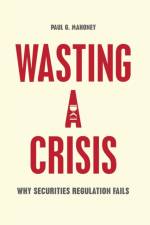
Offers persuasive research to show that the almost universally accepted narrative of market failure - broadly similar across financial crises - is formulated by political actors hoping to deflect blame from prior policy errors. It shows that lax regulation was not a substantial cause of the financial problems of the Great Depression.
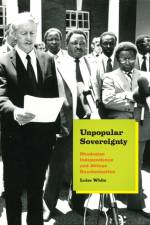
In 1965 the white minority government of Rhodesia issued a unilateral declaration of independence from Britain, rather than negotiate a transition to majority rule. The author shows that the exception that was Rhodesian independence did not, in fact, make the state that different from new nations elsewhere in Africa.
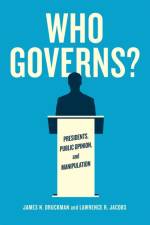
Combining existing research with novel data from US presidential archives, this book shows that presidents make policy by largely ignoring the views of most citizens in favor of affluent and well-connected political insiders. It is suitable for those interested in US politics, public opinion, democratic theory, and more.
Jazz is born of collaboration, improvisation, and listening. This book weaves an argument about how individuals can preserve and improve civic life in a democratic culture. It will appeal to scholars across disciplines as diverse as political science, performance studies, musicology, and literary criticism.
Abonner på vårt nyhetsbrev og få rabatter og inspirasjon til din neste leseopplevelse.
Ved å abonnere godtar du vår personvernerklæring.