





Gjør som tusenvis av andre bokelskere
Abonner på vårt nyhetsbrev og få rabatter og inspirasjon til din neste leseopplevelse.
Ved å abonnere godtar du vår personvernerklæring.Du kan når som helst melde deg av våre nyhetsbrev.

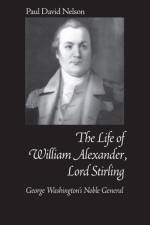
Nelson's "William Alexander, Lord Stirling," (1726-83) is the biographical account of a man who served 18th-century American society as a prominent citizen in peacetime and as a soldier in the Seven Years' War and the American Revolution.
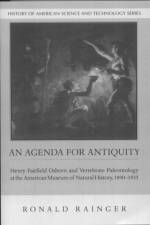
"Rainger does an excellent job of tracing and contextualizing the joint histories of Osborn and the Department of Vertebrate Paleontology at the American Museum."
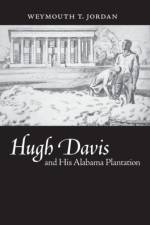
A promising lawyer, Hugh Davis purchased in 1847 the Cahaba River plantation of Beaver Bend, which he operated until his death in 1862. He cleared land, bought slaves, increased his cotton acreage, hired and fired overseers, tried slaves as overseers, experimented with seeds, irrigation and methods of fertilizing soil and erosion prevention.
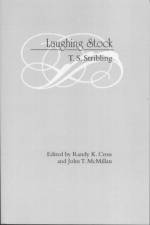
In "Laughing Stock," Stribling's autobiography, the gifted writer reflects with humor, irony, and passion on his trajectory from a remote southern town to the literary heights of Paris and New York.
"This memorial, which is splendidly introduced and translated, ... presents a fascinating story of Franco-British cooperation and conflict on the colonial frontier."
The story of Atlanta Life Insurance Company, with its humble beginning as a small mutual aid association, depicts the inspiring efforts of black Americans to build and sustain economic organizations and enterprises. Its study also fits in to the mosaic of activities that were aimed at developing an economic base within the black community.
"An especially valuable contribution for those scholars interested in the transethnic black politician. Neilson shows us clearly the barriers that exists for black candidates who need substantial white support."
"Assiduously researched and well organized, [this book] transcends the parochialism which marks the history of smaller Jewish communities."
Provides a critical reassessment of Alfred Russel Wallace's path to natural theology and counters the dismissive narrative that Wallace's theistic and sociopolitical positions are not to be taken seriously in the history and philosophy of science.
Provides an important examination of the lives of fourteen political and military leaders. These were the men who opened Alabama for settlement, secured Alabama's status as a territory in 1817 and as a state in 1819, and helped lay the foundation for the political and economic infrastructure of Alabama in its early years as a state.
Explores the relationship between art, architecture, war memory, and Franco-American relations. Kate Clarke Lemay addresses the many functions, both original and more recent, that the American war cemeteries have performed, such as war memorials, diplomatic gestures, Cold War political statements, prompts for debate about Franco-American relations, and the nature of French identity itself.
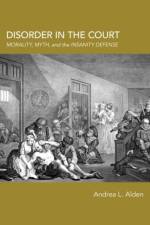
Provides first book-length rhetorical history and analysis of the insanity defense. Disorder in the Court traces the US legal standards for the insanity defense as they have evolved from 1843, when they were first codified in England, to 1984, when the US government attempted to revise them through the Insanity Defense Reform Act.
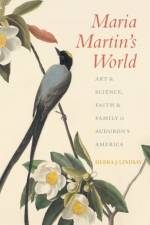
Provides the first book-length treatment of one of John James Audubon's background painters. Maria Martin (1796-1863) was an evangelical Lutheran from Charleston, South Carolina, who became an accomplished painter within months of meeting John James Audubon.
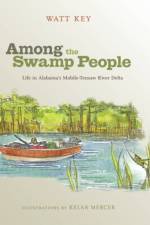
Colorful and lively personal essays about life in the wilds of Alabama's Mobile-Tensaw River Delta
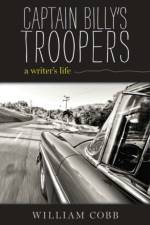
In this audacious memoir, William Cobb reveals the tumultuous creative life of a distinguished practitioner of southern and Alabama storytelling. As poignant and inspiring as his own fiction, Captain Billy's Troopers traces Cobb's early life, education, and struggles with alcohol and the debilitating condition normal pressure hydrocephalus.
Presents the story of human use of and impact on Alabama's forests from pioneer days to the present, as James E. Fickle chronicles the history of the industry from unbridled greed and exploitation through virtual abandonment to revival, restoration, and enlightened stewardship.
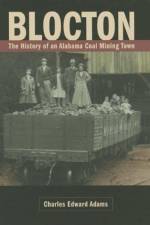
Blocton chronicles the history of a community built on coal.
Traces a crucial paradox in historical and contemporary notions of citizenship: in a liberal democratic culture that imagines its citizens as self-reliant, autonomous, and inviolable, the truth is that claims for citizenship-particularly for marginalized groups such as women and slaves-have just as often been made in the name of vulnerability and helplessness.
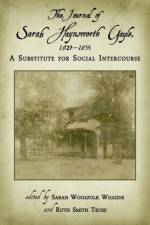
The Journal of Sarah Haynsworth Gayle, 1827 1835 is the remarkable journal of the young wife of early Alabama governor John Gayle and a primary source of our knowledge about early Alabama and the antebellum American South.
Abonner på vårt nyhetsbrev og få rabatter og inspirasjon til din neste leseopplevelse.
Ved å abonnere godtar du vår personvernerklæring.