








Gjør som tusenvis av andre bokelskere
Abonner på vårt nyhetsbrev og få rabatter og inspirasjon til din neste leseopplevelse.
Ved å abonnere godtar du vår personvernerklæring.Du kan når som helst melde deg av våre nyhetsbrev.

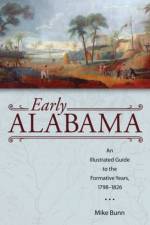
An illustrated guidebook documenting the history and sites of Alabama's origins. The story of the remarkable changes that occurred within Alabama as it transitioned from frontier territory to a vital part of the American union in less than a quarter century is one of the most compelling in the state's past.
Explores well-known Alabama food traditions to reveal salient histories of the state in a new way. Emily Blejwas pays homage to fourteen emblematic foods, dishes, and beverages, one per chapter, as a lens for exploring the diverse cultures and traditions of the state.
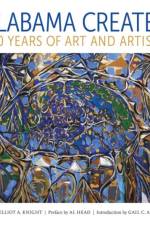
A visually rich survey of two hundred years of Alabama fine arts and artists. The works of art included in this volume have all emerged from a distinctive milieu that has nourished the creation of powerful visual expressions, statements that are both universal and indigenous.
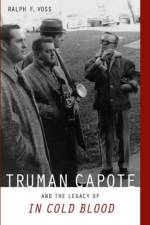
Truman Capote and the Legacy of 'In Cold Blood' is the anatomy of the origins of an American literary landmark and its legacy.
Edgar and Brigitte is a consummate story of change and adjustment, integration and melding. Based on personal insights into the lives of her parents and grandparents, Rosemarie Bodenheimer reconstructs the experience of German Jewish immigrants in early twentieth-century America.
"The Poisoned Chalice" examines the introduction of grape juice into the celebration of Holy Communion in the late 19th century Methodist Episcopal Church and reveals how a 1,800-year-old practice of using fermented communion wine became theologically incomprehensible in a mere forty years.
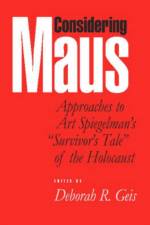
A collection of critical essays on ""Maus"", the searing account of one Holocaust survivor's experiences rendered in comic book form, this title offers the work the critical and artistic scrutiny that it deserves.
This deeply moving story chronicles the tenacity and vision that carried Carl Elliott from the hills of northwest Alabama to eight distinguished terms in the United States House of Representatives. The life story of Carl Elliott is full of humour and wry wisdom and explains how he made his way across a stage as big as America.
This guide to the rock art of Missouri presents major design motifs, such as birds, serpents, and deer, and links those images to Native American beliefs. It documents an array of pictographs and petroglyphs, analyzing the many aspects of these rock carvings and paintings.
A comprehensive guide to the vertebrate and invertebrate wildlife of the state. The four volumes in this collection present current, detailed information on the known vertebrates, freshwater mussels, and snails in Alabama.
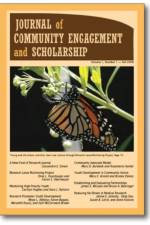
A peer-reviewed international journal through which faculty, staff, students, and community partners disseminate scholarly works. JCES integrates teaching, research, and community engagement in all disciplines, addressing critical problems identified through a community-participatory process.
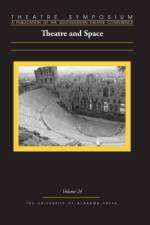
Theatre Symposium, Volume 24 addresses "theatre and space" as a wide-ranging topic in theatre history, examining the myriad spatial arrangements, architectural styles, and historical contexts that inform theatrical productions, and the relationships of audiences to those spaces.
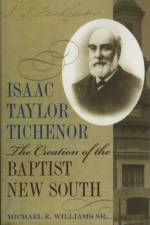
A full-length study of the influential role Tichenor played in shaping both the Baptist denomination and southern culture. Michael E. Williams provides a comprehensive analysis of Tichenor's life, examining the overall impact of his life and work. This volume also documents the methodologies Tichenor used to rally Southern Baptist support around its struggling Home Mission Board.
Jose Kozer is one of the most influential contemporary Cuban poets working today. A key figure in the neobaroque movement within contemporary Latin American poetry, he is one of only three Cubans to win the Pablo Neruda Prize. This is a bilingual edition translated into English by Peter Boyle. In addition, Boyle provides an extensive introduction placing Kozer's work in a critical context.
Argues that one theme colours almost every short story and novel by the turn-of-the-century American author Sarah Orne Jewett: each person, regardless of sex, must break free of the restrictive, polar-opposite norms of behaviour traditionally assigned to men and women by a patriarchal society.
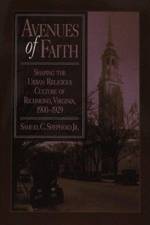
Documents how religion flourished in southern cities after the turn of the century and how a cadre of clergy and laity created a notably progressive religious culture in Richmond, the bastion of the Old South. Famous as the former capital of the Confederacy, Richmond emerges as a dynamic and growing industrial city invigorated by the social activism of its Protestants.
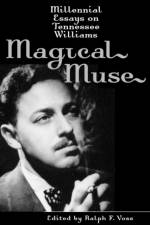
Landmark essays that celebrate the legacy of one of America's most important playwrights and investigate Williams's enduring effect on America's cultural, theatrical, and literary heritage.
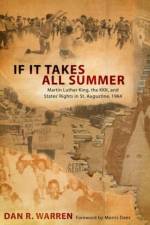
An insider's record of the St. Augustine Civil Rights drama.
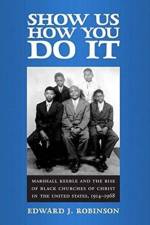
Marshall Keeble (1878-1968) was an evangelist in black Churches of Christ from 1931 until his death in 1968. This book offers a study of Keeble and his career. It reconstructs the life, public ministry, missionary activities, and reception of Keeble among Churches of Christ. It also details Keeble's relationship with white businessmen.
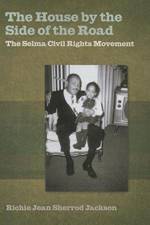
This book is a firsthand account of the behind-the-scenes activity of King and his lieutenants--a mixture of stress, tension, dedication, and the personal interaction at the movement's heart--told by Richie Jean Jackson, who carefully created a safe haven for the civil rights leaders and dealt with the innumerable demands of living in the eye of events that would forever change America.
Inside the Teaching Machine argues that the U.S. public research university has always been a vital component of the capitalist political economy. Advocates of higher education have long contended that universities should operate above the crude material negotiations of economics and politics. Such arguments often ignore the historical reality that the American university system emerged through, and in service to, a capitalist political economy.
This is William March's story of a small Alabama town in the early days of the twentieth century. Connected by relationships that bind, support, and strangle, the citizens of Reedyville are drawn ineluctably toward a single climactic night.
William March's debut novel, Company K, introduced him to the reading public as a gifted writer of modern fiction. Come in at the Door is the first in March's ""Pearl County"" collection, and it tells the story of Chester, a boy who lives with his withholding, widowed father, and Mitty, who keeps house and serves as a surrogate wife to Chester's father and a mother to Chester.
A fresh perspective on the interaction of religious ideals and social change in rural settlements of the Moravian colony of Wachovia.
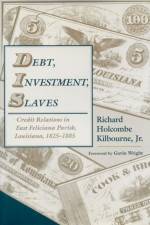
Richard Kilbourne has produced a comprehensive study of the credit system in one Louisiana parish in the antebellum and postbellum periods of the Civil War. East Feliciana Parish was important in terms of both population and the large number of slaves. This book's primary concern is the role of slave property in collateralizing credit relationships and planter perceptions regarding slaves as financial assets.
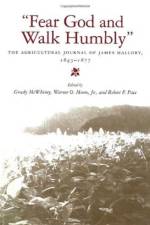
A detailed journal of local, national, and foreign news, agricultural activities, the weather, and family events, from an uncommon Southerner
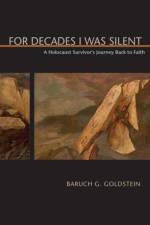
Offers an account of life in a small Polish-German town and provides information on the religious life of the Jewish citizens. This book creates a direct sense of the random, mystifying personal violence individuals felt at the hands of Germans - not the anonymous industrial death machine, but immediate, face-to-face violence.
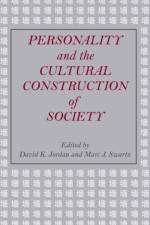
Pyschological anthropology is a vital area of contemporary social science, and one of the field's most important and innovative thinkers is Melford E. Spiro. This volume brings together sixteen essays that review Spiro's theoretical insights and extend them into new areas. The essays center on several general problems: In what ways is it meaningful to speak of a social act as having "functions"? What elements and processes of human personality are universal, and why? What is the relationship between religion and personality? Why? What are the pyschological underpinnings of social manipulation?
Abonner på vårt nyhetsbrev og få rabatter og inspirasjon til din neste leseopplevelse.
Ved å abonnere godtar du vår personvernerklæring.