







Gjør som tusenvis av andre bokelskere
Abonner på vårt nyhetsbrev og få rabatter og inspirasjon til din neste leseopplevelse.
Ved å abonnere godtar du vår personvernerklæring.Du kan når som helst melde deg av våre nyhetsbrev.

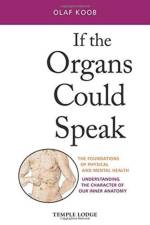
A study of the human organs, their 'character' and how we can optimise our health.
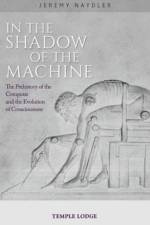
A philosophical and spiritual study of the historical development of electronic technology and its implications for the future.
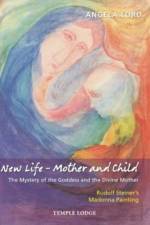
A study of Rudolf Steiner's painting 'New Life', with numerous full-colour illustrations.
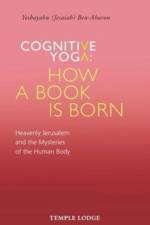
A scientific description of the spiritual research processes that led to the author's book Cognitive Yoga.
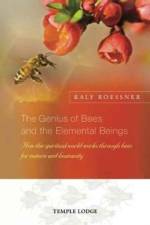
An esoteric study of bees and beekeeping
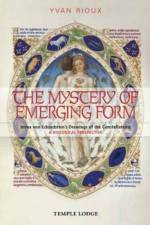
An esoteric study of biology and human evolution in the light of astrology.
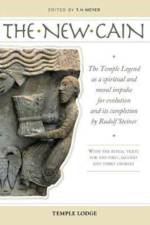
An estoeric study of the biblical Cain in the light of the Temple Legend and human development.
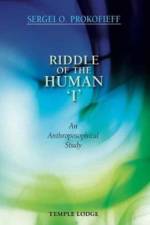
An esoteric study of human individuality and the meaning of the ego.
A study of the afterlife with suggestions of keeping in touch with loved ones who have died.
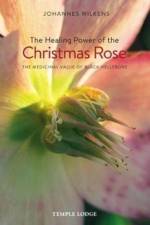
A study of the Christmas Rose (Black Hellebore) medicinal plant, and its use in contemporary medicine. Includes case studies and treatment plans for doctors and medical professionals.
A spiritual study of some of the most critical questions of our age, ranging from artificial intelligence and global politics to education and postmodern philosophy.
Prokofieff investigates the deepest mysteries of Rudolf Steiner's life and individuality and examines the earthly and supersensible aspects of the first Goetheanum, the implications of the Christmas Conference of 1923-24, and the Foundation Stone meditation.
A travelogue of the author's visits to Sicily and Stromboli. Meyer ponders on the lives and work of cultural figures associated with the islands, including Cain, Empedocles, Klingsor, Cagliostro, Goethe and Rudolf Steiner. Unexpected meetings with cryptic strangers result in discussions that are filled with spiritual insights and pearls of wisdom.
An esoteric study of the spiritual origins of Eastern Europe and its future tasks.
A study of metamorphosis through the medium or art and sculpture.
A study of the Buddhist Eightfold Path based on Rudolf Steiner's commentaries.
A meditation on old age, death and dying.
A study and analysis of people's reports of experiencing Jesus Christ.
A radical new science of living organisms, forms and processes, based on the pioneering work of Rudolf Steiner and his pupil George Adams. Whicher widens our thinking to include the 'etheric formative forces' - forces that are alive in ethereal space or 'counterspace'.
Siegloch documents the founding of eurythmy, a new art of movement, with this story of the first eurythmist, Lory Maier-Smits. She brings to life the pioneering period when the new artform was being developed under Rudolf Steiner's personal instruction.
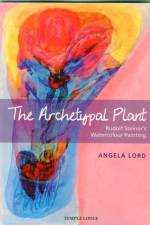
A richly-illustrated study of Rudolf Steiner Archetypal Plant watercolour from 1924. In developing a broad overview, the author forms a deeper, more complete picture of the plant world, paying homage to its diverse characteristics, and stimulating new perceptions and perspectives.
A contemplation of Christian life and practise that relates the events in the Gospels to the rhythms of the year. The second part of the book celebrates the biographies of twelve influential women.
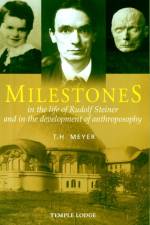
Meyer takes a symptomatological approach to the evolution of Rudolf Steiner's thinking, pinpointing specific moments in his biography, whilst making numerous links to contemporary issues.
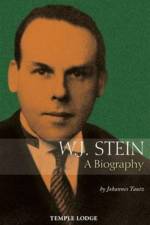
Based on personal knowledge and intimate interviews with his subject, as well as access to W.J. Stein's archive of letters and documents, Tautz's biography is a thoroughly-researched and lovingly-detailed study of an exceptional life.Walter Johannes Stein (Feb. 6, 1891, Vienna - July 7, 1957, London) was an original pioneer of Anthroposophy. A student of the Austrian philosopher Rudolf Steiner, Stein met his spiritual teacher while studying at Vienna University. After serving in World War I, Stein was invited by Rudolf Steiner to teach history and literature at the fledgling first Waldorf school, located in Stuttgart--despite the fact that Stein's doctorate was in philosophy and his training in mathematics and physics. Through his efforts to master the new disciplines required, and with the aid of unconventional methods of research, Stein developed groundbreaking new insights into the legend of Parzival and the mystery of the Holy Grail, which led to his seminal work, The Ninth Century and the Holy Grail.Johannes Tautz describes Walter Stein's close friendship with Eugen Kolisko, his struggles to help establish the threefold social order, his work as a lecturer at the Goetheanum in Dornach Switzerland, and his eventual estrangement from the Anthroposophical Society following Rudolf Steiner's death. After journeys of discovery across Europe, Stein made his home in London in 1933, having become a refugee from the Nazi aggression in Central Europe. In England, he met his mentor D.N. Dunlop, who employed Stein to help establish the first "World Power Conference." Based in England for the final twenty-four years of his life, Stein became a prolific and popular lecturer and editor of the important anthroposophic journal, The Present Age.This important work is a welcome addition to the growing number of biographies on early pioneers of Anthroposophy.
How is evil related to 'the good' that guides the world, and specifically to the Christ impulse? Meyer provides a vital, pithy, aphoristic handbook for our apocalyptic times.
Drawing together insights and interpretations, Seddon has produced a comprehensive monograph that supplements existing biblical commentaries and illumines John's enigmatic Gospel as a truly Christian path of modern initiation - a challenge to all human beings that will remain for millennia to come.
Why is it that certain intervals, scales, and tones sound genuine, while others sound false? Is the modern person able to experience a qualitative difference in a tone's pitch? If so, what are the implications for modern concert pitch and how instruments of fixed tuning are tuned? Renold tackles these and many other questions and provides a wealth of scientific data. Her pioneering work is the result of a lifetime of research into the Classical Greek origin of Western music and the search for modern developments. She deepens our musical understanding by using Rudolf Steiner's spiritual science as a basis, and she elucidates many of his puzzling statements about music. The results of her work include the following discoveries: - The octave has two sizes (a 'genuine' sounding octave is bigger than the "perfect octave")- There are three sizes of "perfect fifths"- An underlying "form principle" for all scales can be found- Equal temperament is not the most satisfactory method of tuning a piano- She provides a basis for some of Steiner's statements, such as, "C is always prime" and "C = 128 Hz = Sun." Intervals, Scales, Tones is a valuable resource for those who wish to understand the deeper, spiritual aspects of music.
Abonner på vårt nyhetsbrev og få rabatter og inspirasjon til din neste leseopplevelse.
Ved å abonnere godtar du vår personvernerklæring.