



Gjør som tusenvis av andre bokelskere
Abonner på vårt nyhetsbrev og få rabatter og inspirasjon til din neste leseopplevelse.
Ved å abonnere godtar du vår personvernerklæring.Du kan når som helst melde deg av våre nyhetsbrev.

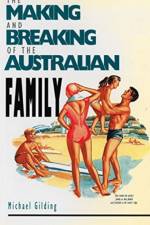
Once everyone knew what the family was. It was something natural and without a history - mum, dad and the kids.Divorce, women in the workforce, de facto relationships and the sexual liberation movements have fractured the old certainties. Nowadays there is more talk about the family than ever, even if no-one is quite sure what it is anymore.The making and breaking of the Australian family looks at the family in history. It traces the shift from the household economy of the late nineteenth century, to the child-centred nuclear family of the mid-twentieth century, to the recent proliferation of households. The book argues that the so-called traditional family was a quite recent creation, and that its fragmentation is obscured by new redefinitions of the family.The making and breaking of the Australian family addresses the changing experiences of childhood, parenting, home, neighbourhood, work, birth and sexuality. It examines the expansion of the market and the state, patterns of class mobilisation, the reconstruction of masculinity and femininity and the creative strategies of ordinary people in everyday life.This is a lively and accessible book, which will prove a valuable reference for students of history, sociology, women''s studies and Australian studies, and will generate wide discussion amongst people concerned with family policy, welfare and contemporary social issues.
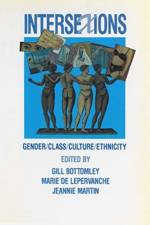
Do writings about ethnicity, class and gender form a ''holy trinity'' or challenge previous unidimensional analyses?Intersexions accepts the triple perspective but goes further. One aim is to understand the processes by which relations of power are maintained, reproduced and resisted. Intersexions also examines modes of representation: within social theory, feminism, development theory and discussions of capitalism and postcolonialism, as well as dominant ideological notions of caste, domesticity and ''success''.The writers'' approaches are all critical but concerned also with providing alternatives. Comparative and specific analyses are combined, attention is paid to the written and spoken material of the people ''represented'' and their own positions as commentators examined. Topics range from discussions of family ideology and paid and domestic work, to analyses of writings by Aboriginals, Vanuatuans and second generation Greek Australians and critiques of the cultural construction of gender and ethnicity in Bangladesh, India and Indonesia.Themes recur and overlap. Unitary categories are questioned and the processes by which relations described as ''class'', ''ethnic'', ''cultural'' and ''gender'' intersect and interact are demonstrated.
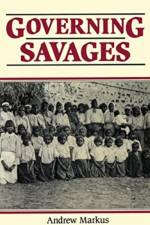
In 1928, after a white man was killed, a punitive party mounted a series of attacks on Aborigines northwest of Alice Springs. The party''s leader admitted that 31 Aborigines were killed. One missionary in the area put the toll at 70; another at as many as 100.Since 1911, the administration of the Northern Territory had been the direct responsibility of the Commonwealth. In placing this event and others within the context of policies pursued by the national government, Governing Savages reveals how policies of brutality and calculated neglect bequeathed a bitter legacy to subsequent generations.
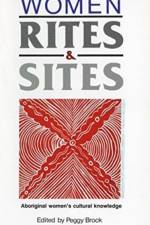
This book challenges a number of widespread preconceptions about Aboriginal society and its interaction with the wider non-Aboriginal society. It builds on recent scholarship that has drastically changed the view of Aboriginal women propagated by nineteenth and early twentieth century reports. These reporters unconsciously based their assessments on their knowledge of their own society; they could not conceive of women undertaking autonomous economic activity. These observations were made by men, and some women, imposing their cultural values on Aboriginal society, and dealing primarily with Aboriginal men. They were influenced by the fact that in white society political and religious power was in the hands of men; they shared the common assumption that the female roles of wife and mother carried as little power and authority in Aboriginal society as they did in western society.This collection of essays, which includes accounts ranging from traditional societies to societies reacting to decades of interaction with non-Aboriginal culture, explores the active role of women in Aboriginal cultural and religious life.It demonstrates the cultural authority possessed by women; it records the pivotal role of women as repositories of cultural knowledge and in the struggle to maintain or rebuild the means of passing on that knowledge.Women, Rites & Sites should be read by all people interested in Aboriginal-white relations, in Aboriginal culture and women''s studies.
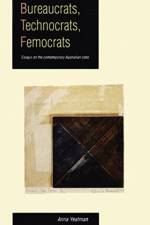
This collection of essays in political sociology and public policy contests some of the fundamental features of the contemporary State as it is manifested in Australia. It explores themes such as the development of the complex interventionist State, characterised by the proliferation of its activities to encompass virtually every feature of its subjects'' daily lives and functioning as a central site of struggle over the distribution of social, economic, political and cultural resources. It also examines the impact of the so-called new social movements - the women''s movement, the various multiracial and multicultural movements, and the environmental movement - which make new claims on the democratisation of the distribution of resources, and investigates the impact on the State of the pressure for economic ''restructuring'' arising from the new terms of competition within a global economy in recession.In tracing the links between these themes, Bureaucrats, Technocrats, Femocrats makes a major contribution to a critical tradition of writing and analysis in public administration.
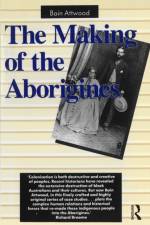
Before 1788, the peoples of this continent did not consider themselves ''Aboriginal''. They only became ''Aborigines'' in the wake of the British invasion. In this startling and original study, Bain Attwood reveals how relationships between black Australians and European colonisers determined the hearts and minds of the indigenous peoples, making them anew as Aboriginals.In examining the period after the ''killing times'', this young historian provides new perspectives on racial ideology, government policy, and the rule of law. In examining European domination, he unravels the patterns of associations which were woven between European and Aborigine, and shows the complex meanings and significance these relationships held for both groups.In this book, the dispossessed are not cast as merely passive victims; they appear as real characters, men and women who adapted to European colonisation in accordance with their own historical and cultural experience. Out of this exchange the colonised created a new consciousness and began to forge a common identity for themselves.A story of cultural change and continuity both poignant and disturbing in its telling, this important book is sure to provoke controversy about what it means to be Aboriginal.''This intelligent and impeccably researched book seeks to advance our understanding of the story of white/Aboriginal contact. It will be required reading for anyone working in the field.'' - Henry Reynolds''Colonisation is both destructive and creative of peoples. Recent historians have revealed the extensive destruction of black Australians and their cultures. But now Bain Attwood, in this finely crafted and highly original series of case studies. plots the complex human relations and historical forces that re-made these indigenous people into the Aborigines.'' - Richard Broome
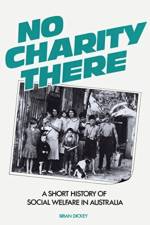
No Charity There, now in a revised edition, provides the first general history of social welfare in Australia. It traces the development of official and community attitudes to demands and expectations.Using material not previously readily available, Brian Dickey analyses how Australian society has sought to solve the problems raised by a wide variety of vulnerable groups since 1788: the aged, orphans, single mothers, the insane, alcoholics and the unemployed.No Charity There is a carefully researched and intelligent study of a subject of ever-increasing importance.
A century ago, health services absorbed few resources and provided little benefit. Since then, advances in medical knowledge and techniques have escalated both the benefits and the costs. The affordability of health services is being questioned in even the richest countries, and the economic aspects of health policy have become ever more intrusive.Australia is no exception, with its health system now absorbing 19% of all government tax revenue. Familiarity with economic issues - such as how to assess health outcomes, how to assign resources efficiently and what financial arrangements will promote equity as well as efficiency - is essential to understanding health policy. This is especially so at a time when the economics of health care are being internationally re-examined, with new forms of competition, challenges to public ownership and case-mix funding of hospitals under scrutiny, and a re-evaluation of the benefits of pharmaceuticals and new technologies underway.Economics and Australian Health Policy offers this understanding to readers with and without formal economic training. It starts with an introduction to both the economic way of thinking about health systems, and the context in which those economic questions are raised - the structure of the Australian health system, its culture and its patterns of financial flows. It then describes and appraises from an economic perspective the major components of the system and the policy issues which arise.This collection has been specially commissioned to address both Australia''s most pressing policy issues and the needs of public health and health economic policy-makers, academics, commentators and students. The list of contributors reads like a who''s who in Australian health economics, who have been encouraged, clearly successfully, to write accessibly yet with authority and conviction.
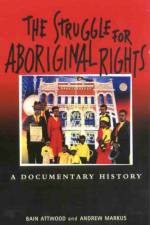
The Struggle for Aboriginal Rights is the first book of its kind. Not only does it tell the history of the political struggle for Aboriginal rights in all parts of Australia; it does so almost entirely through a selection of historical documents created by the Aboriginal campaigners themselves, many of which have never been published. It presents Aboriginal perspectives of their dispossession and their long and continuing fight to overcome this. In charting the story of Aboriginal political activity from its beginnings on Flinders Island in the 1830s to the fight over native title today, this book aims to help Australians better understand both the continuities and the changes in Aboriginal politics over the last 150 years: in the leadership of the Aboriginal political struggle, the objectives of these campaigners for rights for Aborigines, their aspirations, the sources of their programmes for change, their methods of protest, and the outcomes of their protest. Through the words of Aboriginal activists, across 150 years, The Struggle for Aboriginal Rights charts the relationship between political involvement and Aboriginal identity.
The idea that our society is ageing is a popular source of gloomy predictions for the future. We see today''s youth struggling in their mature years to pay for the masses of geriatric baby boomers whose productive years lie far behind.Australia''s New Aged shows that this belief is part reality and part myth. While there will be an increase in the proportion of aged people in the next 20 years, this is a temporary phenomenon and it is likely that tomorrow''s elderly will quite differently from their parents.Australia''s New Aged examines public policy for the aged in the context of an increasingly vocal and active elderly population and cutbacks to health and welfare spending. The authors argue that policy makers have become trapped in a ''social problem'' approach to ageing that assumes the elderly are a homogeneous, disadvantaged group with common interests. They examine a range of cases and identify negative consequences of inappropriate assumptions in terms of structural blindness and brutality. They show that this approach is no longer viable and argue that both policy makers and the aged care industry will need to be more sensitive to diversity and more flexible than ever before.Australia''s New Aged is essential reading for students, policy makers and anyone working with the aged.John McCallum is Professor of Public Health and Dean of the Faculty of Health at the University of Western Sydney, Macarthur and co-editor of Grey Policy (1990). Karin Geiselhart is a journalist previously employed by the Office for the Status of Women in Canberra.
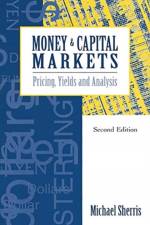
Money and Capital Markets provides the most up-to-date, practical coverage of the pricing and analysis of financial instruments and transactions available for Australian and international capital markets.Here you have the underlying tools and techniques for the valuation and risk management of short-term money market and capital market securities and their derivatives. In a clear and direct way, Michael Sherris covers fixed interest securities, forwards, futures, swaps, options and interest rate derivatives (new in the Second Edition). Everything - from yield calculations to tax and horizon effects to interest rate risk measures - is lucidly explained and extensively illustrated with examples.An invaluable reference for money market professionals, Money and Capital Markets is essential reading for tertiary students of finance, accounting and actuarial studies.
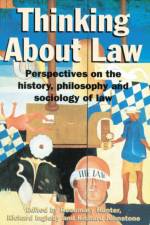
There is more to law than rules, robes and precedents. Rather, law is an integral part of social practices and policies, as diverse and complex as society itself.Thinking About Law offers a comprehensive introduction to the ways in which law has been presented and represented. It explores historical, sociological, economic and philosophical perspectives on the major legal and political debates in Australia today.The contributors examine the position of Aborigines in the Australian legal system and the impact of the Mabo case; divisions of power in Australian society and law; the question of objectivity in law; the relationship between legislation and social change; judicial decision-making and other issues.Accessibly written, Thinking About Law is essential reading for students and anyone interested in understanding our legal system.
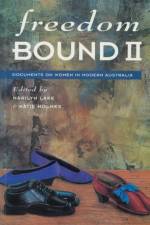
Over generations, Australian women have envisaged a world of freedom. This new collection of documents - letters, songs, poetry, diary extracts - charts the visions that inspired women and the obstacles that confronted them.Exploring twentieth-century Australia, Freedom Bound II shows how intertwined were women''s public and personal lives, and how bound by custom, ties, affections and duties. The different meanings of freedom have been shaped by the nature of women''s oppression, their quests given focus by their different points of departure. Aboriginal women sought self-determination and the right to keep their children; migrant women sought to affirm culture and family ties, and escape discrimination and poverty. Overburdened mothers wanted relief from continual childbearing and a measure of self-fulfilment. Numerous women have campaigned for freedom from domestic tyranny and male violence.Together with its companion volume, Freedom Bound I, which deals with the period of colonisation, this volume documents the dreams that inspired women, the pleasures and the pain that informed their politics and the desires that enthralled them, even as they bade them to be free. It is an essential resource for students and teachers of Australian women''s history.
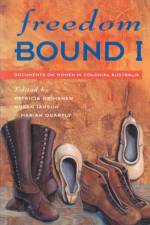
Over generations, Australian women have envisaged a world of freedom. This new collection of documents - letters, diary extracts, poems, public speeches - charts the visions that inspired women and the obstacles that confronted them.Dealing with a period from colonisation to early Federation in 1901, Freedom Bound I shows how intertwined were women''s public and personal lives, and how bound by custom, ties, affection and duties. The different meanings of freedom have been shaped by the nature of women''s oppression, their quests given focus by their different points of departure. Convict women protested - often violently - at the indignities they endured; Aboriginal women protested at the cruelty of the frontier and the paternalism of the mission; and white middle-class women demanded the freedom to participate in the public world.Together with its companion volume, Freedom Bound II, which deals with the twentieth century, this volume documents the dreams that inspired women, the pleasures and pain that informed their politics and the desires that enthralled them, even as they bade them to be free. It is an essential resource for students and teachers of Australian women''s history.
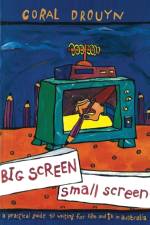
Thinking in pictures is a gift; transferring them to words on paper is a craft. Put them together, and that''s the screenwriter''s art.Big Screen, Small Screen is a complete guide to writing for film and television for beginners as well as more experienced writers. It covers all aspects of screenwriting from changing a film genre to picking a television timeslot.Taking you through the basics of screenwriting with step by step guides to structure, character and the first draft script, and valuable tips and exercises, it also shows you how to find and agent, deal with producers, market your script and apply for funding.
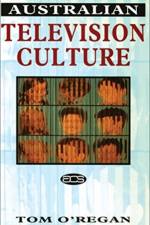
Australian television has been transformed over the past decade. Cross-media ownership and audience-reach regulations redrew the map and business culture of television; leading business entrepreneurs acquired television stations and then sold them in the bust of the late 1980s; and new television services were developed for non-English speaking and Aboriginal viewers.Australian Television Culture is the first book to offer a comprehensive analysis of the fundamental changes of this period. It is also the first to offer a substantial treatment of the significance of multiculturalism and Aboriginal initiatives in television.Tracing the links between local, regional, national and international television services, Tom O''Regan builds a picture of Australian television. He argues that we are not just an outpost of the US networks, and that we have a distinct television culture of our own.
Both the theory and practice of educational administration have undergone major changes in recent years. There is now more theoretical diversity in the field than at any other time, with influences from traditional and post-positivist science, subjectivism, ethics, critical theory and cultural studies. Similarly, social, political and economic factors have brought about new approaches to practice. Schools administration in particular is increasingly being dominated by decentralization and pressures for accountability on curriculum and educational outcomes.Educational Administration is the first Australian text to offer a comprehensive survey of theory, context and practice. It includes chapters from leading Australian scholars such as Richard Bates, Hedley Beare, Brian Caldwell, Gabriele Lakomski and Fazal Rizvi.
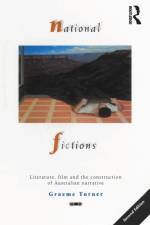
National Fictions is a study of Australian literature and film. It is also a study of Australian culture, viewing the novels and films as products of a specific culture - as narratives with similar structures, functions, forms and meanings. It covers a wide range of texts, offering both close analysis and an account of their place within the system of meanings the book proposes as dominant in Australian culture.The second edition of this influential work includes a new Afterword which traces recent changes in Australian literature and film, examining the growth of women''s writing and popular fiction, as well as current trends in Australian cinema. Turner asks whether these developments really mark a shift in the Australian narrative, and whether it is still possible to speak in terms of a national culture.''.a ground-clearing book. a seminal work, setting an agenda for cultural studies beyond the stockyards and croquet lawns of literary criticism.'' - David Carter, Australian Literary Studies''As a global syncretist, Turner is without peer.'' - Stuart Cunningham, Media Information Australia
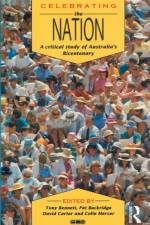
Celebrating the Nation offers the first major critical retrospective on Australia''s Bicentenary. The editors have collected a series of essays focusing on the different ways in which 1988 was celebrated. From the soccer Gold Cup to literary commissions, from Expo 88 to the Travelling Exhibition and the Stockman''s Hall of Fame, it examines the cultural and ideological frameworks which shaped the discourses and rhetoric of those celebrations.The contributors also put the Australian Bicentenary of 1988 in historical and international perspective, comparing the celebrations of 1988 with earlier Australian anniversary celebrations, and with recent national celebrations in France, Canada and the United States.Drawing on the findings of a major research project organised by the Institute for Cultural Policy Studies at Griffith University, Celebrating the Nation provides a provocative and insightful analysis of the cultural and political processes through which modern nations organise and symbolise their histories and identities.
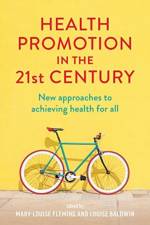
An introduction to health promotion in Australia which addresses the complex local and international causes of ill health, and the range of strategies which can be employed to develop effective and sustainable health promotion interventions.
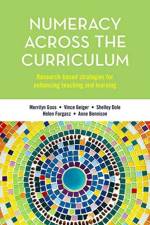
Being numerate involves more than mastering basic mathematics. Numeracy connects the mathematics learned at school with out-of-school situations that require capabilities such as problem solving, critical judgment, and sense-making related to non-mathematical contexts. This book provides prospective and practising teachers with practical, research-based strategies for embedding numeracy across the primary and secondary school curriculum. Based on the authors'' ten-year research program, the text explains what numeracy is and how numeracy has developed as an educational goal. It describes in detail the five dimensions of the authors'' model: attention to real-life contexts; application of mathematical knowledge; use of physical, representational and digital tools; the promotion of positive dispositions towards the use of mathematics to solve problems encountered in day-to-day life; and a critical orientation to interpreting mathematical results and making evidence-based judgements. There is guidance on how to embed numeracy across all subjects within the curriculum, how to assess numeracy learning and how to deal with challenges and dilemmas including working with discipline boundaries and developing support resources.Featuring practical examples and case studies throughout, this book will build pre-service teacher confidence, demystify common misconceptions and grounds theory into practice in this vital area of student competency.''The authors of this text are recognised authorities on numeracy. They have engaged heavily in numeracy research over many years and this text reflects the depth of their understanding and knowledge.'' - Geoff Hilton, University of Queensland
Effective Australian history education has never been more important for the development of critically aware and thoughtful young people. History fosters important skills in reasoning, historical consciousness and empathy; and an appreciation of history is crucial to the development of students'' understanding of the very nature of our society. This edited collection comprises contributions from leading historians, educators and practising teachers, and surveys Australian history teaching today, from the development of the national curriculum to fostering historical thinking and promoting effective engagement in the history classroom.The book begins with an analysis of the principles underlying the drafting of the national curriculum and features insights from the writers of the curriculum themselves. It focuses on the curriculum from primary- and secondary-school teaching perspectives. Part 2 examines the teaching of historical expertise including historical thinking and value formation, as well as productive assessment and the important role social history can play in the classroom. Part 3 concentrates on specific approaches to history teaching including teacher talk; the use of historical fiction and film; digital technology and the internet; as well as museums as a teaching medium. Part 4 analyses key aspects of Australian history teaching including Indigenous perspectives, teaching citizenship and assisting the pre-service teacher in their transition to becoming a professional.Rich with insights into historical skills, historical concepts and critical thinking, as well as practical guidance on translating principles into engaging classroom approaches, this is an essential reference for both pre-service and in-service history teachers and educators.
Leadership is a core skill required by all early childhood educators, whatever position they hold - whether leading their own ethical and professional practice or leading others. From understanding ethical frameworks to managing change, and from quality assurance to working with teams, families and the wider community, the most effective early childhood leaders act with confidence, flexibility and creativity.In this book early childhood researchers Elizabeth Stamopoulos and Lennie Barblett provide a new model for leadership. Recognising that leadership is both an individual and collective endeavour, multi-layered and multidimensional, the authors have distilled core tasks of leadership that are explored in detail in each chapter:*Understanding and conceptualising theories of leadership*Leading in times of change* Advocating for high quality pedagogy and practice*Developing strong communication skills* Leading through digital technology and media* Developing effective teams* Building positive relationships with families and the wider community* Embedding Indigenous perspectives* Embracing evidence-based researchAnd * Leading ethical practice.Featuring the perspectives of leaders from diverse settings, together with reflection exercises and discussion questions throughout, this is an essential book for both pre-service and in-service early childhood educators.''The authors...are commended for their commitment to shining a light on a wide range of research, theories and issues concerned with leadership and the early childhood profession. '' -- from the foreword by Catharine Hydon and Dr Anne Kennedy
Nutrition is a vital part of the complementary approach to health. This uniquely comprehensive and evidence-based text provides a detailed and systematic guide to the principles of clinical nutrition from a naturopathic perspective.The text begins with an overview of basic physiological principles and the body''s protective systems, such as the antioxidant, detoxification and immune systems. The focus then moves to an in-depth examination of food components, including essential nutrients, such as protein, lipids, carbohydrates, vitamins, minerals and trace elements, as well as nutritional bioactives, such as coenzyme Q10, alpha-lipoic acid, phytochemicals, digestive enzymes and probiotics. There is detailed information on how each food component is digested and metabolised in the body, and guidance on its impact on health, including an explanation of the effects of inadequate and excessive intake. The types of supplements available together with dietary sources are also explored.Discussions of important nutritional topics are featured - for example, water as therapy, obesity, anorexia nervosa, high-protein diets, hypoglycaemia, diabetes, phytosterols, gamma-tocopherol, vitamin E and mortality, vitamin C and cancer, infantile scurvy, acid-forming and alkaline-forming diets, hair analysis, sodium and blood pressure, and coenzyme Q10 and cancer. Summary boxes, case studies and quizzes will help readers consolidate their knowledge.Foundations of Naturopathic Nutrition is an essential reference for everyone studying nutrition from a complementary health perspective.''I thoroughly recommend this book as a learning aid for students, and as an excellent reference guide for experienced practitioners.'' - Jackie Day, President, Naturopathic Nutrition Association (UK)''A fabulous resource, not only for practitioners but also all those with an interest in nutrition.'' - Professor Alan Bensoussan, Director, National Institute of Complementary Medicine, University of Western Sydney''The foundation nutrition text we''ve all been waiting for. Fay Paxton has drawn from her many years of clinical nutrition experience, combining it with relevant research-based evidence, to produce an exhaustive body of work that is unique in its specific relevance to naturopathic and complementary medicine students and practitioners.'' - David Stelfox, Associate Program Leader, Naturopathy, Endeavour College of Natural Health
I recommend this scholarly and readable book to all concerned with the field of stress and trauma. Students and clinicians will find it equally beneficial.Mardi J. Horowitz, M.D. Professor of Psychiatry, University of California, San Francisco and author of Stress Response Syndromes and Treatment of Stress Response SyndromesThis is a remarkably good book. One seldom sees such exquisite balance of scholarship, practical relevance and compassion for both client and counsellor. I recommend it most highly.Michael J. Mahoney, author of Constructive Psychotherapy and Human Change ProcessesUnderstanding Trauma and Emotion is an essential reference for all clinicians working in the area of trauma . . . and provides a comprehensive and very accessible account of the emotion-focused model of psychological trauma.Michelle A. Webster, PhD, Institute for Emotionally Focused Therapy, SydneyHow do we help the traumatised?How can we better understand someone who has faced death, violence or imprisonment?Traumatic experiences can leave an indelible impression on those involved, one which the person may suppress or re-live with destructive and troubling consequences. For many traumatised individuals the essence of their trauma is deeply emotional: terror, anger, anxiety.Colin Wastell interprets the modern understanding of the traumatic process and presents his own model based on extensive research. He examines the role of emotion in human function and in particular its role in the experience of trauma and effective trauma treatment.Wastell''s approach is grounded in practical treatment and the way emotion-focused therapy can be used to benefit the therapist and client. Using extensive case studies and making clear links between theory and practice, Wastell presents an innovative practice manual for the counsellor and psychologist interested both in trauma treatment and human emotion. These principles for understanding trauma will also assist health professionals, including nurses, doctors, ambulance officers, social workers, religious leaders, emergency services workers and police officers, to help their clients.This book is also supported by a website, containing a full report of the author''s research at: www.allenandunwin.com/trauma.asp
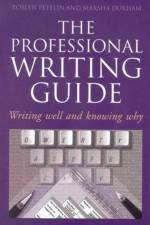
The Professional Writing Guide is for people who wish to improve the quality of their documents and the efficiency of their writing.Busy executives and other writers in organisations, who may spend between 30 and 80 per cent of their working time writing, will find it invaluable because it clearly outlines the principles that underlie effective documents. This book will enable executives to write confidently, competently, and persuasively.High quality output is crucial to a company''s image and to a professional''s own career advancement. Errors in a document can prove expensive. The Professional Writing Guide is an indispensable and accessible reference tool as well as a comprehensive style manual for writers who wish to avoid those expensive mistakes and make a positive impression.Written by two long-term professional writing educators with extensive experience of consulting to Australian business and industry, this lively and highly practical book features workable, reliable, and powerful strategies that can be used to systematically eliminate the writing problems of organisational writers.
Media, communications and cultural studies form a rapidly growing part of secondary and tertiary education in Australia, yet there have been few books dealing specifically with Australian television. This is the first wide ranging study of television in Australia, and includes a coverage of the cultural and institutional history of Australian television as well as examining a wide range of television programming.Prisoner, Perfect Match, Hey Hey It''s Saturday, A Country Practice, Vietnam and Beyond 2000 are some of the programs described and analysed. Issues are raised such as the relationship between children and television, the role of the television documentary and the function television serves in constructing communities.The contributors to Australian Television: Programs, Pleasures and Politics include some of the leading researchers in Australian television and cultural studies and their articles employ a wide range of methods - from semiotic analyses to cultural histories. Despite their dealing with often quite sophisticated problems, the chapters are written in an accessible and lively manner. This is an important collection which opens out space for more informed and challenging discussions of Australia''s television culture - its programs, its meanings, its pleasures and its politics. It will be an invaluable text for all tertiary television, media studies, communications studies, Australian studies and cultural studies programs.
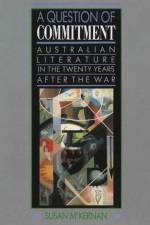
In the years since the Second World War, Australia has seen a period of literary creativity which outshines any earlier period in the nation''s literary history. This creativity has its beginnings in the arguments and alignments which emerged at the end of the War, and the changes in perceptions of art and society which occurred during the fifties and early sixties.A Question of Commitment examines the attitudes of writers as diverse as James McAuley, Frank Hardy, Judith Wright, Patrick White and A. D. Hope, as they responded to a changing Australian society during the postwar years. Through their work and that of many others, it considers the debates about literary nationalism, the artistic politics of the Cold War, the threat of technology to art in the Atomic Age, and the nature of the writer''s role in the new society. It documents the way in which the political commitments of some writers and the resistance to commitment of others were challenged by political and social changes of the late fifties.Susan McKernan''s lively exploration of Australia''s writers in a time of innovation provides the reader with the context needed to understand the creative choices they made and, in so doing, introduces wider intellectual and cultural issues which remain relevant to this day.
Abonner på vårt nyhetsbrev og få rabatter og inspirasjon til din neste leseopplevelse.
Ved å abonnere godtar du vår personvernerklæring.