




















Gjør som tusenvis av andre bokelskere
Abonner på vårt nyhetsbrev og få rabatter og inspirasjon til din neste leseopplevelse.
Ved å abonnere godtar du vår personvernerklæring.Du kan når som helst melde deg av våre nyhetsbrev.

This book explores the current landscape of Initial Teacher Education (ITE) in primary schools in South Africa. Considering recent policy directives and initiatives, it highlights the dilemmas of ITE for the primary school and gives a thorough account of innovations and initiatives to improve ITE.The book presents what works best for quality preparation of teachers in the Global South, where many children rely on their teachers and school life to break the cycle of poverty. Chapters draw on evidence from workplace learning, pre-service study, and primary school teacher education policy to highlight examples of promising change in teacher education in South Africa, addressing the clichés of "theory versus practice" head-on. This book successfully brings out the challenging aspects of teacher education for childhood learning which has otherwise been regarded as the softer option for a career in education.This book will be of great interest for academics, researchers, and post-graduate students in the fields of teacher education, African education, educational policy, international education, and comparative education.
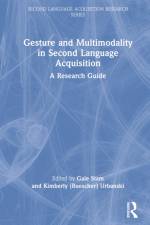
This timely text offers a how-to guide for analyzing gesture and multimodality in second language learning and teaching. Expert contributors from around the world outline the theoretical basis for each topic and offer clear descriptions of data collection and analysis methods for classroom, naturalistic, quasi-experimental, and experimental settings. The book further offers a rich array of ancillary pedagogical material and points out areas ripe for future study. This will be an invaluable resource for undergraduate and graduate students, faculty, and researchers of applied linguistics, communications, education, and psychology interested in gesture studies and multimodality in L2 learning and teaching.
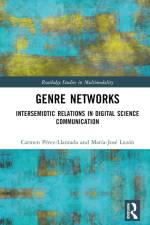
This innovative book employs genre as a fruitful lens for exploring the complexity of science communication online and the new genre assemblages formed at the interface of multiple genres in digital environments.Pérez-Llantada and Luzón argue for a conceptualization of Science 2.0 that views digital genres in conjunction with other genres, accounting for the ways in which diverse Internet users choose different points of entry for accessing information on science of varied depth, views, and perspectives. Taking Swales's conceptualization of forms of genre collectivity as its point of departure, the book puts forward this new understanding of multisemiotic genre assemblages in digital science communication, considering dimensions of hypertextuality, intertextuality, and multimodality in the interdependent relations between genres. The volume draws on a range of case studies each with a distinct genre assemblage and social agenda, exploring such areas as high stakes science, open peer review, science reproducibility, citizen science, and social media networking.Offering new directions for future research on genre studies and digital science communication, Genre Networks: Intersemiotic Relations in Digital Science Communication will be of interest to scholars in these fields, as well as those working in multimodality, language and communication, and languages for academic purposes.
This book examines the history of the generational gap in American politics, with an emphasis on the remarkable contemporary gap.Using data derived primarily from the American National Election Studies (ANES), 2020 National Election Pool, A.P VoteCast, and the Pew Research Center, Patrick Fisher argues that the political environment experienced by successive generations as they have come of age politically influences political attitudes throughout one's life. The result is that different generations have distinct political leanings that they will maintain over their lifetimes. Fisher examines each generation from the Greatest Generation through to Generation Z, who have recently started to come of voting age. He cites the entry of the Millennial Generation and Generation Z into the electorate as completely changing the generational dynamics of American politics, through their distinct political leanings that are significantly to the left of older generations. As a result he concludes that demographically, politically, economically, socially, and technologically, the generations are more different from each other now than at any time in living memory.The Generational Gap in American Politics will appeal to a scholarly and public audience interested in American politics in general and political behavior in particular.
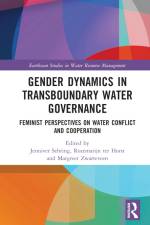
This volume assesses the nexus of gender and transboundary water governance, containing empirical case studies, discourse analyses, practitioners' accounts, and theoretical reflections.Transboundary water governance exists at the intersection of two highly masculinised fields: diplomacy and water resources management. In both fields, positions are mainly held by men, and core ideas, norms, and guiding principles that are presented as neutral, are both shaped by men and based on male experiences. This book sheds light on the often hidden gender dynamics of water conflict and cooperation at the transboundary level and on the implicit assumptions that guide research and policies. The individual chapters of the book, based on case studies from around the world, reveal the gendered nature of water diplomacy, take stock of the number of women involved in organisations that govern shared waters, and analyse programmes that have been set up to promote women in water diplomacy and the obstacles that they face. They explore and contest leading narratives and knowledge that have been shaped mainly by privileged men, and assess how the participation of women concretely impacts the practices, routines, and processes of water negotiations.This volume will be of great interest to students and scholars of water governance, water diplomacy, gender, international relations and environmental politics. It will also be of interest to professionals and policymakers involved in supporting gender mainstreaming in water cooperation.The Open Access version of this book, available at www.taylorfrancis.com, has been made available under a Creative Commons Attribution-Non Commercial-No Derivatives 4.0 license.
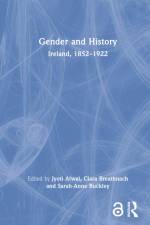
This book provides an overview of Irish gender history from the end of the Great Famine in 1852 until the foundation of the Irish Free State in 1922. It builds on the work that scholars of women's history pioneered and brings together internationally regarded experts to offer a synthesis of the current historiography and existing debates within the field. The authors place emphasis on highlighting new and exciting sources, methodologies, and suggested areas for future research. They address a variety of critical themes such as the family, reproduction and sexuality, the medical and prison systems, masculinities and femininities, institutions, charity, the missions, migration, 'elite women', and the involvement of women in the Irish nationalist/revolutionary period. Envisioned to be both thematic and chronological, the book provides insight into the comparative, transnational, and connected histories of Ireland, India, and the British empire.An important contribution to the study of Irish gender history, the volume offers opportunities for students and researchers to learn from the methods and historiography of Irish studies. It will be useful for scholars and teachers of history, gender studies, colonialism, post-colonialism, European history, Irish history, Irish studies, and political history.The Open Access version of this book, available at www.taylorfrancis.com, has been made available under a Creative Commons Attribution-Non Commercial-No Derivatives 4.0 license.
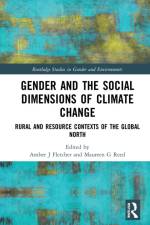
Dispelling the myth that people in the Global North share similar experiences of climate change, this book reveals how intersecting social dimensions of climate change-people, processes, and institutions-give rise to different experiences of loss, adaptation, and resilience among those living in rural and resource contexts of the Global North.Bringing together leading feminist researchers and practitioners from three countries-Australia, Canada, and Spain-this collection documents gender relations in fossil fuel, mining, and extractive industries, in land-based livelihoods, in approaches for inclusive environmental policy, and in the lived experience of climate hazards. Uniquely, the book brings together the voices, expertise, and experiences of both academic researchers and women whose views have not been prioritized in formal policies-for example, women in agriculture, Indigenous women, immigrant women, and women in male-dominated professions. Their contributions are insightful and compelling, highlighting the significance of gaining diverse perspectives for a fuller understanding of climate change impacts, more equitable processes and strategies for climate change adaptation, and a more welcoming climate future.This book will be vital reading for students and scholars of gender studies, environmental studies, environmental sociology, geography, and sustainability science. It will provide important insights for planners, decision makers, and community advocates to strengthen their understanding of social dimensions of climate change and to develop more inclusive and equitable adaptation policies, plans, and practices.
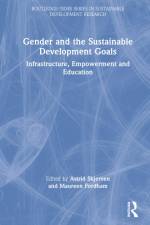
This book sheds light on the important and mostly neglected role that gender plays in achieving the UN Sustainable Development Goals, doing so by investigating three key problem areas: empowerment, education, and infrastructure.Starting with a theoretical and methodological framework, this edited collection contains 12 chapters from scholars and researchers from around the world. The book includes numerous case studies discussing the current status of gender equality relating to the SDGs. It reinforces the significance of gender for sustainable and just development, highlighting how women play a major role in work organization, disaster management, income, household maintenance, and mediation of knowledge. "Women" as a classification encompasses much diversity with many intersecting axes of difference; this book focuses on the excluded and disadvantaged majority social group, without imposing homogeneity on that categorization. Many chapters focus on critical situations occurring in the Global South, where these issues are highly prominent, and importantly, these contributions are written by local scholars. Finally, the volume provides pathways for basic and professional gender responsive education and innovation in the field.The book will generate important discussions in interdisciplinary research and higher education settings focusing on sustainable development, gender, equality, human rights, and education.
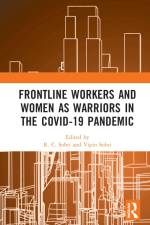
The Covid-19 Pandemic disrupted lives across borders and created unprecedented pressures on the health and medical infrastructure. Frontline workers were at the forefront in handling efforts to curb its devastating effects on people's lives.This volume looks at various challenges frontline workers and women, working tirelessly both in the privacy of homes as well as professionals in public spaces faced and their immense contribution to managing the pandemic. It examines the psychosocial and health implications the pandemic and its fallout has had on the professions and personal lives of healthcare workers, sanitary workers, police, teachers, household helps, sex workers, volunteers among others. Analysing the vulnerabilities and the adaptability of nursing personnel, doctors and administrators, it also offers suggestions for rebooting healthcare systems and for putting in place support-systems to mitigate the adverse gendered impacts of the lockdowns and the spread of the disease.Comprehensive and insightful, with essays from experts in different fields, this book will be of interest to students and researchers of public health, healthcare management, gender studies, public policy making, sociology, economics.
This innovative book provides a new conceptual analysis of loneliness - a condition associated with severe health consequences, including increased morbidity and early death.Arguing that social connection is not the only answer, it explores pathways for transforming loneliness to healthy solitude. The first part of the book draws on the humanities and arts, including psychology, philosophy, and literature to analyse the common, and potentially serious, problem of loneliness. It makes the case that the condition is less a deficiency than a state of self-disconnection that modernity feeds through social forces. The second part of the book looks at how person-centred health care can help educate persons to transform loneliness into healthy solitude. It provides an analysis of self-connection and spiritual connection, discussing how these forms of contact can mitigate risks associated with both lack of social connection, and social connection itself, such as self-disconnection and rejection by others. It goes on to demonstrate that connection to the self and spirit can make aloneness a resource and facilitate access to benefits of connecting with others.This thought-provoking book provides students, scholars, and practitioners from a range of health and social care backgrounds with a new way of thinking about, researching, and practising with lonely people.
This book provides an up-to-date overview of the foundations of spacetime physics. It features original essays written by world-class experts in the physics and philosophy of spacetime.The foundational questions regarding the origin and nature of spacetime are branching into new and exciting directions. These questions are not restricted to the quantum gravity program but also arise in the context of a well-established theory like general relativity. Against the background of these quick and diverse developments, this volume features a broad range of perspectives on spacetime. Part I focuses on the nature of spacetime in non-quantum theories, such as Newtonian mechanics and relativity. Part II explores some intriguing conceptual implications of developing a quantum theory of spacetime.The Foundations of Spacetime Physics is an essential resource for scholars and advanced students working in philosophy of physics, philosophy of science, and scientific metaphysics.
This is the first book to look closely at the concept of 'risk' in elite and professional football from a social scientific perspective. Drawing on the wider sociological, criminological and management literature on risk, it shows how football helps us to understand global risk more generally in present-day society.The book explores how attitudes to risk have shaped the modern football business, and identifies those risks that pose a threat to the sustainability of football in the future. It draws upon the work of theorists including Ulrich Beck, Anthony Giddens and Michel Foucault, as well as digital media sources and policy documents, and covers a range of topics, cases and themes including political, environmental and terrorism risks, technologies, the governance of fans and risk resistance.In the context of the social, globalized and commercialized realm of football, as well as a global pandemic that has had a profound influence on attitudes to risk, the book argues that modern societies' preoccupation with risk has transformed the ways in which modern football is played on the pitch, organized off the pitch, covered in the media and attended by fans.Including an extended case study of the 2026 World Cup, to be held in the USA, Mexico and Canada, this is a thought-provoking read for any student, researcher or policy-maker with an interest in football, sport, events, sociology, criminology or risk management.
This book provides building-owners, managers, individual leaseholders, mortgage-lenders, landlords, and anyone involved in the purchase or sale of a flat situated within a multi-occupied block, with practical, yet comprehensive information regarding the subject of fire safety and the associated responsibilities, obligations and rights.
Fighting Global Neo-Extractivism: Fossil-Free Social Movements in South Africa analyzes social struggles over damaging new fossil fuel projects in the Global South with a focus on South Africa, Africa's biggest fossil fuel emitter.Fossil fuel extraction in South Africa has reached a new accelerated phase in which the fossil fuel frontier is moving beyond historical 'sacrifice zones' into non-traditional spaces, such as conservation parks and middle-class neighbourhoods, and provoking fervent opposition from grassroots activists. This book examines campaigns such as Frack Free South Africa and Save our iMfolozi Wilderness, viewing them as struggles against neo-extractivism driven by the state and industry. Through a series of detailed case studies, it highlights the shaping of mobilisation patterns by prior land use practices and the capacity to mobilize different social groups across race and class. Developing the notion of the fossil fuel frontier as the material and political boundary that activists in South Africa and elsewhere in the world render visible, this volume provides a theoretical framework to understanding global mobilization patterns.This timely and impassioned book will appeal to students and researchers interested in a range of subjects, including environmentalism, social movements, political ecology, and development studies.
This book focuses on the question of theological paradox, exploring what it means and its place in theological method from a Christian perspective. Just as paradoxes are unavoidable in logic and mathematics, paradoxes are inevitable in religious and theological discourses. The chapters in this volume examine a number of cases, including the 'Red Heifer paradox', the 'liar paradox', and the 'paradox of omnipotence', and attention is given to Christian doctrines such as the Trinity and the Incarnation. Arguing for a renewed understanding and appreciation of the role of paradox, this study will be of interest to scholars of theology and the philosophy of religion.
In a unique collection of international and interdisciplinary research, this book focuses on commemorative events around the world on the same day: 11 November 2018, the centenary of Armistice Day, the end of the First World War.It argues that we need to move beyond discourse, narrative and how historical events are represented to fully understand what commemoration does, socially, politically and culturally. Adopting an experiential reframing treats sensory, affective and emotional feelings as fundamental to how we collectively understand shared histories, and through them, shared identities. The volume features 15 case studies from ten countries, covering a variety of settings and national contexts specific to the First World War.Together the chapters demonstrate that a new conceptualisation of commemoration is needed: one that attends to how it feels.
Multinational enterprises continue to rely heavily upon expatriates as part of their global workforce. These expatriates, whose exact employment contract may take different forms, are assigned to help them develop global skills as well as to foster knowledge transfer. But managing this expatriate workforce is extremely complex, requiring a questioning of assumptions and sensitivity to new social and cultural dynamics. This book sets out to examine the problem of expatriate management through an I/O Psychology lens. Each chapter draws upon the expertise of scholars from around the world to provide insights into the latest research findings and remaining needs, pertaining to a wide variety of issues.¿¿The contributors of this book review the current state of the research of the issue at hand and then make recommendations for where the new frontiers of the research should be in the coming decades. This volume covers four sets of issues pertaining to expatriate management and global mobility in depth. First, the different decision points organizations must make about assigning someone to an overseas location for some period of time; second the different categories of employees in the multinational corporation and their unique characteristics and challenges; third, the various issues and implications of managing a globally mobile workforce; and fourth, the unique contexts of global mobility. Overarching future research themes are identified that lay out the research agenda for the coming decades.By bringing together key research, this book aims to help I/O psychologists understand, explore, and identify new ways of contributing to the understanding of the issues involved in managing an expatriate workforce. Incorporating state-of-the art I/O psychology research in this unique context bears the promise of yielding important new paradigms and practices.
Recent years have seen an explosion of interest in evolutionary debunking arguments directed against certain types of belief, particularly moral and religious beliefs. According to those arguments, the evolutionary origins of the cognitive mechanisms that produce the targeted beliefs render these beliefs epistemically unjustified. The reason is that natural selection cares for reproduction and survival rather than truth, and false beliefs can in principle be as evolutionarily advantageous as true beliefs. The present volume brings together fourteen essays that examine evolutionary debunking arguments not only in ethics and philosophy of religion, but also in philosophy of mathematics, metaphysics, and epistemology. The essays move forward research on those arguments by shedding fresh light on old problems and proposing new lines of inquiry. The book will appeal to scholars and graduate students interested in the possible skeptical implications of evolutionary theory in any of the above domains.
Abonner på vårt nyhetsbrev og få rabatter og inspirasjon til din neste leseopplevelse.
Ved å abonnere godtar du vår personvernerklæring.