














Gjør som tusenvis av andre bokelskere
Abonner på vårt nyhetsbrev og få rabatter og inspirasjon til din neste leseopplevelse.
Ved å abonnere godtar du vår personvernerklæring.Du kan når som helst melde deg av våre nyhetsbrev.

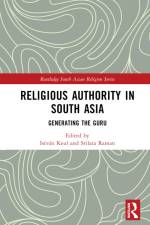
This book focuses on genealogies of religious authority in South Asia, examining the figure of the guru in narrative texts, polemical tracts, hagiographies, histories, in contemporary devotional communities, New Age spiritual movements and global guru organizations.Experts in the field present reflections on historically specific contexts in which a guru comes into being, becomes part of a community, is venerated, challenged or repudiated, generates a new canon, remains unique with no clear succession or establishes a succession in which charisma is routinized. The guru emerges and is sustained and routinized from the nexus of guruship, narratives, performances and community. The contributors to the book examine this nexus at specific historical moments with all their elements of change and contingency.The book will be of interest to scholars in the field of South Asian studies, the study of religions and cultural studies.
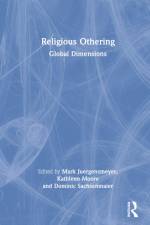
Perhaps the most disturbing feature of globalization is the emergence of a new tribalism, an attitude expressed in the common phrase, "thank God we're not like them." Religious Othering: Global Dimensions explores this political and religious phenomenon.Why are these new xenophobic movements erupting around the world at this moment in history, and what are the features of religious identity that seem to appeal to them? How do we make sense of the strident forms of religious exclusion that have been a part of the past and re-emerged around the world in recent years? This book brings together research scholars from different fields who have had to answer these questions in their own ground-breaking research on religious-othering movements. Written in an engaging, personal style, these essays share these scholars' attempts to get inside the worldviews of these neo-nationalists through such research approaches as participant observation, empathetic interviews, and close textual reading.Religious Othering: Global Dimensions is of interest to students and scholars in religious studies and the social sciences. In addition, anyone concerned about the rise of religious extremism in the contemporary world will be fascinated with these journeys into the mindsets of dogmatic and sometimes violent religious groups.
From athletes praising God to pastors using sport metaphors in the pulpit, the association between sport and religion in North America is often considered incidental. Yet religion and sport have been tightly intertwined for millennia and continue to inform, shape, and critique one another. Moreover, sport, rather than being a solely secular activity, is one of the most important sites for debates over gender, race, capitalism, the media, and civil religion.Traditionally, scholarly writings on religion and sport have focused on the question of whether sport is a religion, using historical, philosophical, theological, and sociological insights to argue this matter. While these efforts sought to answer an important question, contemporary issues related to sports were neglected, such as globalization, commercialization, feminism, masculinity, critical race theory, and the ethics of doping. This volume contains lively, up-to-date essays from leading figures in the field to fill this scholarly gap. It treats religion as an indispensable prism through which to view sports, and vice versa.This book is ideal for students approaching the topic of religion and sport. It will also be of interest to scholars studying sociology of religion, sociology of sport, religion and race, religion and gender, religion and politics, and sport in general.
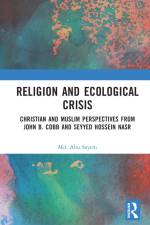
Religion and Ecological Crisis delves into the complex relationship between religions and ecology, presenting Christian and Islamic perspectives on ecological issues through the work of John Boswell Cobb and Seyyed Hossein Nasr. It examines how faith traditions of the world see and respond to our current unprecedented climate change issues.This is the first comparative study of Cobb and Nasr's eco-religious understanding, and explores how their prescriptions can contribute alternatively to techno-scientific initiatives in environmental sustainability. Taking Cobb's "economism" and Nasr's "scientism" as the key concepts for surveying the roots of the ecological crisis, the book offers interdisciplinary and interreligious insights into the debates about ecological equilibrium, motivational awareness in human mind and about entanglements between religion and the environment.This will be an insightful resource for policy makers, faith leaders and for academics working in Environmental Studies and Religious Studies.
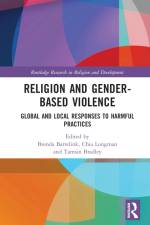
This book takes religion as an entry point for a deeper exploration into why practices of gender-based violence continue and what possible actions might help to contribute to their eradication.International donors are committed to reducing and ending gender-related harm, particularly violence against women, but clear answers as to why harmful practices persist are often slow to emerge. Theological research struggles to find strong links, yet religion is often referred to by local people as the reason for practices such as female cutting, male circumcision, early and forced marriage, nutritional taboos and birth practices, mandatory (un)veiling, harmful spiritual practices, polygamy, gender unequal marital and inheritance rights and so-called honour crimes. This book presents empirical cases of religious, non-religious and secular actors, including local and international governmental and non-governmental agencies in the fields of development, health and equality policies. Tracing their different understandings of how religion is entangled with gender-based violence both contextually as well as historically, the book sheds light on helpful and unhelpful as well as erroneous and harmful understandings of such practices in local and global perspectives.Centralising the perspectives of women themselves, this book will be an important read for development practitioners and policy makers, as well as for researchers across religious studies, gender studies, and global development.
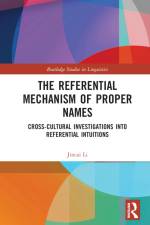
Each of us bears a unique name given to us at birth. When people use your name, they typically refer to you. But what is the linkage that ties a name to a person and hence allows it to refer?Li's book approaches this question of reference empirically through the medium of referential intuitions. Building on the literature on philosophical and linguistic intuitions, she proposes a linguistic-competence-based account of referential intuitions. Subsequently, using a series of novel experiments, she investigates the variation of referential intuitions across different cultures, as well as the developmental trajectory and the underlying causes of the observed cultural differences. What she finds is that the cultural patterns of referential intuitions are already in place around age seven, and the differences are largely attributable to the distinct perspective-taking strategies favoured by easterners and westerners, rather than the moral valence of actions involved in the experimental materials. These results are taken to better support referential pluralism (in particular, the ambiguous view) than referential monism.By undertaking this fascinating research, Li's book provides new insights into the cognitive mechanism underlying people's referential usage of names. It will be valuable to students and scholars of linguistics, philosophy of language and experimental philosophy, and in particular, to those who research into semantic intuitions and theories of reference.
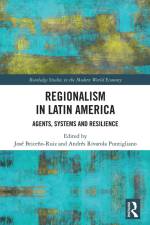
This interdisciplinary edited volume explores the political economy of regionalism in Latin America. It identifies convergent forces which have existed in the region since its very conception and analyses these dynamics in their different historical, geographic and structural contexts. Particular attention is paid to key countries such as Argentina, Brazil and Mexico, as well as subregions like the Southern Cone and Central America.To understand the resilience of regionalism in Latin America, this book proposes to highlight four main issues. Firstly, that resilience is linked to mechanisms of self-enforcement that are part of the accumulation of experiences, institution building and common cultural features described in this book as regionalist acquis. Secondly, the elements and driving forces behind the promotion and expression of the regionalist acquis are influenced and shaped by nested systems in which social processes are inserted. Thirdly, when looking at systems, there is a particular influence by national and global ones, which condition the form and endurance of regional projects. Finally, beyond systems, the book highlights the relevance of agents as crucial players in the shaping of the resilience of regionalism in Latin America.This insightful collection will appeal to advanced students and researchers in international economics, international relations, international political economy, economic history and Latin American studies.
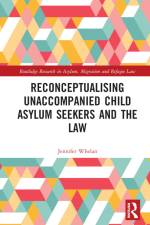
Unaccompanied child asylum seekers are amongst the world's most vulnerable populations, and their numbers are increasing. The intersection of their age, their seeking asylum, and separation from their parents creates a specific and acute triple burden of vulnerability. Their precariousness has long been recognised in international human rights law. Yet, human rights-based responses have been subordinated to progressive global securitisation of irregular migration through interception, interdiction, extraterritorial processing and immigration detention. Such an approach necessitates an urgent paradigm shift in how we comprehend their needs as children, the impact of punitive border control laws on them, and the responsibility of States to these children when they arrive at their borders seeking asylum.This book reconceptualises the relationship between unaccompanied child asylum seekers and States. It proposes a new conceptual framework by applying international human rights law, childhood studies and vulnerability theory scholarship in analysing State obligations to respond to these children. This framework incorporates a robust analysis of the operation and impact of laws on vulnerable populations, a taxonomy for articulating the gravity of any consequent harms and a method to prioritise recommendations for reform.The book then illustrates the framework's utility using Australia's treatment of unaccompanied children as a case study. This book illuminates key learnings from human rights law, childhood studies and vulnerability theory and transforms them into a new roadmap for law reform. As such, it will be a valuable practice-based resource for practitioners, non-government organisations, advocates, policymakers and the general public interested in advocating for the rights of vulnerable populations as well as for academics, researchers and students of human rights law, refugee law, childhood studies and vulnerability studies.
Seismology has come a long way. Being the scientific study of seismic waves and their allied phenomena, it has entered a multidisciplinary realm. As the main tool, it provides a wealth of information when applied systematically to dig inside the Earth structure. Notwithstanding, the utility of seismic waves has increased manifold. Starting from knowing the epicenter of seismic events, it has influenced mapping of civil engineering structures such as dams and bridges, as well as huge constructions. Although there is no dearth of technical papers in the area of seismic waves, there is an absence of synchronized and recent coherent contents in the direction of seismic waves.The book will be a unique contribution to the field of seismology, with the aim of assimilating theory and practices. It will provide a comprehensive glimpse of recent advancements in this area with a strong unification of theory and practices. The main objective of the book is to present an in-depth analysis of the theory and real implementations of seismic waves as versatile probes that would be integrated with modern and future perspectives. The current and the future strategies to be discussed in the relevant areas of seismic waves will be another boon for readers.This book will cater to the needs of novices, researchers and practitioners. Additionally, the contents of the book will be useful for undergraduate as well as postgraduate students of earth science disciplines.
This book gathers together selected papers and book chapters by Dilys Daws, covering her 50 years of pioneering work as a child psychotherapist.
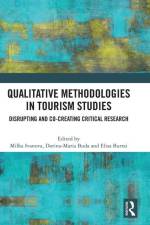
Disruptive and creative research methodologies proposed in this book are designed to dismantle neoliberal narratives deployed in tourism studies and wider social sciences. Progressing criticality in tourism studies, this volume showcases cutting-edge contributions ranging from reflexivity, subjectivities, and dreams; to messy emotions in auto-ethnographic accounts of fieldwork; 'motherhood capital' accessing Inuit communities; collective memory work; ethnodrama and creative non-fiction, amongst others.Disruption and creativity are the two ideas around which tourism geographers challenge and begin dismantling hegemonic ideologies in tourism studies. The chapters in this book provide a vantage point from where to disrupt first, before tourism geographers can engender progress and transformation within and outside of the field. In tourism studies in general, and tourism geography in particular, the years of the 2000s have witnessed an emphasis on qualitative methodological research, both in terms of the topics addressed and the types of methodological tools. In many ways, this legitimisation of qualitative work mirrors developments in other areas such as human geography, sociology and anthropology, in which this book is anchored. The authors debate in more depth how tourism studies offer multidimensional, multilogical and multi-emotional approaches to research design.The chapters were originally published as a special issue of the journal, Tourism Geographies.
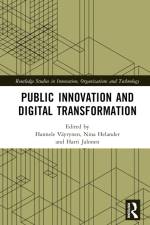
Public innovation and digitalization are reshaping organizations and society in various ways and within multiple fields, as innovations are essential in transforming our world and addressing global sustainability and development challenges. This book addresses the fascinating relationship of these two contemporary topics and explores the role of digital transformation in promoting public innovation.This edited collection includes examples of innovations that emerge suddenly, practices for processing innovations, and the requirements for transformation from innovation to the "new normal". Acknowledging that public innovation refers to the development and realization of new and creative ideas that challenge conventional wisdom and disrupt the established practices within a specific context, expert contributions from international scholars explore and illustrate the various activities that are happening in the world of multiple digitalization opportunities. The content covers public administration, technical and business management, human, social, and future sciences, paying attention to the interaction between public and private sectors to utilize digitalization in order to facilitate public innovation.This timely book will be of interest to researchers, academics and students in the fields of technology and innovation management, as well as knowledge management, public service management and administration.
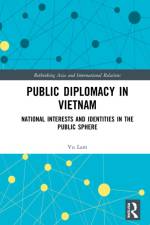
This book explores how Vietnam's leadership conceptualises and conducts public diplomacy (PD) and offers a comparative analysis with regional powers. Drawing on social constructivism as its theoretical framework it investigates the rationale behind an authoritarian regime's implementation of public diplomacy to contribute to a better understanding of the broader framework of foreign-domestic policy. This theoretical and practical exploration of Vietnam's PD in cases of cultural diplomacy, South China Sea diplomacy and online activism situates it in the general academic and theoretical discussion on soft power. Key variables to the conceptualisation and conduct of Vietnam's PD, namely national interest, national identity and changing information technologies, especially the Internet and social media, are also thoroughly investigated. With crosscutting themes ranging from politics and international relations to communication studies, it will appeal to students and scholars of identity politics, populism and nationalism.
This volume explores the dynamic nature of emerging markets, which constitute a major share of global GDP, with a focus on the opportunities for growth and the challenges for businesses in meeting the needs of a diverse set of consumers.With the objective to ensure sustainable growth, there is a need for multinationals belonging to and working in emerging economies to learn best practices and continuously evolve. To conduct business in both urban and rural areas, marketing and promotions are potent tools when applied correctly to portray the right brand image. The book studies recent trends and developments in promotional practices as business strategy, sustainability, and innovation across businesses, including retail, textile, and digital technology. It highlights the path that managers should take in order to better understand the potential of distinct market segments and take marketing managerial decisions accordingly.This book will be useful to scholars and researchers of marketing, management studies, business management, financial management, business economics, international business, finance, digital technologies, development studies, and economics. It will also interest policymakers and practitioners in the field.
This book contributes to the literature on organized crime by providing a detailed account of the various nuances of what happens when criminal organizations misuse or penetrate legitimate businesses. It advances the existing scholarship on attacks, infiltration, and capture of legal businesses by organized crime and sheds light on the important role the private sector can play to fight back. It considers a range of industries from bars and restaurants to labour-intensive enterprises such as construction and waste management, to sectors susceptible to illicit activities including transportation, wholesale and retail trade, and businesses controlled by fragmented legislation such as gambling.¿Organized criminal groups capitalize on legitimate businesses beleaguered by economic downturns, government regulations, natural disasters, societal conflict, and the COVID-19 pandemic. To survive, some private companies have even become the willing partners of criminal organizations. Thus, the relationships between licit businesses and organized crime are highly varied and can range from victimization of businesses to willing collusion and even exploitation of organized crime by the private sector - albeit with arrangements that typically allow plausible deniability. In other words, these relationships are highly diverse and create a complex reality which is the focus of the articles presented here.¿This book will appeal to students, academics, and policy practitioners with an interest in organized crime. It will also provide important supplementary reading for undergraduate and graduate courses on topics such as transnational security issues, transnational organized crime, international criminal justice, criminal finance, non-state actors, international affairs, comparative politics, and economics and business courses.
Preventing Sexual Harm provides an overview of current criminal justice strategies for tackling sexual violence, and highlights existing positive criminological approaches that could help prevent sexual abuse and harm.¿Sexual violence is a complex, multi-faceted crime. Its causes and consequences are both multiple and enduring and our understanding of sexual violence is embedded within our social, cultural, and political constructs. As such, a response to sexual violence ought to be equally complex and multi-faceted. Alternative approaches might therefore be needed, such as positive criminology. This book explores positive criminology as a mechanism to reduce the risk of recidivism, eradicate harm, prevent reoffending as well as to help reintegrate those with histories of sexual abuse back into the community. In light of recent historic cases of sexual abuse and poor institutional response to these allegations, it opens with an overview of the current landscape of sexual offending. The book then reviews the current positive criminological approaches already in existence in the effort to prevent sexual abuse by outlining the approach of positive criminology and by demonstrating the many gaps in practice that might benefit from this new way of working to prevent sexual abuse.¿By highlighting that an alternative response to sexual violence is needed, and by presenting the idea that a positive criminological paradigm is worthy of further examination, this book will be of great interest to scholars of criminology, criminal justice, and forensic psychology.
This book investigates how borders in former Soviet Union territories have evolved and shifted in the thirty years since the end of the Cold War.The collapse of the Soviet Union in 1991 led to fifteen independent states and numerous de facto states; but this process of rebordering is not finished, and social, economic, infrastructural, cultural and political networks and spaces continue to develop. This book explores the intersection between these geopolitical shifts and the individual lived experience, drawing on cases from across border regions in the Caucasus, Central Asia and Eastern Europe. Throughout, the book introduces and frames the case studies with well-informed theoretical, conceptual and methodological overviews that situate them within border studies in general and post-Soviet border spaces in particular. Overall, the book demonstrates that like a kaleidoscope, the dynamic elements in these newly evolved border regions are similar yet strikingly different in their juxtapositions, with the appearance of new configurations often dependent on changing geopolitical constellations.This timely guide to the post-Soviet world thirty years after the Cold War will be of interest to researchers across border studies, politics, geography, social anthropology, history, Eastern European Studies, Central Asian Studies, and Caucasian Studies.
Abonner på vårt nyhetsbrev og få rabatter og inspirasjon til din neste leseopplevelse.
Ved å abonnere godtar du vår personvernerklæring.