

























Gjør som tusenvis av andre bokelskere
Abonner på vårt nyhetsbrev og få rabatter og inspirasjon til din neste leseopplevelse.
Ved å abonnere godtar du vår personvernerklæring.Du kan når som helst melde deg av våre nyhetsbrev.

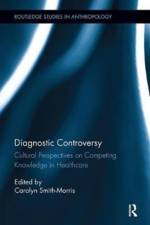
This collection is dedicated to the diagnostic moment and its unrivaled influence on encompassment and exclusion in health care. Diagnosis is seen as both an expression and a vehicle of biomedical hegemony, yet it is also a necessary and speculative tool for the identification of and response to suffering in any healing system. Social scientific studies of medicalization and the production of medical knowledge have revealed tremendous controversy within, and factitiousness at the outer parameters of, diagnosable conditions. Yet the ethnographically rich and theoretically complex history of such studies has not yet congealed into a coherent structural critique of the process and broader implications of diagnosis. This volume meets that challenge, directing attention to three distinctive realms of diagnostic conflict: in the role of diagnosis to grant access to care, in processes of medicalization and resistance, and in the transforming and transformative position of diagnosis for 21st-century global health. Smith-MorrisΓÇÖs framework repositions diagnosis as central to critical global health inquiry. The collected authors question specific diagnoses (e.g., Lyme disease, Parkinson''s, andropause, psychosis) as well as the structural and epistemological factors behind a diseaseΓÇÖs naming and experience.
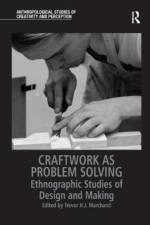
This volume brings together a cross-disciplinary group of anthropologists, researchers of craft, and designer-makers to enumerate and explore the diversity and complexity of problem-solving tactics and strategies employed by craftspeople, together with the key social, cultural, and environmental factors that give rise to particular ways of problem solving. Presenting rich, textured ethnographic studies of craftspeople at work around the world, Craftwork as Problem Solving examines the intelligent practices involved in solving a variety of problems and the ways in which these are perceived and evaluated both by makers and creators themselves, and by the societies in which they work. With attention to local factors such as training regimes and formal education, access to tools, socialisation and cultural understanding, budgetary constraints and market demands, changing technologies and materials, and political and economic regimes, this book sheds fresh light on the multifarious forms of intelligence involved in design and making, inventing and manufacturing, and cultivating and producing. As such, it will appeal to scholars of anthropology, sociology, and cultural geography, as well as to craftspeople with interests in creativity, skilful practice, perception and ethnography.
Includes unpublished manuscripts from the late 1960s and early 1970s, and a rich collection of letters. Focuses on Marcuse's critical theory of contemporary society. With introduction by Douglas Kellner and afterword by Jürgen Habermas.
Kevin is a sometimes-violent teenager with severe emotional disturbance in a family environment of poverty and stress.
This book examines democratic institutions to citizens¿ claims related to diversity issues, and the effects of pluralism on democratic process and deliberation. The chapters originally published as a special issue in the Critical Review of International Social and Political Philosophy.
Collective Creativity offers an analysis of the explosion of artistic creativity currently taking place on the South Pacific island of Rarotonga. With a close examination of tourism, galleries and, of course, the artists themselves Katherine Giuffre presents a detailed picture of a complex and multi-faceted community through the words of the art-world participants themselves. This book will appeal to South Pacific anthropologists as well as scholars concerned with ethnicity, creativity, globalization and network analysis.
This intriguing anthropological study investigates how the boatmen of Banaras have repositioned themselves within the traditional social organization and used their privileged position on the river to contest upper-caste and state domination. Assa Doron examines the evolution of the boatmen community, drawing on a variety of sources to illuminate the cultural politics of social and economic inequality in contemporary India. Caste, Occupation and Politics on the Ganges offers insight into recent debates about the cultural and historical forms of social practice and resistance at the juncture between tradition and the global economy, and will therefore appeal not only to anthropologists, but to anyone working in the field of development studies, globalization, religion, politics and cultural studies.
This book explores illegal forms of corruption and, more widely, moral and legal forms of corruption. The authors draw on detailed ethnographic accounts of corrupt practice at local, national and international levels. Coverage includes both Western and non-Western societies, from Italy to Latin America, to Albania, Africa and post-Soviet bureaucracy in Russia, Mongolia and Kazakhstan. There is also a chapter on corruption in the context of globalization. Key issues discussed include the problems caused by the inflated rhetoric of corruption and by the inadequacy of official definitions. The authors look at measures designed to bring corruption under some degree of control, discussing the level of legal intervention compatible with public expectations and with the dynamics of trust and responsibility. This fascinating book makes a significant contribution to our understanding of conflicting public and private moralities.
Original empirical essays from across the globe demonstrate how the study of cancer promotes theoretical understandings of the politics and pragmatics of suffering, and offers insights into the meanings of survivorship, risk, charity and care in transnational contexts.
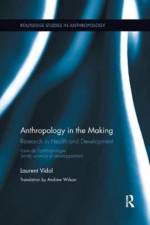
In Anthropology in the Making, Laurent Vidal takes the reader into the world of research in the fields of health and development, providing a fresh and provocative perspective on the practice of anthropology. This volume investigates the ΓÇ£science of othernessΓÇ¥ across four multi-disciplinary research projects in Africa, examining the practices of health workers, the behaviors of patients, and the organization and management of health systems struggling with AIDS, tuberculosis, and malaria. Balancing epistemological considerations with the practical concerns thrown up by real-life situations, Vidal explores the researcherΓÇÖs choices - of method, objective, and terrain.
Who exactly is in debt - and what is inside it? Authors from many disciplines come together in this volume to ask about the ways in which debt is shared out, and the constraints implied in it. The dimensions explored are not merely economic, but also political and symbolic - with special attention being paid to the gendered debt that burdens women.
This book explores the making of robots in labs at the Massachusetts Institute of Technology (MIT). It examines the cultural ideas that go into the making of robots, and the role of fiction in co-constructing the technological practices of the robotic scientists. The book engages with debates in anthropological theorizing regarding the way that robots are reimagined as intelligent, autonomous and social and weaved into lived social realities. Richardson charts the move away from the ΓÇ£workerΓÇ¥ robot of the 1920s to the ΓÇ£socialΓÇ¥ one of the 2000s, as robots are reimagined as companions, friends and therapeutic agents.
This book uses qualitative data to explore the experiences and ideas of African Americans confronting and constructing gentrification in Washington, D.C. It contextualizes Black WashingtoniansΓÇÖ perspectives on belonging and attachment during a marked period of urban restructuring and demographic change in the NationΓÇÖs Capital and sheds light on the process of social hierarchies and standpoints unfolding over time. African Americans and Gentrification in Washington, D.C. emerges as a portrait of a heterogeneous African American population wherein members define their identity and culture as a people informed by the impact of injustice on the urban landscape. It presents oral history and ethnographic data on current and former African American residents of D.C. and combines these findings with analyses from institutional, statistical, and scholarly reports on wealth inequality, shortages in affordable housing, and rates of unemployment. Prince contends that gentrification seizes upon and fosters uneven development, vulnerability and alienation and contributes to classed and racialized tensions in affected communities in a book that will interest social scientists working in the fields of critical urban studies and urban ethnography. African Americans and Gentrification in Washington, D.C. will also invigorate discussions of neoliberalism, critical whiteness studies and race relations in the 21st Century.
This volume provides in-depth coverage of environmental pollution sources, waste characteristics, control technologies, management strategies, facility innovations, process alternatives, costs, case histories, effluent standards, and future trends in waste treatment processes.
This original and stimulating study of Plato's Socratic dialogues rereads and reinterprets Plato's writings in terms of their dialogical or dramatic form. Taking inspiration from the techniques of Umberto Eco, Jacques Derrida, and Leo Strauss, Aakash Singh Rathore presents the Socratic dialogues as labyrinthine texts replete with sophistries and lies that mask behind them important philosophical and political conspiracies.
This book analyses the relationship between cinema and modernity in Bangladesh. It investigates the roles of a non-western 'national' film industry in Asia in constructing nationhood and identity within colonial and postcolonial predicaments, and analyses the political, economic and cultural forces that have been active in shaping Bangladesh cinema. The author explores how the conflict among different social groups turned Bangladesh cinema into a site of contesting identities during the twentieth century and beyond.
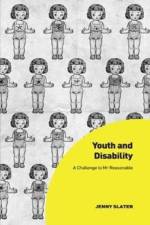
In this ground-breaking book, Jenny Slater uses the lens of ΓÇÖthe reasonableΓÇÖ to explore how normative understandings of youth, dis/ability and the intersecting identities of gender and sexuality impact upon the lives of young dis/abled people. Although youth and disability have separately been thought within socio-cultural frameworks, rarely have sociological studies of ΓÇÖyouthΓÇÖ and ΓÇÖdisabilityΓÇÖ been brought together. By taking an interdisciplinary, critical disability studies approach to explore the socio-cultural concepts of ΓÇÖyouthΓÇÖ and ΓÇÖdisabilityΓÇÖ alongside one-another, Slater convincingly demonstrates that ΓÇÖyouthΓÇÖ and ΓÇÖdisabilityΓÇÖ have been conceptualised within medical/psychological frameworks for too long. With chapters focusing on access and youth culture, independence, autonomy and disabled peopleΓÇÖs movements, and the body, gender and sexuality, this volumeΓÇÖs intersectional and transdisciplinary engagement with social theory offers a significant contribution to existing theoretical and empirical literature and knowledges around disability and youth. Indeed, through highlighting the ableism of adulthood and the falsity of conceptualising youth as a time of becoming-independent-adult, the need to shift approaches to research around dis/abled youth is one of the main themes of the book. This book therefore is a provocation to rethink what is implicit about ΓÇÖyouthΓÇÖ and ΓÇÖdisabilityΓÇÖ. Moreover, through such an endeavour, this book sits as a challenge to Mr Reasonable.
This is the first book of its kind to feature interdisciplinary art history and disability studies scholarship. Art historians have traditionally written about images of figures with impairments and artworks by disabled artists, without integrating disability studies scholarship, while many disability studies scholars discuss works of art, but do not necessarily incorporate art historical research and methodology. The chapters in this volume emphasize a shift away from the medical model of disability that is often scrutinized in art history by considering the social model and representations of disabled figures from a range of styles and periods, mostly from the twentieth century. Topics addressed include visible versus invisible impairments; scientific, anthropological, and vernacular images of disability; and the theories and implications of looking/staring versus gazing. They also explore ways in which art responds to, envisions, and at times stereotypes and pathologizes disability. The insights offered in this book contextualize understanding of disability historically, as well as in terms of medicine, literature, and visual culture.
Based on original fieldwork, this book presents a number of case studies of animism from insular and peninsular Southeast Asia and offers a comprehensive overview of the phenomenon - its diversity and underlying commonalities and its resilience in the face of powerful forces of change. Shedding new light on Southeast Asian religious ethnographic research, the book is a significant contribution to anthropological theory and the revitalization of the concept of animism in the humanities and social sciences.
This groundbreaking text makes an intervention on behalf of disability studies into the broad field of qualitative inquiry. Ronald Berger and Laura Lorenz introduce readers to a range of issues involved in doing qualitative research on disabilities by bringing together a collection of scholarly work that supplements their own contributions and covers a variety of qualitative methods: participant observation, interviewing and interview coding, focus groups, autoethnography, life history, narrative analysis, content analysis, and participatory visual methods. The chapters are framed in terms of the relevant methodological issues involved in the research, bringing in substantive findings to illustrate the fruits of the methods. In doing so, the book covers a range of physical, sensory, and cognitive impairments. This work resonates with themes in disability studies such as emancipatory research, which views research as a collaborative effort with research subjects whose lives are enhanced by the process and results of the work. It is a methodological approach that requires researchers to be on guard against exploiting informants for the purpose of professional aggrandizement and to engage in a process of ongoing self-reflection to clear themselves of personal and professional biases that may interfere with their ability to hear and empathize with others.
High fluoride concentration in groundwater has made many drilled boreholes unusable for drinking in parts of Northern region of Ghana. Treatment of the groundwater by adsorption is also hampered by the lack of suitable locally available adsorbents. This thesis highlights through principal component analysis and saturation indices calculations that predominant mechanisms controlling the fluoride enrichment probably include calcite precipitation and Na/Ca exchange processes, which deplete Ca from the groundwater, and promote the dissolution of fluorite. Additionally, aluminium oxide coated media is capable of reducing fluoride in water, suggesting it is a promising defluoridation adsorbent.
In this book, researchers around the world examine what a shift toward an education for purpose looks like across several cultures. Purpose can be seen as a key promoter in both professional growth and resilience for teachers. This volume was originally published as a special issue of the Journal of Education for Teaching.
Refiguring postmaternalism requires extending the maternal beyond mothers and heterosexual nuclear families, and the memorialization of the maternal needs to diversify to destabilise associations of the maternal with neoliberalism and the depoliticization of feminism. This book was first published as a special issue of Australian Feminist Studies.
This ground-breaking collection dares to take the next step in the advancement of an autonomous, inter-disciplinary restorative justice field of study. It brings together criminology, social psychology, legal theory, neuroscience, affect-script psychology, sociology, forensic mental health, political sciences, psychology and positive psychology to articulate for the first time a psychological concept of restorative justice. To this end, the book studies the power structures of the restorative justice movement, the very psychology, motivations and emotions of the practitioners who implement it as well as the drivers of its theoreticians and researchers. Furthermore, it examines the strengths and weakness of our own societies and the communities that are called to participate as parties in restorative justice. Their own biases, hunger for power and control, fears and hopes are investigated. The psychology and dynamics between those it aims to reach as well as those who are funding it, including policy makers and politicians, are looked into. All these questions lead to creating an understanding of the psychology of restorative justice. The book is essential reading for academics, researchers, policymakers, practitioners and campaigners.
Maritime piracy off the coast of Somalia was first recognised as a global concern in 2008 after the hijackings of World Food Programme vessels. It remains a serious impediment to international maritime trade and a significant risk to seafarers. Bringing a criminological perspective to the subject, this book presents an analysis of Somali piracy by means of Routine Activity Theory and regulatory pluralism. Based on data from a range of sources, including published documents and in-depth interviews with representatives of industry, government, and international organisations, the study concludes that no one institution or policy will suffice to control Somali piracy. Accordingly, a number of different actors and institutions have a role to play in reducing the supply of motivated offenders, the vulnerability of prospective victims, and in enhancing guardianship. The book envisages a holistic counter-piracy program based on a pluralistic regulatory model that is sustainable within the region, and managed by the region, providing the best opportunity for both the immediate future, and for long-term success. This study will be essential reading for criminologists, public policy and legal scholars, as well as policy makers and regulators in countries affected by and dealing with piracy, and international professional advocacy groups operating in the maritime space.
In the age of social media, life writing is everywhere. But does this mean that life is limitless? The Limits of Life Writing offers new insights into life writing by attending to the limits that are approached and sometimes crossed by contemporary writers. This book was originally published as a special issue of Life Writing.
Algorithms can shape how we are retreated, what we know, who we connect with and what we encounter. As they continue to spread throughout our software dense and data rich social world, this book reflects on the power of these decision-making bits of code. This book was first published as a special issue of Information, Communication & Society.
Abonner på vårt nyhetsbrev og få rabatter og inspirasjon til din neste leseopplevelse.
Ved å abonnere godtar du vår personvernerklæring.