




Gjør som tusenvis av andre bokelskere
Abonner på vårt nyhetsbrev og få rabatter og inspirasjon til din neste leseopplevelse.
Ved å abonnere godtar du vår personvernerklæring.Du kan når som helst melde deg av våre nyhetsbrev.

Described by GEM* as ''a very informative and practical book ... worth having on any museum shelf'', the Museum Educator''s Handbook is a thorough and practical guide to setting up and running education services in all types of museum, even the smallest, in any geographical setting. This third edition has been comprehensively updated to reflect the increased emphasis on the role of museums at all levels of education, from schools to further and higher education. There are new sections which deal with the importance of risk management and quality assurance, as well as guidance on the prevalent use of policy documents and new marketing methods. *Group for Education in Museums
Not only does the library have a long and complex history and politics, but it has an ambivalent presence in Western culture ¿ both a site of positive knowledge and a site of error, confusion, and loss. Nevertheless, in literary studies and in the humanities, including book history, the figure of the library remains in many senses under-researched. This collection brings together established and up-and-coming researchers from a number of practices ¿ literary and cultural studies, gender studies, book history, philosophy, visual culture, and contemporary art ¿with an effective historical sweep ranging from the time of Sumer to the present day. In the context of the rise of archive studies, this book attends specifically and meta-critically to the figure of the library as a particular archival form, considering the traits that constitute (or fail to constitute) the library as institution or idea, and questions its relations to other accumulative modes, such as the archive in its traditional sense, the museum, or the filmic or digital archive. Across their diversity, and in addition to their international standard of research and writing, each chapter is unified by commitment to analyzing the complex cultural politics of the library form.
This edited collection disrupts dominant narratives about space, states, and borders, bringing comparative ethnographic and geographic scholarship in conversation with one another to illuminate the varied ways in which space becomes socialized via political, economic, and cognitive appropriation. Societies must, first and foremost, do more than wrangle over ownership and land rights ΓÇö they must dwell in space. Yet, historically the interactions between the stateΓÇÖs territorial imperative with previous forms of landscape management have unfolded in a variety of ways, including top-down imposition, resistance, and negotiation between local and external actors. These interactions have resulted in hybrid forms of territoriality, and are often fraught with fundamentally different perceptions of landscape. This book foregrounds these experiences and draws attention to situations in which different social constructions of space and territory coincide, collide, or overlap. Each ethnographic case in this volume presents forms of territoriality that are contingent upon contested histories, politics, landscape, the presence or absence of local heterogeneity and the involvement of multiple external actors with differing motivations ΓÇö ultimately all resulting in the potential for conflict or collaboration and divergent implications for conceptions of community, autochthony and identity.
This book addresses the unique moral questions raised by pregnancy and its intimate bodily nature. From assisted reproduction to abortion and `vital conflict¿ resolution to more everyday concerns of the pregnant woman, this book argues for pregnancy as a close human relationship with the woman as guardian or custodian.
Visitor engagement and learning, outreach, and inclusion are concepts that have long dominated professional museum discourses. The recent rapid uptake of various forms of social media in many parts of the world, however, calls for a reformulation of familiar opportunities and obstacles in museum debates and practices. Young people, as both early adopters of digital forms of communication and latecomers to museums, increasingly figure as a key target group for many museums. This volume presents and discusses the most advanced research on the multiple ways in which social media operates to transform museum communications in countries as diverse as Australia, Denmark, Germany, Norway, the UK, and the United States. It examines the socio-cultural contexts, organizational and education consequences, and methodological implications of these transformations.
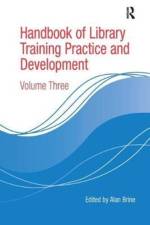
Librarians must now work at a different level from that required 20 years ago, but the training available is not always appropriate or accessible to all. The authors of this volume have responded to this significant and continuing change within the profession by offering a much-needed guide to best practice for staff training and development in library and information work. This handbook addresses new aspects of service provision both in the UK and abroad, and provides an up-to-date review of the current developments that are becoming increasingly important to librarians through the influence of the electronic age and the widening of areas of professional involvement. The Handbook of Library Training Practice and Development will be invaluable to those responsible for the development of staff and line managers as well as providing a crucial insight into the information profession for anyone new to this career path or looking to develop their knowledge within it.
This Gower Handbook is an authoritative guide to both the traditional and newer aspects of library and information management.
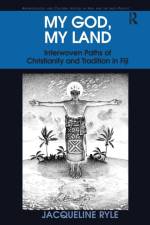
Examining the multifaceted nature of Christianity in Fiji, My God, My Land reveals the deeply complex and often paradoxical dynamics and tensions between processes of change and continuity as they unfold in representations and practices of Christianity and tradition in people''s everyday lives. The book draws on extensive, multi-sited fieldwork in different denominations to explore how shared values and cultural belonging are employed to strengthen relations. As such My God, My Land will be of interest to anthropologists of Oceania as well as scholars and students researching into social and cultural change, ritual, religion, Christianity, enculturation and contextual theology.
This monograph further develops Georgalis' important work on minimal content, recasting and providing novel solutions to several of the fundamental problems faced by philosophers of language. His theory defends the importance of thought-tokens and minimal content and their many-to-one relation to linguistic meaning.
This volume explores the themes of vanishing matter, matter and the laws of nature, the qualities of matter, and the diversity of the debates about matter in the early modern period. Chapters are unified by a number of interlocking themes which together enable some of the broader contours of the philosophy of matter to be charted in new ways.
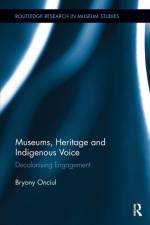
Current discourse on Indigenous engagement in museum studies is often dominated by curatorial and academic perspectives, in which community voice, viewpoints, and reflections on their collaborations can be under-represented. This book provides a unique look at Indigenous perspectives on museum community engagement and the process of self-representation, specifically how the First Nations Elders of the Blackfoot Confederacy have worked with museums and heritage sites in Alberta, Canada, to represent their own culture and history. Situated in a post-colonial context, the case-study sites are places of contention, a politicized environment that highlights commonly hidden issues and naturalized inequalities built into current approaches to community engagement. Data from participant observation, archives, and in-depth interviewing with participants brings Blackfoot community voice into the text and provides an alternative understanding of self and cross-cultural representation. Focusing on the experiences of museum professionals and Blackfoot Elders who have worked with a number of museums and heritage sites, Indigenous Voices in Cultural Institutions unpicks the power and politics of engagement on a micro level and how it can be applied more broadly, by exposing the limits and challenges of cross-cultural engagement and community self-representation. The result is a volume that provides readers with an in-depth understanding of the nuances of self-representation and decolonization.
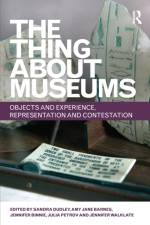
The Things about Museums constitutes a unique, highly diverse collection of essays unprecedented in existing books in either museum and heritage studies or material culture studies. Taking varied perspectives and presenting a range of case studies, the chapters all address objects in the context of museums, galleries and/or the heritage sector more broadly. Specifically, the book deals with how objects are constructed in museums, the ways in which visitors may directly experience those objects, how objects are utilised within particular representational strategies and forms, and the challenges and opportunities presented by using objects to communicate difficult and contested matters. Topics and approaches examined in the book are diverse, but include the objectification of natural history specimens and museum registers; materiality, immateriality, transience and absence; subject/object boundaries; sensory, phenomenological perspectives; the museumisation of objects and collections; and the dangers inherent in assuming that objects, interpretation and heritage are ΓÇÿgoodΓÇÖ for us.
All properties that exist in the world are functional properties in the sense of causal properties. The authors base a conservative ontological reductionism on this claim and develop functional reduction into a fully-fledged theory reduction through functional sub-types that are coextensive with physical types, providing case studies from biology.
This collection is designed to bring together some of the best work on the nature of representation being done by both established senior philosophers of science and younger researchers.
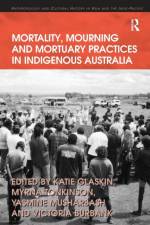
Drawing on ethnography of Aboriginal and Torres Strait Islander communities across Australia, Mortality, Mourning and Mortuary Practices in Indigenous Australia focuses on the current ways in which indigenous people confront and manage various aspects of death. The contributors employ their contemporary and long-term anthropological fieldwork with indigenous Australians to construct rich accounts of indigenous practices and beliefs and to engage with questions relating to the frequent experience of death within the context of unprecedented change and premature mortality. The volume makes use of extensive empirical material to address questions of inequality with specific reference to mortality, thus contributing to the anthropology of indigenous Australia whilst attending to its theoretical, methodological and political concerns. As such, it will appeal not only to anthropologists but also to those interested in social inequality, the social and psychosocial consequences of death, and the conceptualization and manipulation of the relationships between the living and the dead.
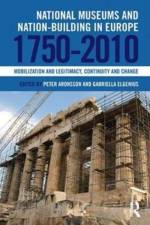
National Museums and Nation-building in Europe 1750-2010 examines the degree to which national museums have created models and representations of nations, their past, present and future, and proceeds to assess the consequences of such attempts.
This lost classic by famous anthropological theorist Leslie A. White, published now for the first time, represents twenty-five years of his scholarship on the anthropology of modern capitalism.
This book explores the associative duties we owe to our children, parents, friends, colleagues, associates and compatriots and defends a novel account which justifies such duties through the realization of values that are produced in these various kinds of social relationships.
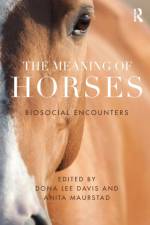
The Meaning of Horses: Biosocial Encounters examines some of the engagements or entanglements that link the lived experiences of human and non-human animals. The contributors discuss horse-human relationships in multiple contexts, times and places, highlighting variations in the meaning of horses as well as universals of ΓÇÿhorsinessΓÇÖ. They consider how horses are unlike other animals, and cover topics such as commodification, identity, communication and performance. This collection emphasises the agency of the horse and a need to move beyond anthropocentric studies, with a theoretical approach that features naturecultures, co-being and biosocial encounters as interactive forms of becoming. Rooted in anthropology and multispecies ethnography, this book introduces new questions and areas for consideration in the field of animals and society.
This collection assembles some of Marcuse's most important work and presents for the first time his responses to and development of classic Marxist approaches to revolution and utopia. Includes a comprehensive introduction which places Marcuse's thought in the context of his engagement with the main currents of twentieth century philosophy.
Bringing about a creative dialogue between the anthropologist's own experience of magical consciousness and theoretical analysis, this book is a poly-vocal study in which the voices of the neurobiologist, anthropologist as anthropologist, anthropologist as native, and various spirit beings weave an alternative narrative displaying the process of magical thinking.
This book makes a critical examination of how anthropological and other interpretative social science research has been utilized in the field of HIV/AIDS studies. It argues that most research uncritically addresses the epidemic in terms of the questions and the research methods favored by biomedicine, and that the failure to draw on high-quality qualitative anthropological and other social science research in the modeling of the epidemic and in the design and implementation of AIDS control interventions has rendered these less successful than they might otherwise have been.
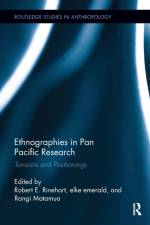
This interdisciplinary volume explores - through a focus on the Pan Pacific region and the global south - the politics of ethnography and ethnographic practices, including indigenous ethnography and ethnographic writing as cultural production in its own right.
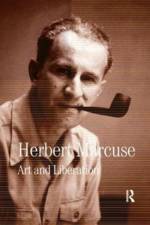
This collection explores a previously neglected area of study - the role of art in Marcuse's work. Presenting a wealth of published and unpublished material, it is essential reading not only for those new to Marcuse, but also for specialists.
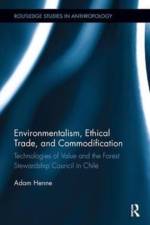
This book explores the global connections between Chilean landscapes and Northern consumers embodied by the Forest Stewardship Council logo, the green seal of approval for certified sustainably-produced "good wood." How do we decide what makes good forestry? What knowledges and values are expressed or silenced when "good" is defined with a market mechanism like certification? Henne''s ethnographic study documents the new forms of labor and the new expectations about sustainability and responsibility that certification generates, in the context of the competing ideas about how to manage a forest ΓÇô or even what a forest is ΓÇô that constitute forest certification in Chile. A critical analysis of certificationΓÇÖs practices helps understand the role of ethical trade initiatives in creating sustainable, survivable global futures.
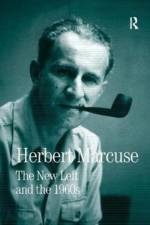
Volume III of Herbert Marcuse's Collected Papers focusing on the New Left movement for whom he provided theoretical and political guidance. The new material collected in this and accompanying volumes provides a rich and deep grasp of the era.
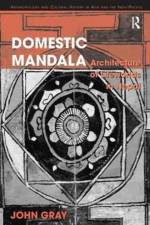
A rich and fascinating ethnography of domestic architecture and activities among the high caste Chhetris of Kholagaun in Nepal, this book focuses on the spatial organization, everyday activities and ritual performances that generate and display Chhetri houses as ''mandalas'', sacred diagrams that are both maps of the cosmos and machines for revelation. Describing the orientation and layout of the Chhetri house and surrounding compound; it shows how the orientation and distribution of everyday social activities with the domestic mandala shape people''s experience of the enigmas of their lifeworld as householders; and analyses the double significance of rituals that take place in the domestic mandala. By treating the Nepali house as more than just the background of people''s everyday life, the author reveals the Chhetri everyday lifeworld as a revelation of Hindu tantric cosmology, its enigmatic illusion, and the path to liberation from it. The themes addressed in the book make a unique contribution to the fields of anthropology, architecture and human geography.
Abonner på vårt nyhetsbrev og få rabatter og inspirasjon til din neste leseopplevelse.
Ved å abonnere godtar du vår personvernerklæring.