


















Gjør som tusenvis av andre bokelskere
Abonner på vårt nyhetsbrev og få rabatter og inspirasjon til din neste leseopplevelse.
Ved å abonnere godtar du vår personvernerklæring.Du kan når som helst melde deg av våre nyhetsbrev.

Published in 1996, this book advocates and persuasively exemplifies a qualitative sociology of childhood, spoken repeatedly through children's voices.
This book examines the Western and local spheres of intervention and shows how their separation helps to perpetuate intervention.
How did free communities of color protect their social status and economic gains in the Age of Atlantic Revolutions? This book highlights the complications of civil rights and abolition in the late-colonial era Caribbean. This book was first published as a special issue of Atlantic Studies.
This book offers a comprehensive analysis of the record of the trial of former Serbian leader Slobodan Milosevic at the International Criminal Tribunal for the former Yugoslavia (ICTY).
This book offers a guide to different aspects of de-radicalization theories, programs and methods.
This new Handbook offers a comprehensive overview of current research on private security and military companies, comprising essays by a mixture of established scholars and up and coming researchers who have all made significant contributions to the field.
This volume brings together a range of viewpoints and approaches to the question of what International Criminal Tribunal for the former Yugoslavia's legacy will and should be.
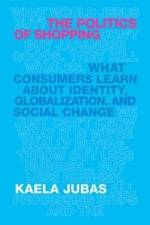
An exploration of how people who are concerned about globalization and consumption learn about these issues through their shopping and use that knowledge to change the status quo.
Authored by well-established and respected scholars, this work examines the kinds of efforts that have been made to adopt Western modernity in Melanesia and explores the reasons for their varied outcomes. The contributors take the work of Professor Marshall Sahlins as a starting point, assessing his theories of cultural change and of the relationship between cultural intensification and globalizing forces. They acknowledge the importance of Sahlins'' ideas, while refining, extending, modifying and critiquing them in light of their own first hand knowledge of Pacific island societies. Also presenting one of Sahlins'' less widely available original essays for reference, this book is an exciting contribution to serious anthropological engagement with Papua New Guinea.
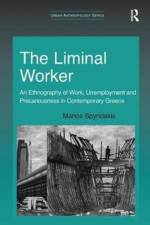
The Liminal Worker examines the experience of work, employment, employment insecurity and precariousness in a context of high unemployment and welfare state crisis in modern Greece. A theoretically-informed, anthropological exploration of the notion of work in contemporary western society and its relation to processes of political decision making, this book challenges the mainstream conception of work as an economic or purely productive activity, presenting a comparative analysis of work as a social phenomenon. Drawing on original empirical research, it explores the key themes of the transformation, experience, meaning and narrative of work and its relation to attendant social policies. A unique examination of the complicated experience of work and labour relations within power systems, institutions and organisations, as well as the reactions and survival strategies of ordinary actors facing precariousness in their daily existence, The Liminal Worker elaborates upon the notion of the anthropology of work and investigates the connection between ethnographic data (and its critical analysis) and the formation of policy. As such, it will be of interest to anthropologists, sociologists, policy makers and geographers concerned with questions of work, labour relations and policy formation.
This companion provides an indispensable overview of contemporary and classical issues in social and cultural anthropology. Although anthropology has expanded greatly over time in terms of the diversity of topics in which its practitioners engage, many of the broad themes and topics at the heart of anthropological thought remain perennially vital, such as understanding order and change, diversity and continuity, and conflict and co-operation in the reproduction of social life. Bringing together leading scholars in the field, the contributors to this volume provide us with thoughtful and fruitful ways of thinking about a number of contemporary and long-standing arenas of work where both established and more recent researchers are engaged. The companion begins by exploring classic topics such as Religion; Rituals; Language and Culture; Violence; and Gender. This is followed by a focus on current developments within the discipline including Human Rights; Globalization; and Diasporas and Cosmopolitanism. It provides an interesting and challenging look at the state of current thinking in anthropology, serving as a rich resource for scholars and students alike.
This volume explores how mechanisms of postindustrial capitalism affect places and people in peripheral regions and de-industrializing cities. While studies of globalization tend to emphasize localities newly connected to global systems, this collection, in contrast, analyzes the disconnection of communities away from the market, presenting a range of ethnographic case studies that scrutinize the framework of this transformative process, analyzing new social formations that are emerging in the voids left behind by the de-industrialization, and introducing a discussion on the potential impacts of the current economic and ecological crises on the hyper-mobile model that has characterized this recent phase of global capitalism and spatially uneven development.
In this innovative volume, anthropologists turn their attention to a topic that has rarely figured as a focus of concerted investigation and yet which can be described as an intrinsic aspect of all human knowing and part of all processes by which human beings process information about themselves, their identities, their environments and their relations: the imagination. How do anthropologists use imagination in coming to know their research subjects? How might they, and how should they, use their imagination? And how do research subjects themselves understand, describe, justify and limit their use of the imagination? Presenting a range of case studies from a variety of locations including the UK, US, Africa, East Asia and South America, this collection offers a comparative exploration of how imagination has been conceptualized and understood in a range of analytical traditions, with regard to issues of both methodology and ethnomethodology. With emphasis not on abstraction but on imagination as activity, technique and subject situated in the middle of lives, Reflections on Imagination sheds new light on imagination as a universal capacity and practice - something to which human beings attend whenever they make sense of their environments and situate their life-projects in these environments - the means by which worlds come to be.
Broadband is one of the most transformative technologies of the 21st century, yet our understanding of its regional impacts remains somewhat rudimentary. Not only are issues of broadband pricing and speed relevant in this context, but the overall quality of service for broadband can often dictate its impacts on regional development. This book illuminates the regional impacts of this pervasive and important technology.
Transforming Cities examines the profound changes that have characterised cities of the advanced capitalist societies in the final decades of the twentieth century.
This book studies the phenomemon of spirit possession in the Spiritual Baptist Faith and Orisha Work of the West Indies, examining the similarities and interactions between the different religions of differing populations.
This book is about understanding challenges in managing our environment and ensuring sustainability of this Planet. The author presents role of key stakeholders such as the Government, Financing Institutions, Business and Communities with case studies.
Published in 2004, this collection will encourage and foster informed discussion of key issues as society comes to grips with the implications of genetic engineering, the mapping and sequencing of the human genome, and the advent of the post-genomic era.
Mathematical Modelling of Waves in Multi-Scale Structured Media presents novel analytical and numerical models of waves in structured elastic media, with emphasis on the asymptotic analysis of phenomena such as dynamic anisotropy, localisation, filtering and polarisation as well as on the modelling of photonic, phononic, and platonic crystals.
Key Variables in Social Investigation encourages sociologists and other social scientists to think about the conceptual and empirical problems of using and evaluating key variables in social research.
This book explores the process of heritage making and its relation to the production of touristic places, examining several case studies around the world. Most existing literature on heritage and tourism centers either on its managerial aspects, the tourist experience, or issues related to inequality and identity politics. This volume instead establishes theoretical links between analyses of heritage and the production and reproduction of places in the context of the global tourist trade. The approach adopted here is to explore the production of heritage as a complex process shaped by local and global discourses that can have a deep impact on several policies and legislations. The chapters in this book stress the need for identifying the intrinsic political implications of these processes, relocating their study in political, economic and social settings.
The management of industrial heritage sites requires rethinking in the context of urban change, and the issue of how to balance protection, preservation/conservation, and development becomes all the more crucial as industrial heritage sites grow in number. This book explores the conservation and change of industrial heritage sites in transformation, presenting and examining six European case studies. The interdisciplinary approach of the book connects a diversity of rationales and discourses, including monument protection, World Heritage conventions, urban regeneration, urban planning and design, architecture, and politics. This is the first book to deepen the understanding of industrial heritage site management as a networked, multi-dimensional task involving diverse social agents and societal discourses.
Every large nation in the world was directly or indirectly affected by the impact of war during the course of the twentieth century, and while the historical narratives of war of these nations are well known, far less is understood about how small islands coped. These islands - often not nations in their own right but small outposts of other kingdoms, countries, and nations - have been relegated to mere footnotes in history and heritage studies as interesting case studies or unimportant curiosities. Yet for many of these small islands, war had an enduring impact on their history, memory, intangible heritage and future cultural practices, leaving a legacy that demanded some form of local response. This is the first comprehensive volume dedicated to what the memories, legacies and heritage of war in small islands can teach those who live outside them, through closely related historical and contemporary case studies covering 20th and 21st century conflict across the globe.
New approaches to both cultural landscapes and historic urban landscapes increasingly recognize the need to guide future change, rather than simply protecting the fabric of the past. Challenging traditional notions of historic preservation, Conserving Cultural Landscapes takes a dynamic multifaceted approach to conservation. It builds on the premise that a successful approach to urban and cultural landscape conservation recognizes cultural as well as natural values, sustains traditional connections to place, and engages people in stewardship where they live and work. It brings together academics within the humanities and humanistic social sciences, conservation and preservation professionals, practitioners, and stakeholders to rethink the meaning and practice of cultural heritage conservation, encourage international cooperation, and stimulate collaborative research and scholarship.
The second edition of this popular handbook has been thoroughly updated by the original team of experts and some new contributors, to provide current best practice guidance on the key legal information issues for every type of service. Each of the chapters is updated to reflect general changes in law libraries and their users in the past seven years. In particular, the handbook covers new information technologies, including social networking and communication. New chapters also focus on the key topics of outsourcing, and the impact of the 2007 Legal Services Act. The second edition of this valuable handbook continues to be an important professional reference tool for managers and staff of all types of legal information services, and will help them with the challenges they face in their work every day.
The term `systems theory¿ is used to characterize a set of disparate yet related approaches to fields as varied as information theory, cybernetics, biology, sociology, history, literature, and philosophy. What unites each of these traditions of systems theory is a shared focus on general features of systems and their fundamental importance for diverse areas of life. Yet there are considerable differences among these traditions, and each tradition has developed its own methodologies, journals, and forms of anaylsis. This book explores this terrain and provides an overview of and guide to the traditions of systems theory in their considerable variety. It draws attention to the traditions of systems theory in their historical development, especially as related to the humanities and social sciences, and shows how from these traditions various contemporary developments have ensued.
This International Handbook describes the legal environments in which librarians work and policy issues with which they need to engage. It provides resources, analysis, and considered studies for seasoned international law librarians, those about to enter the field, and anyone interested in the evolution of legal information in the twenty-first century.
This is a fascinating exploration of the relationship between marriage, violence and sorcery in an Australian Aboriginal community. Of Marriage, Violence and Sorcery offers an archive of valuable primary materials, drawing on the author's forty-year knowledge of the community on Mornington Island.
Abonner på vårt nyhetsbrev og få rabatter og inspirasjon til din neste leseopplevelse.
Ved å abonnere godtar du vår personvernerklæring.