









Gjør som tusenvis av andre bokelskere
Abonner på vårt nyhetsbrev og få rabatter og inspirasjon til din neste leseopplevelse.
Ved å abonnere godtar du vår personvernerklæring.Du kan når som helst melde deg av våre nyhetsbrev.

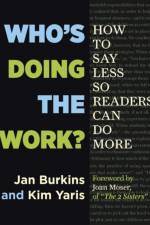
In their follow-up to Reading Wellness, Jan Burkins and Kim Yaris explore how some traditional scaffolding practices may actually rob students of important learning opportunities and independence. Who's Doing the Work? suggests ways to make small but powerful adjustments to instruction that hold students accountable for their own learning.
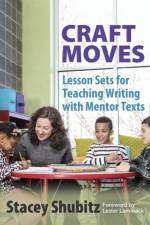
Ruth Culham focuses her love of children's literature - and her decades of work developing the traits of writing - on books that celebrate Latino life and culture. She provides a wide variety of ideas to teach writing using some of the richest and most beautiful children's books available.
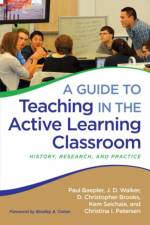
Provides an introduction to Active Learning Classrooms, briefly covering their history and then synthesizing the research on these spaces to provide faculty with empirically based, practical guidance on how to use these unfamiliar spaces effectively.
Radiation Detection: Concepts, Methods, and Devices provides a modern overview of radiation detection devices and radiation measurement methods. The book topics have been selected on the basis of the authors' many years of experience designing radiation detectors and teaching radiation detection and measurement in a classroom environment.
In this book Kerry O¿Halloran analyses a subject of international interest ¿ religion ¿ and examines related contemporary issues from a human rights perspective.
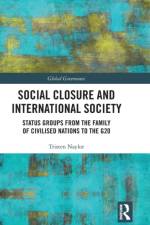
Laying the foundations of a theory of `international social closure¿ this book examines how actors compete for a seat at the table in the management of international society and how that competition stratifies the international domain.
Environmental Chemical Analysis provides an explanation of analytical instrumentation methods for students without a background in analytical chemistry.
While crime, law, and punishment are subjects that have everyday meanings not very far from their academic representations, "social control" is one of those terms that appear in the sociological discourse without any corresponding everyday usage
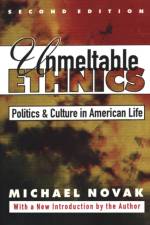
This new, enlarged edition of an influential book-originally published in 1972 as The Rise of the Unmeltable Ethnics-extends the author's wise and generous view of ethnicity. Its aim "is to raise consciousness about a crucial part of the American experience: to involve each reader in self-inquiry. Who, after all, are you? What history brought you to where you are? Why are you different from others?" But the point of such inquiry is civility: "The new ethnic consciousness embodied in this book delights in recognition of subtle differences in the movements of the soul. It is not a call to separatism but to self-consciousness. It does not seek division but rather accurate, mutual appreciation."This new edition contains six new essays by the author, including the acclaimed "Pluralism: A Humanistic Perspective." New, too, is Novak's comprehensive introduction, bringing the argument up to date. Novak describes how and why ethnicity has become a prominent issue in American politics. He also sharply denounces the current ideology of "multiculturalism" as a disfiguration of genuine ethnicity. "Multiculturalism is moved by the eros of Narcissus" Novak writes, "the new ethnicity is driven by the eros of unrestricted understanding."When the book first appeared, Time said that "Novak has attacked the American Dream in order to open up a possible second chapter for it." Newsweek called it "a tough-minded, provocative book which could well signal an important change in American politics."This new edition adds crucial distinctions for those seeking an intelligent path through such current-day mystifications as "multiculturalism" and "diversity." Twenty-five years ago, Novak's argument led the way in focusing on families, neighborhoods, and other "mediating institutions" of civil society. It is an argument critical to a realistic sense of national community.
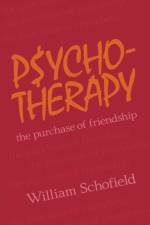
William Schofield presents a classic analysis of mental illness, of professional psychotherapists and their training, and of the elements of psychotherapy
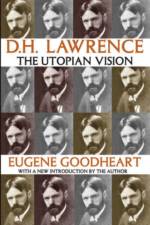
Provides a critical analysis of the ideological character of Lawrence's novels and essays, in particular the effect of his utopianism on his views of nature, myth, and religious experience, while responding to his aesthetic achievement. In the introduction to the book, the author reflects upon the vicissitudes of Lawrence's reputation.
This is not like other counting books. In How Many?, there are multiple things to count on each page. Students might count one pair of shoes, or two shoes, or four corners of a shoebox. They might discuss whether two shoes have two shoelaces, or four. They might notice surprising patterns and relationships, and they will want to talk about them.
This is not like other counting books. In How Many?, there are multiple things to count on each page. Students might count one pair of shoes, or two shoes, or four corners of a shoebox. They might discuss whether two shoes have two shoelaces, or four. They might notice surprising patterns and relationships, and they will want to talk about them.
In 2017, Bret Eynon and Laura M. Gambino, to broad acclaim, released High Impact ePortfolio Practice. With Catalyst in Action they have taken the next step. Teams of faculty and college leaders detail their experiences exploring and testing the Framework on their campuses. The case study authors put Eynon and Gambino's integrative strategies into practice.
In 2017, Bret Eynon and Laura M. Gambino, to broad acclaim, released High Impact ePortfolio Practice. With Catalyst in Action they have taken the next step. Teams of faculty and college leaders detail their experiences exploring and testing the Framework on their campuses. The case study authors put Eynon and Gambino's integrative strategies into practice.
A professional guide intended for faculty, curriculum planners, or instructional designers who want to design, teach, facilitate, and assess collaborative learning. The book covers the use of information and communication technology tools by collaborative partners who may or may not be co-located.
Research shows that online education, when designed and facilitated well, is as effective as traditional campus-based instruction. Thrive Online is an invitation for the rising tide of online educators that are relatively new to teaching online, and also for those more experienced instructors that are increasingly frustrated by the dominant bias against online education.
By unpacking SoTL processes through rich narratives that illustrate what they look like, this collection offers inspiration to anyone at any stage of engagement with SoTL. Going beyond definitions, how-to, theory, and debates about methods and standards, the contributors offer a SoTL primer documenting how practitioners have intentionally thought through key moments in their work.
By unpacking SoTL processes through rich narratives that illustrate what they look like, this collection offers inspiration to anyone at any stage of engagement with SoTL. Going beyond definitions, how-to, theory, and debates about methods and standards, the contributors offer a SoTL primer documenting how practitioners have intentionally thought through key moments in their work.
Offers higher education professionals the information and guidance they need to craft strong online biographical statements; prioritize where and how they want to represent themselves online; intentionally and purposefully create an effective brand for their professional identity online; and develop online profiles that are consistent, professional, accurate, organised, and of good quality.
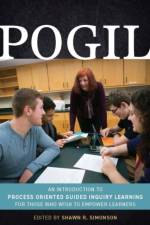
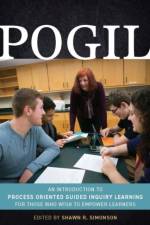
Process Oriented Guided Inquiry Learning (POGIL) is a pedagogy that is based on research on how people learn and has been shown to lead to better student outcomes in many contexts and in a variety of academic disciplines. As a pedagogy it has been shown to be effective in a variety of content areas and at different educational levels. This is an introduction to the process and the community.
Process Oriented Guided Inquiry Learning (POGIL) is a pedagogy that is based on research on how people learn and has been shown to lead to better student outcomes in many contexts and in a variety of academic disciplines. As a pedagogy it has been shown to be effective in a variety of content areas and at different educational levels. This is an introduction to the process and the community.
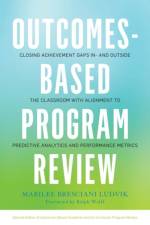
Introduces the reader to the principles of assessment of student learning outcomes in the context of program review, and illustrates how to implement a sustainable outcomes-based assessment program review process based on over 30 case studies of exemplary practice across a range of institutional types.
Abonner på vårt nyhetsbrev og få rabatter og inspirasjon til din neste leseopplevelse.
Ved å abonnere godtar du vår personvernerklæring.