



















Gjør som tusenvis av andre bokelskere
Abonner på vårt nyhetsbrev og få rabatter og inspirasjon til din neste leseopplevelse.
Ved å abonnere godtar du vår personvernerklæring.Du kan når som helst melde deg av våre nyhetsbrev.

Karl Mannheim's thought cuts across much of twentieth-century sociology, politics, history, philosophy, and psychology
Great first book on algebraic topology. Introduces (co)homology through singular theory.
This book provides comprehensive information regarding the use of the important therapeutic maneuver in the treatment of neurological disease. It discusses the technical aspects in stereotactic with frames, frameless stereotactic, and stereotactic radiosurgery.
Changes in the thinking of science are usually accompanied by lively intellectual conflicts between opposing or divergent points of view
The Personality of a Child Molester argues two main points
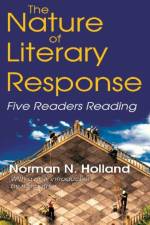
In a rare fusion of literary sensibility with psychological research, Norman N
Brings together studies of monkeys and apes from both the laboratory and the field. Many broad aspects of primate life, including facial expressions, sexual signals, grooming, play, social organisation and parental care, are covered by the contributors and provide a whole new approach to primate behaviour.
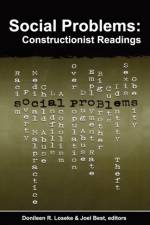
Designed as an accompaniment to "Thinking About Social Problems: An Introduction to Constructionist Perspectives" by D.R. Loseke, this text is aimed at students not already familiar with constructionist literature.
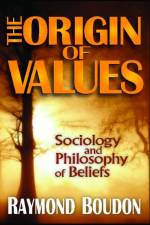
Values have always been a central topic in both philosophy and the social sciences
This extensive text covers what managers and their consultants need to implement a foreign currency management programme, from trends in exchange rates to understanding price determinants. The author discusses in detail the market for currencies and exposure and risk management.
The development of industry in Europe and United States has resulted in great marvels of production. This title deals with various topics of social change: cultural problems of change in general; a description of the concept of culture; a discussion of cultural change in its various forms; and, an introduction to the process of directed change.
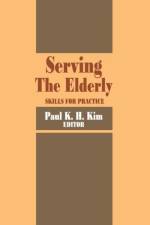
Broadly speaking there are two kinds of professional practice skills relevant to the burgeoning field of gerontological human service: clinical modalities and macro strategies. This book identifies seven essential approaches to clinical gerontology, including five of the most important macro skills that all professionals in the field will need to acquire, and it presents each of them in a single collection intended to serve as a basic text and reference work for academic and in-service training. Each contributor to this volume speaks with recognized expertise on his/her preferred subject, while mindful of the larger purpose of the collection as a whole. In a concluding chapter, Dr. Kim draws on his own long and successful experience in obtaining financial support for his programs and provides a wealth of useful information on the preparation of grant proposals and the conduct of other fundraising activities. Serving the Elderly is adaptable to the uses of a wide variety of geriatric health care providers, from students and trainees in social work, clinical psychology, and other care-giving professions to already established practitioners who are branching out in gerontology.
This text provides an objective, evidence-based evaluation of particular facets of the ageing process, gender differences in this process, and their modification by physical activity and lifestyle.
Books, Bricks, and Bytes brings together an extraordinary array of authors at the cutting edge of these concerns, not only within the United States, but experts drawn from the United Kingdom, Germany, France, Russia, Brazil and India.
Michael Porter has argued that a sustainable economic base can be created in the inner city only if it has been created elsewhere: through private, for-profit, initiatives and investment based on economic self-interest and genuine competitive advantage-not through artificial inducements, charity, or government
Today a college degree is needed to ensure an avenue to a decent standard of living
Beginning with colonial times, the authors t race the development of the college and university system ch ronologically, in terms of men and institutions. '
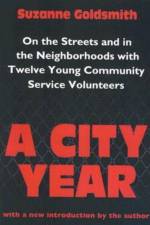
A City Year is both the story of a battle in urban America and a recipe for social change.
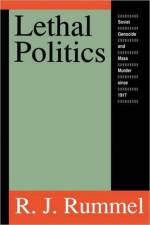
While there are estimates of the number of people killed by Soviet authorities during particular episodes or campaigns, until now, no one has tried to calculate the complete human toll of Soviet genocides and mass murders since the revolution of 1917
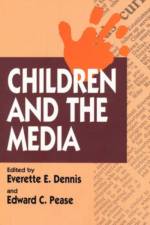
Throughout history the media has primarily been produced by adults, for adults, about adults. Increasingly, children have become a matter of high priority in the modern media society, and as they have, they have also become the subject of much concern.
In this landmark effort to understand African American people in the New World, Gunnar Myrdal provides deep insight into the contradictions of American democracy as well as a study of a people within a people.
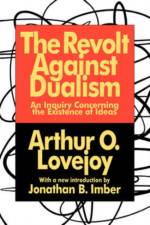
The Revolt Against Dualism, first published in 1930, belongs to a tradition in philosophical theorizing that Arthur O
Based on the biographies of some three hundred people in each city, this book shows how such distinguished Boston families as the Adamses, Cabots, Lowells, and Peabodys have produced many generations of men and women who have made major contributions to the intellectual, educational, and political life of their state and nation
When it was originally published, The Academic Man was the first full-scale social science-based study on the American academic profession
Here is a light, pithy book on the familiar theme: "The humanities are in deep trouble." Walter Kaufmann, Professor of Philosophy at Princeton and advocate of humanism in his writings on philosophy, literature, religion, as well as through his own poetry and translations, is vexed that so many of his fellow academicians are indifferent to the nature, purpose, and fate of the humanities. He calls these professors "scholastics" because they pursue arcane knowledge and treat learning as "a kind of 'sport,' if not a game, or a racket." He accuses them, along with the "journalists," who purvey superficial and erroneous information, of undermining the stature of the humanities, but he believes that stature can be restored by making the goals and methods of the humanities explicit and demanding. The principal goal is "to teach vision," which is a sense of values and the meaning of experience, and this can be achieved only by scrutinizing language and ideas, developing critical thought, and constructing intellectual syntheses. Kaufmann does not offer these convictions as mere generalizations but embodies them in concrete pedagogical and scholarly proposals (with examples from his own teaching). He has also "leaned over backwards not to be gentle" to his enemies, so he is more specific, direct, and argumentative than educational writers usually are. Readers will not sleep through Kaufmann's pages, and even if they reject his ideas, they will lay the book aside wondering, as Kaufmann wants them to do: "What kind of future would we like to build?" (Kirkus Reviews)
Based on a study of the Israeli kibbutz movement, Gender and Culture discusses the differences in male and female orientations to marriage, the family, and work
The environment of modern organizations is so complex and volatile that we take for granted that organizational change is necessary for organizational survival. Yet the literature on organizations has for years described manifold obstacles to such change. First published in 1971, this book extracts from that literature and from experience a comprehensive yet concise overview of those barriers. Because these elements of the analysis are as valid now as when they were originally written, The Limits of Organizational Change is still widely read and cited nearly a quarter-century later.
Peter Drucker's lively and thoughtful memoirs are now available in paperback with a new introduction by the author. He writes with wit and spirit about people he has encountered in a long and varied life, including Sigmund Freud, Henry Luce, Alfred Sloan, John L. Lewis, and Marshall McLuhan. After beginning with his childhood in Vienna during and after World War I, Drucker moves on to Europe in the 1920s and early 1930s, describing the imminent doom posed by Hitler and the Nazis. He then goes on to describe London during the 1930s, America during the New Deal era, the World War II years, and beyond. According to John Brooks of The New York Times Book Review, "Peter Drucker is at a corner cafe, delightfully regaling anyone who will listen with tales of what must be one of the more varied-and for a practitioner of such a narrow skill as that of management counseling, astonishing-of contemporary professional lives." Dorothy Rabinowitz of the Washington Post writes, "The famous are here as well as the infamous.... All are the beneficiaries, for better or for worse, of Drucker's unerring eye for psychological detail, his remorseless curiosity, and his imaginative sympathy.... Drucker's book appears in a stroke to have restored the art of the memoir and of the essay." Adventures of a Bystander reflects Drucker's vitality, infinite curiosity, and interest in people, ideas, and the forces behind them. His book is a personal and informal account of the rich life of an independent man of letters, a life that spans eight decades and two continents. It will be of interest to scholars and professionals in the business world, historians, sociologists, and admirers of Peter Drucker.
Jane Addams, the founder of Hull House in Chicago, may be best known as a social activist
Abonner på vårt nyhetsbrev og få rabatter og inspirasjon til din neste leseopplevelse.
Ved å abonnere godtar du vår personvernerklæring.