






Gjør som tusenvis av andre bokelskere
Abonner på vårt nyhetsbrev og få rabatter og inspirasjon til din neste leseopplevelse.
Ved å abonnere godtar du vår personvernerklæring.Du kan når som helst melde deg av våre nyhetsbrev.

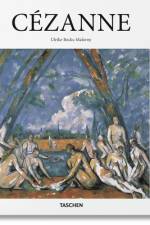
In the latter half of the 19th century, in the verdant countryside near Aix-en-Provence, Paul Cézanne (1839-1906), busily plied his brush to landscapes and still lifes that would become anchors of modern art. With compact, intense dabs of paint and bold new approaches to light and space, he mediated the way from Impressionism to the defining movements of the early 20th century and became, in the words of both Matisse and Picasso, "father of us all." This fresh artist introduction selects key works from Cézanne's oeuvre to understand his development, innovation, and crucial influence on modern art. From compositions of fruits and pears to scenes of outdoor bathers, we trace his experimentation with color, perspective, and texture to evoke "a harmony parallel to Nature," as well as the very process of seeing and recording. Along the way, we discover Cézanne's celebrated Card Players, his layering of warm and cool hues to build up form and surface, and the geometric rigor of his landscapes from the vicinity of Aix-en-Provence, as bright with the light of southern France as they are bold with a radical new rendering of dimensions and depth.
In the work of Joseph Mallord William Turner (1775-1851) lies an impact akin to a sudden acquisition of sight. His landscapes and seascapes scorch the eye with such ravishing light and color, with such elemental force, it is as if the sun itself were gleaming out of the frame. Appropriately known as "the painter of light," Turner worked in print, watercolor, and oils to transform landscape from serene contemplative scenes to pictures pulsating with life. He anchored his work to the River Thames and to the sea, but in the historical context of the Industrial Revolution, also integrated boats, trains, and other markers of human activity, which juxtaposes the thrust of civilization against the forces of nature. This book covers Turner's illustrious, wide-ranging repertoire to introduce an artist who combined a traditional genre with a radical modernism.
From men in bowler hats, floating in the sky, to a painting of a pipe above the caption "this is not a pipe", René Magritte (1898-1967) created an echo chamber of object and image, name and thing, reality and representation. Like other Surrealist works, Magritte's paintings combine a precise, mimetic technique with abnormal, alienating configurations which defy the laws of scale, logic, and science: a comb the size of a wardrobe, rocks that float in the sky, clouds that drift through an open door. The result is a direct yet disorientating realm, often witty, often unsettling, and always prompting us to look beyond the visible, to "what is hidden by what we see." This introductory book explores Magritte's vast repertoire of visual humor, paradox, and surprise which to this day makes us look and look again, not only at the painting, but at our sense of self and the world.
Some call it the American obsession, but men everywhere recognize the hypnotic allure of a large and shapely breast. In The Big Book of Breasts, Dian Hanson explores the origins of mammary madness through three decades of natural big-breasted nudes. Starting with the World War II Bosom-Mania that spawned Russ Meyer, Howard Hughes's The Outlaw and Frederick's of Hollywood, Dian guides you over, around, and in between the dangerous curves of infamous models including Michelle Angelo, Candy Barr, Virginia Bell, Joan Brinkman, Lorraine Burnett, Lisa De Leeuw, Uschi Digard, Candye Kane, Jennie Lee, Sylvia McFarland, Margaret Middleton, Paula Page, June Palmer, Roberta Pedon, Rosina Revelle, Candy Samples, Tempest Storm, Linda West, June Wilkinson, Julie Wills, and dozens more, including Guinness World Record holder Norma Stitz, possessor of the World`s Largest Natural Breasts. The 396 pages of this book contain the most beautiful and provocative photos ever created of these iconic women, plus nine original interviews, including the first with Tempest Storm and Uschi Digard in over a decade, and the last with Candy Barr before her untimely death in 2005. In a world where silicone is now the norm, these spectacular real women stand as testament that nature knows best.
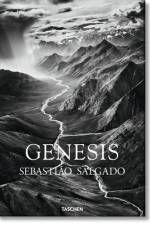
Sebastião Salgado's masterpiece Genesis is the result of an epic eight-year expedition to rediscover the mountains, deserts, and oceans, the animals and peoples that have so far escaped the imprint of modern society--the land and life of a still pristine planet. The Genesis project, along with the Salgados' Instituto Terra, is dedicated to showing the beauty of our planet, reversing the damage done to it, and preserving it for the future. On over 30 trips--by foot, light aircraft, boats, canoes, and even balloons, through extreme temperatures and in sometimes dangerous conditions--Salgado has created a collection of images showing us nature, animals, and indigenous peoples in such intense beauty it takes our breath away. The reach is truly global. Through Salgado's lens, one discovers the animal species and volcanoes of the Galápagos; the penguins, sea lions, cormorants, and whales of the South Atlantic; Brazilian alligators and jaguars; and African lions, leopards, and elephants. We travel over icebergs in the Antarctic, the volcanoes of Central Africa, the ravines of the Grand Canyon, and the glaciers of Alaska. We encounter the Stone Age Korowai people of West Papua, nomadic Dinka cattle farmers in Sudan, Nenets and their reindeer herds in the Arctic Circle, as well as the Mentawai jungle communities on islands west of Sumatra. In characteristic monochrome, Salgado's painterly notes are perfectly tuned to these sublime scenes, capturing sweeping aerial panoramas as much as the most intricate details and textures, from a reptilian skin to the fur coat of the Nenet people of northern Siberia. The exquisitely reproduced images are arranged not by theme but rather conceived as a journey around the globe, immersing them in Salgado's vision of the Earth's mesmerizing scale, order, and beauty.INSTITUTO TERRAFounded in 1998 at Aimorés in the state of Minas Gerais, Instituto Terra is the culmination of Lélia Wanick Salgado and Sebastião Salgado's lifelong activism and work as cultural documentarians. Through a scientific program of planting and raising saplings, the organization has performed a miraculous reforestation of the once infertile region and furthered the Salgados' mission of reversing the damage done to our planet. TASCHEN is proud to reach carbon zero status through our continued partnership.
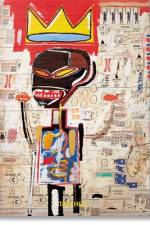
The legend of Jean-Michel Basquiat is as strong as ever. Synonymous with 1980s New York, the artist first appeared in the late 1970s under the tag SAMO, spraying caustic comments and fragmented poems on the walls of the city. He appeared as part of a thriving underground scene of visual arts and graffiti, hip hop, post-punk, and DIY filmmaking, which met in a booming art world. As a painter with a strong personal voice, Basquiat soon broke into the established milieu, exhibiting in galleries around the world. Basquiat's expressive style was based on raw figures and integrated words and phrases. His work is inspired by a pantheon of luminaries from jazz, boxing, and basketball, with references to arcane history and the politics of street life--so when asked about his subject matter, Basquiat answered "royalty, heroism and the streets." In 1983 he started collaborating with the most famous of art stars, Andy Warhol, and in 1985 was on the cover of The New York Times Magazine. When Basquiat died at the age of 27, he had become one of the most successful artists of his time. First published in an XXL edition, this unprecedented insight into Basquiat's art is now available in a compact, accessible volume in celebration of TASCHEN's 40th anniversary. With pristine reproductions of his most seminal paintings, drawings, and notebook sketches, it offers vivid proximity to Basquiat's intricate marks and scribbled words, further illuminated by an introduction to the artist from editor Hans Werner Holzwarth, as well as an essay on his themes and artistic development from curator and art historian Eleanor Nairne. Richly illustrated year-by-year chapter breaks follow the artist's life and quote from his own statements and contemporary reviews to provide both personal background and historical context.
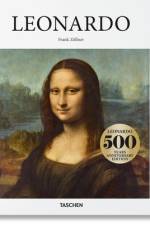
Filling notebook after notebook with sketches, inventions, and theories, Leonardo da Vinci (1452-1519) not only stands as one of the most exceptional draftsmen of art history, but also as a mastermind and innovator who anticipated some of the greatest discoveries of human progress, sometimes centuries before their material realization. From the smallest arteries in the human heart to the far-flung constellations of the universe, Leonardo saw nature and science as being unequivocally connected. His points of inquiry and invention spanned philosophy, anatomy, geology, and mathematics, from the laws of optics, gravitation, heat, and light to the building of a flying machine. In his painting, Leonardo steered art out of the Middle Ages with works such as The Last Supper and the world-famous La Gioconda or Mona Lisa depicting not only physical appearances, but a compelling psychological intrigue and depth which continues to draw crowds of mesmerized visitors to masterpieces in Paris, Milan, Washington, London, and Rome. This book brings together some of Leonardo's most outstanding work to introduce a figure of infinite curiosity, feverish imagination, and sublime artistic ability, often described as having "not enough worlds for to conquer, and not enough lives for to live" (Alan Woods).
Filling notebook after notebook with sketches, inventions, and theories, Leonardo da Vinci (1452-1519) not only stands as one of the most exceptional draftsmen of art history, but also as a mastermind and innovator who anticipated some of the greatest discoveries of human progress, sometimes centuries before their material realization. From the smallest arteries in the human heart to the far-flung constellations of the universe, Leonardo saw nature and science as being unequivocally connected. His points of inquiry and invention spanned philosophy, anatomy, geology, and mathematics, from the laws of optics, gravitation, heat, and light to the building of a flying machine. In his painting, Leonardo steered art out of the Middle Ages with works such as The Last Supper and the world-famous La Gioconda or Mona Lisa depicting not only physical appearances, but a compelling psychological intrigue and depth which continues to draw crowds of mesmerized visitors to masterpieces in Paris, Milan, Washington, London, and Rome. This book brings together some of Leonardo's most outstanding work to introduce a figure of infinite curiosity, feverish imagination, and sublime artistic ability, often described as having "not enough worlds for to conquer, and not enough lives for to live" (Alan Woods).
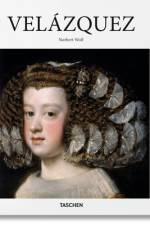
Court painter to King Philip IV of Spain, Diego RodrÃguez de Silva y Velázquez (June 1599 - August 6, 1660) is not only a leading light of the Spanish Golden Age, but among the most celebrated masters in all Western art history. Monet and Renoir, Corot and Courbet, Degas and Dalà all hailed his influence. Picasso was so inspired by his masterpiece Las Meninas that he painted 44 variations of it. Velázquez's importance is found particularly in his naturalist approach, in contrast to the more ubiquitous idealized manner of his age. Early works included numerous "bodegones", genre scenes of everyday life in early 17th century Spain, in which warm, rich tones and textures set off the most ordinary of subjects and humble of faces, such as Old Woman Frying Eggs. Later, his portraiture for the Royal Court brought the same naturalism to the highest echelons of society, marking a profound shift in the depiction of royalty with softer, more relaxed poses that offered his subjects a human warmth and character as much as a sense of grandeur. Velázquez's most famous work, Las Meninas, was also painted in the royal court, but in its enigmatic composition raises many broader questions about reality and illusion and the relationship between the painter, painting, and viewer. This fresh TASCHEN Basic Art 2.0 edition introduces Velázquez through key works from throughout his career. From humble genre scenes to the royal portraits, the exquisite Rokeby Venus nude, and the ever-mysterious Las Meninas, we explore his exceptional attention to composition, masterful handling of tone, and his remarkable influence as, in Manet's words, "the greatest painter of all."
French flower painter Pierre-Joseph Redouté (1759-1840) devoted himself exclusively to capturing the diversity of flowering plants in watercolor paintings which were then published as copper engravings, with careful botanical descriptions. The darling of wealthy Parisian patrons including Napoleon's wife Josephine, he was dubbed "the Raphael of flowers," and is regarded to this day as a master of botanical illustration. This elegant catalogue brings together all engravings from Redouté's illustrations of Roses and Choix des plus belles fleurs (Selection of the Most Beautiful Flowers) and the most astounding images from The Lilies. Offering a vibrant overview of Redouté's admixture of accuracy and beauty, it is also a privileged glimpse into the magnificent gardens and greenhouses of a bygone Paris.
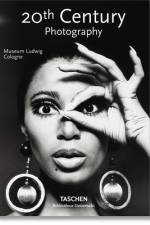
The history of photography began nearly 200 years ago, but only relatively recently has it been fully recognized as a medium in its own right. Cologne's Museum Ludwig was the first museum of contemporary art to devote a substantial section to international photography. The L. Fritz Gruber collection, from which this book is drawn, is one of the most important in Germany and one of the most representative anywhere in the world, constituting the core of the museum's holdings. This book provides a fascinating insight into the collection's rich diversity; from conceptual art to abstraction to reportage, all of the major movements and genres are represented via a vast selection of the 20th century's most remarkable photographs. From Ansel Adams to Piet Zwart, over 850 works are presented in alphabetical order by photographer, with descriptive texts and photographers' biographical details, providing a comprehensive and indispensable overview of 20th-century photography.
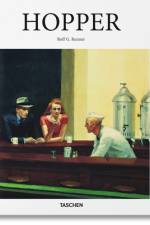
Edward Hopper (1882-1967) is something of an American success story, if only his success had come swifter. At the age of 40, he was a failing artist who struggled to sell a single painting. As he approached 80, Time magazine featured him on its cover. Today, Hopper is considered a giant of modern expression, with an uncanny, unforgettable, and utterly distinct sense for mood and place. Much of Hopper's work excavates modern city experience. In canvas after canvas, he depicts diners, cafes, shopfronts, street lights, gas stations, rail stations, and hotel rooms. The scenes are marked by vivid color juxtapositions and stark, theatrical lighting, as well as by harshly contoured figures, who appear at once part of, and alien to, their surroundings. The ambiance throughout his repertoire is of an eerie disquiet, alienation, loneliness and psychological tension, although his rural or coastal scenes can offer a counterpoint of tranquility or optimism. This book presents major works from Hopper's oeuvre to introduce a key player not only in American art history but also in the American psyche.
With the patronage of the powerful Medici family, a canon of secular and religious work, and contributions to the celebrated Sistine Chapel, Sandro Botticelli (1444/45-1510) was well placed for fame. After his death, however, his work was eclipsed for some four hundred years. It wasn't until the 19th century that the painter began to gain major art-historical recognition. Today, Botticelli is hailed as a towering figure of the Florentine Early Renaissance. His secular works The Birth of Venus and Primavera, mostly read as an allegory of Spring, are among the most recognized paintings in the world, resplendent in their delicate details, graceful lines, and compositional balance. His arrangements are fluid yet poised, his figures serene yet sensual. Venus, in particular, is held up as art-historical icon of beauty: pale-skinned, delicately featured, soft with fecund promise. This essential introduction presents key works from Botticelli's oeuvre to understand the making of a Renaissance legend. Through the painter's most famous mythological and allegorical scenes, as well as his radiant religious works, we explore a mastery of figuration, movement, and line, which has gone on to inspire artists from Edgar Degas to Andy Warhol, René Magritte to Cindy Sherman.
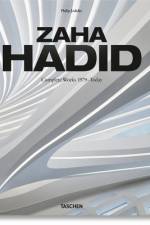
Zaha Hadid (1950 - 2016) was a revolutionary architect. For years, she was widely acclaimed and won numerous prizes despite building practically nothing. Some even said her work was simply impossible to build. Yet, during the latter years of her life, Hadid's daring visions became a reality, bringing a new and unique architectural language to cities and structures such as the Port House in Antwerp, the Al Janoub Stadium near Doha, Qatar, and the spectacular new airport terminal in Beijing. By her untimely death in 2016, Hadid was firmly established among architecture's finest elite, working on projects in Europe, China, the Middle East, and the United States. She was the first female architect to win both the Pritzker Prize for architecture and the prestigious RIBA Royal Gold Medal, with her long-time Partner Patrik Schumacher now the leader of Zaha Hadid Architects and in charge of many new projects. Based on the massive TASCHEN monograph, this book is now available in an extensively updated and accessible edition covering Hadid's complete works, including ongoing projects. With abundant photographs, in-depth sketches, and Hadid's own drawings, the volume traces the evolution of her career, spanning not only her most pioneering buildings but also the furniture and interior designs that were integrated into her unique, and distinctly 21st-century, universe.
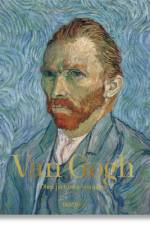
Today, the works of Vincent van Gogh (1853-1890) are among the most well known and celebrated in the world. In paintings such as Sunflowers, The Starry Night, and Self-Portrait with Bandaged Ear, we recognize an artist uniquely dexterous in the representation of texture and mood, light and place. Yet in his lifetime, van Gogh battled not only the disinterest of his contemporary audience but also devastating bouts of mental illness. His episodes of depression and anxiety would eventually claim his life, when, in 1890, he committed suicide shortly after his 37th birthday. This comprehensive study of Vincent van Gogh offers a complete catalogue of his 871 paintings, alongside writings and essays, charting the life and work of a master who continues to tower over art to this day.
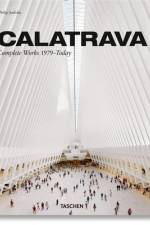
Santiago Calatrava is a world-renowned architect, structural engineer, sculptor, and artist. From the Athens 2004 Olympic Sports Complex to the World Trade Center Transportation Hub in Manhattan, he exhibits a remarkable aesthetic and engineering prowess with a simultaneous sensitivity for both the appearance and the anatomy of a structure. With influences ranging from NASA space design to da Vinci's nature studies, Calatrava's creations are at once aerodynamic and organic in their associations. Natural forms and human movements inform a number of his projects, with a particular interest in the meeting point of equilibrium and dynamism. This updated monograph gathers detailed entries, photography, and the original watercolor sketches that set Calatrava aside as a unique creative master. It includes all of Calatrava's original input, as well as new projects such as the Mediopadana Station in Reggio Emilia, Italy, the Museum of Tomorrow in Rio de Janeiro, and recent works like the UAE Pavilion at Expo 2020 in Dubai.
Latin America is a cradle of ancient civilizations like those of the Incas, Maya and Aztecs, and later became the goal of European explorers and immigrants. It looks back on a long history, often full of contrasts and contradictions, but also has a very special multicultural atmosphere. This book presents breathtakingly beautiful landscapes and extraordinary hotels. Short texts and practical information complement the superb photos. The places to stay shown here include the Anavilhanas Jungle Lodge in the Brazilian Amazon and the Uxua on the beach of Trancoso, for which a Dutch designer has transformed historic buildings into villas in ethnic style. Big Bang in Uruguay is a wonderful place for glamping between the ocean and the forest. The elegant vacation destinations of this country are home to the Fasano Punta del Este by the architect Isay Weinfeld and the Posada Ayana, where the American Land Art star James Turrell has installed one of his famous Skyspaces on the estate. This journey also goes to the Explora El Chaltén at the foot of Monte Fitz Roy in rugged Patagonia, to the Tierra Atacama in the world's driest desert in Chile, to the mid-century classic Antumalal, and to Easter Island, guarded since time immemorial by the huge stone sculptures of the Moai. In Peru visitors follow in the footsteps of the Incas through Valle Sagrado, site of the ruined city of Machu Picchu, and get to know the indigenous Achuar people in Ecuador while staying at the Kapawi Ecolodge. The itinerary also takes in Columbia - with the picturesque Hotel San Pedro de Majagua on Isla Grande. At the Nantipa in Costa Rica, three friends have made their dream of the ideal beach hotel come true, and in Nicaragua an American brother and sister have found their own paradise on a private island, the Isleta El Espino. This book would not be complete without Mexico, of course - including, for example, Alberto Kalach's spectacular Hotel Terrestre in Puerto Escondido, the eclectic Mesón Hidalgo combining a bed & breakfast with boutiques in San Miguel de Allende, and the luxurious, laid-back Hotel San Cristóbal Baja in Todos Santos.
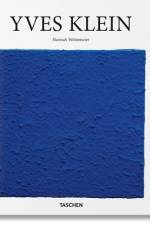
In the mid-1950s, Yves Klein (1928-1962) declared that "a new world calls for a new man." With his idiosyncratic style and huge charisma, this bold artist would go on to pursue a brief but bountiful career, producing more than 1,000 paintings over seven years in an oeuvre now considered a mainstay of postwar modernism. Klein made his name above all with his large monochrome canvases in his own patented hue of blue. International Klein Blue (IKB), composed of pure pigment and binding medium, is at once rich and luminous, evocative and decorative, and was conceived by Klein as a means of evoking the immateriality and infinitude of the world. The works of this "Blue Revolution" seem to draw us into another dimension, as if hypnotized by a perfect summer sky. Klein was also renowned for his deployment of "living brushes, " in which naked women, daubed in International Klein Blue, would make imprints of their bodies on large sheets of paper. This Basic Art introduction presents key Klein works to introduce an artist who was at once a showman, inventor, and pioneer of performance art. With page after page of the ever-alluring International Klein Blue, it is both an essential guide to a modern art master and a meditation on the unique effects of a single color.
Abonner på vårt nyhetsbrev og få rabatter og inspirasjon til din neste leseopplevelse.
Ved å abonnere godtar du vår personvernerklæring.