











Gjør som tusenvis av andre bokelskere
Abonner på vårt nyhetsbrev og få rabatter og inspirasjon til din neste leseopplevelse.
Ved å abonnere godtar du vår personvernerklæring.Du kan når som helst melde deg av våre nyhetsbrev.

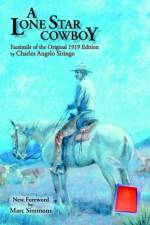
For a number of years prior to 1922, one of Santa Fe, New Mexico's most colorful and famous residents was Charles Angelo Siringo (1855-1928), popularly known as "the cowboy detective." A small, wiry man, he was friends with practically everyone in town. In 1916 Governor William C. McDonald persuaded Siringo to accept a commission as a New Mexico Mounted Ranger for the state Cattle Sanitary Board. The only thing unusual about that was Charlie Siringo's age, a ripe 61. Undaunted, he saddled up and with a pack horse started for his headquarters at Carrizozo in Lincoln County. His duty was to run down outlaws and stock thieves in southern New Mexico. "During my two years as a ranger," Siringo said, "I made many arrests of cattle and horse thieves and had many close calls with death staring me in the face." Obviously, Governor McDonald had made a wise choice when he tapped this hard-riding, fast-shooting "senior citizen" for the dangerous ranger job. But Siringo was more than a law man. He put in countless nights writing up his experiences. When his book," A Texas Cowboy," appeared, its author achieved fame overnight. "A Lone Star Cowboy," published in 1919, and which Sunstone Press has chosen to include in its Southwest Heritage Series, contained many of the stories in his earlier books and the author says in his preface: "This volume is to take the place of A Texas Cowboy." Meanwhile, soon after publishing his recollections, Siringo joined the renowned Pinkerton Detective Agency, whose branch offices covered the West. He remained with the firm for two decades. After leaving the Pinkertons, Charlie Siringo did a good bit of roaming before settling in Santa Fe. Because of the name he'd made in publishing, he had access to many persons, on both sides of the law. From them he got first hand information that he later incorporated in a new book called "Riata and Spurs." In that work, the writer had wanted to include some of his own daring adventures while serving with the Pinkertons. But the Agency threatened a lawsuit if he revealed any of their professional secrets. So the cowboy detective had to delete some of his best material. Siringo's experiences as the quintessential cowboy and determined detective helped romanticize the West and its myth of the American cowboy.
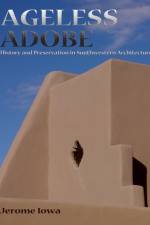
The American Southwest possesses an extraordinary depth of cultural heritage and much of its history is preserved in its architecture. Particularly prominent in the region's man-made landscape are the historic structures made from the earth itself-adobe. Attention has turned to ways of preserving and maintaining the old buildings of the Southwest partly because of the growing national interest in historic preservation. However, in the Southwest there has also been an increased awareness of the inherent viability of native architecture. Adobe structures present unique challenges and require special treatment and until now, much of that information has been unpublished. AGELESS ADOBE provides practical details on methods of preservation and maintenance for old adobe buildings. The over 200 illustrations in the book along with directions on "e;how-to"e; will enable the do-it-yourself home owner as well as the professional architect or contractor to plan and carry out renovation. The author presents solutions to the problems of keeping an historic structure intact while repairing it and making it 20th century livable. The issue of energy conservation is discussed at length and the premise of the book is that historic integrity does not have to be sacrificed for energy efficiency. Rehabilitation is always preferable, usually possible and often more profitable than demolition.
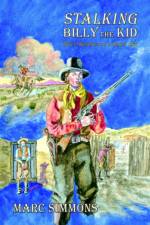
"e;Having written about New Mexico history for more than forty years,"e; explains the author, "e;it was perhaps inevitable that in time I should publish a few articles on Billy the Kid. After all, he is the one figure from this state's past whose name is known around the world. The Kid's career, although astonishingly short, nonetheless, left an indelible mark in the annals of the Old West. And his name, William H. Bonney, alias Billy the Kid, seems locked forever into the consciousness of the starry-eyed public. Upon request,"e; the author continues, "e;I was able to assemble a collection of my varied writings pertaining to some of Billy's real or imagined deeds. Each section opens a small window on an aspect of his tumultuous life, or casts light upon others whose fortunes intersected with his. In this book, I have stalked Billy in an erratic rather than a systematic way, taking pleasure merely in adding a few new and unusual fragments to his biography. I trust that readers who have a fascination with the history and legend of Billy the Kid will find in these pages something of interest and value. As Eugene Cunningham wrote more than seventy years ago, 'in our imagination the Kid still lives--the Kid still rides.'"e;
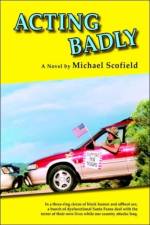
As in the lives of people we all know, this story presents a dozen fictional Santa Feans trying to love, yet mistreating, each other the week before US forces invade Iraq. "e;The aggression that dominates American life today,"e; says author Michael Scofield, "e;goads them into brandishing their dark sides."e; Married realtor Maxine Morgan, for instance, coaxes conservative mortgage broker Ron Kirkpatrick (and others) into bed. Ron's not-quite-yet-psychotic wife Lila tries to seduce handyman Victor Valdez. High-tech writer Manny Barnes falsely promises his fiancee to give up in-your-face activism. CPA Chuck Ridley leaves his family for Silicon Valley CEO Bret, who changes his mind about war. In an ambiance of black humor and misfiring sex, readers will find themselves embracing Maxine's attempt to escape from nymphomania after meeting a retired war correspondent, Victor's desperate scheme to care for his mother while returning to carving Santos, Lila's plan to destroy Maxine, Manny's longing to give Joyce a baby, and Chuck's joy in discovering he's gay. You'll laugh a lot--but you'll also weep to see how our increasing turmoil at home in the United States mirrors our ongoing behavior overseas. Yale University graduate MICHAEL SCOFIELD received his MFA in Writing from Vermont College in 2002. Currently he teaches creative-writing skills to half a dozen students one-on-one. The author of two books of poems, "e;Silicon Valley Escapee"e; (2000) and "e;Whirling Backward into the World"e; (2006), he also has published books on bird-watching and do-it-yourself upholstering. Before moving to Santa Fe, New Mexico in 1995, his wife and he ran a high-tech marketing-communications business from their home in Palo Alto, California.
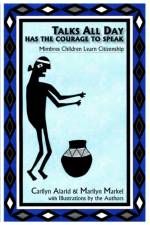
This exciting story introduces the use of the Native American "e;talking stick"e; and the "e;lightning stick"e; through the unique, black and white painted pottery images used by the Mimbres Indians of southwest New Mexico. The story centers on five Mimbres children who empower themselves to become active, contributing citizens of their village. Their life experiences teach them courage, empathy, tolerance and determination on their journey toward adulthood. The children are brought to life through the illustrated scenes of everyday activity as depicted on the pottery bowls by Mimbres artists of a thousand years ago. This book, focusing on the theme of citizenship, is the second in a series to help children learn how to develop good character traits. Teachers, librarians and children of all ages will enjoy this pictorial narrative. Twin sisters Carilyn Alarid and Marilyn Markel are dedicated to helping children learn how to have respect for the individual and cultural differences of all people. With a Master's degree in Special Education and pursuing a Master's degree in History respectively, Carilyn synthesizes classroom instruction to emphasize the importance of character development and Marilyn teaches about the increasing need to preserve our archaeological treasures. Born and raised in New Mexico, these sisters have the utmost respect for native cultures both past and present. The other books in the "e;talking stick"e; series include OLD GRANDFATHER TEACHES A LESSON, HITS WITH HIS FIST GIVES A HELPING HAND, RUNS LIKE THE WIND STOPS IN HER TRACKS, and THINKS A LOT HAS HER HEAD IN THE CLOUDS, all published by Sunstone Press.
Willa Cather, in the historical novel "e;Death Comes for the Archbishop,"e; depicts Padre Antonio Jose Martinez as an unscrupulous backward rogue priest and Archbishop Jean Baptiste Lamy as a civilizing, heroic and monumental figure. Countering Cather's assessment and portrayal of these two larger-than-life Southwestern folk heroes, Ray John de Aragon attempts to set the historical record straight. Padre Martinez (1793-1867) is viewed as a genius who was ahead of his time. Recognized as a champion of the poor, defender of the Native Americans and proponent of human rights, it was inevitable that he would clash with Lamy. Bishop Lamy (1814-1888), who also had his followers, emerges as someone whose understanding of native New Mexican cultures was lacking, but one whose intentions were to do good as a missionary in a strange and foreign land.
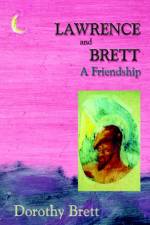
In March of 1924, D. H. Lawrence, Frieda Lawrence and the Honorable Dorothy Brett went to Taos, New Mexico, to absorb the color and romance of what was to them a mysterious and compelling land. Dorothy Brett recreated those days in this fascinating first-hand account, and also writes of when she was the close friend of Aldous Huxley, Lytton Strachey, Katherine Mansfield, and other important literary and artistic figures. But more importantly, she focused on her relationship with Lawrence and the book was specifically addressed to him as if he were to read it, reminding him personally of her long-standing devotion. Such devotion was not rebuffed by Lawrence, it seems, but it was met differently by the two other women orbiting the famous writer: his wife, Frieda Lawrence, and Mabel Dodge Luhan. They were in turn cross and conciliatory to her. But it seems that she just accepted them as other intense admirers of Lawrence, took it all simply and wrote it all down with a minimum of comment. When this book was first published in 1933, it was praised by critics as well as the general public. Alfred Stieglitz said: "e;It was a rare spiritual experience--no student of Lawrence can afford to miss this book.. There is an integrity in the book--a sense of the eternal--a sense of Light--which raises it above all the other books I have read about Lawrence."e; And, interestingly, Mabel Dodge Luhan called it "e;clearly and explicitly drawn."e; Here it all is again with additional material added by Dorothy Brett herself when the 1974 edition was first published by Sunstone Press.
Many conditions, cultures, and events have played a part in the history of New Mexico. The author, a recognized authority, guides the reader from the earliest land formations into the present time and has illustrated the narrative with photographs, maps, and artwork depicting various changes that took place during the many stages of New Mexico's development. Donald R. Lavash taught New Mexico junior and senior high school history for 13 years, and at the college level for two years. This book is the outgrowth of his teaching experiences and his feeling of a strong need for a New Mexico history text. Dr. Lavash was also the Southwest Historian for the New Mexico State Records Center and Archives for five years. He is the author of numerous articles and books on history and archeology.
Why has Billy Graham, more than any other person, left his imprint on the religious life and history of our times? Why has a man who always cherished quiet conversations with ordinary people made international headlines as perhaps the world best-known "e;religious celebrity"e;? And how did Billy Graham stay free of the tarnishing Elmer-Gantry-type temptations of money and women? David Poling asks these and many other questions critics have often asked--and he offers answers as one who was an outspoken critic in the past but changed his mind and attitudes. Placing Billy Graham's life and ministry under the journalist's microscope, Poling examines the personal qualities and unchanging message that characterized the great evangelist. He also chronicles the triumphs and struggles of the Graham Crusades and other far-reaching ministries. Evaluating the man in the context of the global society of which Graham still remains so prominent a figure, Poling traces his ministry and its effects from the early days to his position of leadership and reveals why Billy Graham won his abiding respect and admiration and remains a shining example to be followed in his private and public life and conduct. DAVID POLING is author/co-author of fourteen books. He has been pastor to Presbyterian congregations in New York, Oklahoma, New Mexico and Texas. His weekly syndicated column on faith and ethics appeared in 600 newspapers, with an audience of 17 million. Married to Ann Reid Poling, a Wooster College classmate(and known to others as "e;his favorite theologian"e;) the couple has four grown children and eight grandchildren. Next book: "e;The Gospel According to the Apaches."e;
Why has Billy Graham, more than any other person, left his imprint on the religious life and history of our times? Why has a man who always cherished quiet conversations with ordinary people made international headlines as perhaps the world best-known "religious celebrity"? And how did Billy Graham stay free of the tarnishing Elmer-Gantry-type temptations of money and women? David Poling asks these and many other questions critics have often asked--and he offers answers as one who was an outspoken critic in the past but changed his mind and attitudes. Placing Billy Graham''s life and ministry under the journalist''s microscope, Poling examines the personal qualities and unchanging message that characterized the great evangelist. He also chronicles the triumphs and struggles of the Graham Crusades and other far-reaching ministries. Evaluating the man in the context of the global society of which Graham still remains so prominent a figure, Poling traces his ministry and its effects from the early days to his position of leadership and reveals why Billy Graham won his abiding respect and admiration and remains a shining example to be followed in his private and public life and conduct. DAVID POLING is author/co-author of fourteen books. He has been pastor to Presbyterian congregations in New York, Oklahoma, New Mexico and Texas. His weekly syndicated column on faith and ethics appeared in 600 newspapers, with an audience of 17 million. Married to Ann Reid Poling, a Wooster College classmate(and known to others as "his favorite theologian") the couple has four grown children and eight grandchildren. Next book: "The Gospel According to the Apaches."
This readable, easy-to-follow guide to physical fitness incorporates Olympic coach Carl Miller''s lifetime of experience. The book discusses the benefits of the motions used in Olympic-style weight lifting that contribute to strength, endurance and flexibility and Miller has fine-tuned his approach with decades of hands-on work with clients, both men and women, from age 9 to 90. The Miller Fitness Plan works for everyone, from athletes training for competition to reformed couch potatoes and people with physical challenges. Athletic weight training movements serve as a core for sound physical fitness, enabling people of all ages and abilities to see long term benefit, and have fun while exercising. Complete with photo illustrations, testimonials for those who have used the Miller Plan and advice on motivation, this book is a unique, user-friendly manual for getting and staying in shape that can be done at any gym or at home.
What allows kids to use a lot of energy, make funny noises, relax, and learn to focus all at the same time? Yoga! While many yoga books present individual poses, this book explains how to create a flowing yoga practice that will holds kids' interest while providing the benefits of yoga. Here is a handbook for anyone--including parents, teachers, and kids--who wants to develop a fun yoga practice. In addition, the book provides ideas for yoga games, yoga at a wall, more relaxation games, and five-minute classroom yoga.
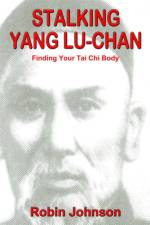
This unique manual of internal methods, inspired by the skills of Yang the Invincible, reveals key elements in finding and training a Tai Chi body. How did Yang do it? From whom did he learn? He watched the Chens but had to train alone in secret. Yang Lu-chan had to learn from himself, through his own body. Beginning in the stillness of Wu Ji standing, the author presents core components of Tai Chi movement. Each chapter identifies, describes, and explains structures and techniques of a moving body. What, in plain language, are the meanings of stillness in motion? How does ground-level attention ensure seamless moves in solo forms and applied technique? Which complementary action principles ensure the correct shape and energy? What is modesty, and how does it optimize energy exchange? Why are form orientations both useful and misleading? How does a Tai Chi boxer employ the fourth dimension?These and other questions about Tai Chi movement are answered in clear and direct language. There are no theories nor confusing aphorisms. And the methods employ sensing and deeds, not thinking and ideas. Whatever your intent--self-care, self-defense, or enhanced understanding--you'll find ways to progress at all levels. The author has distilled thirty years of exploration and deep respect for Yang into this manual. Rather than think and talk, he has tried to put himself in Yang Lu-chan's shoes.
A weekend vacation rekindles the joy and pain of youth. A search for historical truth reveals a hundred-year-old secret. A quest for new life redefines loneliness. A search for meaning unlocks the awesome power of a single word. A decades-long Cold War in the vast reaches of space suddenly heats up. A New Garden of Eden unleashes a new kind of Serpent. A mournful journey becomes the beginning of hope. These are some of the stories, some of the voyages, some of the discoveries, in this collection by Melvyn Chase. Sometimes you will travel no further than the next town. Sometimes the journey will take you far across the reaches of time and space. But don't be too sure that you know where you are headed. Your destination may not be what it seems to be. And getting there is all about discovery.
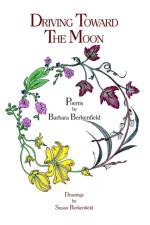
"I cannot remember a time when I was not writing," says Barbara Berkenfield. "After many years as a free-lance writer, I am very comfortable in my craft and write articles for a public audience with confidence. Throughout my life poetry has been my very personal place, where I can release and organize the words that define 'me.' I have seldom shared my poems with an audience beyond my immediate family, and only five have been previously published. Therefore in the roar of today's world, I hope that my 'mouse voice' is loud enough to evoke memories and sentimental sparks among my new audience."Barbara Berkenfield grew up amid the noise and soot of Pittsburgh, Pennsylvania during its heyday as a city of belching steel mills and clanging street cars. Elected to Phi Beta Kappa at Wellesley College, she graduated Summa Cum Laude with a BA in History of Art. In New York City, she found both her niche as a research consultant at the Wildenstein Gallery and her husband John Berkenfield.Following a stint in suburbia, John's career took them abroad with two young sons and they all thrived in the vibrancy of Paris and the beauties and traditions of France. Since 1989 they have lived in Santa Fe where she is a free-lance writer and a docent at the living history museum, El Rancho de las Golondrinas. Many of her poems have been sharpened while on their treasured driving trips in the Southwest with their dog Molly.
In New York City in 1948, a dozen or so reporters founded the New York Press Club to improve relations between newspapermen and the judiciary and police department. One of these "e;newspapermen,"e; and the only living founder is Jeanne Toomey, a law school dropout for financial reasons. At twenty-one years of age, she joined the staff of "e;The Brooklyn Daily Eagle"e; and was sent to cover police headquarters, alternating between Brooklyn and Manhattan. What went on behind all those headlines? The inside story of the sex lives, the disasters, comic episodes, and the general mayhem of those who report the crime of a great city is faithfully recorded in "e;Assignment Homicide."e; With bail bondsmen, judges and cops, the only woman among one hundred men, the author was the envy of her female friends. When the reporters--she dated some of them--launched their press club, they also introduced the district attorneys and police commissioners to their hectic, alcohol-fueled world. Heartaches, passionate mix-ups resulting in sudden death, plane crashes, jail breaks, complex court cases--every kind of disaster--were daily fare for reporters in America's largest city. Here is their story: uncolored, unbiased, bigger than life. Working for as many as thirty newspapers, as well as the Associated Press and King Features Syndicate, JEANNE TOOMEY was a veteran wanderer and itinerant. Never caring much about pensions, benefits, and other serious concerns of many of her peers, she was more preoccupied with seeing the "e;Real America"e; (or France or Mexico). She worked both sides of the United States, carrying a notebook or tape recorder. Published by "e;Family Circle,"e; "e;Family Weekly,"e; AP Newsfeatures, and a number of detective magazines as well as newspapers, she has won the "e;Woman of the Year"e; award from the Women's Press Club of New York, as well as the Nevada State Press Association's prize as best feature writer. A graduate of Southampton College of Long Island University, she tried to hold up a strong mirror to life.
Abonner på vårt nyhetsbrev og få rabatter og inspirasjon til din neste leseopplevelse.
Ved å abonnere godtar du vår personvernerklæring.