









Gjør som tusenvis av andre bokelskere
Abonner på vårt nyhetsbrev og få rabatter og inspirasjon til din neste leseopplevelse.
Ved å abonnere godtar du vår personvernerklæring.Du kan når som helst melde deg av våre nyhetsbrev.

Four hundred years ago, the pioneer men and women who first came to New Mexico were forced to make their life compatible with the earth and with their isolation. The beauty that surrounded them did not sustain them, but out of reverence for the land, there appeared the chosen ones--the "curanderos" who understood the medicinal uses of herbs; the "veijitos," the old men who made folklore, history and tradition and recounted it to the younger generations. And from this same tradition came the Patrón, a man who had the ability to channel ambition and determination, and to make the land and its people yield to the law of common interest. He was a protector, a watcher of signs; he was a code maker, a fashioner of a way of life that is sadly missing in today''s world. He was called the Patrón by those whom he loved and who returned that love with work, faith and personal devotion. They called him the Patrón, but they might just as well have called him the Godfather. José Ortiz y Pino has portrayed New Mexico, its characters and traditions with a sagacious wit and poignant keenness that could only have emanated from one who grew up in its midst. And he has narrated for us the story of a man whose visions had no limits, a man whose dedication to his goal was matched only by his sense of justice and compassion for all men--Don José Ortiz, The Last Patrón.
Half-breed Cherokee warrior Tse-quo-ni fears no man. But his greatest frustration comes from his inability to win the war raging within himself. The source of his inner hell is the uninvited influence of the white man.He hates the white blood racing unwanted through his veins. He hates Franklin Adair, the white man he thought was his father. He hates Matthew McCloud, the white man his mother reveals to be his father just before her death. He hates the deceitfulness of all whites. He hates what has happened to the once proud Cherokee nation because of their rush to live like white people.During the time of the removal of the great Cherokee nation from North Georgia and the Carolinas, he slips away and journeys West to keep the promise he made to himself the moment he learned about Matthew McCloud. The journey is a daily struggle in the war within Tse-quo-ni. This chronicle of the journey reveals each skirmish, assault, retreat, wound, and battle and the eventual resolution that surprises even this fearless warrior. TOM V. WHATLEY lives in Muscle Shoals, Alabama and is the author of four Western novels. "Cuts No Slack," "He Ain''t Dead," "Ghost Runner," and "Twice As Good." He is also the author of a suspense novel, "The Gatekeeper." All were published by Sunstone Press.
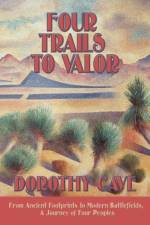
Here are four men, representing the dominant cultures of the American Southwest, who set their feet upon trails which follow the physical and metaphysical journeys of their forefathers--the Pueblos' Cornmeal Path, the Navajo Beautyway, the Spanish Way of the Cross, and the Yankee Trail of Destiny. All lead to the great fact of the past century, World War II, in which each man blazes his own trail in his country's greatest crisis. Each carries to war his people's pride and his father's faith. Through the jungles of Bataan, the bloody battles of Tarawa and Iwo Jima, across the deserts of North Africa, and the formidable Italian mountain chain, each carries his bits of home--medicine bundle or crucifix, sacred cornmeal or pocket Bible--and each clings to the mystic thread that will bring him home. At journey's end the circle closes as each man, each race, each reader, must speculate on the untrodden paths ahead, leaving them, and us, with profound--perhaps painful--questions and a deeper understanding of man's relation to man, and to the trinity of Earth, Sky and Water.
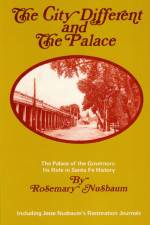
The year was 1909, and a youthful Jesse Nusbaum had resigned his teaching position at the Normal School at Las Vegas, New Mexico, and had ridden his "e;...four-horse-power, twin-cylinder, chain-belt-driven, two-speed Excelsior motorcycle over the rough and rocky Santa Fe Trail route, to enter on July 1 at the Old Palace of the Governors."e; He was the first employee of the newly-formed Museum of New Mexico and School of American Archaeology. From that day, Jesse Nusbaum's life was inextricably bound to Santa Fe: it was he who undertook the remodeling of the Palace of the Governors into a museum; from 1909-1913, it was he who supervised the razing of the old Army barracks at the corner of Palace and Lincoln Avenue I 1916 and also supervised the construction of the Fine Arts Museum on that site; and he was one of the organizers of the Laboratory of Anthropology, Inc., and was its first director when the doors opened in 1930. Additionally, Jesse was one of the foremost Southwestern archeologists, and he was a first-rank photographer, as many of the illustrations in this volume (although reproduced here from less than excellent sources) will attest. For all his other accomplishments, however, Jesse Nusbaum is most closely associated with the Palace of the Governors. In this book, dedicated in memory of her husband, Rosemary Nusbaum has delineated the history of the "e;Old Palace."e; Much has been written elsewhere about that historic structure, but only in this volume can the insight and experiences of Jesse Nusbaum be found. ROSEMARY L. NUSBAUM was born in Marquette, Michigan and graduated from the Baraga High School in that city. In 1929, she received the R.N. degree from the University Hospital in Chicago, Illinois and then worked as a Medical Pathologist for the Eight Corps Area of the Army stationed at Bruns General Hospital in Santa Fe in World War II. She studied sculpture with Eugenie Shonnard and ceramics with Warren Gilbertson in Santa Fe. She was also the author of numerous short stories and poems which appeared in many well-known publications. Ernest Thompson Seton said of her: "e;She possesses the virtue of intelligence."e;
Would you like to age with grace and vitality? Increase your strength, energy and flexibility? Sleep better and be sharper mentally? You can achieve all of these if you practice yoga on a regular basis. Many women go to class once or twice a week and want to practice at home but just don't know how to begin. "e;Yoga for Women at Midlife and Beyond: A Home Companion"e; will give women over 50 the support and guidance they need to create a personal yoga practice in the privacy of their own home. This guidebook includes ten yoga practices with clear illustrations that you can follow on your own, such as a practice for energizing, one for relaxation and another for insomnia. The manual also contains practical information about: where, when and how long to practice; how to set an intention and get support for your practice; how to use your breath to enhance your practice, and how to sustain a home practice. Concepts from classical yoga philosophy to help readers deepen their practice and integrate relevant concepts into their lives are introduced and inspiring stories from women over 50 about how yoga has made a difference to them are peppered throughout the book.
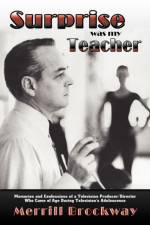
As both a producer and director, Merrill Brockway pioneered dance on television on the Emmy Award-winning PBS series, "e;Dance in America."e; Through this series and CBS' "e;Camera 3,"e; Brockway brought the performing arts to the "e;vast wasteland"e; of television in its early years. Working with the greatest artists of the day, including Pierre Boulez, George Balanchine, Martha Graham, Eugene Ormandy, Stella Adler, Agnes de Mille, Ruby Dee, Merce Cunningham and others, Mr. Brockway brought high art into the homes of the average American.
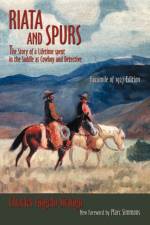
In his introduction to the 1927 edition of "e;Riata and Spurs,"e; Gifford Pinchot said that "e;Charlie Siringo's story of his life is one of the best, if not the very best, of all books about the Old West, when cowpunchers actually punched cows."e; He goes on to say that "e;it is worth something to be able to lay your hand on a book written by a man who is the real thing, and who tells the truth."e; Others might not have the same opinion about the book and some might argue about Siringo's memories of things that happened during his lifetime. But, in any event, the book is a colorful portrayal of the ins and outs of cowboys, bad men, and the one detective who took out after them. Siringo originally had references to his experiences with the Pinkerton Agency, but which objected to his statements and they do not appear in the 1927 edition. There's plenty left, however, including stories about Billy the Kid, Kid Curry, Butch Cassidy, and even a mention of Will Rogers. All in all, this fascinating book will give today's readers a rare glimpse of what was once called "e;the Old West"e; and is now gone forever. This new edition includes a new foreword by New Mexico historian Marc Simmons.
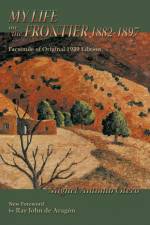
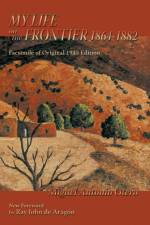
Miguel Antonio Otero (1859-1944) not only distinguished himself as a political leader in New Mexico and lived out his life as a champion of the people, but he is also highly recognized for his career as an author. He published his legendary "e;My Life on the Frontier, 1864-1882,"e; in 1935, followed by "e;The Real Billy the Kid: With New Light on the Lincoln County War"e; in 1936, "e;My Life on the Frontier, 1882-1897"e; in 1939, and "e;My Nine Years as Governor of the Territory of New Mexico, 1897-1906"e; in 1940. These books, of which this is one in Sunstone's Southwest Heritage Series, are filled with the raw power and intrigue of the Wild West written by one who lived it. One would expect no less from such a vibrant personality who filled the pages of his monumental history with the passionate memories of an exciting era. Otero was born in St. Louis, Missouri. His father, who bore the same name, and who was born in Valencia, New Mexico in 1829, had built up a stellar career in the East. Miguel Antonio Otero, Jr. was brought up in a family of wealth and influence, but he also experienced the hardships of growing up in a household that was always on the move. His family's sojourns took him from one town to another across Missouri, Kansas, Colorado, and New Mexico. During Miguel A. Otero's travels and frequent stopovers in Wild Western towns he came into contact with notorious outlaws like Clay Allison and popular lawmen such as Wild Bill Hickok, Pat Garrett, Elfego Baca, and other well known figures including Doc Holliday, William F. Cody ("e;Buffalo Bill"e;), General George A. Custer, and frontiersman Christopher "e;Kit"e; Carson. In fact, Otero was such an adventurous soul that he always sought out, or was in close contact with, anyone making headlines during the turbulent era he lived in. He even published a short lived newspaper called the "e;Otero Optic,"e; which eventually became the "e;Las Vegas Daily Optic."e; He began his illustrious career in politics as Las Vegas City Clerk, San Miguel County probate clerk, county clerk, and recorder, and district court clerk. Then in 1892 President William McKinley appointed Miguel Antonio Otero as governor of the New Mexico territory where he served until 1906. Includes foreword to original edition by George P. Hammond and a new foreword to this new Sunstone Press edition by Ray John de Aragon.
Miguel Antonio Otero (1859-1944) not only distinguished himself as a political leader in New Mexico and lived out his life as a champion of the people, but he is also highly recognized for his career as an author. He published his legendary "e;My Life on the Frontier, 1864-1882,"e; in 1935, followed by "e;The Real Billy the Kid: With New Light on the Lincoln County War"e; in 1936, "e;My Life on the Frontier, 1882-1897"e; in 1939, and "e;My Nine Years as Governor of the Territory of New Mexico, 1897-1906"e; in 1940. These books, of which this is one in Sunstone's Southwest Heritage Series, are filled with the raw power and intrigue of the Wild West written by one who lived it. One would expect no less from such a vibrant personality who filled the pages of his monumental history with the passionate memories of an exciting era. Otero was born in St. Louis, Missouri. His father, who bore the same name, and who was born in Valencia, New Mexico in 1829, had built up a stellar career in the East. Miguel Antonio Otero, Jr. was brought up in a family of wealth and influence, but he also experienced the hardships of growing up in a household that was always on the move. His family's sojourns took him from one town to another across Missouri, Kansas, Colorado, and New Mexico. During Miguel A. Otero's travels and frequent stopovers in Wild Western towns he came into contact with notorious outlaws like Clay Allison and popular lawmen such as Wild Bill Hickok, Pat Garrett, Elfego Baca, and other well known figures including Doc Holliday, William F. Cody ("e;Buffalo Bill"e;), General George A. Custer, and frontiersman Christopher "e;Kit"e; Carson. In fact, Otero was such an adventurous soul that he always sought out, or was in close contact with, anyone making headlines during the turbulent era he lived in. He even published a short lived newspaper called the "e;Otero Optic,"e; which eventually became the "e;Las Vegas Daily Optic."e; He began his illustrious career in politics as Las Vegas City Clerk, San Miguel County probate clerk, county clerk, and recorder, and district court clerk. Then in 1892 President William McKinley appointed Miguel Antonio Otero as governor of the New Mexico territory where he served until 1906.
Abonner på vårt nyhetsbrev og få rabatter og inspirasjon til din neste leseopplevelse.
Ved å abonnere godtar du vår personvernerklæring.