










Gjør som tusenvis av andre bokelskere
Abonner på vårt nyhetsbrev og få rabatter og inspirasjon til din neste leseopplevelse.
Ved å abonnere godtar du vår personvernerklæring.Du kan når som helst melde deg av våre nyhetsbrev.

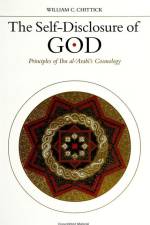
The Self-Disclosure of God offers the most detailed presentation to date in any Western language of the basic teachings of Islam's greatest mystical philosopher and theologian. It represents a major step forward in making available to the Western reading public the enormous riches of Islamic teachings in the fields of cosmology, mystical philosophy, theology, and spirituality.The Self-Disclosure of God continues the author's investigations of the world view of Ibn al-Arabi, the greatest theoretician of Sufism and the 'seal of the Muhammadan saints". The book is divided into three parts, dealing with the relation between God and the cosmos, the structure of the cosmos, and the nature of the human soul. A long introduction orients the reader and discusses a few of the difficulties faced by Ibn al-'Arabi's interpreters. Like Chittick's earlier work, The Sufi Path of Knowledge, this book is based primarily on Ibn al-Arabi's monumental work, al-Futuhat al-makkiyya "The Meccan Openings". More than one hundred complete chapters and subsections are translated, not to mention shorter passages that help put the longer discussions in context. There are detailed indices of sources, Koranic verses and hadiths. The book's index of technical terminology will be an indispensable reference for all those wishing to delve more deeply into the use of language in Islamic thought in general and Sufism in particular.
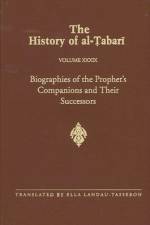
This is biographical material that al-T'abari appended to his History, bringing together biographies of Companions and successors of the Prophet. Many chapters are devoted to women who played a role in the transmission of knowledge.
The first comprehensive study of the idea of the Mahdi, or divinely guided messianic leader.
Challenges Beauvoir's self-portrait and argues that she was a philosopher in her own right.
Leading scholars of classical rhetoric address contemporary topics in Greek rhetoric and oratory.This is a bone-crushing confrontation of contemporary questions about the origins and early development of Greek rhetorical theory and practice. It examines a number of important issues from several new perspectives, and offers a more complex and multi-faceted account of the early history of rhetoric than is to be found anywhere else. It is especially unique in bringing together in one place the work of several distinguished scholars of Greek rhetoric and oratory. It takes a revisionist look at the Sophists and explores Greek sites, settings, and culture in ways that challenge long-standing ideas about discourse in the polis. A passionate book full of satyrs rather than philosophers, it is innovative and bold, a treasure-house of provocative ideas.
Based on the 1990 National Jewish Population Survey, this book analyzes gender equality in education, labor force participation, and occupational achievement among American Jews, and offers a comparison with the wider American population and Israeli Jews.
The standard histories of Israeli literature limit the canon, virtually ignoring those who came to Israel from Jewish communities in the Middle East. By focusing on the work of Iraqi-born authors, this book offers a fundamental rethinking of the canon and of Israeli literary history.The story of these writers challenges common conceptions of exile and Zionist redemption. At the heart of this book lies the paradox that the dream of ingathering the exiles has made exiles of the ingathered. Upon arriving in Israel, these writers had to decide whether to continue writing in their native language, Arabic, or begin in a new language, Hebrew. The author reveals how Israeli works written in Arabic depict different memories of Iraq from those written in Hebrew. In addition, her analysis of the early novels of Hebrew writers set against the experience of "transit camps" (ma'abarot) argues for a re-evaluation of the significance of this neglected literary subgenre.
Using a "cultural studies" approach to the question of what constitutes literary study at the end of the twentieth century, the contributors address identity politics in specific cultural instances.
Abonner på vårt nyhetsbrev og få rabatter og inspirasjon til din neste leseopplevelse.
Ved å abonnere godtar du vår personvernerklæring.