












Gjør som tusenvis av andre bokelskere
Abonner på vårt nyhetsbrev og få rabatter og inspirasjon til din neste leseopplevelse.
Ved å abonnere godtar du vår personvernerklæring.Du kan når som helst melde deg av våre nyhetsbrev.

Om Manipadme Hum, perhaps the most well-known and most widely used of all Buddhist mantras, lies at the heart of the Tibetan system and is cherished by both laymen and lama alike. This book presents a new interpretation of the meaning of Om Manipadme Hum, and includes a detailed, annotated precis of Karandauyuha Sutra, opening up this important work to a wider audience.The earliest textual source is the Karandauyuha Sutra, which describes both the compassion of Avalokitesvara, the bodhisattva whole power the mantra invokes, and the mythical tale of the search and discovery of the mantra. Through a detailed analysis of this sutra, Studholme explores the historical and doctrinal forces behind the appearance of Om Manipadme Hum in India at around the middle of the first millennium C.E. He argues that the Karandauyuha Sutra has close affinities to non-Buddhist puranic literature, and that the conception of Avalokitesvara and his six-syllable mantra is influenced by the conception of the Hindu deity Siva and his five-syllable mantra Namah Sivaya. The Karandauyuha Sutra reflects historical situation in which the Buddhist monastic establishment was coming into contact with Buddhist tantric practitioners, themselves influenced by Saivite practitioners.
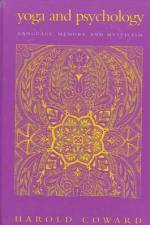
Harold Coward explores how the psychological aspects of Yoga philosophy have been important to intellectual developments both East and West. Foundational for Hindu, Jaina, and Buddhist thought and spiritual practice, Patanjali's Yoga Sutras, the classical statement of Eastern Yoga, are unique in their emphasis on the nature and importance of psychological processes. Yoga's influence is explored in the work of both the seminal Indian thinker Bhartrhari (c. 600 C.E.) and among key figures in Western psychology: founders Freud and Jung, as well as contemporary transpersonalists such as Washburn, Tart, and Ornstein.Coward shows how the yogic notion of psychological processes makes Bhartrhari's philosophy of language and his theology of revelation possible. He goes on to explore how Western psychology has been influenced by incorporating or rejecting Patanjali's Yoga. The implications of these trends in Western thought for mysticism and memory are examined as well.
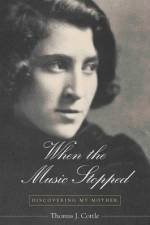
This is the story of one woman's decision to forfeit a brilliant career for the sake of mother-hood. Once a child prodigy, Gitta Gradova traveled the world as an internationally acclaimed concert pianist, performing recitals as well as appearing with prominent orchestras of her era. Her son Thomas J. Cottle uses written records, interviews, and personal reminiscence to reconstruct her life, as well as their own mother-son relationship. He is at times a storyteller, at times a psychologist, at times a son seeking to uncover those aspects of his mother's life he could never know, or perhaps, chose not to know until it was too late.
Abonner på vårt nyhetsbrev og få rabatter og inspirasjon til din neste leseopplevelse.
Ved å abonnere godtar du vår personvernerklæring.