














Gjør som tusenvis av andre bokelskere
Abonner på vårt nyhetsbrev og få rabatter og inspirasjon til din neste leseopplevelse.
Ved å abonnere godtar du vår personvernerklæring.Du kan når som helst melde deg av våre nyhetsbrev.

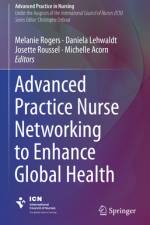
This book is the first bringing together the work of the ICN NP/APN Network, recognised as the leading authority on advanced practice nursing globally. Since its inception a wide range of projects have been conducted. This book offers readers an overview of global developments led by the Network on advanced practice in addition to findings related to education, research, health policy and clinical practice. This volume recognises the benefits and challenges associated with the development of advanced practice nursing globally. It begins with an overview of the Network before discussing some of the global challenges. The second section of the book presents a variety of the Network's projects and evidence informed data on APN role. This book presents the global context of advanced practice in a variety of settings; As such it is relevant for APNs, students, health policy makers, educators and researchers.
1 Die Chirurgie des Felsenbeins und der lateralen Schädelbasis.- 1 Unsere Langzeiterfahrungen bei der Behandlung von jugulotympanalen Paragangliomen.- 2 Der Wert der Somatostatinszintigraphie in der Diagnostik der Paragangliome.- 3 Das Felsenbeinkarzinom - eine interdisziplinäre Herausforderung.- 4 Unser Konzept beim Karzinom des äuÃeren Gehörganges.- 5 Möglichkeiten und Grenzen der Karotiskanalchirurgie.- 6 Intrakraniell bedrohliche Erkrankungen durch unscheinbare Entzündungen des Mittelohrs.- 7 Der transtemporale Zugang zum Klivus und zur petroklivalen Region Chirurgische Anatomie und klinische Erfahrung.- 8 Topographische Anatomie der Felsenbeinspitze und des Dorello-Kanals.- 9 Differentialdiagnosen von Raumforderungen des inneren Gehörgangs.- 10 Zum Stellenwert der Sakkotomierevision in der Behandlung des Morbus Menière.- 11 Der subtemporale Zugangsweg - eine gehörerhaltende Alternative beim Felsenbeincholesteatom.- 12 Wie stellt sich die laterale Schädelbasis im Dünnschnittplastinat dar?.- 13 Langerhans-Zellhistiozytose mit Beteiligung des Felsenbeins.- 14 Massive Osteolyse Gorham-Stout des Felsenbeins und des kraniozervikalen Ãbergangs.- 15 Falldarstellung: Lymphangiom des Felsenbeins.- 16 Missbildungen der lateralen Schädelbasis.- 2 Die Therapie des Vestibularisschwannoms.- 17 Funktionserhaltende Chirurgie des Akustikusneurinoms - Ergebnisse interdisziplinärer Kooperation.- 18 Hörvermögen vor, während und nach transtemporaler Akustikusneurinomexstirpation.- 19 Würzburger Schule der Akustikusneurinomchirurgie Interdisziplinäre Chirurgie des Akustikusneurinoms - Würzburger Konzept aus der Sicht des Otochirurgen.- 20 Zur Wait-and-See-Strategie beim einseitigen Akustikusneurinom.- 21 Die radiochirurgische Therapie des Akustikusneurinoms Technik im internationalen Vergleich.- 22 Rundtischgespräch zur Therapie des Vestibularisschwannoms.- 3 "Multi-information-guided therapy", CAS und neue Technologien in der Schädelbasischirurgie.- 23 3D-Navigation an der frontalen und lateralen Schädelbasis.- 24 Intraoperative Bildgebung und Neuronavigation - Gegenwart und Weiterentwicklung.- 25 Die Kombination der konventionellen CAS mit der intraoperativen Navigation der Laterobasis: enhanced CAS.- 26 Telemedizin in der Chirurgie der lateralen Schädelbasis - Vergleich ISDN, Internet, ATM.- 27 Computerassistierte Chirurgie der lateralen Schädelbasis Aktuelle Möglichkeiten und zukünftige Entwicklungen.- 28 Variationen des navigationsgestützten Zugangs zur lateralen Schädelbasis.- 29 Mögliche Fehler bei der Anwendung von CAS-Systemen an der Schädelbasis.- 30 Anwendungsmöglichkeiten der Telemedizin in der Schädelbasischirurgie.- 31 MRT-Visualisierung der Schädelbasisregion von unfixierten und kurzzeitfixierten Materialien.- 4 Experimentelle und histopathologische Untersuchungen zur Chirurgie der lateralen Schädelbasis.- 32 Tierexperimentelle Untersuchung zur medikamentösen Therapie der traumatischen Optikusneuropathie.- 33 Molekulargenetische und zellbiologische Untersuchungen am NF2-Gen.- 34 Analyse des adenoidzystischen Karzinomes mittels Laser-Scanning-Zytometrie.- 35 Das maligne fibröse Histiozytom der Kieferhöhle.- 36 Das intratemporale Fazialisneurinom: Diagnostik und Therapie.- 37 Neurobiokompatibilität von Titan, Gold und Silikon in vitro.- 38 Angiosarkomentstehung in Schwannomen des Nervus vagus.- 39 Minimal-invasiv applizierbare Zell- und Gewebeträger für die Schädelbasischirurgie.- 40 Dehiszenzen des Paries jugularies und Häufigkeit zusätzlicher Knochenkanäle der Fossa jugularis.- 5 Aktuelle Aspekte der Chirurgie der vorderen Schädelbasis.- 41 Neue Aspekte zur Therapie des Lagophthalmus.- 42 Invasive Mukozelen der Stirnhöhle - therapeutisches Vorgehen.- 43 Das Osteosarkom der Schädelbasis.- 44 Dorsale und ventrale kraniozervikale Stabilisierung bei progredienter basilärer Impression nach Densresektion bei PCP.- 45 Optikusdekompression bei bewusstlosen Patienten.- 46 Dislokation des
This surgical atlas illustrates the various successful thyroid surgery techniques of world-renowned surgeons. Some approaches presented include total thyroidectomy, right thyroid lobectomy, left thyroid lobectomy, minimally invasive approach to thyroidectomy, video-assisted approach to thyroidectomy, and endoscopic approaches, such as the transaxillary approach, bilateral axillo-breast approach (BABA), and trans-oral thyroid surgery (TOEVA). The Atlas is intended for a broader audience than publications for other procedures since thyroidectomy is among the most common neck procedures. The Atlas of Thyroid Surgery will help all surgeons caring for patients with thyroid disease minimize complications and perform successful thyroidectomy.
This textbook offers a comprehensible introduction to the physical fundamentals of the processes in our universe. The first chapters cover the observational possibilities of astrophysical quantities, cosmic rays, star formation and evolution, and galaxy formation and modeling. Subsequently, the basics of general relativity and different phenomena such as gravitational waves and black holes are covered. The book concludes with an introduction to cosmology: In addition to traditional homogeneous approaches, inhomogeneous cosmology in particular is given a broader scope in this new edition. Current inflationary models are presented. The book is intended for students of physics at the undergraduate, bachelor, and master levels, but it also offers a readable and easy-to-understand introduction for people with a basic knowledge of mathematics and physics who are interested in the natural sciences. In this third edition, all chapters have been thoroughly revised, restructured, and brought up to date with the latest findings from astrophysics, cosmology, and astronomy. ContentsSome important physical basics - observational possibilities - cosmic rays - stellar structure and stellar evolution - final stages of burning stars - galaxies - Newtonian cosmology - computational rules of ART - ART effects - relativistic stars and stellar dynamics - homogeneous cosmology - observations and interpretation approaches - inflation - inhomogeneous cosmologyThe AuthorKarl-Heinz Spatschek was Professor of Theoretical Physics at the Universities of Essen and Düsseldorf from 1975 to 2010 and collaborated with the Forschungszentrum Jülich in the field of plasma physics. Today he is involved in research on laser-plasma interaction and regularly lectures on astrophysics at the University of Düsseldorf.
1 Introduction.- Views and Experiences of Configuration Management.- Workshop Structure and Comments from Discussion.- 2 Part I: Analysis of Customers, Markets and Technology.- Record from 1st Group Work.- Even Modular Products can be Unmanageable.- Structured Sales Process for Configuration.- Visualizing Interdependencies in Technical Design.- 3 Part 11: Development of Product Portfolios and Module Systems.- Record from 2nd Group Work.- Product Structuring for Design Re-use.- Capturing Quality Perceptions in the Design Rational of a Modular Product Concept.- Relating Product and Process Structures.- 4 Part III: Metrics and Methods for Modularity and Configurability.- Record from 3rd Group Work.- Modularisation by Relational Matrices - a Method for the Consideration of Strategic and Functional Aspects.- Enhancing Product Modularisation with Multiple Views of Decomposition and Clustering.- A Framework for Evaluating Commonality.- 5 Part IV: Supporting Modeling and IT-Tools.- Conclusions and Discussion for Further Research.- Preservation of Engineering Knowledge in Configuration Systems.- Report on Using Product Data Management Software in Managing Modular Products.- ValueMap(TM) - a Method for Understanding the Economical Potential of Product Modularization and Cost of Variety.
This unique medical guide focuses on scars. The impact of scars is often underestimated and rarely discussed, and they are considered an inevitable side effect of surgery or trauma.Although therapies for distressing scars do exist, many are based on myths rather than evidence. This strongly practice-oriented book provides step-by-step instructions with scales and measuring instruments for assessing scars. Featuring brief abstracts and summaries, this valuable reference resource benefits clinical professionals such as doctors and nurses alike. It will appeal to practitioners who want to understand the nature and background of planned treatments, and to non-experts who simply want to broaden their medical horizons.
The incidence and prevalence of high myopia has increased significantly over the past decade and is expected to more than double over the next 20 years. These patients are more impacted by their vision than patients with lower refractive errors, and also have more limited safe and effective treatment options available to them. Fortunately, recent developments in the field have improved refractive surgery screening to improve safety, and new surgical options are now available specifically to address these more complex refractive errors. The book will address the unique challenges presented by patients with high myopia and cover the pros and cons of current treatment options. The book will also feature case studies, with detailed images and tables. In addition, the book will discuss promising future options currently in development.Refractive Surgery for High Myopia is a must-have resource for ophthalmologists, refractive surgeons, residents, and fellows.
This book presents up-to-date descriptions of smart services innovations in industry, supported by new scientific approaches. It summarizes the outcomes of the fourth Smart Services Summit, held in Zurich in October 2022, which primarily focused on how smart services can promote sustainability.As smart services accelerate, new technologies can be leveraged to create new value propositions and business models that deliver tangible sustainability outcomes. This book addresses social, economic and environmental aspects of sustainability in connection with new technologies. It includes contributions on how the quality and value of services are affected by digital technologies, how collaboration affects shared value creation, and how organizations can be enabled to drive digital value creation.Given its scope, the book represents an indispensable guide for practitioners and advanced students alike.
Jan Waldenström (1906-1996) was the leading Swedish internist of the twentieth century. The first chapter of the book presents his remarkable family including five generations of physicians. Born in Stockholm, we follow JW to medical school at Uppsala University during 1924-33. In 1934-5, he spent a year in the laboratory of Nobel Laureate Hans Fischer in Munich. In 1937, he defended a landmark thesis on acute intermittent porphyria. As "Docent" (assistant professor) in Uppsala, he discovered two new diseases in 1943. In 1944-5, he spent 7 months in the US commissioned by the Swedish Health Board. This started friendships with leading colleagues and scientists. With time, JW fostered a worldwide network of contacts and became a most influential international star. But this was just the beginning. The book follows Waldenström's remarkable career including his description of chronic active hepatitis as a new disease, his introduction of nuclear medicine in Sweden, hispioneering of the concept of the concept of poly- and monoclonal gammopathies, and many more highly significant achievements. His legacy is emphasized by Waldenström lectures, Waldenström Prizes, and by the International Waldenström's Macroglobulinemia Foundation, IWMF, and the Bing Center for Waldenström's macroglobulinemia at the Dana Farber Institute of Cancer Institute of the Harvard University in Boston. And now, not least, by this comprehensive biography.
This book aims to introduce scientists and educated laymen to the fascinating geology of the Bergell Alps, first with some background information on geology, tectonics, minerals and rocks and then to lead readers on excursions to observe geological features in the field. We believe the best way to make readers familiar with local geology is to lead them to intriguing outcrops. Such books are common in North America, but missing in Europe, particularly for the Alps. With this work, we use hands-on experience at a series of sites to educate readers how individual outcrops, moraines, landslides or other features contribute to our broader understanding of the region¿s unique geology.
This OpenAccess - textbook sheds new light on pathology in and around the orbit, which is typically an area where many medical disciplines overlap. Each physician brings a specific expertise, but the goal should be that the end result of all this input is much more than the sum of the parts. Collaboration, insight and overall knowledge of all parties involved are essential to achieve an optimal patient outcome.Oral and Maxillofacial surgeons have traditionally focused on the bony parts of the orbit, but usually have limited knowledge of the intricacies of binocular single vision, and for the Ophthalmologist it may be the other way around. In the past, scientific articles were often written from a single point of view, resulting in tunnel vision for the physician. The multidisciplinary approach to the orbit leads to an improvement in treatment that should not be underestimated and from which the patient benefits immensely. But especially for the physician and the trainees, a multidisciplinary consultation is a real goldmine in which a lot can be gained. Not every medical problem needs to be tackled in a multidisciplinary framework, but problems around the eye socket often do.At Amphia Hospital in Breda, the Netherlands, more than fifteen years ago, a collaboration between Oral and Maxillofacial Surgeons, Endocrinologists, Radiologists and Ophthalmologists was initiated, which has proven to be very fruitful. The main focus was on Graves' Orbitopathy and orbital fractures, but problems associated with these conditions were also frequently encountered. For those who want to follow this example, or for those who are interested in both orbital surgery, anatomy or ophthalmological orbital issues, this book could prove to be complementary.
1 Allgemeine Wirkungsweise der Physiotherapie.- 2 Elektrodiagnostik.- 3 Elektrotherapie.- 4 Massage.- 5 Bewegungstherapie.- 6 Kryotherapie.- Hydrotherapie.- 8 Sachverzeichnis.
This book provides a comprehensive overview of various chronic diseases - including their clinical characteristics, diagnostic methods, treatment options, and recent research findings - with a special focus on the psychosexual impacts of these conditions on patients and their partners. Each chapter in the book is dedicated to a specific chronic illness, examining its impact on the patient's sexual health and relationships. The book starts with an overview of the disease and its management, including both traditional and contemporary therapies, diagnostic tools, and international research studies. This is followed by a thorough discussion of the psychosexual consequences of the disease, along with the potential interventions that a multidisciplinary healthcare team can offer to provide comprehensive support to the patient. The book's primary objective is to improve healthcare professionals' approach to chronic patients by emphasizing the importance of addressing the patient's sexual health and intimacy. By acknowledging and addressing these aspects of the patient's life, healthcare providers can offer more holistic and effective care, leading to better patient outcomes. Overall, this book serves as a practical and essential guide for healthcare professionals seeking to enhance their knowledge and understanding of the psychosexual impacts of chronic illnesses. It is a valuable resource for those looking to provide compassionate, patient-centered care to those living with chronic conditions.
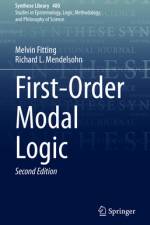
This revised edition of the highly recommended book "First-Order Modal Logic", originally published in 1998, contains both new and modified chapters reflecting the latest scientific developments. Fitting and Mendelsohn present a thorough treatment of first-order modal logic, together with some propositional background. They adopt throughout a threefold approach. Semantically, they use possible world models; the formal proof machinery is tableaus; and full philosophical discussions are provided of the way that technical developments bear on well-known philosophical problems. The book covers quantification itself, including the difference between actualist and possibilist quantifiers; equality, leading to a treatment of Frege's morning star/evening star puzzle; the notion of existence and the logical problems surrounding it; non-rigid constants and function symbols; predicate abstraction, which abstracts a predicate from a formula, in effect providing a scoping function for constants andfunction symbols, leading to a clarification of ambiguous readings at the heart of several philosophical problems; the distinction between nonexistence and nondesignation; and definite descriptions, borrowing from both Fregean and Russellian paradigms.Review of the First Edition: "This Text is an excellent and most useful volume. It is pitched correctly: the exercises are just right... It sets a high standard for anything following. It is to be highly recommended." (Bulletin of Symbolic Logic, 8:3)
This monograph summarizes several decades of collaborations between ecologists and mathematicians, presenting novel applications in biological modeling. The authors are among the first researchers to pioneer the use of dynamical systems models to successfully describe and predict animal behavior in relation to environmental changes. The text highlights the biological and mathematical techniques used in the research, including three main components: 1) large data sets on natural populations in the field; 2) mathematical models rigorously tied to data, which describe, explain, and predict behavioral dynamics in relation to environmental variables; and 3) simplified, proof-of-concept models to probe dynamic mechanisms, suggest testable hypotheses, and allow study of the consequences of environmental change and evolving traits. It is a suitable text for field ecologists interested in the modeling procedures and conclusions addressed therein, as well as mathematicians interested inapplications to population, ecological, and evolutionary dynamics.
This book builds on the path-breaking work of George E. Smith and further explores the notions of evidence and confirmation in the exact sciences from two perspectives: conceptual and historical. Contributions in this volume investigate the philosophical presuppositions, explanatory scope, and historical precursors of evidence in mathematical physics and related disciplines. The papers are written by and of interest to philosophers and historians of science.
In light of the growing number of African summits and a new awareness of international interdependence during the COVID-19 pandemic, this book provides a comprehensive analysis of the current state of Africäs international relations (IR). Leading IR scholars from Africa and around the world examine international cooperation with African countries in areas such as health care, education, and peacekeeping and explore how Africäs role in the system of international relations has changed during the COVID-19 pandemic.The book is divided into four parts, the first of which explores analyzes the various actors that constitute African agency in the post-pandemic world, while the second focuses on the summits of the major powers regarding cooperation with Africa. The third part covers public health cooperation and regional initiatives in Africa, including issues such as vaccine diplomacy, while the fourth and final part discusses conflicts & political process despite COVID Pandemics.
This book consists of stories of struggles in science education presented by a network of science educators working in Australia, Brazil, Canada, Britain, and the United States. The common goal of these educators is to produce more socially/ecologically just models and practices of science education. The book considers and reworks the key-terms of current social justice: agency, realism, justice, and power. Its first section explores re-inhabiting science in the quest for more just worlds including reterritorializing science within emergent theories of critical realism, engaging citizens activists with corporate science, and challenging neoliberalism and the forces that organize (structure) knowledge. The second section redefines praxis of science education itself through nuanced explorations of agency, decolonialism, and justice in ways that emphasize complexity, hybridity, ambivalence, and contradiction. The stories of this international group capture individual and collective efforts, motivated by a persistent sense that science and science education matter for questions of justice.
The volume provides the first book-length study of Chrysostomus Javelli¿s philosophical works. An Italian university professor and a prominent figure in the intellectual landscape of sixteenth-century Europe, Javelli (ca. 1470-1540) was the author of insightful commentaries on both Plato and Aristotle as well as of original works in which he laid the foundations of a new Christian philosophy. In this volume, a group of leading scholars from around the world guide readers through the many facets of Javelli¿s philosophical corpus, showing the long-term impact of his ideas on Western philosophical thought. The twelve essays of this volume shed light on an understudied yet central figure of Renaissance culture, revealing new connections and unexplored influences. This book is a valuable tool for students and scholars of early modern philosophy, classical tradition, and Christian theology, contributing to the understanding of a neglected chapter of Western intellectual history.
This edited volume reviews 20 years' worth of research under the European Landscape Convention. The authors from the research network UNISCAPE offer readers insights into their combined efforts to carry out and support the goals of a sustainable European landscape. 20 years after defining these original goals, the editors make landscape ecology and management, a cornerstone for the debate on a 21st century Europe. The numerous contributions cover the three major areas of Landscape Policy and Governance, Landscape Design and Time and Observing Landscape. The pan-European approach highlights the strength of international collaboration and interdisciplinary thinking.This book offers the collected knowledge as a working tool for researchers, scholars and professionals in landscape ecology.
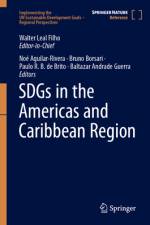
This volume provides an overview of the ways sustainable development issues as a whole, and the SDGs in particular, are perceived and practiced in a variety of countries in the Latin America and Caribbean region. It also discusses the extent to which its many socio-economic problems hinder progresses towards the pursuit of a sustainable future, and documents successful experiences from across the region.
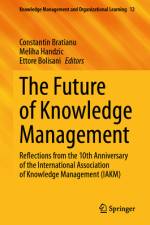
This edited volume explores the challenges and opportunities of knowledge management (KM) in the post-pandemic world. Intangibles have become dominant resources, and their effective management is key to navigating the complexity of the new business environment. The book is divided into three parts, each focusing on a different aspect of KM: complexity, human factors, and technology.Through 15 chapters by 28 contributors from 18 countries, this collection offers a diverse range of perspectives on the evolution of KM over the past decade and its potential for the future. The contributors analyze topics such as digital transformation, distant reading, knowledge visualization, and advanced KM systems. This volume will be of interest to researchers and practitioners in the field of KM, as well as to anyone interested in the challenges and opportunities facing organizations in the post-pandemic world.This edited volume celebrates the 10th anniversary of the International Association for Knowledge Management, offering an overview of the field's achievements and prospects for innovation and sustainability.
I. Einleitung.- II. Stoffwechsel.- III. Hormone.- IV. Pharmakologie der allgemeinen Gewebsreaktionen.- I. Zentralnervensystem (Narkose und Verwandtes).- II. Peripheres Nervensystem. Lokalanaesthesie.- III. Autonomes Nervensystem.- IV. Blutkreislauf.- V. Atemwege.- VI. Verdauung.- VII. Blut und Gewebe. Erster Teil.- VIII. Blut und Gewebe. Zweiter Teil.- IX. Pharmakologie der Niere.- I. Desinfektion.- II. Chemotherapie.
During the recent decades, space missions (e.g., CHAMP, GOCE, GRACE and Swarm) have been developed by space agencies in Europe and the USA to measure the Earth¿s gravity and magnetic fields and their spatio-temporal variations. These successful missions have already provided a wealth of groundbreaking results about the permanent and time-variable gravity and magnetic fields of the Earth. However, more can be learned about the Earth¿s structure by combining data of the gravity and magnetic fields, together with Earth¿s rotation data routinely measured using space geodesy techniques, as well as with the most up-to-date modelling of the Earth's internal structure. Use in synergy of these global observables and model data represents a unique way to further investigate the physics of the deep Earth's interior. In addition to the well-known correlation between Earth¿s rotation and magnetic field observed at interannual and decadal time scales, recent studies have reported unexpected correlation between spatio-temporal changes of the gravity field and magnetic field, also at interannual time scale. These changes may result from processes occurring in the liquid core and at the core-mantle boundary. This book gathers a series of chapters that provide state-of-the art overviews on the gravity field, magnetic field and Earth¿s rotation observations, and on their interpretation in terms of the deep Earth¿s structure, as well as on core dynamics and processes at the core-mantle boundary. The chapters 'Gravity Variations and Ground Deformations Resulting from Core Dynamics', 'Rapid Variations of Earth¿s Core Magnetic Field', 'A Dynamical Prospective on Interannual Geomagnetic Field Changes', 'Core Eigenmodes and their Impact on the Earth¿s Rotation', 'Earth¿s Rotation: Observations and Relation to Deep Interior', 'Interiors of Earth-Like Planets and Satellites of the Solar System', 'Correction to: Interiors of Earth-like planets and satellites of the Solar System', 'Fluid Dynamics Experiments for Planetary Interiors', 'Structure, Materials and Processes in the Earth¿s Core and Mantle', 'Correction to: Structure, Materials and Processes in the Earth¿s Core and Mantle' and 'Applications and Challenges of GRACE and GRACE Follow-On Satellite Gravimetry' are available open access under a Creative Commons Attribution 4.0 International License via link.springer.com. Previously published in Surveys in Geophysics, Volume 43, Issue 1, 2022
This book discusses the significance of water quality parameters in aquatic ecosystems, offering a concise and practical measurement methodology for early career researchers and post-graduate students in the fields of environmental science, oceanography, and aquatic science . The keys topics covered include aquatic sampling, basics of physicochemical properties and carbonate chemistry of aquatic science , the importance of nutrients in natural water bodies, biological productivity in aquatic ecosystems, aquatic pollution, and statistical analyses of different types of water science data. Several parameters such as microplastics, dimethylsulfoniopropionate and polychlorinated biphenyls have also been incorporated in the book for comprehensive coverage of the topic. The book is meant as a practical guide for beginners and young researchers using a clear writing style and practical examples, highlighting the significance of water science parameters and their measurement protocols in aquatic environments.
This reference work is strong informative about the role of the gut microbiome in organism metabolism and fully discusses the relationship between gut alterations and/or gut microbiome-derived metabolites and the pathogenesis of many diseases, as well as recent advances in clinical applications of microbiome and microbial effector molecules.It clearly shows how the microbiome research is a growing field in molecular and clinical sciences, due to technical advances based on high throughput genetic sequencing technologies and omics analyses that empower systems biology-based methods for precision health monitoring and treatment. It will help in understanding that high diversity of the microbial communities in the gut is important to preserve health and microbiome alterations, not only in nutrition associated diseases like obesity and diabetes, but also in many chronic inflammatory, cardiovascular, oncological and neurological disorders. Written by renown experts in the field, this reference work is intended for clinicians, residents, specialists and physicians involved in the diagnosis and treatment of affected patients. It is published as part of the SpringerReference program, which provides access to live editions constantly updated through a dynamic peer-review publishing process.
This book presents a comprehensive overview of Structural Equation Modeling and how it can be applied to address research issues in different disciplines. The authors employ a 'simple to complex' approach. The book reviews topics such as variance, covariance, correlation, multiple regression, mediation, moderation, path analysis, and confirmatory factor analysis. The authors then discuss the initial steps for performing structural equation modeling, including model specification, model identification, model estimation, model testing, and model modification. The book includes an introduction to the IBM SPSS and IBM SPSS Amos software. The authors the explain how this software can be utilized for developing measurement, structural models, and SEM models. The book provides conceptual clarity in understanding the models and discusses practical approaches to solving them. The authors also highlight how these techniques can be applied to various disciplines, including psychology, education, sociology, business, medicine, political science, and biological sciences.
Abonner på vårt nyhetsbrev og få rabatter og inspirasjon til din neste leseopplevelse.
Ved å abonnere godtar du vår personvernerklæring.