












Gjør som tusenvis av andre bokelskere
Abonner på vårt nyhetsbrev og få rabatter og inspirasjon til din neste leseopplevelse.
Ved å abonnere godtar du vår personvernerklæring.Du kan når som helst melde deg av våre nyhetsbrev.

This extensively revised edition examines renal pathophysiology and the rationale for renal denervation for the management of hypertension, as well as possible long-term benefits and risks of this therapy. Renal denervation is a minimally invasive, endovascular catheter-based procedure that makes use of radiofrequency ablation to treat resistant hypertension, with studies showing a high degree of effectiveness. The devices involved in the continued evolution of this therapy are discussed and the book incorporates analyses of the development of the technique while evaluating its cost effectiveness and future applications. Renal Denervation: A New Approach to Treatment of Resistant Hypertension describes the technique in detail, its advances and its pitfalls. While it has been estimated that 50% of Western civilization has hypertension and approximately 20% of patients have resistant hypertension, hypertension remains the leading cause of cardiovascular morbidity and mortality thus strengthening arguments to consider a wider range of potential solutions to manage these patients.
Missbildungen am Zentralnervensystem von Tritonen durch Allgemeinen Sauerstoffmangel bei Normaldruck.
This new edition presents the essential topics in probability and statistics from a rigorous standpoint. Any discipline involving randomness, including medicine, engineering, and any area of scientific research, must have a way of analyzing or even predicting the outcomes of an experiment. The authors focus on the tools for doing so in a thorough, yet introductory way. After providing an overview of the basics of probability, the authors cover essential topics such as confidence intervals, hypothesis testing, and linear regression. These subjects are presented in a one semester format, suitable for engineers, scientists, and STEM students with a solid understanding of calculus. There are problems and exercises included in each chapter allowing readers to practice the applications of the concepts.
This book is a comprehensive, up-to-date reference on general and subspecialty gynecology. Covering all aspects of gynecology commonly encountered in day-to-day practice, this exhaustive and fully updated new edition provides a practical, one-stop reference work for clinicians working in the field.This carefully-designed volume includes ten sections, beginning with comprehensive coverage of office-based gynecology, and continuing on to present disease processes and management information by patient age group. Each chapter includes background information, current recommendations for screening, diagnostic criteria, common and uncommon associated problems, approach to diagnosis, summary of treatment options, and an overview of ICD-10 codes for specific diagnoses. Importantly, many areas that are covered in the handbook as subspecialty problems are pertinent and important information to many of the general practitioners who handle and develop some expertise in these areas. These include ovulation induction, medical management of incontinence, management of abnormal Pap smears, and work-up of abnormal bleeding. The handbook concludes with an easy-to-navigate presentation of minimally-invasive operations, surgical procedures, neoplasms, and pathology. Advantages and risks associated with management of particular diseases are covered, along with multiple tips for avoiding complications.This second edition is fully updated. With extensive updates on cervical cancer screening, pelvic organ prolapse, and more, many chapters will be completely rewritten to reflect the latest guidelines, procedures, and methods of care in women's health. The text additionally includes two new chapters, covering the impact of COVID on gynecology care, and the work-up and surgical management of chronic pelvic pain.This is an ideal guide for practicing gynecologists, family and internal medicine physicians, physician assistants, nurse practitioners, fellows, residents, medical students, and all women's health care providers.
Methodisches.- Ergebnisse.- Diskussion.- Zusammenfassung.- Literatur.
This reader-friendly guide is specifically designed for any student who has ever had a question about theses as part of their university undergraduate degree course in a life- or health science-related subject. It covers the varied types of projects that exist, including experimental work, surveys, meta-analyses, audits and qualitative and quantitative studies - all in one place.Get support at planning, completing and writing of your research based thesis. By using examples and check lists, this book leads you through the entire process encompassing each chapter of the dissertation. Let the question and answer writing style encourage you and boost your confidence when embarking on what is probably your largest piece of work to date, solved in a step by step approach.The experienced authors have run an enormous number of web and face-to-face workshops to support students in life and health sciences and help them write their dissertations. It became clear that research theses are a considerable source of anxiety and that many essential questions need answering - this book is your solution.
T. Stoltenberg: Foreword.- L. Hedegaard, B. Lindström: Cross-border Integration in the Oresund Region: A NEBI Showcase?.- K. Peschel: Economic Integration: J. Bröcker: Migration Potential and Migration Effects after EU Enlargement.- Z. Wisniewski: Unemployment, Migration and the Effects of EU Membership on the Polish Labour Market.- T. Straubhaar: Immigration to Scandinavia: Good or Bad for the Nordic Economies?.- M. Johansson, L. Persson: Approaching a Single Labour Market: Emerging Migration Patterns in the Baltic Sea Area.- M. Schack: Cross-border Commuting and Integration.- C.-E. Stalvant: Spatial Planning and the Environment: M. Tennberg: The Politics of Sustainability in the European Arctic.- S. Sawhill: Underwriting the Environment: Development Bank Influence in the Barents Region.- M. Sandberg: Environmental Aid to Poland and Win-Win Strategies.- B. Madsen, C. Jensen-Butler: The Regional Economic Effects of the Femer Belt Link for the Western Baltic Area.- A.-L. Myllynen, O. Saastamoinen: Russia in the Baltic Sea Roundwood Trade.- A. Ãsthol: Transborder Regional Co-operation: M. Anderson: Transborder-Co-operation: An Assessment.- M. Davis: The European Union and the Baltic Sea Region: Problems and Prospects for Stability.- T. König, T. Bräuninger: The Union`s Institutional Reform and Enlargement.- I. Neumann: State to Region: Nordic Co-operation and the Winds of Change.- C. Höög: Regional Lobbying in Brussels.- P. Joenniemi: Political Integration, Territorial Governance and Security: Z. Lachowski: Building Military Stability in the Baltic Sea Region.- P. van Ham: US Policy Toward Northern Europe: Political and Security Aspects.- A. Nokkala: Security Development in the Barents Region.- G. Herd: The Process of RussianDecentralisation: Baltic Policy Implications.- C. Archer: Security Aspects of the EU`s Northern Dimension.- J. Köll: North European and Baltic Statistics.
This three-volume set introduces the practice of advanced, ¿dialectical¿ systems-level problem solving in both the social and natural sciences. In social science, it opens new vistas regarding organizational, strategy, and work design. In the natural sciences, it provides heretofore missing conceptions of physical systems in peril due to the climate crisis. In addition, the author draws conclusions that are important for advancing generative AI. The monograph presents novel conceptual tools that directly impact the internal structure of a systems analyst¿s mental processing in real time. While the first volume lays the theoretical groundwork for dialectical systems analysis, the second, focusing on the nature of work, lays bare the structure of complex thinking in terms of the ¿thought forms¿ it requires. In order to facilitate better understanding of the principles taught in the first two volumes, the third volume provides a Manual of Dialectical Thought Forms, which is the only one in existence today.
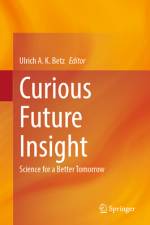
This book follows up the debate on the future of science and technology at the Curious2022 - Future Insight Conference, the second event in this conference series initiated on the occasion of Merck's 350th anniversary. In the chapters, some of the world's top scientists, managers and entrepreneurs explore breakthrough technologies and how they can be applied to make a better world for humanity. The book begins with an introduction to the vision of the conference "United by science for a better tomorrow" and the impacts caused by the pandemic, highlighting the importance of gathering like-minded people to discuss and support the advancement of science and technology for the benefit of humanity. In the first part of the book, readers will also find a chapter written by the Executive Board of Merck KGaA discussing the importance of curiosity for innovation and an overview of the company's contribution in the areas of life sciences, healthcare andelectronics forward-moving the scientific discovery. The second part of the book offers insights of some of the scientific topics discussed at the conference, and particular attention is given to new therapies and sustainability. In the final part of the book, readers will find some thoughts on ethical principles guiding our application of science and technology to create a bright future for humanity, and diverse perspectives on topics such as health, life sciences, nutrition, material sciences, digitalization, AI, energy, mobility, space flight, robotics, the secrets of the human mind and new ways of working together. Given its interdisciplinary appeal, the book will inspire curiosity in a wide readership, from scholars and researchers to professionals with an interest in exploring the future of science and technology, solving the problems of today, and paving the way for a better tomorrow. Chapters 1 and 2 are available open access under a Creative Commons Attribution 4.0 International License via link.springer.com
Ãber die Struktur der Sinnesmannigfaltigkeit und der Reizbegriffe.
Introduction.- The EMU Ins and the EMU Outs: Maastricht and beyond.- Introduction; On the feasibility of EMU in Europe; The Ins group and the Outs group; Monetary policy after 1999; Summary and concluding remarks; Greece and the European Monetary Union: a bottle half-empty or half-full?.- Introduction; The Greek economy: past performance and current position; Costs and benefits from EMU membership; The Greek Convergence Programmes: a deficit of credibility; What strategy for Greece?.- Monetary Developments in Greece: 1975-97.- A brief account of monetary events; The process of financial liberalization; Money and credit aggregates; Interest rates; Exchange rates; Recent Greek monetary policies.- Introduction; Some preliminaries; Recent monetary strategies in Greece; From intermediate targets to formal inflation targets in Greece.- Introduction; Inflation-targeting: theory and international evidence; Inflation in Greece; Main features and operation of an inflation-targeting regime in Greece; An independent Bank of Greece: an idea whose time has come.- Introduction; Central bank independence: a brief review of theories; The Bank of Greece: past experience and current regime; How independent should the Bank of Greece be?; Independence and other associated functions of the Bank of Greece; An independent and accountable Bank of Greece; Summary and Lessons for EU candidates.
This book presents the foundations of using analytics from the laboratory, social media platforms, and the web. The authors cover key topics including analytics strategy, data gathering approaches, data preprocessing, data quality assessment, analytical methods, tools, and validation methods. The book includes chapters explaining web analytics, social media analytics, and how to create an analytics strategy. The authors also cover on data sources, such as online surveys, crowdsourcing, eye tracking, mouse tracking, social media APIs, search logs, and analytics triangulation. The book also discusses analytical tools for social media analytics, search analytics, persona analytics, user studies, and website analytics. The authors conclude by examining the validity of online analytics.
The book consists of more than 200 clinical vignettes on subjects dealing with medical and surgical problems of the small intestinal, colorectal, and anal regions seen in a busy tertiary care practice. The cases themselves are preceded by sections on anatomy, basic surgical techniques and history, and each case depends heavily on operative photographs, radiographic images and histopathology. Moreover, there is a strong element of history of disease and technique included here, providing additional context to the generously illustrated content and vibrant case material. Written and edited by experts associated with the Cleveland Clinic, this richly illustrated case-based guide will be an excellent resource for students, residents and fellows in gastroenterology and colorectal surgery.
There has been a dramatic increase in theoretical and practical studies on insect natural enemies over the last decades. The appeal of insect predators and, in particular, parasitoids, as research animals derives from the relative ease with which many species may be cultured and experimented on in the laboratory, the simple life-cycles of most parasitoid species, and the increasing demand for biological pest control as a key component of the integrated pest management approach.There is now a very substantial literature on insect natural enemies and thus a great need for a general text that enquiring students or research workers can use in deciding on approaches and techniques that are appropriate to the study and evaluation of such insects. This book fulfils that demand. It is a considerably updated and expanded version of a previous best-seller and provides an account of major aspects of the biology of predators and parasitoids, punctuated with information and advice onwhich experiments or observations to conduct and, importantly, how to carry them out. Guidance is provided, where necessary, on the most recent further literature that may need to be consulted on given topics.While researchers can now refer to several books on parasitoids and predators, Jervis's Insects as Natural Enemies is unique in emphasising practicalities. It is aimed at students and professionals working in universities and both government and commercial institutes in the fields of integrated pest management, agriculture, horticulture and forestry, as well as those interested in fundamentals of behavioural, population, community and evolutionary ecology.
1 Historical Aspects of Fluorescence.- 1 Introduction: On the Origin of the Terms Fluorescence, Phosphorescence, and Luminescence.- References.- 2 Pioneering Contributions of Jean and Francis Perrin to Molecular Luminescence.- 2.1 Introduction.- 2.2 Biographical Sketches of Jean Perrin and Francis Perrin.- 2.3 The Perrin-Jablonski Diagram.- 2.3.1 Jablonski Diagram.- 2.3.2 Ãtats Métastables - Phosphorescence.- 2.4 Resonance Energy Transfer.- 2.5 Fluorescence Polarization.- 2.6 Concluding Remarks.- 2.7 Bibliographical Notes.- References.- 3 The Seminal Contributions of Gregorio Weber to Modern Fluorescence Spectroscopy.- 3.1 Overview.- 3.2 EarlyYears.- 3.3 Cambridge.- 3.4 Francis Perrin's Influence.- 3.5 Ph.D. Thesis.- 3.6 Postdoctoral.- 3.7 Sheffield.- 3.8 Intrinsic Protein Fluorescence.- 3.9 Red-Edge Effects.- 3.10 EEM.- 3.11 Brandeis.- 3.12 University of Illinois.- 3.13 Phase Fluorometry.- 3.14 Polarization Revisited.- 3.15 Students, Postdocs and Visitors.- 3.16 Commercialization of Fluorescence.- 3.17 National Laboratories.- 3.18 Honors.- 3.19 Proteins and Pressure.- References.- 2 Fluorescence of Molecular and Supramolecular Systems.- 4 Investigation of Femtosecond Chemical Reactivity by Means of Fluorescence Up-Conversion.- 4.1 Nanosecond and Picosecond Time-Resolved Fluorescence Techniques.- 4.1.1 Phase Modulation Spectroscopy.- 4.1.2 Time Correlated Single Photon Counting.- 4.1.3 Streak Cameras for Time-Domain Measurements.- 4.2 Femtosecond Emission Spectroscopy by Time-Gated Up-Conversion.- 4.2.1 Historical Background of the Time-Gated Up-Conversion Technique.- 4.2.2 Principle of the Time-Gated Up-Conversion Technique.- 4.2.2.1 Phase Matching Conditions.- 4.2.2.2 Quantum Efficiency for Up-Conversion.- 4.2.2.3 Group Velocity Effects.- 4.2.3 Experimental Setup.- 4.3 Time-Resolved Spectroscopy.- 4.3.1 Solvation Processes.- 4.3.1.1 Time-Dependent Fluorescence Stokes Shift (TDFSS) Non-Specific Solvation.- 4.3.1.2 Specific Solvation: Role of the Structure and the Charge of the Probe.- 4.3.1.3 Specific Solvation: Hydrogen Bond Dynamics.- 4.3.1.4 Isotope Effect.- 4.3.1.5 Spectral Narrowing in the 10 ps Time Scale.- 4.3.2 Photoinduced Intramolecular Charge Transfer.- 4.3.3 Intermolecular Electron Transfer.- 4.3.4 Intramolecular Proton Transfer.- 4.3.5 S2?S1 Internal Conversion.- 4.3.6 Biological Systems.- 4.4 Conclusions.- References.- 5 Spectroscopic Investigations of Intermolecular Interactions in Supercritical Fluids.- 5.1 Introduction.- 5.2 Instrumentation.- 5.3 Sample Preparation and Precautions..- 5.4 Selected Applications.- 5.5 Laser Flash Photolysis.- 5.6 Basic Picture Revealed by These Studies.- 5.7 The Future.- References.- 6 Space and Time Resolved Spectroscopy of Two-Dimensional Molecular Assemblies.- 6.1 Introduction.- 6.1.1 Motivation.- 6.1.2 Models.- 6.2 Experimental.- 6.3 Results and Discussion.- 6.3.1 Inhomogeneous Multilayers: RB 18 and ARA.- 6.3.2 Homogeneous Multilayers: SRH+ARA.- 6.3.3 Multilayers of CV18 and ARA or DPPA.- 6.3.3.1 CV 18 in DPPA.- 6.3.3.2 Cd-Arachidate Multilayers.- 6.3.4 Intralayer Quenching of PYR18 by CV18.- 6.4 Conclusions.- References.- 7 From Cyanines to Styryl Bases - Photophysical Properties, Photochemical Mechanisms, and Cation Sensing Abilities of Charged and Neutral Polymethinic Dyes.- 7.1 Introduction.- 7.2 Cyanine Dyes.- 7.2.1 Photophysical Model Mechanisms.- 7.2.2 Complexation Properties.- 7.3 Styryl Dyes.- 7.3.1 Photophysical Model Mechanisms.- 7.3.2 Complexation Properties.- 7.4 Styryl Bases.- 7.4.1 Photophysical Model Mechanisms.- 7.4.2 Complexation Properties.- 7.4.2.1 Donor Acceptor Fluoroionophores.- 7.4.2.2 Donor Acceptor Donor Fluoroionophores.- 7.5 Conclusion.- References.- 8 Phototunable Metal Cation Binding Ability of Some Fluorescent Macrocydic Ditopic Receptors.- 8.1 Introduction.- 8.2 Anthraceno Coronands.- 8.2.1 Free Ligand.- 8.2.2 In the Presence of Metal Cation.- 8.3 Benzeno Coronands.- 8.3.1 BBO5O5.- 8.3.2 0TTO5O5.- 8.3.3 Fluorescence Anisotropy Experiments w
1. Assays for Dinoflagellate Toxins, Specifically Brevetoxin, Ciguatoxin, and Saxitoxin.- 2. Maitotoxin, Okadaic Acid and Microcystins: Toxins That Disturb Signal Transduction and Phosphorylations.- 3. Sea Anemone Toxins Acting on Na+ Channels and K+ Channels: Isolation and Characterization.- 4. Nemertine Toxins.- 5. Conus Peptides and their Iodinated Derivatives as Probes for Ion Channels and Receptors.- 6. Ant Polypeptide Toxins.- 7. Wasp Kinins and Kinin Analogues.- 8. Mastoparan as a G Protein Activator.- 9. Pharmacologically Active Peptides and Proteins from Bee Venom.- 10. Purification and Characterization of Scorpion Toxins Acting on Voltage-Sensitive Na+ Channels.- 11. Immunological Properties of Scorpion Toxins.- 12. Scorpion Toxins and Potassium Channels.- 13. Chemical Synthesis and Characterization of Small Proteins: Example of Scorpion Toxins.- 14. Characterization of Animal Toxins Binding to Ionic Channels from Electrophysiological Recordings.- 15. "Three-Fingered" Toxins from Hydrophid and Elapid Snakes: Artificial Procedures to Overproduce Wild-Type and Mutated Curaremimetic Toxins.- 16. Elapidae Toxins: The Fasciculins, and their Interaction with Acetylcholinesterase.- 17. Dendrotoxins and BPTI-like Proteins.- 18. Sarafotoxins: Cloning of mRNAs Encoding Sarafotoxin Precursors.- 19. Snake Venom Phospholipase A2 Enzymes in Cell Biology.- 20. Polypeptides and Proteins Active in the Coagulation Process.- Guide to Solutions.- Guide to Protocols.- Troubleshooting Guide.
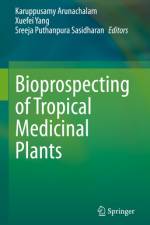
This book focuses on natural products, in particular medicinal plants and their derived products, as an indispensable source of bioactive molecules that serve as either drug candidates or lead compounds for drug design and discovery . There are several advantages for plant-derived therapeutics, including wide availability, diverse pharmacological actions, and a generally good profile of safety and tolerability. Over the recent years, there have been numerous reports from clinical studies testifying the efficacy and safety of medicinal plants and phytochemicals in treating human diseases. A plethora of basic studies has also unraveled molecular mechanisms underlying the health benefits of herbal medicines. Nevertheless, issues such as identification of bioactive ingredients, standardization of the products, and drug interactions remain to be systematically documented. Bioprospecting of Tropical Medicinal Plants represents a comprehensive analysis of natural products, mainly medicinal plants and phytochemicals. It includes detailed medicinal properties and pharmacological action from in vitro models to clinical trials. The goal is to present the readers a carefully curated collection of plant-derived natural products and their underlying molecular mechanisms.
This book provides an overview of the progress in Spanish tourism geography, particularly after the overlay of financial, pandemic and climate crisis, by the scrutiny of the different geographical areas and variables of analysis. It shows the diversity of geographical environments and their varied relationship with tourism, from the emptied inland regions to urban heritage in historic centres to coastal resorts. The book also introduces the analysis of the most important variables when studying the implications of Spanish tourist specialization. How are the beaches with intensive tourist use managed? What socio-spatial processes do leisure-rooted migrations involve? What are the labour conditions in the Spanish tourism industry? How does saving water boost tourism growth? The book offers answers through a methodological specificity of Spanish geography, which is highly oriented towards the analysis of public policies and even the proposal of new planning and methodology formulas that go beyond diagnostic studies.The domestic perspective, or that of insiders, of these scientists residing in Spain bestows them with special codes for conducting interpretations and analyses based on their everyday proximity to a territory characterised by its intense touristification. The tourism and real estate specialisation that Spanish society, together with its territory and institutions, have forged since the beginning of ¿developmentalism¿ permeates this scientific analysis. By providing a strong conceptual and empirical portrait, this book is a great resource for students and scholars in geography of tourism, as well as for social scientists and policy makers.
This volume comprises the second part of the proceedings of the 10th International Conference on Finite Volumes for Complex Applications, FVCA, held in Strasbourg, France, during October 30 to November 3, 2023.The Finite Volume method, and several of its variants, is a spatial discretization technique for partial differential equations based on the fundamental physical principle of conservation. Recent decades have brought significant success in the theoretical understanding of the method. Many finite volume methods are also built to preserve some properties of the continuous equations, including maximum principles, dissipativity, monotone decay of the free energy, asymptotic stability, or stationary solutions. Due to these properties, finite volume methods belong to the wider class of compatible discretization methods, which preserve qualitative properties of continuous problems at the discrete level. This structural approach to the discretization of partial differential equations becomes particularly important for multiphysics and multiscale applications. In recent years, the efficient implementation of these methods in numerical software packages, more specifically to be used in supercomputers, has drawn some attention. The first volume contains all invited papers, as well as the contributed papers focusing on finite volume schemes for elliptic and parabolic problems. They include structure-preserving schemes, convergence proofs, and error estimates for problems governed by elliptic and parabolic partial differential equations.This volume is focused on finite volume methods for hyperbolic and related problems, such as methods compatible with the low Mach number limit or able to exactly preserve steady solutions, the development and analysis of high order methods, or the discretization of kinetic equations.
1. Die ökologische Herausforderung.- 1.1 Verschiedene Sichtweisen.- 1.2 Problem der Umweltbelastung und die Lösungsansätze.- 1.3 Interdisziplinäre Methodik.- 2. Umweltschutz in der chemischen Industrie.- 2.1 Chemische Industrie.- 2.1.1 Abgrenzung der Branche.- 2.1.2 Bedeutung der Branche.- 2.2 Umweltrelevante Rahmenbedingungen der chemischen Industrie.- 2.2.1 Einteilung der Rahmenbedingungen.- 2.2.2 Rechtliche Rahmenbedingungen.- 2.2.2.1 Einleitung.- 2.2.2.2 Bundes-Immissionsschutzgesetz.- 2.2.2.3 Wasserhaushaltsgesetz und Abwasserabgabegesetz.- 2.2.2.4 Kreislaufwirtschafts- und Abfallgesetz.- 2.2.2.5 Chemikaliengesetz.- 2.2.2.6 Umwelthaftungsgesetz.- 2.2.2.7 Beauftragtenorganisation für den Umweltschutz.- 2.2.3 Wirtschaftliche Rahmenbedingungen.- 2.2.4 Ãko-toxikologische Rahmenbedingungen.- 2.2.5 Technische Rahmenbedingungen.- 2.2.6 Gesellschaftliche Rahmenbedingungen.- 2.3 Aufwand für den Umweltschutz in der chemischen Industrie.- 2.3.1 Abgrenzung der betrieblichen Umweltkosten.- 2.3.2 Investitions- und Betriebskosten.- 2.3.3 Organisatorischer Aufwand für den Umweltschutz.- 3. Produktionsintegrierter Umweltschutz und seine Beispiele in der chemischen Industrie.- 3.1 Produktionsbedingte Umweltproblematik der chemischen Industrie.- 3.1.1 Grundlagen chemischer Produktionsprozesse.- 3.1.2 Produktionsbedingte Umweltbelastung.- 3.2 Gliederung der technologischen UmweltschutzmaÃnahmen.- 3.2.1 Additiver Umweltschutz.- 3.2.2 Integrierter Umweltschutz.- 3.2.3 Vergleichende Zusammenfassung.- 3.3 Methoden des produktionsintegrierten Umweltschutzes.- 3.3.1 Einleitung.- 3.3.2 Gestaltung des Produktionsprogramms.- 3.3.3 Chemische Forschung und Verfahrensentwicklung.- 3.3.4 Verfahrensauswahl.- 3.3.5 Optimierung chemischer Prozesse.- 3.4 Kriterien des produktionsintegrierten Umweltschutzes.- 3.5 Beispiele zum produktionsintegrierten Umweltschutz in der chemischen Industrie.- 3.5.1 Einleitung.- 3.5.2 Substitution der Syntheseroute von Ibuprofen.- 3.5.3 Optimierung der Syntheseroute von Etinol.- 3.5.4 Zeolite als Katalysatoren.- 3.5.5 Optimaler Reaktionsweg zur Synthese eines Zwischenproduktes von Vitamin E.- 3.5.6 DuPont-Oxidationsverfahren von n-Butan zur Herstellung von Maleinsäureanhydrid und Tetrahydrofuran.- 3.5.7 N-Methylpyrrolidon als alternatives Lösemittel.- 3.5.8 Fazit.- 4. Umweltmanagementsysteme in der chemischen Industrie.- 4.1 Managementsystemansatz.- 4.1.1 Funktionen des Managements.- 4.1.2 Begriffe und Aufgaben der betrieblichen Organisation.- 4.1.3 Managementmodelle.- 4.1.3.1 Sinn und Zweck von Managementmodellen.- 4.1.3.2 "Management-by"-Modelle.- 4.1.3.3 St. Gallener Managementmodell.- 4.1.3.4 Grundlagen der Managementsysteme.- 4.2 Qualitätsmanagementsysteme.- 4.2.1 Einleitung.- 4.2.2 Ausgangspunkte des Qualitätsmanagements.- 4.2.3 DIN ISO 9000er Normenreihe.- 4.2.4 Total Quality Management.- 4.2.5 Qualitätsmanagementsysteme in der chemischen Industrie.- 4.3 Grundlagen der Umweltmanagementsysteme.- 4.3.1 Historische Entwicklung.- 4.3.2 Ziele von Umweltmanagementsystemen.- 4.3.3 Elemente des Umweltmanagementsystems am Beispiel der EMAS.- 4.3.4 Responsible Care und die EMAS.- 4.3.5 Elemente des Umweltmanagementsystems am Beispiel der ISO 14001.- 4.3.6 Verknüpfung von Qualitäts-, Sicherheits- und Umweltmanagementsystemen in der chemischen Industrie.- 4.4 Aufbau und Implementierung von Umweltmanagementsystemen.- 4.4.1 Einleitung.- 4.4.2 Aufbauphase I: ProjektanstoÃ.- 4.4.2.1 Vorstudie und erste Schritte.- 4.4.2.2 Festlegung der Umweltpolitik.- 4.4.2.3 Bildung einer Projektgruppe.- 4.4.2.4 Festlegung von Arbeitspaketen.- 4.4.3 Aufbauphase II: Umweltprüfung.- 4.4.3.1 Anforderungen.- 4.4.3.2 Vorgehensweise.- 4.4.3.3 Auswertung.- 4.4.4 Aufbauphase III: Umweltziele und -programm.- 4.4.5 Aufbauphase IV: MaÃnahmenumsetzung.- 4.4.5.1 Festlegung der Organisationsstruktur.- 4.4.5.2 Schulung, BewuÃtseinsbildung und Kompetenz.- 4.4.5.3 Notfallvorsorge.- 4.4.5.4 Dokumentation.- 4.4.6 Aufbauphase V: MaÃnahmenüberprüf
I. Thermodynamik.- II. Statistische Mechanik.- III. Quantenstatistik.- IV. Ideale und reale Gase.- V. Der feste Körper.- VI. Schwankungen und Brownsche Bewegung.- VII. Thermodynamik irreversibler Prozesse.- Namen- und Sachverzeichnis.
This book addresses the impact of inclusion on the performance of students with and without special needs in Lebanese schools. It examines the performance of regular students to the performance of students with learning disabilities (LD) and gifted students as perceived by them to identify the population that is best served by inclusion. The book investigates three domains affecting student performance in inclusive settings: management and organization. Teaching and learning, and student support and school ethos. In addition, it compares the ways in which these domains affect student performance for each population. In addition, the book presents a detailed description of the inclusive practices that affect student performance and the indicators that contribute most positively to fostering the performance of regular students, gifted students, and students with LD. Finally, it describes the inclusion model applied and proved empirically to affect the positive performance of all student groups as a response to the increasing call for inclusive schooling in Lebanon. Key areas of coverage include: Inclusive education, social justice, and equity in Lebanese schools. Student perceptions of inclusion in Lebanon. Inclusion of gifted learners and students with learning disabilities. Comparison of student performance among different populations in inclusive settings. Domains affecting student performance in inclusive settings. Proposed model of student inclusion in Lebanese schools. School Inclusion in Lebanon is an essential resource for researchers, professionals and policymakers, and graduate students in such interrelated fields as school psychology, inclusive education / educational psychology, and social work.
This book will offer a practical guide for the surgical management of oncologic emergencies, that pose great challenges to both surgeons and oncologists. Combining the knowledge of experienced surgeons and oncologists, it describes the experience gained from daily life into a tertiary hospital. Every chapter will be focused on radical treatment of primary tumors, metastatic disease and palliation, and will include an "Highlight" section with 4-5 key messages at the beginning of each chapter, whereas at the end a flow-diagram will be employed to summarize the subject discussed topic. Every chapter will be written by at least two authors, including a surgeon and an oncologist, to guarantee a 360 degrees analysis of each topic. This work will benefit both surgeons and oncologists: surgeons will found in it a step to step practical tool that helps the decision making process, while oncologists will find interesting indications about how and when to involve a general surgeon into the management of an oncologic emergent condition.
1 Analysenmethoden.- 1.1 Anwendung der Sektorfeld-ICP-MS zur Bestimmung der Hintergrundbelastung der Bevölkerung mit Platinmetallen.- 1.2 Voltammetrische Bestimmung von Platin- und Rhodiumspuren in Umweltkompartimenten und biologischen Materialien.- 1.3 Platin-Speziation in pflanzlichen Materialien mittels HPLC-ICP-MS.- 1.4 Platin Speziesanalytik mit Hilfe der on-line Kopplung von Kapillarelektrophorese und ICP-MS: Entwicklung, Vorteile und Anwendung dieser schnellen und nachweisstarken Methode.- 1.5 Bestimmung von Palladium in Umweltkompartimenten.- 1.6 Bestimmung von Palladium in biologischen Proben.- 1.7 Trennverfahren für Platin-Spezies.- 1.8 Trennungen der Metalle der Platingruppe (PGE) mit HPLC und Vergleich mehrerer Probenvorbereitungstechniken.- 1.9 Anwendung der Nickelsulfid-Dokimasie zur Bestimmung von Platingruppenelementen (PGE) in Umweltmaterialien mittels Graphitrohr-AAS.- 2 Stand der Katalysator-Technik.- 2.1 Schadstoff-Verminderung in Kfz-Abgasen durch Regelung des Kraftstoff-Gemisches mit der Lambda-Abgas-Sonde.- 2.2 Quantitative Motorstand-Reihenuntersuchungen zur Bestimmung der Platinemissionen aus Automobilabgaskatalysatoren.- 3 Piatin(metalle) in Umweltkompartimenten.- 3.1 Platinkonzentrationen in Staubproben aus Frankfurt am Main und Umgebung.- 3.2 Verteilung und Konzentrationen von Platin, Palladium und Rhodium in Umweltmaterialien entlang der Bundesautobahn A 5 (Akm 459 - Akm 524).- 3.3 PGE-Konzentrationen in Böden entlang der Autobahnen A 45 und A 3 im Vergleich zu Böden im EinfluÃbereich der edelmetallverarbeitenden Industrie in Hanau.- 3.4 Platin in kommunalen Kläranlagen.- 3.5 Biomonitoring verkehrsbedingter Platin-Immissionen.- 3.6 Relevanz von Platinemissionen durch Krankenhäuser.- 3.7 Verteilung und Konzentration von Platingruppenelementen (PGE) im Boden entlang der Autobahn Frankfurt-Mannheim.- 4 Bioverfügbarkeit von Platin(metallen).- 4.1 Automobilverkehr und Störungen im Wasserhaushalt von Pflanzen.- 4.2 Pflanzenverfügbarkeit, Boden - Pflanze Transfer.- 4.3 Zum Transformationsverhalten Kfz-emittierten Platins in einem Boden und Platinaufnahme durch Pflanzen.- 4.4 Zur Löslichkeit und Speziestransformation von Platin aus Autoabgaskatalysatoren durch Huminsäure.- 4.5 Geochemisches Verhalten von Platinmetallen aus Autoabgaskatalysatoren in Sedimenten und im Wasser aus einem Versickerbecken.- 5 Toxikologisches und allergologisches Gefährdungspotential von Platin und anderen Platinmetallen (Arbeitsmedizin).- 5.1 Toxikologisches Gefährdungspotential der Platingruppenelemente Platin, Palladium und Rhodium.- 5.2 Arbeitsmedizinische Aspekte der Platinsalzallergie: Krankheitsbild, Diagnostik, Prognose, Prävention und Therapie.- 5.3 Abschätzung des Gesundheitsrisikos von Platinemissionen aus Automobilabgaskatalysatoren.- 5.4 Biomonitoring von Platin im Urin in der Arbeitsmedizin.
Drawing on the statistical and philosophical expertise of its authors, this book is designed to improve understanding and use of randomised controlled trials (RCTs) among health professionals. It is intended for use primarily by medical educators involved in teaching statistics and evidence-based medicine (EBM) to medical students, junior doctors and other health professionals. However, each of the chapters serves a wider range of interests, including the practical needs of physicians in interpreting research evidence to support clinical decision making and the teaching needs of philosophers of medicine who want to more fully appreciate how RCTs work in practice and provide engaging examples for their students. Rather than compete with the proliferating methodological literature on RCT designs, this book focuses on cultivating a healthy skepticism among developing health professionals to support critical appraisal of their own and published work on RCTs at a fundamental level, including through a more informed understanding of the place of subgroup analyses in sound statistical inference. Management of the positive predictive value in the statistical analysis of RCT findings is included as an important topic for contemporary medical curricula. In comparing RCTs with non-randomised studies, a search for empirical evidence for the superiority of RCTs is initiated, pointing to the need for further work to confirm what form this evidence should take.Medical educators will find a wealth of reasons to encourage their students to think more critically about how the RCT operates in practice as a gold standard.
This edited volume aims to widen the discussion about the diversity of human-nature relationships and valuation methods and to stimulate new perspective that are needed to build a more sustainable future, especially in face of ongoing socio-environmental changes. Conceptual and empirical approaches, including qualitative, quantitative, and mixed methodologies have been used to highlight the importance of an integrative understanding of socio-ecological systems, where healthy ecosystems underpin the quality of life and societal activities largely drive environmental changes. Readers will obtain a comprehensive overview of the many and diverse ways the relationships between people and nature can be characterized. This includes understanding how people assign values to nature, discuss how human-nature interactions are shaped and provide examples of how these values and interactions can be systematically assessed across different land systems in Europe and beyond. This open access book is produced by internationally recognized scientists in the field but written in an accessible format to be of interest to a large audience, including prospective students, lecturers, young professionals and scientists embarking to the interdisciplinary field of socio-ecological research and environmental valuation.
This book is about the Random Field Ising Model (RFIM) - a paradigmatic spin model featuring a frozen disordering field. The focus is on the second-order phase transition between the paramagnetic and ferromagnetic phases, and the associated critical exponents. The book starts by summarizing the current knowledge about the RFIM from experiments, numerical simulations and rigorous mathematical results. It then reviews the classic theoretical works from the 1970's which suggested a property of dimensional reduction - that the RFIM critical exponents should be the same as for the ordinary, non-disordered, Ising model of lower dimensionality, and related this an emergent Parisi-Sourlas supersymmetry. As is now known, these remarkable properties only hold when the spatial dimensionality of the model is larger than a critical dimension. The book presents a method to estimate the critical dimension, using standard tools such as the replica trick and perturbative renormalization group, whose result is in agreement with the numerical simulations. Some more elementary steps in the derivations are left as exercises for the readers. This book is of interest to researchers, PhD students and advanced master students specializing in statistical field theory.
This book deals with analytical techniques and methods applied in several sectors of technology and industry and serves as a concise and up-to-date reference for the practical application of analytical chemistry. Divided into 10 chapters, the book starts with an introduction to the fundamentals of analytical chemistry, followed by a review of modern analytical technologies and their application in different industrial sectors and activities such as agrochemicals and pharmaceuticals, ores and mining, polymers, biotechnology, and oil & gas. Particular attention is given to industrial environmental issues, where the author discusses the advanced analytical techniques used to provide quantitative information about pollutants in aqueous and gaseous effluents and their carbon footprint. The book finishes with a chapter summarizing the main remarks and conclusions on advanced analytical techniques used in different industrial sectors, as well as on topics of sustainability, and instrumental analysis. In this book, readers will find valuable insights, including real-life examples, of how classical and instrumental techniques can be used by industry, to help professionals in the quality control of raw materials, products and processes, in the assessment of the formulation contamination, environmental pollution and in the evaluation of sustainability, among others. Given its breadth, the book appeals to professionals (mainly chemists, biochemists, and engineers), researchers, professors, and graduate students.
Abonner på vårt nyhetsbrev og få rabatter og inspirasjon til din neste leseopplevelse.
Ved å abonnere godtar du vår personvernerklæring.