





















Gjør som tusenvis av andre bokelskere
Abonner på vårt nyhetsbrev og få rabatter og inspirasjon til din neste leseopplevelse.
Ved å abonnere godtar du vår personvernerklæring.Du kan når som helst melde deg av våre nyhetsbrev.

1 The Semantics of Geometric Constraints.- The Role of Constraints in Geometric Modelling.- Progress and Problems in Extending the STEP Standard.- 2 Constraints for Conceptual and Collaborative Design.- Constraint Propagation Using an Active Semantic Network.- Analyzing and Optimizing Constraint Structures in Complex Parametric CAD Models.- Design Support Using Constraint-Driven Design Spaces.- Solving Over- and Underconstrained Geometric Models.- A Constraint-Based Shape Modeling System.- 3 Constraint Representation and Solving Methods.- Modelling of Geometric Constraints in CAD-Applications.- Geometric Constraint Decomposition.- Desargues: A Constraint-Based System for 3D Projective Geometry.- YAMS: A Multi Agent for 2D Constraint Solving.- Qualitative Study of Geometric Constraints.- Geometric Relaxation for Solving Constraint-Based Models.- 4 Constraints for Freeform Surfaces.- Variational Design and Surface Reconstruction.- Computer Aided Spectacle Lens Design.
1 Vakuumbeschichtungsverfahren - Ãbersicht.- 2 Bedeutung der Vakuumtechnik für die Beschichtungstechnik.- 2.1 Vorbemerkungen.- 2.2 Einfluà der Restgase auf die Schichtreinheit.- 2.3 Vakuumerzeugung.- 2.4 Vakuummessung.- 2.4.1 Wärmeleitungsvakuummeter.- 2.4.2 Reibungsvakuummeter.- 2.4.3 Kaltkatoden-Ionisationsvakuummeter.- 2.4.4 Ionisationsvakuummeter mit Glühkatode.- 2.4.5 Totaldruckmessung bei Beschichtungsprozessen.- 2.4.5.1 Konventionelle Katodenzerstäubung.- 2.4.5.2 Reaktive Katodenzerstäubung.- 2.4.5.3 Konventioneles Aufdampfen.- 2.4.5.4 Reaktives Aufdampfen.- 2.4.6 Partialdruckmessung.- 3 Aufdampfen im Hochvakuum.- 3.1 Vorbemerkungen.- 3.2 Physikalische Grundlagen.- 3.2.1 VerdampfungsprozeÃ.- 3.2.2 Transportphase.- 3.2.3 Kondensationsphase.- 3.3 Anlagentechnik.- 3.3.1 Vorbemerkungen.- 3.3.2 Zubehör zu Aufdampfanlagen.- 3.3.2.1 Verdampfungsquellen.- 3.3.2.1.1 Allgemeines.- 3.3.2.1.2 Widerstandsbeheizte Verdampfungsquellen.- 3.3.2.1.3 Elektronenstrahlverdampfer.- 3.3.2.1.4 Sonstige Verdampfungsquellen.- 3.3.2.1.5 Verdampfen von verschiedenen Materialien.- 3.3.2.2 Substrathalter.- 3.3.2.3 Substratheizung.- 3.3.2.4 Glimmeinrichtung.- 3.3.2.5 Testglaswechsler.- 3.3.2.6 Blenden.- 3.3.2.7 SchichtdickenmeÃgeräte.- 3.3.2.8 Vakuumausrüstung.- 3.3.2.9 Weiteres Zubehör zu Aufdampfanlagen.- 3.3.3 Anlagen zum Herstellen optischer Schichten.- 3.3.3.1 Grundsätzliches.- 3.3.3.2 Wichtige Verfahrenshinweise.- 3.3.3.2.1 Vakuumbedingungen.- 3.3.3.2.2 SchichtdickengleichmäÃigkeit.- 3.3.3.3 Anlagentechnik.- 3.3.4 Anlagen zum Metallisieren von Kunststoffteilen.- 3.3.4.1 Allgemeines.- 3.3.4.2 Einfluà von Kunststoffeigenschaften auf den BeschichtungsprozeÃ.- 3.3.4.3 Anlagentechnik.- 3.3.5 Anlagen zum Beschichten von Papier- und Kunststoffolien.- 3.3.5.1 Ãbersicht.- 3.3.5.2 Anlagenkonzeption und ProzeÃablauf.- 3.3.5.3 Ausführungsformen von semikontinuierlich betriebenen Folienbeschichtungsanlagen.- 3.3.6 Anlagen zum Beschichten groÃer Flächen.- 4 Ionenplattieren.- 4.1 Einleitung.- 4.2 IonenplattierungsprozeÃ.- 4.2.1 Plasmaphysikalische Grundlagen.- 4.2.2 Reinigung der Substratoberfläche.- 4.2.3 Gefügestruktur der ionenplattierten Schichten.- 4.2.4 Haftfestigkeit ionenplattierter Schichten.- 4.2.5 Reaktives Ionenplattieren.- 4.3 Anlagentechnik.- 4.3.1 Materialquellen für das Ionenplattieren.- 4.3.2 Ionisierungserhöhung beim Ionenplattieren.- 4.3.3 Alternierendes Ionenplattieren.- 4.4 Entwicklungsstand und Ausblick.- 5 Ionenzerstäubung von Festkörpern (Sputtering).- 5.1 Einführung.- 5.2 Beschreibung des Zerstäubungsprozesses.- 5.2.1 Zur Theorie der Festkörperzerstäubung durch TeilchenbeschuÃ.- 5.2.2 Numerische Näherungen.- 5.2.3 Zerstäubungsausbeuten elementarer Targets bei senkrechtem IonenbeschuÃ.- 5.2.3.1 Abhängigkeit von der BeschuÃenergie.- 5.2.3.2 Abhängigkeit von Ytot vom Targetmaterial und der BeschuÃteilchenart.- 5.2.4 BeschuÃwinkelabhängigkeit der Zerstäubungsausbeute.- 5.2.5 Zerstäubung nichtelementarer Targets und partielle Zerstäubungsausbeuten.- 5.2.6 Energie- und Winkelverteilung bei der Festkörperzerstäubung.- 5.2.6.1 Winkelverteilungen gesputterter Teilchen.- 5.2.6.2 Energieverteilungen zerstäubter Neutralteilchen.- 5.2.7 Einkristalline Effekte bei der Festkörperzerstäubung.- 5.2.8 Zusätzliche Effekte beim Teilchenbeschuà von Festkörperoberflächen.- 5.3 Plasmagestützte Zerstäubungsverfahren.- 5.3.1 Plasmaphysikalische Grundlagen von Zerstäubungsanlagen.- 5.3.2 Ausführungsformen von Zerstäubungsanlagen.- 5.4 Anlagentechnik.- 5.4.1 Grundsätzliches.- 5.4.2 Einkammeranlagen.- 5.4.2.1 Allgemeines.- 5.4.2.2 Ausführungsformen von Einkammeranlagen.- 5.4.2.3 Anlagenzubehör.- 5.4.2.3.1 Vakuumausrüstung.- 5.4.2.3.2 Katoden.- 5.4.2.3.3 Blenden.- 5.4.2.3.4 Infrarotheizung.- 5.4.2.3.5 Raten- und SchichtdickenmeÃgeräte.- 5.4.3 Zweikammeranlagen.- 5.4.4 Mehrkammeranlagen.- 6 Teilchenstrahlgestützte Verfahren.- 6.1 Einleitung.- 6.2 Teilchenstrahlquellen.- 6.2.1 Ionenstrahlerzeugung.
1 Einführung in die Thematik.- 1.1 Begriffsfindungen.- 1.2 Herausforderung Nr. 1: Der Preiskarnpf in der IT-Branche.- 1.3 Von Umsatzzielen und Provisionsmodellen.- 1.3.1 Einführung und Begriffsfindungen.- 1.3.2 Umsatzziele.- 1.3.3 Das lineare Provisionsmodell.- 1.3.4 Das progressive Provisionsmodell.- 1.3.5 Zusammenfassung.- 1.4 Der Forecast.- 1.4.1 Begriffsfindung.- 1.4.2 Mögliche EinflussgröÃen im Forecast.- 1.4.3 Informationen, die der Forecast beinhalten sollte.- 1.4.4 Forecast Meetings.- 1.4.5 Fazit.- 1.5 Vorgehensweisen im Vertrieb.- 1.5.1 Allgemeines zu Vorgehensweisen im Vertrieb.- 1.5.2 Unterschiedliche Modelle.- 1.5.3 Aufwandsbetrachtungen im Vertrieb.- 1.5.4 Der Vertriebszyklus - Sales Cycle.- 1.5.5 Unterschiedliche Vertriebsansätze hinsichtlich der Zielgruppe beim Kunden.- 1.5.6 Der "Take-the-money-and-go"-Ansatz.- 1.5.7 Argumentationshilfe Return on Investment.- 1.5.8 Fazit.- 1.6 Die Quartalsdenke.- 1.6.1 Einführung.- 1.6.2 Umsatzziele börsennotierter Unternehmen.- 1.6.3 Damoklesschwert Quartalsende.- 1.6.4 Konsequenzen der Quartalsdenke.- 1.6.5 Fazit.- 1.7 Vertrieb über das Internet.- 1.7.1 Rückblick.- 1.7.2 Vorgehensweise beim Vertrieb über das Internet.- 1.7.3 Zu schaffende Grundvoraussetzungen.- 1.7.4 Fazit.- 1.8 Call Center.- 1.8.1 Einführung.- 1.8.2 Arbeitsweise von Call Centern.- 1.8.3 Die 3 Schritte eines Piloten.- 1.8.4 Auswahl eines Call Centers.- 1.8.5 Vorteile des Einsatzes von Call Centern.- 1.8.6 Entlohnung von Call Centern.- 1.8.7 Weitere Einsatzmöglichkeiten von Call Centern.- 1.8.8 Fazit.- 1.9 Vertriebsgebiete.- 1.9.1 Einführung.- 1.9.2 Nach Postleitzahlen aufgebaute Vertriebsgebiete.- 1.9.3 Nach Branchen aufgeteilte Vertriebsgebiete.- 1.9.4 Mischung zwischen Branchen- und Postleitzahlen-orientierten Vertriebsgebieten.- 1.9.5 Problemfälle bei der Zuordnung.- 1.9.6 Fazit.- 1.10 Ausblick auf die weiteren Inhalte dieses Buches.- 2 Rollen im Vertrieb.- 2.1 Einführung in Rollen.- 2.2 Die einzelnen Rollen innerhalb einer groÃen Vertriebsorganisation.- 2.2.1 Der Vertriebsleiter.- 2.2.2 Der Vertriebsdirektor.- 2.2.3 Der Gebietsleiter.- 2.2.4 Der Vertriebsmitarbeiter.- 2.2.5 Der Telesales.- 2.2.6 Der Telequalifizierer.- 2.2.7 Zusammenfassung.- 2.3 Die Wirkungsfelder der unterschiedlichen Rollen.- 2.3.1 Einführung.- 2.3.2 Wirkungsfeld des Vertriebsleiters.- 2.3.3 Wirkungsfeld des Vertriebsdirektors.- 2.3.4 Wirkungsfeld des Gebietsverkaufsleiters.- 2.3.5 Wirkungsfeld des Vertriebsmitarbeiters.- 2.3.6 Wirkungsfeld des Telesales.- 2.3.7 Wirkungsfeld des Telequalifizierers.- 2.4 Der Presales als Bindeglied zum Vertriebsmitarbeiter.- 2.4.1 Vorbemerkung.- 2.4.2 Aufgabenbeschreibung des Presales.- 2.4.3 Der Presales-Pool.- 2.4.4 Wirkungsfeld des Presales.- 2.4.5 Der Unterschied zum Consulting-Mitarbeiter.- 2.4.6 Zusammenfassung.- 2.5 Fazit.- 3 Produktvertrieb versus Dienstleistungsvertrieb.- 3.1 Einführung in die Thematik.- 3.2 Die wesentlichen Unterschiede zwischen Produkt- und Dienstleistungsvertrieb.- 3.2.1 Allgemeines.- 3.2.2 Unterschiede beim Geldfluss.- 3.2.3 Unterschiede im Risiko.- 3.2.4 Unterschiede im Vertriebsansatz.- 3.2.5 Unterschiede bei der Kompensation von Umsatzausfällen.- 3.2.6 Unterschiede in der Motivation.- 3.2.7 Fazit.- 3.3 Gemeinsamkeiten zwischen Produkt- und Dienstleistungsvertrieb.- 3.3.1 Allgemeines.- 3.3.2 Gesprächsvorbereitung.- 3.3.3 Wettbewerbsbetrachtungen.- 3.3.4 Fazit.- 3.4 Gemeinsames Hilfsmittel im Vertrieb: Der Workshop.- 3.4.1 Hinführung zum Thema.- 3.4.2 Zielsetzung des Workshops.- 3.4.3 Berechnung des Workshops.- 3.4.4 Zusammensetzung des Teilnehmerkreises.- 3.4.5 Inhaltliche Gestaltung eines Workshops beim Kunden.- 3.4.6 Auswirkungen eines erfolgreichen Workshops.- 3.4.7 Externe Unterstützung bei der Konzeption eines Workshops.- 3.5 Integration von Risikomanagement.- 3.5.1 Einleitung.- 3.5.2 Erstellen einer Risikoliste.- 3.5.3 Festlegen von Risikoklassen und Risikowahrscheinlichkeitsklassen.- 3.5.4 Ableiten einer Risikomatrix.- 3.5.5 Ergebnisse.- 3.
This book focuses on both theoretical and practical aspects of the "Device-Edge-Cloud continuum", a development approach aimed at the seamless provision of next-generation cyber-physical services through the dynamic orchestration of heterogeneous computing resources, located at different distances to the user and featured by different peculiarities (high responsiveness, high computing power, etc.). The book specifically explores recent advances in paradigms, architectures, models, and applications for the "Device-Edge-Cloud continuum", which raises many 'in-the-small' and 'in-the-large' issues involving device programming, system architectures and methods for the development of IoT ecosystem. In this direction, the contributions presented in the book propose original solutions and aim at relevant domains spanning from healthcare to industry, agriculture and transportation.
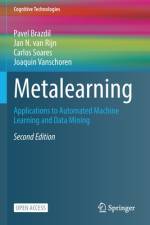
This open access book offers a comprehensive and thorough introduction to almost all aspects of metalearning and automated machine learning (AutoML), covering the basic concepts and architecture, evaluation, datasets, hyperparameter optimization, ensembles and workflows, and also how this knowledge can be used to select, combine, compose, adapt and configure both algorithms and models to yield faster and better solutions to data mining and data science problems. It can thus help developers to develop systems that can improve themselves through experience.As one of the fastest-growing areas of research in machine learning, metalearning studies principled methods to obtain efficient models and solutions by adapting machine learning and data mining processes. This adaptation usually exploits information from past experience on other tasks and the adaptive processes can involve machine learning approaches. As a related area to metalearning and a hot topic currently, AutoML is concerned with automating the machine learning processes. Metalearning and AutoML can help AI learn to control the application of different learning methods and acquire new solutions faster without unnecessary interventions from the user.This book is a substantial update of the first edition published in 2009. It includes 18 chapters, more than twice as much as the previous version. This enabled the authors to cover the most relevant topics in more depth and incorporate the overview of recent research in the respective area. The book will be of interest to researchers and graduate students in the areas of machine learning, data mining, data science and artificial intelligence.
1 - Kamera-Setup.- 1.1 Grundlegende Kameraeinstellungen.- 1.1.1 Empfehlungen.- 1.2 Bildauflösung.- 1.3 Bildkomprimierung.- 1.4 Auflösung und Komprimierung eintesten.- 1.5 Schärfung.- 1.6 Farbraum.- 1.7 Digitalzoom.- 1.8 Sucher.- 1.9 Monitor.- 1.10 Belichtung.- 1.10.1 Belichtungsmessung.- 1.10.2 Belichtungsprogramme.- 1.10.3 Belichtungsvarianten.- 1.10.4 Belichtungskorrektur.- 1.11 Autofokus.- 1.11.1Sensorwahl.- 1.11.2 Statischer und dynamischer Autofokus.- 1.11.3 Auslöse- und Schärfepriorität.- 1.11.4.Manuelle Scharfeinstellung.- 1.12 Empfindlichkeit.- 1.13 WeiÃabgleich.- 1.13.1 Lichtfarben.- 1.13.2 Automatischer WeiÃabgleich.- 1.13.3 Manueller WeiÃabgleich.- 1.14 Datum und Uhrzeit.- 1.15 Dateneinbelichtung.- 1.16 Fernsehsignal.- 1.17 Tonsignale.- 1.18 Optimiertes Kamera-Setup kurz gefasst.- 1.18.1 Standardsituationen.- 1.18.2 Höchste Ansprüche.- 1.18.3 Available-Light-Situationen.- 1.18.4 Nah- und Makroaufnahmen.- 1.18.5 Schnelle Fotografie.- 2 - Belichtung.- 2.1 Belichtungsmessung.- 2.1.1 Charakteristik der Belichtungsmessung.- 2.2 Belichtungsprogramme.- 2.2.1 Programmautomatik.- 2.2.2 Programmshift.- 2.2.3 Motivprogramme.- 2.2.4 Zeitautomatik.- 2.2.5 Blendenautomatik.- 2.2.6 Manuelle Belichtungseinstellung.- 2.3 Belichtungseingriffe.- 2.3.1 Belichtungskorrektur.- 2.3.2 Ersatzmessung.- 2.3.3 Kontrastmessung.- 2.3.4 Belichtungsreihe.- 3 - Praxis der digitalen Fotografie.- 3.1 Vorzüge.- 3.2 Anmerkungen.- 3.3 Aufnahmevorbereitungen.- 3.3.1 Energieversorgung.- 3.3.2 Speichermedien.- 3.3.3 Kamera-Setup.- 3.3.4 Belichtungsmessung.- 3.3.5 Nützliches für die Kameratasche.- 3.3.6 Kameratasche packen.- 3.4 Fotos gestalten.- 3.4.1 Der Goldene Schnitt.- 3.5 Gestalten mit der Brennweite.- 3.5.1 Weitwinkelbrennweite.- 3.5.2 Normalbrennweite.- 3.5.3 Telebrennweite.- 3.5.4 Schärfentiefe.- 3.5.5 Brennweitenwirkung.- 3.6 Licht in der Fotografie.- 3.6.1 Tageslicht.- 3.6.2 Aufhellen.- 3.6.3 Available Light.- 3.6.4 Kunstlicht.- 3.6.5 Mischlicht.- 3.6.6 Langzeitbelichtung.- 4 - Blitzlichtfotografie.- 4.1 Blitzlicht.- 4.2 Grundlagen.- 4.2.1 Blitzleistung.- 4.2.2 Abstandsgesetz.- 4.2.3 Blitzsynchronisation.- 4.2.4 Blitzreichweite.- 4.3 Blitztechniken.- 4.3.1 Vorblitz.- 4.3.2 Aufhellblitz.- 4.3.3 Vollblitz.- 4.3.4 Kurzzeitsynchronisation.- 4.3.5 Langzeitsynchronisation.- 4.3.6 Blitz-Belichtungskorrektur.- 4.3.7 Ultrakurzzeitfotografie.- 4.3.8 Drahtlose Blitzsteuerung.- 4.4 Blitzautomatiken.- 4.4.1 Blitzen mit Programmautomatik.- 4.4.2 Blitzen mit Zeit- oder Blendenautomatik.- 4.4.3 Manuelles Blitzen.- 4.5 Besseres Blitzlicht.- 4.5.1 Indirekter Blitz.- 4.5.2 Entfesselter Blitz 1.- 4.5.3 Entfesselter Blitz 2.- 4.5.4 Blitzreflektor.- 4.5.5 Servoblitz.- 5 - Motive und Themen.- 5.1 Handwerkliches.- 5.2 Visuelle Notizen.- 5.3 Landschaftsfotografie.- 5.4 Architekturfotografie.- 5.5 Nah-und Makrofotografie.- 5.6 Menschenbilder.- 5.7 Reise und Reportage.- 5.8 Infrarotfotografie.- 5.9 Ultraviolettfotografie.- 5.10 Experimente.- 5.11 Panoramafotografie.- 6 - Studiofotografie.- 6.1 Sachaufnahme.- 6.2 Stilleben.- 6.3 Reproduktion.- 6.4 Lichtquellen im Studio.- 6.4.1 Tageslicht.- 6.4.2 Blitzlicht.- 6.4.3 Kaltlichtleuchte.- 6.4.4 Kunstlichtleuchte.- 6.4.5 Portables Studioblitzgerät.- 6.4.6 Studioblitz.- 6.4.7 Studioblitzgerät zünden.- 6.5 Einrichten des Studios.- 6.5.1 Tipps zum Raum.- 6.5.2 Aufheller und Neger.- 6.5.3 Hintergrund.- 6.5.4 Aufnahmetisch.- 6.6 Lichtführung.- 6.6.1 Lichtposition.- 6.6.2 Lichtcharakteristik.- 6.6.3 Licht einrichten.- 6.6.4 Lichtführung im Nahbereich.- 6.6.5 Hellfeldbeleuchtung.- 6.6.6 Dunkelfeldbeleuchtung.- 6.6.7 Lichtzelt.- 6.6.8 Polarisiertes Licht.- 6.7 Ausrüstungsvorschlag.- 6.8 Setup für Sachaufnahmen.- 7 - Fotos digitalisieren.- 7.1 Analoge Vorlagen digitalisieren.- 7.2 Digitalisieren mit der Kamera.- 7.2.1 Aufsichtvorlagen digitalisieren.- 7.2.2 Durchsichtvorlagen digitalisieren.- 7.3 Filmscanner.- 7.4 Flachbettscanner.- 7.5 Trommelscanner.- 7.6 Scan-Service via Photo CD.- 7.7 Hinweise zum Digitalisieren.
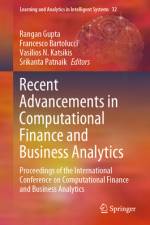
Recent Advancements of Computational Finance and Business Analytics provide a comprehensive overview of the cutting-edge advancements in this dynamic field. By embracing computational finance and business analytics, organizations can gain a competitive edge in an increasingly data-driven and complex business environment.This book has explored the latest developments and breakthroughs in this rapidly evolving domain, providing a comprehensive overview of the current state of computational finance and business analytics. It covers the following dimensions of this domains:Business AnalyticsFinancial AnalyticsHuman Resource AnalyticsMarketing Analytics
This open access book applies a social ecological systems (SES) lens to conservation-based development in Patagonia, bringing together authors with historical, contemporary, and future-oriented perspectives in order to increase understanding of the social and environmental implications of nature-based tourism and other forms of conservation-based territorial development. By focusing on Patagonia (as a region) and its various forms of conservation-based development, this book contributes one of the first collections of South American based lessons and will be valuable to researchers and practitioners, both locally and around the world, seeking to better understand complex interconnections between social and ecological environments, and pursue a similar path to resilience and sustainability.
This book presents the state of the art in High-Performance Computing on modern supercomputer architectures. It addresses trends in hardware and software development in general. The contributions cover a broad range of topics, from performance evaluations in context with power efficiency to Computational Fluid Dynamics and High-Performance Data Analytics. In addition, they explore new topics like the use of High-Performance Computers in the field of Artificial Intelligence and Machine Learning. All contributions are based on selected papers presented in 2022 at the 33rd Workshop on Sustained Simulation Performance, WSSP33, held at HLRS in Stuttgart, Germany, and WSSP34, held at Tohoku University in Sendai, Japan.
1 Das Wesen von Software.- 2 Dynamik in der Software- Entwicklung.- 3 Software-Architektur.- 4 Beispiel einer Software-Architektonik.- 5 Zeit- und Kostenschätzungen.- 6 Architekturfaktoren, Prozedur zur Entscheidungsfindung.- 7 Wechselwirkung zwischen Architekturelementen und Implementierung.- 8 Von den Komponenten zur Schicht.- 9 Aufteilung des Software-Systems auf ein verteiltes Computersystem.- 10 Ausführen von Programmen.- 11 Formale Grundlage der Architekturelemente.- 12 Ausfallsicherheit: Redundanzarchitektur bei Echtzeitsystemen.- 13 Qualitätssicherung.- 14 Methoden- und Sprachbewertung: UML, SDL, Java, C++, CORBA.- 15 Projektmanagement.- 16 Erfolgreiche Projektkooperation: Soziale Bedingungen.- 17 Resümee.- Pseudo-Code der Komponentenmodelle.- Verzeichnis für Bilder und Tabellen.
This book provides an introduction to the basic ideas involved in cybersecurity, whose principal aim is protection of IT systems against unwanted behaviour mediated by the networks which connect them. Due to the widespread use of the Internet in modern society for activities ranging from social networking and entertainment to distribution of utilities and public administration, failures of cybersecurity can threaten almost all aspects of life today.Cybersecurity is a necessity in the modern world, where computers and other electronic devices communicate via networks, and breakdowns in cybersecurity cost society many resources.The aims of cybersecurity are quite simple: data must not be read, modified, deleted or made unavailable by persons who are not allowed to. To meet this major challenge successfully in the digitally interconnected world, one needs to master numerous disciplines because modern IT systems contain software, cryptographic modules, computing units, networks, and human users--all of which can influence the success or failure in the effort.Topics and features: Introduces readers to the main components of a modern IT system: basic hardware, networks, operating system, and network-based applicationsContains numerous theoretical and practical exercises to illustrate important topicsDiscusses protective mechanisms commonly used to ensure cybersecurity and how effective they areDiscusses the use of cryptography for achieving security in IT systemsExplains how to plan for protecting IT systems based on analysing the risk of various forms of failureIllustrates how human users may affect system security and ways of improving their behaviourDiscusses what to do if a security failure takes placePresents important legal concepts relevant for cybersecurity, including the concept of cybercrimeThis accessible, clear textbook is intended especially for students starting a relevant course in computer science or engineering, as well as for professionals looking for a general introduction to the topic.Dr. Robin Sharp is an emeritus professor in the Cybersecurity Section at DTU Compute, the Dept. of Applied Mathematics and Computer Science at the Technical University of Denmark (DTU).
This book comprises the proceedings of the Annual Conference of the Canadian Society of Civil Engineering 2022. The contents of this volume focus on specialty conferences in construction, environmental, hydrotechnical, materials, structures, transportation engineering, etc. This volume will prove a valuable resource for those in academia and industry.
This book provides undergraduate physics majors and students of related sciences with a sound understanding of basic electronics and how it is used in the physical sciences. While today few science students go on to careers that demand an ability to design and build electronic circuits, many will use and rely on electronics. As scientists, they will require an appropriate level of fundamental knowledge that enables them, for example, to understand what electronic equipment is doing, to correctly interpret the measurements obtained, and to appreciate the numerous links between electronics and how it is practiced and other areas of science. Discussing electronics in the broader context and from the point of view of the scientist, this book is intended for students who are not planning to become electronics specialists but who will use electronics. It has been written in a relatively informal style and includes many detailed examples, as well assome "outside the box" material, including some ideas from quantum computing, to inspire thought and creativity. A selection of relevant exercises is included at the end of each chapter.In the updated second edition, some sections are clarified and end-of-chapter problems are added. It includes an additional chapter on quantum logic/computing
This book presents mathematical models of various renewable energy sources (RESs) such as wind energy systems, solar PV systems, battery energy storage systems, pumped-storage hydropower, biomass, and electric vehicles (EVs). It also discusses the challenging task of the integration of high penetration of renewable energies and EVs within existing power systems. The uncertainty related to RESs, electric vehicle charging, and load demands is also modelled. The book provides illustrative and comprehensive practical case studies to enable a complete understanding of the proposed methodologies. This book will consider the nuances of all these new paradigms, smart grid components, technology, and the impact of energy storage, EVs, and distributed energy resources, in the power networks.
This book provides for the first time an overview on the current approaches and applications of energy aspects in production and logistics by the use of simulation techniques. During the last decade, the importance of energy in the material flow processes has become more and more important. The pressure to reduce the environmental footprint of production and logistics systems will even intensify in future. Therefore, enterprises have started to integrate the use of energy into their planning processes much more than before, even designing feedback loops, e.g., from energy control to production control. This receives additional attention with the increasing use of renewable, but less reliable, energy sources. Care must be taken to establish processes that aim to use energy when it is available. As an example, many industrial processes like melting or coating have significant energy demands, but could vary the point of time of its consumption within specific limits, leading to a very high complexity. It discusses the construction and application of energy-specific performance indicators and analyzes the input information that needs to be acquired before implementing suitable models. On this basis, concrete technical solutions are introduced.
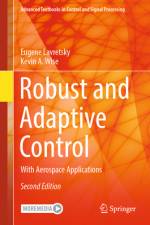
Robust and Adaptive Control (second edition) shows readers how to produce consistent and accurate controllers that operate in the presence of uncertainties and unforeseen events. Driven by aerospace applications, the focus of the book is primarily on continuous-time dynamical systems.The two-part text begins with robust and optimal linear control methods and moves on to a self-contained presentation of the design and analysis of model reference adaptive control for nonlinear uncertain dynamical systems. Features of the second edition include: sufficient conditions for closed-loop stability under output feedback observer-based loop-transfer recovery (OBLTR) with adaptive augmentation;OBLTR applications to aerospace systems;case studies that demonstrate the benefits of robust and adaptive control for piloted, autonomous and experimental aerial platforms;realistic examples and simulation data illustrating key featuresof the methods described; andproblem solutions for instructors and MATLAB(R) code provided electronically.The theory and practical applications address real-life aerospace problems, being based on numerous transitions of control-theoretic results into operational systems and airborne vehicles drawn from the authors' extensive professional experience with The Boeing Company. The systems covered are challenging--often open-loop unstable with uncertainties in their dynamics--and thus require both persistently reliable control and the ability to track commands either from a pilot or a guidance computer.Readers should have a basic understanding of root locus, Bode diagrams, and Nyquist plots, as well as linear algebra, ordinary differential equations, and the use of state-space methods in analysis and modeling of dynamical systems. The second edition contains a background summary of linear systems and control systems and an introduction to state observers and output feedback control, helping to make it self-contained.Robust and Adaptive Control teaches senior undergraduate and graduate students how to construct stable and predictable control algorithms for realistic industrial applications. Practicing engineers and academic researchers will also find the book of great instructional value.
The book brings together the research completed during 10 editions of International Seminars of Bionics, organized by the School of Architecture of the University of Alcalá de Henares, Madrid, several of them in partnership with the ¿Ion Mincü University of Architecture and Urbanism, Bucharest, carried out in Spain and in Romania. The articles here consider advanced bionic design principles, implementing them to an impressive variety of application fields, including, but not limited to, urban planning and landscape, public space, architecture and building structures, design and detailing, application of natural dynamic processes, bio-digital architecture, innovative materials based on living organisms (micro-algae), and nano-modified materials. A particular focus is given to light and perception of light. To illustrate the principles developed, this contributed volume includes descriptions and full-color images of the experimental projects created during the workshops held in the framework of these ISB meetings: Learning from Nature, Integrating Bionics (2009); Adaptability, Efficiency and Biostructures (2010); Bionics and Innovation (2011); Forms and Structures Inspired by Nature (2016, 2017); Furniture Inspired by Natural Models (2018); Relation between Structure and Envelope: Light Structures (2019); Light, from Nature to Architecture. Structures Inspired in Nature (2020); Light in Architecture and Design: A Bionic Perspective (2021); Sustainable Thinking and Bionics (2022).
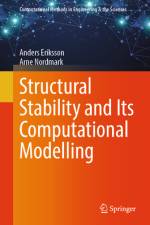
The volume showcases how basic formulation and solution methods can be used for an improved understanding of stability-affected structures. It also highlights the numerical treatment of the resulting equations, demonstrating and quantifying many aspects of structural stability not available to engineers by the traditional methods. The elaborated theoretical background is also used to show how methods included in commercial software can give misleading conclusions. The book will be of interest to researchers and professionals working in computational modelling of structures. The book includes exercises and projects, appended to each chapter, which further extends its usability as a text book in classroom teaching and for professional courses.
This book explores a process perspective on design and development, grounded in research in design studies, engineering design and systems design.The design and development process is important---it creates all artificial products and systems and determines how well they address human needs. The process perspective set out in this book has value for design and development practice and education, and is in its own right a fascinating topic of investigation.This book expands on the foundations of a process perspective and discusses its realisation in many process models, theories and approaches that have been developed over the years. The chapters provide connected overviews of key concepts and introduce new conceptual frameworks to clarify relationships between the contributions discussed. Practical considerations and competencies required to realise the tangible benefits of a process perspective are also discussed. A unique aspect of this book is that itbrings together many perspectives on the design and development process: those that focus on individual design activity through to those that focus on large-scale development projects; those of research interest and those of practical interest; and those of relevance to design contexts ranging from human-centered design to engineering design and systems design. The chapter bibliographies collect carefully-selected recommendations for further reading on each topic discussed. The book additionally contains many figures presented in colour, visually reflecting each topic's relationship to the new organising frameworks that are introduced.
Model Validation and Uncertainty Quantification, Volume 3: Proceedings of the 41st IMAC, A Conference and Exposition on Structural Dynamics, 2023, the third volume of ten from the Conference brings together contributions to this important area of research and engineering. The collection presents early findings and case studies on fundamental and applied aspects of Model Validation and Uncertainty Quantification, including papers on: Introduction of Uncertainty QuantificationUncertainty Quantification in DynamicsModel Form Uncertainty and Selection incl. Round Robin ChallengeSensor and Information FusionVirtual Sensing, Certification, and Real-Time MonitoringSurrogate Modeling
This book contains and summarizes research carried out within the DFG Priority Programme 1897: "Calm, Smooth and Smart - Novel Approaches for Influencing Vibrations by Means of Deliberately Introduced Dissipation". The contributions help reduce unwanted vibrations by developing novel approaches for influencing them and lead to a "calm, smooth and smart" behaviour of technical units. "Calm" represents the demand to avoid or at least to severely reduce unwanted noise generated by technical installations. "Smooth" ensures a still comfortable and jerk-free operation of them. Finally, "smart" means that the introduced damping devices not only help to achieve the desired vibrational behaviour of the overall technical systems, but also that they take over additional functional tasks. The results presented in this volume summarize the state-of-the-art and provide motivation for future research. The book is intended for experienced researchers as well as for doctoral and post-doctoral students in engineering, mathematics and physics, as well as industrial researchers interested in the field.
Section I Resistance and Susceptibility Genes of Plants.- The Use of Resistance Genes in Breeding: Epidemiological Considerations.- I. Introduction.- II. Current Techniques for Selecting for Disease Resistance.- III. Strategies for Using Resistant Varieties.- IV. New Approaches.- V. Conclusions.- VI. References.- Functional Models to Explain Gene-for-Gene Relationships in Plant-Pathogen Interactions.- I. Introduction.- II. Physiologic Races and Differentials.- III. Genetic Analysis of Gene-for-Gene Relationships.- IV. Gene-for-Gene Interactions Involving Fungal Pathogenic Bacteria.- V. Gene-for-Gene Interactions Involving Fungal Plant Pathogens.- VI. Conclusion.- VII. References.- Section II Virulence and Avirulence Genes of Pathogens.- An Analysis of Host Range Specificity Genes of Rhizobium as a Model System for Virulence Genes in Phytobacteria.- I. Introduction.- II. Genes Required for Plant-Microbe Interactions.- III. Rhizobium as a Useful Model System.- IV. Discussion.- V. References.- Pathogen A virulence Genes and Elicitors of Plant Defense.- I. Introduction.- II. Host Range Determinants.- III. General Elicitors.- IV. Suppressors.- V. Specific Elicitors.- VI. Do Plants Contain Receptors That Recognize Elicitors and Initiate the HR?.- VII. Signal Transduction and Defense Gene Activation.- VIII. Conclusions.- IX. References.- Pathogenicity Determinants in the Smut Fungi of Cereals.- I. Introduction.- II. General Aspects of the Life Cycle of the Smut Fungi-With Emphasis on U. maydis.- III. The Mating Type Loci of U stilago maydis.- IV. Host-Pathogen Interactions in the Smut Fungi.- V. Conclusion.- VI. References.- Identification of Fungal Genes Involved in Plant Pathogenesis and Host Range.- I. Introduction.- II. Transformation of Phytopathogenic Fungi.- III. Gene Cloning Procedures.- IV. Pathogenicity of U stilago maydis.- V. Fungal Penetration of the Plant Cell.- VI. The PDA Gene, a Gene for Pathogenicity and Host Range.- VII. Some Aspects of Further Development in Plant Pathology.- VIII. References.- Section III Perception of Pathogens and Signal Transduction.- Interactions Between Agrobacterium tumefaciens and Its Host Plant Cells.- I. Introduction.- II. An Overview of Crown Gall Tumorigenesis.- III. A Chronology of Tumorigenesis.- IV. References.- Elicitor Recognition and Signal Transduction.- I. Introduction 183.- II. Elicitors and Plant Responses.- III. Perception of Elicitor Stimulus.- IV. Transduction of Elicitor Signal.- V. Regulation of Plant Responses.- VI. Conclusions.- VII. References.- Section IV Plant Genes Induced in the Defense Reaction.- Pathogenesis-related Proteins.- I. Introduction.- II. The Tobacco-TMV System.- III. Alternative Plant Systems.- IV. Conclusions.- V. References.- The Primary Structure of Plant Pathogenesis-related Glucanohydrolases and Their Genes.- I. Introduction.- II. Multiple Isoforms of Ã-1,3-Glucanase and Chitinase.- III. Primary Structure.- IV. Genes Encoding Chitinase and Ã-1,3-Glucanase.- V. Conclusion.- VI. References.- Characterization and Analysis of Thionin Genes.- I. Introduction.- II. Thionin Types.- III. Biosynthesis and Subcellular Location.- IV. Structure and Chromosomal Location of Thionin Genes.- V. Gene Expression.- VI. Antimicrobial Properties and Other In Vitro Activities of Thionins.- VII. Possible Implication of Thionins in Plant Defense.- VIII. Conclusion and Perspectives.- IX. References.- Regulatory Elements Controlling Developmental and Stress-induced Expression of Phenylpropanoid Genes.- I. Introduction.- II. L-Phenylalanine Ammonia-Lyase (PAL).- III. 4-Coumarate: CoA Ligase (4CL).- IV. Chalcone Synthase (CHS).- V. Perspectives.- VI. References.- Regulation of Lignification in Defense.- I. Introduction.- II. Lignin: Matrix Polymer of a Structural Barrier Against Pathogen Ingress.- III. Regulation of Enzymes in Lignin Biosynthesis.- IV. Cinnamyl-Alcohol Dehydrogenase-a Committed Enzyme.- V. Possible Roles of Lignin Monomers and Polymers in the Structural B
This book illustrates how to achieve effective dimension reduction and data clustering. The authors explain how to accomplish this by utilizing the advanced dynamic graph learning technique in the era of big data. The book begins by providing background on dynamic graph learning. The authors discuss why it has attracted considerable research attention in recent years and has become well recognized as an advanced technique. After covering the key topics related to dynamic graph learning, the book discusses the recent advancements in the area. The authors then explain how these techniques can be practically applied for several purposes, including feature selection, feature projection, and data clustering.
This book brings together a series of chapters that provides updated information on adaptation practices against climate change in agriculture and livestock. Information on some new aspects like conservation of carnivorous plants, climate-smart millets production, advances in genomic interventions for climate resilient crops, perceptions on disease and pests under changing climate, role of neglected crops in climate resilient agriculture, nanotechnology in sustainable agriculture, use of crop wild relatives for developing climate resilient crops have been discussed. It also presents detailed information carbon sequestration practices and green consumption behaviour for sustainable development. The last chapter of book mentions about an innovative agronomic technique under rainfed conditions for sustainable yield advantage in soybean crop.
This book comprises the proceedings of the third TMM_CH International Conference on "Transdisciplinary Multispectral Modelling and Cooperation for the Preservation of Cultural Heritage." This book showcases the latest advancements in non-destructive testing and structural techniques across a wide range of applications within the realm of cultural heritage. The conference, held at the esteemed Eugenides Foundation in Athens, Greece, brought together scientists, engineers, architects, archeologists, conservators, geologists, art historians, and other stakeholders. Thirteen sessions and panel discussions featuring 142 esteemed panelists provided a platform for the exchange of ideas. With a significant online presence and approximately 50,000 online viewers, the conference had a profound impact on a global scale. This book serves as a valuable resource, presenting recent scientific breakthroughs, non-destructive techniques, and technologies that contribute to the holistic preservation of our world's cultural heritage.
Evangelista Torricelli exemplifies the use the moderns made of the ancients' mathematical methods. Celebrating Evangelista Torricelli's monumental Opera geometrica, this book marks 380 years since its publication (1644-2024). This homage to Torricelli introduces the magnificent major work in Mechanics and Mathematics of a brilliant Archimedean-and-Galilean scientist to modern readers.Opera geometrica deals with Motion & Mechanics and Geometry & Infinitesimals. In quibus Archimedis doctrina Torricelli also presents his mechanical principle of equilibrium - the foundation of the modern Principle of Virtual Work/Static.This outstanding source and research book spotlights the relevance and originality of Torricelli's Mechanics, and is the first and most profound analysis of the Opera geometrica to date. The historical study is achieved in extensive Introduction, 5 Essays and an accurate Transcription of Opera geometrica with parallel side-by-side text, including substantive explicative notes. The book is an accessible avenue to understanding this work by leading authorities who offer much-needed insights into the relationship Physics-Mathematics, Mechanics and Fundamentals. It appeals to historians, epistemologists and scientists.
Aus dem Inhalt: Endokrine Kontrolle der Ovarialfunktion; Endokrinologische Störungen und weibliche Sterilität; Diagnostik und Therapie des polyzystischen Ovarsyndroms; Corpus-luteum-Funktion; Therapie der hypothalamischen Amenorrhö durch pulsatile Gabe von GnRH; Ovarielle Stimulation - Möglichkeiten und Komplikationen; Entwicklung und Anwendung der GnRH-Analoga in der Sterilitätstherapie; Ultraschall in der Reproduktionsmedizin; Endoskopie in der Sterilitätsdiagnostik; Mikrochirurgische Techniken in der rekonstruktiven Tubenchirurgie; Immunologische Aspekte in der Reproduktionsmedizin; Ehesterilität und Reproduktionsmedizin - psychosomatische Aspekte; Einfluà von Umweltfaktoren auf die Fruchtbarkeit der Frau; Physiologie der Befruchtung; In-vitro-Fertilisation; Embryotransfer - Probleme und Perspektiven; Schwangerschaft und Geburt nach Sterilitätsbehandlung; Andrologischer Patient in gynäkologischer Praxis; Grundlagen der Inseminationsbehandlung; ICSI; Behandlung der männlichen Subfertilität; Genetik in der Andrologie; Kryokonservierung menschlischer Eizellen; Präimplantationsdiagnostik; Juristische Aspekte der Reproduktionsmedizin.
Abonner på vårt nyhetsbrev og få rabatter og inspirasjon til din neste leseopplevelse.
Ved å abonnere godtar du vår personvernerklæring.