


![Handbuch Baubetrieb af G]nter K]hn](https://cdnbackdoor.tales.as/thumbnail/150x225/products/00205/09927/handbuch-baubetrieb-organisation-betrieb-maschinen.jpg)











Gjør som tusenvis av andre bokelskere
Abonner på vårt nyhetsbrev og få rabatter og inspirasjon til din neste leseopplevelse.
Ved å abonnere godtar du vår personvernerklæring.Du kan når som helst melde deg av våre nyhetsbrev.

This book is comprehensive with most of its contents following the recommendations of international health and medical informatics associations and societies. To this extent it covers the areas of healthcare and medical information systems, management of healthcare and medical information systems, healthcare/medical information systems supporting patients and the public, healthcare/medical networking and care sharing, medical imaging and 3D/4D surgical visualization, design and analysis of health/medical records, health/medical data representation and analysis, simulation and modeling in healthcare, and health and medical informatics education.The book provides an excellent professional development resource for educators and practitioners on the state-of-the-art Health and Medical Informatics. It covers many areas and topics of Health and Medical Informatics and contributes toward the enhancement of the community outreach and engagement component of Health and Medical Informatics. Various techniques, methods, and approaches adopted by Health and Medical Informatics experts in the field are introduced. Furthermore, it provides detailed explanation of the Health and Medical Informatics concepts that are aptly reinforced by applications and some practical examples and a road map of future trends that are suitable for innovative Health and Medical Informatics.
This book provides a comprehensive overview of the latest trends and developments in AI and business innovation research. In today's rapidly changing business environment, artificial intelligence (AI) has become an essential tool for innovation and growth. From marketing and customer service to supply chain management and product development, AI is transforming the way businesses operate, allowing them to make better decisions and achieve their goals faster and more efficiently than ever before.However, the integration of AI into business operations is not without its challenges and risks. There are concerns about data privacy, cybersecurity, and the potential for AI to disrupt traditional industries and displace workers. As a result, it is essential for business leaders and researchers to understand both the potential and risks of AI, and how it can be effectively leveraged for business innovation.This book explores the potential benefits of AI for modern enterprises, including how it can be used to enhance customer service, optimize supply chain management, and improve decision-making in a range of business contexts. It also examines the role of AI in product development, marketing, and sales, and how it can be used to drive innovation and growth.The book also examines the risks and challenges associated with the integration of AI into business operations. It explores the ethical and legal implications of AI, including issues related to data privacy and security, bias in algorithms, and the impact of AI on employment and the labor market. It also examines the role of government and policymakers in regulating AI and managing the risks associated with its integration into business operations.Overall, this book provides a comprehensive and balanced perspective on the potential and risks of AI for modern enterprises.
1 Ziele und Gliederung der Arbeitsvorbereitung.- 1.1 Stllung der Arbeitsvorbereitung im Unternehmen.- 1.1.1 ProzeÃkette Procluktentwicklung.- 1.1.2 ProzeÃkette Auftragsabwicklung.- 1.2 Aufgaben der Arbeitsplanung.- 1.2.1 Arbeitsablaufplanung.- 1.2.2 Arbeitssystemplanung t1.- 2 Arbeitsablaufplanung.- 2.1 Aufgaben cler Arbeitsablaufplanung.- 2.2 Planungsvorbereitung.- 2.3 Stücklistenverarbeitung.- 2.3.1 Stücklistenarten.- 2.3.2 Stücklistenverarbeitung in der Arbeitsvorbereitung.- 2.4 ProzeÃplanersteHung.- 2.4.1 Ausgangsteilbestimmung.- 2.4.2 ProzeÃfolgeermittlung.- 2.4.3 Fertigungsmittelauswahl.- 2.4.4 Vorgabezeitermittlung.- 2.4.5 Informationswesen in cler ProzeÃplanung.- 2.4.6 Fallbeispiel.- 2.5 Operationsplanung.- 2.6 Montageplanung.- 2.6.1 Ausprägungen der Montageablaufplanung.- 2.6.2 Hilfsmittel uncl Methoclen zur Montageablaufplanung.- 2.7 Prüfplanung.- 2.7.1 Zielsetzung und Arten cler Prüfplanung.- 2.7.2 Durchführung der Prüfplanung.- 2.7.3 Dokumente der Prüfplanung.- 2.8 Fertigungs- und Prüfmittelplanung.- 2.8.1 Werkzeugplanung.- 2.8.2 Vorrichtungsplanung.- 2.8.3 Prüfmittelplanung.- 2.9 NC-/ RC-Programmierung.- 2.9.1 Grundlagen.- 2.9.2 NC-Programmerstellung.- 2.9.3 MC/RC-Programmerstellung.- 2.10 Kostenplanung/Kalkulation.- 2.10.1 Ziele, Aufgaben und Einordnung.- 2.10.2 Kalkulationsverfahren für den wirtschaftlichen Verfahrensvergleicht.- 2.10.3 Make-or-buy Entscheidungen.- 3 Arbeitssystemplanung.- 3.1 Aufgaben der Arbeitssystemplanung.- 3.2 Fertigungsmittelplanung.- 3.2.1 Auswahl der Bearbeitungsmaschinen.- 3.2.2 Planung der Anordnungsstruktur.- 3.3 Lager- und Transportplanung.- 3.4 Personalplanung.- 3.5 Flächenplanung.- 3.6 Investitionsrechnung.- 3.6.1 Statische Verfahren.- 3.6.2 Dynamische Verfahren.- 4 Arbeitssteuerung.- 4.1 Aufgaben der Arbeitssteuerung.- 4.2 Produktionsprogrammplanung.- 4.2.1 Absatzplanung.- 4.2.2 Bestandsplanung.- 4.2.3 Primärbedarfsplanung.- 4.2.4 Ressourcengrobplanung (auftragsanonym).- 4.3 Produktionsbedarfsplanung.- 4.3.1 Bruttosekundärbedarfsermittlung.- 4.3.2 Nettosekundärbedarfsermittlung.- 4.3.3 Beschaffungsartzuordnung.- 4.3.4 Durchlaufterminierung.- 4.3.5 Kapazitätsbedarfsermittlung.- 4.3.6 Kapazitätsabstimmung.- 4.4 Eigenfertigungsplanung und -steuerung.- 4.4.1 LosgröÃenrechnung.- 4.4.2 Feinterminierung.- 4.4.3 Ressourcenfeinplanung.- 4.4.4 Reihenfolgeplanung.- 4.4.5 Verfügbarkeitsprüfung.- 4.4.6 Auftragsfreigabe.- 4.4.7 Auftragsüberwachung.- 4.4.8 Ressourcenüberwachung.- 4.5 Fremdbezugsplanung und -steuerung.- 4.5.1 Bestellrechnung.- 4.5.2 Angebotseinholung/-bewertung.- 4.5.3 Lieferantenauswahl.- 4.5.4 Bestellfreigabe und Bestellöberwachung.- 4.6 Auftragskoordination.- 4.6.1 Angebotsbearbeitung.- 4.6.2 Auftragsklarung.- 4.6.3 Auftragsgrobterminierung.- 4.6.4 Ressourcengrobplanung (auftragsbezogen).- 4.6.5 Auftragsführung.- 4.7 Lagerwesen.- 4.7.1 Lagerbewegungsführung.- 4.7.2 Bestandssteuerung.- 4.7.3 Lagerort- und Lagerplatzverwaltung.- 4.7.4 Chargenverwaltung.- 4.7.5 Lagerkontrolle.- 4.7.6 Inventur.- 4.8 PPS-Controlling.- 4.8.1 Informationsautbereitung.- 4.8.2 Informationsbewertung.- 4.8.3 Konfiguration.- 4.9 Ausprägungen der Arbeitssteuerung.- 4.9.1 Morphologie.- 4.9.2 Auftragsfertiger.- 4.9.3 Rahmenauftragsfertiger.- 4.9.4 Variantenfertiger.- 4.9.5 Lagerfertiger.- 4.10 Ausgewählte Strategien und Verfahren im Rahmen der Produktionsplanung und -steuerung.- 4.10.1 Ãbersicht.- 4.10.2 Management Resources Planning.- 4.10.3 Kanban.- 4.10.4 Fortschrittszahlenkonzept.- 4.10.5 Belastungsorientierte Auftragsfreigabe.- 4.10.6 Optimized Production Technology.- 4.10.7 Einordnung und Bewertung.- 6 EDV-Systeme in der Arbeitsvorbereitung.- 6.1 Tätigkeitsspezifische EDV-Unterstützung.- 6.1.1 Rationalisierungsmöglichkeiten durch EDV-Einsatz in der Arbeitsplanung.- 6.1.2 Vorgehensweise zur Rationalisierung der Arbeitsplanung.- 6.1.3 Vorgehensweise zur Einführung von EDV-Systemen.- 6.2 Feature-Technologie.- 6.2.1 Grundbegriffe der Feature-Technologie.- 6.2.2 Anwen
This book includes the latest research in the diverse field of intelligent distributed computing, covering a multitude of aspects in both distributed computing and intelligent systems. It includes contributions in machine learning, distributed systems & agents, text- and research-centric applications, social systems, and smart cities. It was written by leading experts in the field, who presented their work as part of the 15th International Symposium on Intelligent Distributed Computing (IDC 2022).
There are two different, interdependent components of IT that are important to a CIO: strategy, which is long-term; and tactical and operational concerns, which are short-term. Based on this distinction and its repercussions, this book clearly separates strategy from day-to-day operations and projects from operations - the two most important functions of a CIO.It starts by discussing the ideal organization of an IT department and the rationale behind it, and then goes on to debate the most pressing need - managing operations. It also explains some best industry standards and their practical implementation, and discusses project management, again highlighting the differences between the methodologies used in projects and those used in operations. A special chapter is devoted to the cutover of projects into operations, a critical aspect seldom discussed in detail. Other chapters touch on the management of IT portfolios, project governance, as well as agile project methodology, how it differs from the waterfall methodology, and when it is convenient to apply each. In this second edition, besides a number of corrections and updates throughout the text, chapter 8 on "Agile Project Management" replaces the former chapter 8 completely, and chapter 10 on "IT Security" has been newly introduced as this topic has become more and more important for both management and operations during the last six years.Taking the fundamental principles of IT service management and best practices in project management, the book offers a single, seamless reference for IT managers and professionals. It is highly practical, explaining how to apply these principles based on the author's extensive experience in industry.
Drawing a line, and then another, and another. Go back from the lines to the movements they capture and see gestures in them: not spatial displacements, but modes of knowledge that pass through the exercise of the body. Discovering something new in a gesture: the line that contracts into a point or the point that expands into a zone, perhaps sinking into a hole. Thus experiencing a diagram: a becoming other inscribed in the novelty of the gesture and in the changes of the forms it shapes. This and much more is discussed in the essays gathered in Diagrams and Gestures. Resulting from trans-disciplinary work between mathematicians, philosophers, linguists and semioticians, the volume delivers an up-to-date account of the most valuable research on the connections between gesture and diagram. As one of the most important themes in contemporary thought, the study of these connections poses a challenge for the future: to elaborate a theory that is equal to new and stimulating research methodologies. We call this theory a philosophy of diagrammatic gestures.
The book is designed to serve as a textbook for courses offered to undergraduate and graduate students enrolled in electrical, electronics, and communication engineering. The objective of this book is to help the readers to understand the concepts of digital system design as well as to motivate the students to pursue research in this field. Verilog Hardware Description Language (HDL) is preferred in this book to realize digital architectures. Concepts of Verilog HDL are discussed in a separate chapter and many Verilog codes are given in this book for better understanding. Concepts of system Verilog to realize digital hardware are also discussed in a separate chapter. The book covers basic topics of digital logic design like binary number systems, combinational circuit design, sequential circuit design, and finite state machine (FSM) design. The book also covers some advanced topics on digital arithmetic like design of high-speed adders, multipliers, dividers, square root circuits, and CORDIC block. The readers can learn about FPGA and ASIC implementation steps and issues that arise at the time of implementation. One chapter of the book is dedicated to study the low-power design techniques and another to discuss the concepts of static time analysis (STA) of a digital system. Design and implementation of many digital systems are discussed in detail in a separate chapter. In the last chapter, basics of some advanced FPGA design techniques like partial re-configuration and system on chip (SoC) implementation are discussed. These designs can help the readers to design their architecture. This book can be very helpful to both undergraduate and postgraduate students and researchers.
1. Der Betrieb.- 1.1. Einführung.- 1.2. Wesen des Baubetriebes.- 1.2.1. Ãberblick.- 1.2.2. Das Besondere.- 1.2.3. Moderne Aspekte.- 1.2.4. Moderne Methoden.- 1.2.5. Moderne Hilfsmittel.- 1.2.6. Tätigkeitsbereiche.- 1.2.7. Image.- 1.2.8. Wettbewerb und Gewinn.- 1.2.9. Management.- 1.2.10. Handeln.- 1.3. Der Produktionsapparat.- 1.3.1. Ãberblick.- 1.3.2. Bauwirtschaft.- 1.3.3. Bauuunternehmungen.- 1.3.4. Baubetriebsabteilung.- 1.3.5. Maschinentechnische Abteilung.- 1.3.6. Baustelle.- 1.3.7. Arbeitsgemeinschaft (ARGE).- 1.3.8. Bauleiter.- 1.3.9. Technischer Leiter.- 1.3.10. Betriebsführung.- 1.4. Der Weg zum Auftrag.- 1.4.1. Ãberblick.- 1.4.2. Planung.- 1.4.3. Entwurf.- 1.4.4. Ausschreibung.- 1.4.5. Leistungsverzeichnis.- 1.4.6. Vergabewesen.- 1.4.7. Projektierung.- 1.4.7.1. Verfahrenstechnik.- 1.4.7.2. Wahl des Bauverfahrens.- 1.4.7.3. Fertigungssystem.- 1.4.7.3.1. Betriebsstruktur.- 1.4.7.3.2. Transportstruktur.- 1.4.8. Sondervorschläge.- 1.4.9 Angebotskalkulation.- 1.5. Baupreisermittlung.- 1.5.1. Ãberblick.- 1.5.2. Herstellkosten der Gesamtleistung.- 1.5.3. Einzelkosten der Teilleistungen.- 1.5.4. Maschinenkosten.- 1.5.5. Arbeitstage.- 1.5.6. Gemeinkosten der Baustelle.- 1.5.7. Zuschläge.- 1.5.8. Baupreis.- 1.5.9. Angebot.- 1.5.10. Der Zuschlag.- 1.6. Ausführung.- 1.6.1. Ãberblick.- 1.6.2. Bauvertrag.- 1.6.3. Bildung einer Arbeitsgemeinschaft.- 1.6.4. Organisation der Baustelle.- 1.6.5. Pläne.- 1.6.6. Auftragskalkulation.- 1.6.6.1. Beispiel Schalkosten.- 1.6.6.2. Beispiel Maschinenkosten.- 1.6.7. Arbeitsvorbereitung.- 1.6.8. Bauarbeitsplan.- 1.6.9. Bauzeitpläne.- 1.6.10. Bereitstellungspläne.- 1.6.11. Baustelleneinrichtung.- 1.6.11.1. Planungsgrundsätze.- 1.6.11.2. Aufstellung der Turmdrehkrane.- 1.6.12. Vermessung.- 1.6.13. Berichtswesen.- 1.6.14. Führungstechnik.- 1.7. Moderne Planungsmethoden.- 1.7.1. Ãberblick.- 1.7.2. Netzplantechnik.- 1.7.3. Arbeitsweise der Netzplantechnik.- 1.7.3.1. Vorgangspfeilnetzplan.- 1.7.3.2. Vorgangsknotennetzplan.- 1.7.3.3. Verknüpfung.- 1.7.4. Anwendungsbeispiel.- 1.7.5. Systemtechnik.- 1.7.5.1. Ãberblick.- 1.7.5.2. Das System.- 1.7.5.3. Systemerkennung.- 1.7.5.4. Vorgehensweise.- 1.7.5.5. Modellbildung.- 1.7.5.6. Hilfsmittel.- 1.7.5.7. Morphologischer Kasten.- 1.7.5.8. Nutzwertanalyse.- 1.7.6. Beispiel mathematisches Modell.- 1.7.7. Kybernetik.- 1.7.7.1. Funktionsweise.- 1.7.7.2. Regelkreise.- 1.7.8. Operations Research.- 1.7.8.1. Ãberblick.- 1.7.8.2. Verfahren des Operation Research.- 1.7.8.3. Vorgehen.- 1.7.8.4. Lineares Programmieren.- 1.7.8.4.1. Ein Transportproblem.- 1.7.8.4.2. Ein Zuordnungsproblem.- 1.7.8.5. Warteschlangentheorie.- 1.7.9. Simulation.- 1.7.10. Aktuelles Planungsbeispiel.- 1.8. Weitere wichtige Problemkreise.- 1.8.1. Ãberblick.- 1.8.2. Vertragsfragen.- 1.8.3. Sicherheit auf der Baustelle.- 1.8.4. Baulärm.- 1.8.4.1. Richtlinien und Bestimmungen.- 1.8.4.2. Lärmmessungen.- 1.8.4.3. Lärmarme Baustelleneinrichtung.- 1.8.4.4. Lärmminderungsplanung.- 1.8.4.5. Ãffentlichkeitsarbeit.- 1.8.5. Erschütterungen.- 1.8.6. Boden.- 1.8.7. Wetter.- 1.9. Kalkulations-Formblätter.- 1.10. Auszüge aus der VOB.- 1.10.1. Teil A: Allgemeine Bestimmungen für die Vergabe von Bauleistungen.- 1.10.1.1. Arten der Vergabe (§ 3).- 1.10.1.2. Leistungsvertrag, Stundenlohnvertrag, Selbstkostenerstattungsvertrag (§5).- 1.10.1.3. Leistungsbeschreibung (§ 9).- 1.10.1.4. Vertragsbedingungen (§ 10).- 1.10.2. Teil B: Allgemeine Vertragsbedingungen für die Ausführung von Bauleistungen.- 1.10.2.1. Art und Umfang der Leistung (§ 1).- 1.10.2.2. Vergütung (§ 2).- 1.10.2.3. Ausführungsunterlagen (§ 3).- 1.10.2.4. Abnahme (§12).- 1.10.2.5. Gewährleistung (§ 13).- 1.10.2.6. Sicherheitsleistung (§ 17).- 1.11. Beispiel "Institutsneubau".- 1.11.1. Ãberblick.- 1.11.2. Projektplanung.- 1.11.2.1. Schwerpunkte.- 1.11.2.2. Grundlagen.- 1.11.2.3. Leistungen des Auftraggebers.- 1.11.2.4. Leistungsbeschreibung (LV).- 1.11.3. Ausschreibung.- 1.11.4. Angebotsstrategie.- 1.11.5. Angeb
This open access book provides an overview of the progress in landslide research and technology and is part of a book series of the International Consortium on Landslides (ICL). The book provides a common platform for the publication of recent progress in landslide research and technology for practical applications and the benefit for the society contributing to the Kyoto Landslide Commitment 2020, which is expected to continue up to 2030 and even beyond to globally promote the understanding and reduction of landslide disaster risk, as well as to address the 2030 Agenda Sustainable Development Goals.
This book is a comprehensive resource for managers, engineers, researchers, academics, and professionals from various fields seeking to grasp the complexities and opportunities presented by digital transformation. It goes beyond the superficial understanding of digitalization, delving into the intricacies of this transformative process and its profound impact on organizations. By exploring the latest developments and insights from around the world, readers will gain a deep understanding of how digital transformation influences not only technological aspects but also human resources, processes, relationships, and information management. With a critical lens, this book addresses the challenges and changes that arise in the context of digital transformation, empowering readers to effectively lead and manage these processes. From examining the role of technology transfer to discussing talent management, consumer vulnerabilities, generative AIs, and the evolving landscape of e-commerce and internet use, this book provides a rich tapestry of knowledge and practical recommendations. It also highlights the significance of collaboration, virtual teams, and intelligent tools in driving digitalization. Moreover, it explores innovative management practices and techniques for addressing mobile phone waste, utilizing scientometric, bibliometric, and visual analytic tools. Ultimately, this book equips readers with the necessary insights and strategies to navigate the digital transformation successfully and harness its potential to achieve organizational excellence in an increasingly dynamic world.
This book highlights recent research advances in various domains related to software ecosystems such as library reuse, collaborative development, cloud computing, open science, sentiment analysis and machine learning. A key aspect of software ecosystems is that software products belong to ever more interdependent networks of co-evolving software components. The ever-increasing importance of social coding platforms has made software ecosystems indispensable to software practitioners, in commercial as well as open-source settings.The book starts with an introductory chapter that provides a historical account of the origins of software ecosystems. It provides the necessary context about the domain of software ecosystems by highlighting its different perspectives, definitions, and representations. It also exemplifies the variety of software ecosystems that have emerged during the previous decades. The remaining book is composed of five parts: Part I contains two chapters on software ecosystem representations, Part II two chapters that focus on complementary ways and techniques of analyzing software ecosystems. Next, Part III includes two chapters that focus on aspects related to the evolution within software ecosystems, while Part IV looks at workflow automation and infrastructure-as-code ecosystems. Finally, Part V focuses on ecosystems for software modeling and for data-intensive software.This book is intended for researchers and practitioners interested in data mining, tooling, and empirical analysis of software ecosystems. The reader will appreciate chapters that cover a wide spectrum of social and technical aspects of software ecosystems, each including an overview of the state of the art.Chapter 2 The Software Heritage Open Science Ecosystem is available open access under a Creative Commons Attribution 4.0 International License via link.springer.com.
This book covers the latest research studies regarding Explainable Machine Learning used in multimedia-based healthcare applications. In this context, the content includes not only introductions for applied research efforts but also theoretical touches and discussions targeting open problems as well as future insights. In detail, a comprehensive topic coverage is ensured by focusing on remarkable healthcare problems solved with Artificial Intelligence. Because today's conditions in medical data processing are often associated with multimedia, the book considers research studies with especially multimedia data processing.
The contributions gathered in this open access book focus on modern methods for data science and classification and present a series of real-world applications. Numerous research topics are covered, ranging from statistical inference and modeling to clustering and dimension reduction, from functional data analysis to time series analysis, and network analysis. The applications reflect new analyses in a variety of fields, including medicine, marketing, genetics, engineering, and education.The book comprises selected and peer-reviewed papers presented at the 17th Conference of the International Federation of Classification Societies (IFCS 2022), held in Porto, Portugal, July 19-23, 2022. The IFCS federates the classification societies and the IFCS biennial conference brings together researchers and stakeholders in the areas of Data Science, Classification, and Machine Learning. It provides a forum for presenting high-quality theoretical and applied works, and promoting and fostering interdisciplinary research and international cooperation. The intended audience is researchers and practitioners who seek the latest developments and applications in the field of data science and classification.
1. Nomenklatur, Indizierungsregeln und Definitionen.- 2. Faser-Kunststoff-Verbund und seine Ausgangswerkstoffe.- 3. Verbund- und Bauteilherstellung.- 4. Werkstoffeigenschaften, Versuche und Interpretation durch Modelle.- 5. Vorausberechnung der ES-Kennwerte mittels Mikromechanik.- 6. Schichtenverbundanalyse.- 7. Berechnung der Bauteilbeanspruchung.- 8. Sicherheit und Zuverlässigkeit.- 9. AbschlieÃende Empfehlungen.- 10. Glossar.- 11. Literaturhinweise.- 12. Stichwortverzeichnis.
This book gathers the peer-reviewed proceedings of the 14th Annual Meeting of the Bulgarian Section of the Society for Industrial and Applied Mathematics, BGSIAM'19, held in Sofia, Bulgaria. The general theme of BGSIAM'19 was industrial and applied mathematics with particular focus on mathematical physics, numerical analysis, high-performance computing, optimization and control, mathematical biology, stochastic modeling, machine learning, digitization and imaging, and advanced computing in environmental, biomedical, and engineering applications.
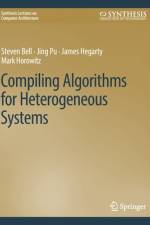
Most emerging applications in imaging and machine learning must perform immense amounts of computation while holding to strict limits on energy and power. To meet these goals, architects are building increasingly specialized compute engines tailored for these specific tasks. The resulting computer systems are heterogeneous, containing multiple processing cores with wildly different execution models. Unfortunately, the cost of producing this specialized hardware--and the software to control it--is astronomical. Moreover, the task of porting algorithms to these heterogeneous machines typically requires that the algorithm be partitioned across the machine and rewritten for each specific architecture, which is time consuming and prone to error. Over the last several years, the authors have approached this problem using domain-specific languages (DSLs): high-level programming languages customized for specific domains, such as database manipulation, machine learning, or image processing. By giving up generality, these languages are able to provide high-level abstractions to the developer while producing high-performance output. The purpose of this book is to spur the adoption and the creation of domain-specific languages, especially for the task of creating hardware designs. In the first chapter, a short historical journey explains the forces driving computer architecture today. Chapter 2 describes the various methods for producing designs for accelerators, outlining the push for more abstraction and the tools that enable designers to work at a higher conceptual level. From there, Chapter 3 provides a brief introduction to image processing algorithms and hardware design patterns for implementing them. Chapters 4 and 5 describe and compare Darkroom and Halide, two domain-specific languages created for image processing that produce high-performance designs for both FPGAs and CPUs from the same source code, enabling rapid design cycles and quick porting of algorithms. The final section describes how the DSL approach also simplifies the problem of interfacing between application code and the accelerator by generating the driver stack in addition to the accelerator configuration. This book should serve as a useful introduction to domain-specialized computing for computer architecture students and as a primer on domain-specific languages and image processing hardware for those with more experience in the field.
This updated edition adds new material on the acoustics of mufflers and ducts, including a new analysis on sound propagation in a duct having a cross sectional area that varies in the direction of the duct length. The textbook retains its class-tested fundamentals of engineering acoustics and examination of in-depth concepts within the domains that apply to reducing noise, measuring noise, and designing microphones and loudspeakers. The book particularly emphasizes the physical principles used in designing miniature microphones. These devices are used in billions of electronic products, most visibly, cell phones and hearing aids, and enable countless other applications. Distinct from earlier books on this topic that take the view of the electrical engineer analyzing mechanical systems using electric circuit analogies. This text uses Newtonian mechanics as a more appropriate paradigm for analyzing these mechanical systems and in so doing provides a more direct method of modeling. Written at a level appropriate for upper-division undergraduate and graduate courses, and enhanced with end-of-chapter problems and MatLab routines, the book is ideal as a core text for students interested in engineering acoustics in ME, EE, and physics programs, as well as a reference for engineers and technicians working in the huge global industry of miniature microphone design.
This book presents the proceedings of the 7th International Conference on Innovative Technologies in Intelligent Systems & Industrial Application (CITISIA), held in virtual mode in Kuala Lumpur, Malaysia, and Sydney, Australia on November 16-18, 2022. It showcases advances and innovations in Industry 4.0, smart society 5.0, mobile technologies, smart manufacturing, smart data fusion, hybrid intelligence, cloud computing, and digital society.
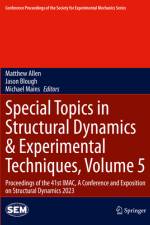
Special Topics in Structural Dynamics & Experimental Techniques, Volume 5: Proceedings of the 41st IMAC, A Conference and Exposition on Structural Dynamics, 2023, the fifth volume of ten from the Conference brings together contributions to this important area of research and engineering. The collection presents early findings and case studies on fundamental and applied aspects of Structural Dynamics, including papers on: Active ControlAdditive ManufacturingExperimental TechniquesFinite Element TechniquesMultifunction StructuresRotating MachinerySystem Identification
This open access book, building on the legacy of food systems scholar and advocate, Jerome Kaufman, examines the potential and pitfalls of planning for urban agriculture (UA) in the United States, especially in how questions of ethics and equity are addressed. The book is organized into six sections. Written by a team of scholars and practitioners, the book covers a comprehensive array of topics ranging from theory to practice of planning for equitable urban agriculture. Section 1 makes the case for re-imagining agriculture as central to urban landscapes, and unpacks why, how, and when planning should support UA, and more broadly food systems. Section 2, written by early career and seasoned scholars, provides a theoretical foundation for the book. Section 3, written by teams of scholars and community partners, examines how civic agriculture is unfolding across urban landscapes, led largely by community organizations. Section 4, written by planning practitionersand scholars, documents local government planning tied to urban agriculture, focusing especially on how they address questions of equity. Section 5 explores UA as a locus of pedagogy of equity. Section 6 places the UA movement in the US within a global context, and concludes with ideas and challenges for the future. The book concludes with a call for planning as public nurturance - an approach that can be illustrated through urban agriculture. Planning as public nurturance is a value-explicit process that centers an ethics of care, especially protecting the interests of publics that are marginalized. It builds the capacity of marginalized groups to authentically co-design and participate in planning/policy processes. Such a planning approach requires that progress toward equitable outcomes is consistently evaluated through accountability measures. And, finally, such an approach requires attention to structural and institutional inequities. Addressing these four elements is more likelyto create a condition under which urban agriculture may be used as a lever in the planning and development of more just and equitable cities. This is an open access book.This is an open access book.
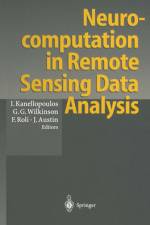
Foreward - Introduction - Open Questions in Neurocomputing for Earth Observation - A Comparison of the Characterisation of Agricultural Land Using Singular Value Decomposition and Neural Networks - Land Cover Mapping from Remotely Sensed Data with a Neural Network: Accomodation Fuzziness - Geological Mapping Using Multi-Sensor Data: A Comparison of Methods - Application of Neural Networks and Order Statistics Filters to Speckle Noise Reduction in Remote Sensing Imaging - Neural Nets and Multichannel Image Processing Applications - Neural Networks for Classification of Ice Type Concentration from ERS-1 SAR Images. Classical Methods versus Neural Networks - A Neural Network Approach to Spectral Mixture Analysis - Comparison Between Systems of Image Interpretation - Feature Extraction for Neural Network Classifiers - Spectral Pattern Recognition by a Two-Layer Perceptron: Effects of Training Set Size - Comparison and Combination of Statistical and Neural Network Algorithms for Remote-Sensing Image Classification - Integrating the Alisa Classifier with Knowledge-Based Methods for Cadastral-Map Interpretation - A Hybrid Method for Preprocessing and Classification of SPOT Images - Testing some Connectionist Approaches for Thematic Mapping of Rural Areas - Using Artificial Recurrent Neural Nets to Identify Spectral and Spatial Patterns for Satellite Imagery Classification of Urban Areas - Dynamic Segmentation of Satellite Images Using Pulsed Coupled Neural Networks - Non-Linear Diffusion as a Neuron-Like Paradigm for Low-Level Vision - Application of the Constructive Mikado-Algorithm on Remotely Sensed Data - A Simple Neural Network Contextual Classifier - Optimising Neural Networks for Land Use Classification - High Speed Image Segmentation Using a Binary Neural Network - Efficient Processing and Analysis of Images Using Neural Networks - Selection of the Number of Clusters in Remote Sensing Images by Means of Neural Networks - A Comparative Study of Topological Feature Maps Versus Conventional Clustering for (Multi-Spectral) Scene. Identification in METEOSAT Imagery - Self Organised Maps: the Combined Utilisation of Feature and Novelty Detectors - Generalisation of Neural Network Based Segmentation. Results for Classification Purposes - Remote Sensing Applications which may be Addressed by Neural Networks Using Parallel Processing Technology - General Discussion
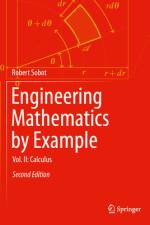
This textbook is a complete, self-sufficient, self-study/tutorial-type source of mathematical problems. It serves as a primary source for practicing and developing mathematical skills and techniques that will be essential in future studies and engineering practice. Rigor and mathematical formalism is drastically reduced, while the main focus is on developing practical skills and techniques for solving mathematical problems, given in forms typically found in engineering and science. These practical techniques are split into three separate books: the topics of algebra, complex algebra, and linear algebra (Vol. I), calculus of single and multiple argument functions (Vol. II), and continues and discrete Convolution and Fourier integrals/sums of typical functions used in signal processing, in addition to Laplace transform examples (Vol. III).
This book of Springer Nature is another proof of Springer's outstanding greatness on the lively interface of Holistic Computational Optimization, Green IoTs, Smart Modeling, and Deep Learning! It is a masterpiece of what our community of academics and experts can provide when an interconnected approach of joint, mutual, and meta-learning is supported by advanced operational research and experience of the World-Leader Springer Nature! The 6th edition of International Conference on Intelligent Computing and Optimization took place at G Hua Hin Resort & Mall on April 27-28, 2023, with tremendous support from the global research scholars across the planet. Objective is to celebrate "Research Novelty with Compassion and Wisdom" with researchers, scholars, experts, and investigators in Intelligent Computing and Optimization across the globe, to share knowledge, experience, and innovation--a marvelous opportunity for discourse and mutuality by novel research, invention, and creativity. This proceedings book of the 6th ICO'2023 is published by Springer Nature--Quality Label of Enlightenment.
1 Allgemeine Verfahren und Grundsätze.- 1.1 GMP-Richtlinien.- 1.2 HygienemaÃnahmen in der Lebensmittelindustrie.- 1.3 Umweltschutz (Abluft- und Abwasser) in der Nahrungs- und GenuÃmittelindustrie.- 1.4 Möglichkeiten der Haltbarmachung von Lebensmitteln durch physikalische Verfahren.- 1.5 Extraktion mit überkritischen Gasen.- 1.6 Anwendung von Enzymen in der Lebensmitteltechnik.- 2 Fette und Ãle.- 2.1 Gewinnung und Raffination von Fetten und Ãlen.- 2.2 Verfahren zur Modifizierung von Fetten und Ãlen.- 2.3 Fettsäuren und deren Veresterung.- 2.4 Margarine-Herstellung.- 3 Getreide und Getreideerzeugnisse.- 3.1 Müllerei-Technologie.- 3.2 Brot- und Kleingebäck.- 3.3 Feine Backwaren.- 3.4 Teigwaren und ihre Herstellung.- 3.5 Mikrobiologie der Backwaren-Herstellung.- 4 Kartoffelerzeugnisse.- 5 Stärke.- 6 Zucker.- 6.1 Zuckertechnologie.- 6.2 Zuckerwarentechnologie.- 6.3 Technologie der Kakao- und Schokoladeherstellung.- 7 Getränke.- 7.1 Erfrischungsgetränke.- 7.2 Fruchtgetränke und Gemüsesäfte.- 7.3 Bier.- 7.4 Technologie des Weines.- 7.5 Spirituosen.- 8 Kaffee und Tee.- 9 Milch und Milchprodukte.- 10 Fleischverarbeitung.- 11 Fischverarbeitung.- 12 Obst- und Gemüseverwertung.- 13 Konfitüren - Gelees - Marmeladen.- 14 Gewürze und Drogen.- 15 Essig und Senf.- 15.1 Essig.- 15.2 Senf.- 16 Suppen, SoÃen, Brühen in Trocken- und Pastenform, Würzen.- 17 Tiefkühlkost.
The AI enabled enterprise uses technology to continuously learn by monitoring its behavior and the environment as well as external knowledge sources in order to automate the decision-making and decision-implementation processes leading to continuous improvement over time. This book discusses the key challenges that organizations need to overcome in achieving an AI enabled enterprise: the role of digital twins in evidence-backed design, enterprise cartography that goes far beyond process mining, decision-making in the face of uncertainty, software architecture for continuous adaptation, democratized knowledge-guided software development enabling coordinated design, low code versus no code, and coherent design. For each challenge, the book proposes a line of attack along with the associated enabling technology and illustrates the same through a near real world use case.
This book constitutes refereed articles which present research work on new and emerging topics such as distributed ledger technology, blockchains and architectures, smart cities, machine learning and deep learning techniques and application areas such as flight pricing, energy demand and healthcare.The intended readership of the book include researchers, developers and practitioners in the areas of deep learning, big data and blockchains technologies and their applications.
I. Motors, Vehicles.- Synthesis of Automotive Cams Using Multiple Shooting-SQP Methods for Constrained Optimization.- Numerical Optimization of Scavenging in Two-Stroke Engines with Transfer Ducts, an Exhaust Port and a Moving Piston.- A Numerical Tool for Flow Simulation in a Wankel Motor.- An Efficient Navier-Stokes Solver for Automotive Aerodynamics.- Numerical Simulation of Exhaust Systems in Car Industry - Efficient Calculation of Radiation Heat Transfer.- Combinatorial Optimization Techniques for Three-Dimensional Arrangement Problems.- Simulation of Test-drives of Automobiles at Driving Limit.- An Optimal Control Approach To Real-Time Vehicle Guidance.- Theoretical and Experimental Studies of an S-Catamaran.- II. Environmental Technology.- Robust Error Estimators for Interface Problems Occuring in Transport Processes in Porous Media.- Modelling and Simulation of a Planned Bio-Chemical in situ Remediation.- Influence of Surfactants on Spreading of Contaminants and Soil Remediation.- Improvement of Environment Observing Remote Sensing Devices by Regularization Techniques.- III. Flow, Transport and Reactions in Technological Processes.- Stability Analysis for Reactors from Chemical Industry.- Heterogeneous Dynamic Process Flowsheet Simulation of Chemical Plants.- Numerical Simulation of Annular Chromatography.- Numerical Methods for Parameter Estimation in Bingham-Fluids.- A Viscoelastic Turbulence Model Based on Renormalization Group Theory.- Modelling and Simulation of Capacitor Impulse Welding.- Analysis of Transport Processes for Layered Porous Materials Used in Industrial Applications.- Modelling and Numerical Simulation of District Heating Networks with Time-Saving Solution Methods.- Sensitivity and Robustness Analysis for Construction and Monitoring of Tubine-Generator Shafts.- IV. Optics and Sensors.- Adaptive Multigrid Methods for the Vectorial Maxwell Eigenvalue Problem for Optical Waveguide Design.- Direct and Inverse Problems for Diffractive Structures - Optimization of Binary Gratings.- Computation of Electromagnetic Fields for a Humidity Sensor.- V. Crystal Growth, Semiconductors.- Simulation of Industrial Crystal Growth by the Vertical Bridgman Method.- Numerical Simulation and Control of Industrial Crystal Growth Processes.- Optimal Control of Sublimation Growth of SiC Crystals.- Mathematical Modelling and Numerical Simulation of Semiconductor Detectors.- Optimal Design of High Power Electronic Devices by Topology Optimization.- Modelling and Simulation of Strained Quantum Wells in Semiconductor Lasers.- VI. Electronic Circuits.- Efficient Analysis of Oscillatory Circuits.- Modelling and Simulation of Power Devices for High-Voltage Integrated Circuits.- Finding Beneficial DAE Structures in Circuit Simulation.- CHORAL - a Charge-Oriented Algorithm for the Numerical Integration of Electrical Circuits.- VII. Tomography, Image Analysis and Visualisation.- Reconstructing Crystalline Structures from Few Images Under High Resolution Transmission Electron Microscopy.- Measurement of Paint Layer Thickness with Photothermal Infrared Radiometry.- Spatio-Temporal Current Density Reconstruction from EEG-/MEG-Data.- Signal Correction in NMR Spectroscopy.- On Scattering of Ultrasonic Waves.- Smoothing of Tomographic Data and Hybrid Volume-Surface Visualisation.- Video Coding with Adaptive Vector Quantization and Rate Distortion Optimization.- VIII. Statistical Methods in Medical Applications.- The Application of Statistical Methods of Meta-Analysis for Heterogeneity Modelling in Medicine and Pharmacy, Psychology, Quality Control and Assurance.- An Application for the Analysis of Human Tremor Time-Series.- IX. Optimization in Design and Production.- Free Material Optimization.- Automatic Layout and Labelling of State Diagrams.- Optimization Problems in a Semi-Automatic Device for Cutting Leather.- Stochastic Programming for Power Production and Trading Under Uncertainty.- Scheduling Scarce Resources in Chemical Engineer...
Over the past few years, the demand for data traffic has experienced explosive growth thanks to the increasing need to stay online. New applications of communications, such as wearable devices, autonomous systems, drones, and the Internet of Things (IoT), continue to emerge and generate even more data traffic with vastly different performance requirements. With the COVID-19 pandemic, the need to stay online has become even more crucial, as most of the fields, would they be industrial, educational, economic, or service-oriented, had to go online as best as they can. As the data traffic is expected to continuously strain the capacity of future communication networks, these networks need to evolve consistently in order to keep up with the growth of data traffic. Thus, more intelligent processing, operation, and optimization will be needed for tomorrow's communication networks. The Sixth Generation (6G) technology is latest approach for mobile systems or edge devices in terms of reduce traffic congestions, energy consumption blending with IoT devices applications. The 6G network works beyond the 5G (B5G), where we can use various platforms as an application e.g. fog computing enabled IoT networks, Intelligent techniques for SDN network, 6G enabled healthcare industry, energy aware location management. Still this technology must resolve few challenges like security, IoT enabled trust network.This book will focus on the use of AI/ML-based techniques to solve issues related to 6G enabled networks, their layers, as well as their applications. It will be a collection of original contributions regarding state-of-the-art AI/ML-based solutions for signal detection, channel modeling, resource optimization, routing protocol design, transport layer optimization, user/application behavior prediction 6G enabled software-defined networking, congestion control, communication network optimization, security, and anomaly detection. The proposed edited book emphasis on the 6G network blended with Fog-IoT networks to introduce its applications and future perspectives that helps the researcher to apply this technique in their domain and it may also helpful to resolve the challenges and future opportunities with 6G networks.
Abonner på vårt nyhetsbrev og få rabatter og inspirasjon til din neste leseopplevelse.
Ved å abonnere godtar du vår personvernerklæring.