

















Gjør som tusenvis av andre bokelskere
Abonner på vårt nyhetsbrev og få rabatter og inspirasjon til din neste leseopplevelse.
Ved å abonnere godtar du vår personvernerklæring.Du kan når som helst melde deg av våre nyhetsbrev.

This set of five volumes gathers the proceedings of the International Scientific-Technical Conference MANUFACTURING 2019, held on May 19-22, in Poznan, Poland. It covers cutting-edge technologies and their application in manufacturing, with a special emphasis to modern issues related to the increased degree of automation and computerization. It offers an extensive and timely guide, and a source of inspiration to both researchers and professionals active in the field of mechanical, manufacturing and industrial engineering.
1 Physische und kulturelle Mobilität-Die Führungskraft als Europäer.- 2 Freizeitmobilität im Erlebniszeitalter.- 3 Internationaler Tourismus als Wirtschaftsfaktor.- 4 Ich fahr' mal schnell zum Joggen Freizeitverkehr und Lokale Agenda 21.- 5 Freizeitverkehr - Ein Widerspruch in sich?.- 6 Handlungsbedarf im Freizeitverkehr aus der Sicht.- Freizeitmobilität im Alltag.- Die Wiederentdeckung der Nähe im Stadt-Land-Verbund.- Ironbridge-Auf dem Weg zum sozial akzeptierten Freizeitverkehr*.- Ferntourismus-Risiko oder Chance für eine nachhaltige Entwicklung?.- Virtuelles Reisen als kulturelle Erfahrung.- Virtuell um die Welt* Neue Formen der Vergnügungsreise im Cyberspace.- Wie nah, wie fern, wie virtuell? Neue Herausforderungen im Freizeitverkehr.- Die weite Ferne nebenan? Freizeitmobilität und Tourismus im Spannungsfeld zwischen globalem Wachstum und Nachhaltigkeit. Ãberlegungen für ein neues Forschungs- und Politikfeld.- Physical and Cultural Mobility-The Executive as a European.- Leisure Time Travel-A Contradiction in Terms?.- Ironbridge-Towards Socially Acceptable Leisure Transport.- World Voyaging The New Modalities of Leisure Travel.- Die Autoren.- Die Experten.
This book gathers the latest advances, innovations, and applications in the field of information technology in civil and building engineering, presented at the 19th International Conference on Computing in Civil and Building Engineering (ICCCBE), held in Cape Town, South Africa on October 26-28, 2022. It covers highly diverse topics such as BIM, construction information modeling, knowledge management, GIS, GPS, laser scanning, sensors, monitoring, VR/AR, computer-aided construction, product and process modeling, big data and IoT, cooperative design, mobile computing, simulation, structural health monitoring, computer-aided structural control and analysis, ICT in geotechnical engineering, computational mechanics, asset management, maintenance, urban planning, facility management, and smart cities. Written by leading researchers and engineers, and selected by means of a rigorous international peer-review process, the contributions highlight numerous exciting ideas thatwill spur novel research directions and foster multidisciplinary collaborations.
This book gathers the latest advances, innovations, and applications in the field of computational engineering, as presented by leading international researchers and engineers at the 29th International Conference on Computational & Experimental Engineering and Sciences (ICCES), held in Shenzhen, China on May 26-29, 2023. ICCES covers all aspects of applied sciences and engineering: theoretical, analytical, computational, and experimental studies and solutions of problems in the physical, chemical, biological, mechanical, electrical, and mathematical sciences. As such, the book discusses highly diverse topics, including composites; bioengineering & biomechanics; geotechnical engineering; offshore & arctic engineering; multi-scale & multi-physics fluid engineering; structural integrity & longevity; materials design & simulation; and computer modeling methods in engineering. The contributions, which were selected by means of a rigorous international peer-review process, highlight numerous exciting ideas that will spur novel research directions and foster multidisciplinary collaborations.
In both Islamic and non-Islamic countries many population groups worldwide, such as vegetarians and people of the Jewish faith, consumers do not eat pork. Amongst these groups consumers are concerned about importing processed food which may contain or has been contaminated with pork or swine-derived products. This is especially true of halal foods in Muslim communities where the foods may be prepared or processed utilizing one of more non-halal ingredients. Halal and kosher foodstuff play an incredibly important role in the Muslim and Jewish diet, economy and health. This makes halal and kosher food product quality, safety and shelf life preservation a major topic in these communities and for the manufacturers of halal and kosher food products. Halal and Kosher Food: Integration of Quality and Safety for Global Market Trends covers a wide range of important topics in halal foods including quality, standards, safety of food additives, antimicrobial andveterinary drug residues, aflatoxin in feedstuff, application of Hazards Analysis and critical Control Points (HACCP). Important data regarding halal and kosher food similarities and differences are covered in full. Best practices in halal food product manufacturing are covered, plus the importance of halal food safety for consumer health. Written by elite international halal food experts, this work differs from other books on the subject which focus on history, legislation and certification. Readers can utilize this book as an orientation and practical guidebook to recognize the quality and safety of halal food products.
This book delves into the world of hybrid photocatalyst nanomaterials and their diverse applications. With a focus on interdisciplinary research, this book highlights the importance of these materials in addressing critical challenges in various fields. The book begins by introducing the significance of multifunctional hybrid photocatalyst nanomaterials and their potential impact on interdisciplinary research. It explores the synthesis techniques employed to create these advanced materials, emphasizing the integration of multiple components to enhance their photocatalytic performance. The applications of hybrid photocatalyst nanomaterials are thoroughly examined throughout the book. From wastewater treatment and energy production to environmental sensing and virus degradation, the diverse range of practical uses is explored in detail. The book also covers recent developments in semiconductor nanomaterials as sensors, screen printing techniques using hybrid nanomaterials, and the use of 2D and 3D printing in sensing applications.
This open access book gathers original contributions focused on the transition of the European steel industry to Industry 4.0. It not only investigates how Industry 4.0 can enhance productivity, cost-saving, and sustainability in the steel industry but also helps to comprehend its broad consequences on employment, education and training, human resources, economic resilience and decarbonisation. The content engages with the international debate on Industry 4.0 through the lens of the steel industry from a multidisciplinary perspective. It encourages a scientifically grounded critical approach and includes contributions from humanities and technical disciplines, with a focus on the social dimensions of the phenomenon. This book draws strength from up-to-date international research projects and adopts a strong industry-based perspective, providing a thorough description and analysis of the state of the art of the European steel industry. It also analyzes the trends, outcomes, opportunities, and criticalities arising with the transition to the Industry 4.0 paradigm. The book is primarily based on the results of the European Steel Skills Agenda (ESSA) skills alliance project co-funded by the Erasmus+ programme of the European Union and supported by the European Steel Technology Platform (ESTEP). This is an open access book.
This book provides a single-source reference to the state-of-the-art in emerging computer systems. The authors address the technological contributions and developments at various hardware levels of new systems that compute under novel operational paradigms such as stochastic, probabilistic/inexact, neuromorphic, spintronic, bio-inspired and in-memory computing. Coverage includes the entire stack, i.e., from circuit, architecture, up to system level. This book includes tutorials, reviews and surveys of current theoretical/experimental results, design methodologies and a range of applications.
This groundbreaking book transcends traditional machine learning approaches by introducing information measurement methodologies that revolutionize the field. Stemming from a UC Berkeley seminar on experimental design for machine learning tasks, these techniques aim to overcome the 'black box' approach of machine learning by reducing conjectures such as magic numbers (hyper-parameters) or model-type bias. Information-based machine learning enables data quality measurements, a priori task complexity estimations, and reproducible design of data science experiments. The benefits include significant size reduction, increased explainability, and enhanced resilience of models, all contributing to advancing the discipline's robustness and credibility. While bridging the gap between machine learning and disciplines such as physics, information theory, and computer engineering, this textbook maintains an accessible and comprehensive style, making complex topics digestible fora broad readership. Information-Driven Machine Learning explores the synergistic harmony among these disciplines to enhance our understanding of data science modeling. Instead of solely focusing on the "how," this text provides answers to the "why" questions that permeate the field, shedding light on the underlying principles of machine learning processes and their practical implications. By advocating for systematic methodologies grounded in fundamental principles, this book challenges industry practices that have often evolved from ideologic or profit-driven motivations. It addresses a range of topics, including deep learning, data drift, and MLOps, using fundamental principles such as entropy, capacity, and high dimensionality. Ideal for both academia and industry professionals, this textbook serves as a valuable tool for those seeking to deepen their understanding of data science as an engineering discipline. Its thought-provoking content stimulates intellectual curiosity and caters to readers who desire more than just code or ready-made formulas. The text invites readers to explore beyond conventional viewpoints, offering an alternative perspective that promotes a big-picture view for integrating theory with practice. Suitable for upper undergraduate or graduate-level courses, this book can also benefit practicing engineers and scientists in various disciplines by enhancing their understanding of modeling and improving data measurement effectively.
Chilean Patagonia, located at the southwestern tip of South America, is one of the last regions on earth where highly intact environments predominate. With a coastline that extends along some 100,000 km of fjords, channels, and islands, it has one of the world´s most extensive marine-terrestrial interfaces. Local place-based and Indigenous cultures and management practices are a vital presence across the region, while the long and rich history of conservation efforts have resulted in officially protected areas covering over 50% of the land and 41% of the coastal-marine area. However, Chilean Patagonia is increasingly facing anthropogenic pressures associated with increased infrastructure and access, salmon aquaculture, extractive industries, and the spread of invasive exotic species. Despite widespread recognition that Chilean Patagonia represents a unique global reservoir of socio-natural heritage, to date there has been no region-wide assessment of the scientific evidence of the conservation status of its ecosystems or the priorities for their effective conservation.Conservation in Chilean Patagonia: Assessing the state of knowledge, opportunities, and challenges is the first book to gather and synthesize the available scientific and socio-environmental information related to Patagonian conservation. It presents the collaborative work of 68 researchers and local experts, representing a range of specialties and perspectives, including: biology, ecology, socio-ecology, fisheries, aquaculture, anthropology, economics, geography, tourism, cryosphere, oceanography, climate and global change. The book's 18 chapters focus on the status of key ecosystems and conservation tools, and provide recommendations toward the construction of a renewed, inclusive, and integrated conservation agenda for the Chilean Patagonian region. It provides an essential primer for anyone interested in the future of this ecologically vital region, as well as lessons on interdisciplinary collaboration and integrated analysis of conservation issues useful for conservation practitioners and scholars.This is an open access book.
The scientific theme of the book is "Virtualisation - a multifaceted key enabler of Industry 4.0 from holonic to cloud manufacturing" which is addressed in the framework of cyber-physical system development. The book approaches cyber-physical systems for manufacturing with emergent digital technologies: Internet of Things, digital twins (based on the virtualization of production models embedded in the design, virtual commissioning, optimization and resilience of processes and fault tolerance of resources), big data, cloud control and computing, machine learning and cobots, that are applied in the book's chapters to industry and service sectors such as manufacturing, energy, logistics, construction and health care. The novelty of this approach consists in interpreting and applying the characteristics of RAMI4.0-the reference architecture model of the Industry 4.0 framework-as combinations of virtualized cyber-physical system elements and IT components in life cycle value stream models. The general scope of the book is to foster innovation in smart and sustainable manufacturing and logistics systems and in this context to promote concepts, methods and solutions for the digital transformation of manufacturing through service orientation in holonic and agent-based control with distributed intelligence. The book's readership is comprised by researchers and engineers working in the manufacturing value chain area who develop and use digital control solutions in the "Industry of the Future" vision. The book also addresses to master's and Ph.D. students enrolled in Engineering Sciences programs.
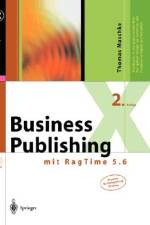
Aus dem Inhalt: .- Einführung.- Kurze Geschichte von RagTime.- Business Publishing mit RagTime.- Installation.- Grundlagen - Ein Baukasten mit vielen Möglichkeiten.- Die Benutzeroberfläche.- Komponenten von RagTime: .- Text.- Layout.- Rechenblatt.- Infographik.- Zeichnung.- Knopf.- Ton.- Bild.- Film.- RagTime kofigurieren.- Formulardesign.- Dokumente sichern und austauschen.- Daten austauschen.- Projekte mit RagTime: .- Korrespondenz.- Kalkulation.- Automatisierte Dokumente.- Materialsammlung.- Publikationen.- Präsentationen.- Spezialitäten.- Ausgabe: .- Inhouse Publishing.- Schriften.- Farbmanagement. - Drucken.- Desktop publishing mit RagTime.- Index.
The book deals with the research activities focussed on solar VAD systems evaluating its merit of compatibility with ozone friendly refrigerants and adoptability with solar energy option. The authors of this book have given more emphasis on discussing various solar cooling VAD systems and its viability for the commercial use. Relevant references on "Solar Cooling: Basics and Advances" has been provided which significantly adopt some of the information for the completeness of the book.
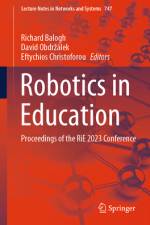
This book provides an overview of Educational Robotics and includes information that reflects the current status of the field, research activity, experiences, and new tools. It compiles the contributions presented at the 14th International Conference on Robotics in Education (RiE2023). Beyond insights into theoretical aspects, practical projects and syllabus activities exemplify the concepts and provide implementation ideas, which span the whole educational system from kindergarten to the university level. The relevance to science, technology, engineering, and mathematics (STEM) education is highlighted by teaching the topics in a unified framework. The book constitutes a valuable resource for educators, researchers, scientists, and engineers interested in robotics. It covers topics including school teaching curricula, educational methodologies and pedagogy, projects, competitions, hardware, simulations, programming, machine learning, and artificial intelligence in education.
This book describes unified image-based measurement methods (theories, numerical methods, and algorithms) to determine the important physical quantities of complex flows in engineering and natural systems, including velocity, pressure, temperature, heat transfer, and skin friction. It presents a systematical study of the inverse problems in global flow diagnostics in a unified framework of the variational formulations. The authors further illustrate the main physical quantities in fluid mechanics, including velocity, pressure, skin friction and surface heat flux, extracted from flow visualization images obtained in experiments and observations. The developed methods are applicable in various image-based flow measurements in diverse disciplines ranging from fluid mechanics/aerodynamics to plenary sciences.
1. Der Ãbergang zur Informationsgesellschaft als sozio-ökonomischer ProzeÃ.- 1.1 Das Ende der Industriegesellschaft.- 1.2 Die Informationsgesellschaft und der Wandel der Arbeit.- 1.3 Der charakteristische Arbeitsplatz der Informationsgesellschaft.- 1.4 Resümee.- 2. Räumliche Strukturen in der Informationsgesellschaft.- 2.1 Anthropologische Voraussetzungen und Bedürfnisse.- 2.2 Global Cities/Global Village?.- 2.3 Das "ortlose Büro", die vergessene Kommunikation versus "Mediatektur".- 2.4 Resümee.- 3. Der Industriebau - ein Gebäudetyp im Wandel.- 3.1 Begriff, Arten und Funktion der Gebäudetypologie.- 3.2 Die funktionale oder Zwecktypologie.- 3.3 Corporate Process Architecture - von der Fabrik zum Unternehmensgebäude.- 3.4 Industriebau und Konversion.- 3.5 Resümee.- 4. Der Perspektivenwechsel bei der Betrachtung von Gebäuden in der Informationsgesellschaft.- 4.1 Die wirtschaftliche Aufwertung der Gebäude.- 4.2 Corporate Real Estate Management und Facility Management - rein quantitative Instrumente?.- 4.3 Resümee.- 5. Informationstechnologie in der Planung und Bewirtschaftung von Gebäuden.- 5.1 Planung unter den Bedingungen der UngewiÃheit - die Beschleunigung der Prozesse.- 5.2 "Digitales" Bauen.- 5.3 Informationstechnologie und Ãkologie.- 5.4 Resümee.- 6. Von der isolierten zur holistischen Gebäudekonzeption.- 6.1 Die Synthese von Informationstechnologie und Humanität in Gebäuden.- 6.2 Integrales Infrastrukturmanagement.- 6.3 Kompetenz im Wandel: das künftige Profil des Planers und Architekten.- 6.4 Resümee.- 7. Ergebnis: Zur Programmatik der Corporate Process Architecture.
This book constitutes the second part of the proceedings of the 15th Asian Conference on Intelligent Information and Database Systems, ACIIDS 2023, held in Phuket, Thailand, during July 24-26, 2023. The 50 full papers included in this book were carefully reviewed and selected from 224 submissions. They were organized in topical sections as follows: Computer Vision, Cybersecurity and Fraud Detection, Data Analysis, Modeling, and Processing, Data Mining and Machine Learning, Forecasting and Optimization Techniques, Healthcare and Medical Applications, Speech and Text Processing.
1. Introduction.- 1.1 Brief Overview of Motion Analysis.- 1.2 Statement of the "Motion from Stereo" Problem.- 1.3 Organization of The Book.- 2. Uncertainty Manipulation and Parameter Estimation.- 2.1 Probability Theory and Geometric Probability.- 2.2 Parameter Estimation.- 2.2.1 Standard Kalman filter.- 2.2.2 Extended Kalman filter.- 2.2.3 Discussion.- 2.2.4 Iterated ExtendKalman Filter.- 2.2.5 Robustness and Confidence Procedure.- 2.3 Summary.- 2.4 Appendix: Least-Squares Techniques.- 3. Reconstruction of 3D Line Segments.- 3.1 Why 3D Line Segments.- 3.2 Stereo Calibration.- 3.2.1 Camera Calibration.- 3.2.2 Epipolar Constraint.- 3.3 Algorithm of the Trinocular Stereovision.- 3.4 Reconstruction of 3D Segments.- 3.5 Summary.- 4. Representations of Geometric Objects.- 4.1 Rigid Motion.- 4.1.1 Definition.- 4.1.2 Representations.- 4.2 3D Line Segments.- 4.2.1 Previous Representations and Deficiencies.- 4.2.2 A New Representation.- 4.3 Summary.- 4.4 Appendix: Visualizing Uncertainty.- 5. A Comparative Study of 3D Motion Estimation.- 5.1 Problem Statement.- 5.1.1 Line Segment Representations.- 5.1.2 3D Line Segment Transformation.- 5.2 Extended Kalman Filter Approaches.- 5.2.1 Linearization of the Equations.- 5.2.2 Derivation of Rotation Matrix.- 5.3 Minimization Techniques.- 5.4 Analytical Solution.- 5.4.1 Determining the Rotation.- 5.4.2 Determining the Translation.- 5.5 Kim and Aggarwal's method.- 5.5.1 Determining the Rotation.- 5.5.2 Determining the Translation.- 5.6 Experimental Results.- 5.6.1 Results with Synthetic Data.- 5.6.2 Results with Real Data.- 5.7 Summary.- 5.8 Appendix: Motion putation Using the New Line Segment Representation.- 6. Matching and Rigidity Constraints.- 6.1 Matching as a Search.- 6.2 Rigidity Constraint.- 6.3 Completeness of the Rigidity Constraints.- 6.4 Error Measurements inn the Constraints.- 6.4.1 Norm Constraint.- 6.4.2 Dot-Product Constraint.- 6.4.3 Triple-Product Constraint.- 6.5 Other Formalisms Rigidity Constraints.- 6.6 Summary.- 7. Hypothesize-and-Verify Method for Two 3D View Motion Analysis.- 7.1 General Presentation.- 7.1.1 Search in the Transformation Space.- 7.1.2 Hypothesize-and-Verify Method.- 7.2 Generating Hypotheses.- 7.2.1 Definition and Primary Algorithm.- 7.2.2 Control Strates in Hypothesis Generation.- 7.2.3 Additional Constraints.- 7.2.4 Algorithm of Hypothesis Generation.- 7.3 Verifying Hypothesis.- 7.3.1 Estimating the Initial Rigid Motion.- 7.3.2 Propagating Hyphoteses.- 7.3.3 Choosing the Best Hypothesis.- 7.3.4 Algorithm of Hypothesis Verification.- 7.4 Matching Noisy Segments.- 7.4.1 Version 1.- 7.4.2 Version 2.- 7.4.3 Version 3.- 7.5 Experimental Results.- 7.5.1 Indoor Scenes with a Large Common Part.- 7.5.2 Indoor Scenes with a Small Common Part.- 7.5.3 Rock Scenes.- 7.6 Summary.- 7.7 Appendix: Transforming a 3D Line Segment.- 8. Further Considerations on Reducing Complexity.- 8.1 Sorting Data Features.- 8.2 "Good-Enough" Method.- 8.3 Speeding Up the Hypothesis Generation Process Through Grouping.- 8.4 Finding Clusters Based on Proximity.- 8.5 Finding Planes.- 8.6 Experimental Results.- 8.6.1 Grouping Results.- 8.6.2 Motion Results.- 8.7 Conclusion.- 9. Multiple Object Motions.- 9.1 Multiple Object Motions.- 9.2 Influence of Egomotion on Observed Object Motion.- 9.3 Experimental Results.- 9.3.1 Real Scene with Synthetic Moving Objects.- 9.3.2 Real Scene with a Real Moving Object.- 9.4 Summary.- 10. Object Recognition and Localization.- 10.1 Model-Based Object Recognition.- 10.2 Adapting the Motion-Determination Algorithm.- 10.3 Experimental Result.- 10.4 Summary.- 11. Calibrating a Mobile Robot and Visual Navigation.- 11.1 The INRIA Mobile Robot.- 11.2 Calibration Problem.- 11.3 Navigation Problem.- 11.4 Experimental Results.- 11.5 Integrating Motion Information from Odometry.- 11.6 Summary.- 12. Fusing Multiple 3D Frames.- 12.1 System Description.- 12.2 Fusing Segments from Multiple Views.- 12.2.1 Fusing General Primitives.- 12.2.2 Fusing Line Segments.- 12.2.3 Ex...
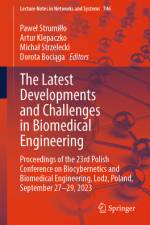
The book contains 35 chapters, in which you can find various examples of the development of methods and/or systems supporting medical diagnostics and therapy, related to biomedical imaging, signal and image processing, biomaterials and artificial organs, modelling of biomedical systems, which were presented as current research topics at the 23rd Polish Biocybernetics and Biomedical Engineering Conference, held at the Institute of Electronics, Lodz University of Technology in September 2023. The ongoing and dynamic development of AI-based data processing and analysis methods plays an increasingly important role in medicine. This book addresses these issues by presenting applications of such methods in various areas, such as disease diagnosis and prediction, particularly through the use of image data analysis algorithms. Other topics covered include personalized medicine, where multimodal patient data is acquired and analyzed, as well as robotic surgery and clinical decision support.The book is of interest to an advanced and broad readership, including researchers and engineers representing both medical, biological, and engineering viewpoints. Its readers may also be graduate and postgraduate students in various fields such as biomedical engineering, artificial intelligence, biomaterials, and medical electronics, as well as software developers in R&D departments working in the field of intelligent healthcare engineering.
What do we mean by semiotic perception? Why should the concepts of perception and expressivity be reinterpreted within the encompassing framework of a dynamic theory of semiotic fields and forms? Can we redeploy the concept of form in such a way as to make explicit such a native solidarity ('chiasmatic' would have said Merleau-Ponty) between perception, praxis and expression -- and first and foremost in the activity of language, right to the heart of the life of the social and speaking animal that we are? What then would be the epistemological and ontological consequences, and how might this affect the way we describe semiolinguistic forms? This book aims to provide answers to these questions by opening up avenues of research on how to understand the linguistic and semiotic dimensions at work in the constitution of experience, both individual and collective.
Across three different centuries, the American Jewish Year Book has provided insight into major trends among Jews primarily in North America. Part I of the current volume contains two chapters: One is a critical assessment of the major American Jewish Population Surveys over the past fifty years (1970-2020). The second chapter is an assessment of the media coverage of Israel in the American Press. Subsequent chapters address recent domestic and international events as they affect the American Jewish community, and the demography and geography of the US, Canada, and World Jewish populations. Part II provides lists of Jewish institutions, including federations, community centers, social service agencies, national organizations, camps, museums, and Israeli consulates. The final chapters present lists of Jewish periodicals and broadcast media, Jewish Studies programs, books, journals, articles, websites, research libraries, and academic conferences as well as lists of major events in the past year, Jewish honorees, and obituaries. This volume employs an accessible style, making it of interest to public officials, Jewish professional and lay leaders, as well as the general public and academic researchers.The American Jewish Year Book is a tremendously useful resource for scholars, Jewish community professionals, pundits, clergy, and policy makers. For over a century, it has offered comprehensive insight into North American Jewish demography, sociology, and culture. It remains a vital source for comprehending the complexities of American and Canadian Jewish life. Robin Judd, Associate Professor of History and Director of the Hoffman Program for Leaders and Leadership in History, The Ohio State UniversityThe American Jewish Year Book is the first draft of history, documenting the trends and topics of interest for such an organizedcommunity. Looking through the 100+ volumes, we can track how discussions have changed over time, which concerns have returned, and how we arrived at the current point in time. It is a valuable tool for anyone interested in trends in American Jewish life. David Manchester, Director of the Berman Jewish DataBank and Director of Community Data and Research Development at The Jewish Federations of North America
This book tells the story of the Lebanese Shi¿a and their development from a marginalized, discriminated minority to a highly politicized community that has given birth to Hezbollah, one of the most powerful paramilitary forces in the contemporary Middle East. It explores the Arab-Israeli conflict through the lens of Shi¿a intellectuals and scholars from South Lebanon, and chronologically reflects on trending perceptions of Palestine, the Zionist movement, and the Jewish community in Lebanon.The monograph illustrates how Zionism and the establishment of Israel played a decisive role in the intellectual revival of early Muslim perceptions of Jews. It demonstrates how political conflicts after 1948 have impacted the work of scholars such as Musa as-Sadr and Muhammad Hussein Fadlallah, and have triggered the formation of social and Islamist movements. It also shows how Hezbollah¿s leaders have used religious sources and Western anti-Jewish narratives to construct a deep-rooted ideology to support their struggle for South Lebanon and Palestine. The combination of social needs, religious beliefs and political interests forms the core of the analysis. This text appeals to students and researchers working within the convergence of politics and Middle Eastern religions.
This book gathers the peer-reviewed papers presented at the 13th International Conference on Structural Analysis of Historical Constructions (SAHC), held in Kyoto, Japan, on September 12-15, 2023. It highlights the latest advances and innovations in the field of conservation and restoration of historical and heritage structures. The conference topics encompass history of construction and building technology, theory and practice of conservation, inspection methods, non-destructive techniques and laboratory testing, numerical modeling and structural analysis, management of heritage structures and conservation strategies, structural health monitoring, repair and strengthening strategies and techniques, vernacular constructions, seismic analysis and retrofit, vulnerability and risk analysis, resilience of historic areas to climate change and hazard events, durability, and sustainability. As such the book represents an invaluable, up-to-the-minute tool, providing an essential overview of conservation of historical constructions, and offers an important platform to engineers, architects, archeologists, and geophysicists.Chapter The Challenges of the Conservation of Earthen Sites in Seismic Areas, Chapter Performance Evaluation of Patch Repairs on Historic Concrete Structures (PEPS): Preliminary Results from Two English Case Studies are available open access under a Creative Commons Attribution 4.0 International License via link.springer.com.
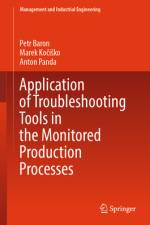
The book presents practical examples of troubleshooting tools applied in real technological processes. The content is useful for technicians, engineers, or maintenance professionals involved in setting up technical systems and reliable operation of rotary machines. The book presents various proactive maintenance methods, exploring how they can be applied to enhance the reliability and efficiency of technical systems. The importance of technical diagnostics is highlighted, offering valuable insights into the process of identifying and analyzing potential issues. The measurement and assessment of vibrations in technical systems are examined. Moreover, the book covers assessing the condition of systems through the study of friction, lubrication, and wear. The application of technical diagnostics tools in reductors' test operation is also detailed. In the concluding section, readers will find a thoughtful synthesis of the key concepts discussed throughout the book.
This book comprises the proceedings of the Annual Conference of the Canadian Society of Civil Engineering 2022. The contents of this volume focus on specialty conferences in construction, environmental, hydrotechnical, materials, structures, transportation engineering, etc. This volume will prove a valuable resource for those in academia and industry.
Under ongoing climate change, natural and cultivated habitats of major food crops are being continuously disturbed. Such condition accelerates to impose stress effects like abiotic and biotic stressors. Drought, salinity, flood, cold, heat, heavy metals, metalloids, oxidants, irradiation etc. are important abiotic stresses; and diseases and infections caused by plant pathogens viz. fungal agents, bacteria and viruses are major biotic stresses. As a result, these harsh environments affect crop productivity and its biology in multiple complex paradigms. As stresses become the limiting factors for agricultural productivity and exert detrimental role on growth and yield of the crops, scientists and researchers are challenged to maintain global food security for a rising world population.This two-volume work highlights the fast-moving agricultural research on crop improvement through the stress mitigation strategies, with specific focuses on crop biology and their response to climatic instabilities. Together with "Climate Resilient Agriculture, Vol 1: Crop Responses and Agroecological Perspectives", it covers a wide range of topics under environmental challenges, agronomy and agriculture processes, and biotechnological approaches, uniquely suitable for scientists, researchers and students working in the fields of agriculture, plant science, environmental biology and biotechnology.
This book provides a concise introduction to switching strategies for power electronics. It provides an in-depth examination of this one concept giving a newcomer a complete immersive experience which has both the depth that is needed to gain confidence yet is simple to understand. The authors examine the basic operation of power electronic systems from scratch and with the help of simulations, how these systems can be constructed. The approach used treats power electronics similar to puzzles and rather than merely presenting them and describing how they work, explore why they came to have the construction they have, and how they could potentially be modified. The authors make extensive use of simulations, with every theory and every result accompanied by a simulation. All simulations are performed by the free and open source Python programming language and the free and open source circuit simulator Python Power Electronics.
The book is about the development of the theory of epistemic fields with the corresponding relational and information fields as a framework for the understanding of strategies and tactics of the theory of knowing as the production of intellectual investment flows and the theory of knowledge accumulation as the production of intellectual capital stocks in systems of factories and departments providing the foundations for the development of open algorithms in the open space of problem-solution dualities. The concepts and the roles of thinking and reasoning with curiosity, creativity, hope, Ill-posed problems, phantom problems, unsolved problems, misinformation, disinformation, fake news, and courage are introduced, defined, and analyzed on the cognitive journeys over the space of ignorance-knowledge dualities, where dualistic-polar conflicts between duals in the space of ignorance-knowledge dualities are resolved with the instruments of fuzzy optimization, the results of which are used to induced the zones of ignorance, the zones of knowledge, and the zones of contentions. A complete development of the set of connecting paths of spaces and sub-spaces is provided, where all varieties, categories, and spaces reside in dualistic-polar structures with knowledge stock viewed as a single tree with the same roots, one trunk, many branches, and a fruit cocktail. The ontological space contains the space of actual-potential dualities as the primary category of knowing, and the epistemological space contains the space of imagination-reality dualities as the derived category of knowing within the space of primary-derived dualities. The space of potentials contains the space of imaginations which contains the sub-spaces of possibility-impossibility, probability-improbability, and possibility-probability dualities with corresponding spaces of necessity-freedom and anticipation-expectation dualities leading to the conception of the possible-world-impossible-world dualities in the space of semantic-non-semantic dualities. This book is also a continuation of the sequence of my works on the theories of paradigms of thought, rationality, info-statics, info-dynamics, entropy, problem-solution dualities in self-contained mathematics and philosophy, and their relational connectivity to information, language, knowing, knowledge, cognitive practices and open maching learning relative to nominalism, and the space of construction-reduction dualities over the spaces of fundamental-applied, production-consumption, input-output, and cost-benefit dualities.
This book provides an overview of recent research in the area of advanced materials for improving human healthcare, protecting the environment and alternative energy resources. The authors analyze and deliver viable technical solutions, demonstrating how chemistry and engineering can collectively solve technical and societal challenges. The book explores innovative technology for the synthesis of complex carbohydrates & glycoproteins, new drug development & delivery, theragnostics of infectious disease and cancer. It also provides insights into the nature of energy extraction, management and usage related to fossil fuels and sustainable energy. The book brings together a group of dynamic and productive scientists, engineers, and other professionals in celebration of the 40th Anniversary of Chinese American Chemical Society. It is a valuable resource for all readers interested in the study of materials to address society's increasing need for electrical and chemical energy.
Human Melanoma and Ultraviolet Radiation.- 1 Introduction.- 2 Melanoma and Solar Ultraviolet Radiation.- 3 The Ozone Layer Problem and Melanoma.- 4 Artificial Sources of Ultraviolet Radiation and Melanoma.- 5 Conclusions.- References.- Maintaining Health of Farm Animals in Adverse Environments.- 1 Introduction.- 2 Field Observations.- 3 Experimental Observations.- 4 Survival of Airborne Microorganisms.- 5 Host Defence..- 6 General Discussion and Conclusions.- References.- Thermoelectric Methods for Measurement of Sap Flow in Plants.- 1 Introduction.- 2 Theory.- 3 Calibration or Verification of the Methods.- 4 Application of the Methods in Research Studies.- 5 Conclusions.- References.- Laser Remote Sensing of Vegetation.- 1 Introduction.- 2 Remote Laser Spectrofluorometry of Vegetation.- 3 Laser Remote Sensing of the Geometrical Structure of the Plant Canopy.- 4 Conclusions.- References.- Global Monitoring of Forests with Radar.- 1 Introduction.- 2 Radar Systems.- 3 Forestry Studies.- References.
Abonner på vårt nyhetsbrev og få rabatter og inspirasjon til din neste leseopplevelse.
Ved å abonnere godtar du vår personvernerklæring.