






















Gjør som tusenvis av andre bokelskere
Abonner på vårt nyhetsbrev og få rabatter og inspirasjon til din neste leseopplevelse.
Ved å abonnere godtar du vår personvernerklæring.Du kan når som helst melde deg av våre nyhetsbrev.

1 Aufgaben, Wirkungsweise und Bedeutung von Lagerungen.- 1.1 Funktionsweise.- 1.2 Geschichtlicher Rückblick.- 1.3 Lagerarten.- 2 Tribologische Grundlagen und KenngröÃen der Schmierstoffe.- 2.1 Reibung und VerschleiÃ.- 2.1.1 Reibungsarten.- 2.1.2 Reibungszustände.- 2.1.3 Stribeck-Kurve.- 2.2 Schmierstoffe.- 2.2.1 Aufgaben und Einteilung der Schmierstoffe.- 2.2.1.1 Aufgaben.- 2.2.1.2 Einteilung.- 2.2.2 KenngröÃen von Schmierstoffen.- 2.2.2.1 Viskosität und Dichte.- 2.2.2.2 Thermische KenngröÃen von Schmierstoffen.- 2.2.3 Viskositätsklassifikation der Schmieröle.- 2.2.3.1 ISO-Normöle.- 2.2.3.2 SAE-Klassifikation.- 2.2.3.3 Weitere Motorenöl-Klassifikationen.- 2.2.4 Additive für Motorenöle.- 2.2.5 Prüfung von Motorenölen, Gebrauchtöl-Eigenschaften.- 2.2.5.1 Motorenölprüfung.- 2.2.5.2 Veränderung von Motorenölen im Gebrauch.- 3 Schmiersysteme von Verbrennungsmotoren.- 3.1 Funktion und Bestandteile von Schmiersystemen.- 3.2 Schmierstoffpumpen.- 3.3 Schmierstoffilter und Filtersysteme.- 3.3.1 Anforderungen.- 3.3.2 Filterbauarten.- 3.4 Schmierölkühlung.- 3.5 Steuerungs- und Sicherheitsbauteile.- 3.6 Schmiersysteme unterschiedlicher Motorentypen.- 3.6.1 PKW-Motoren.- 3.6.2 LKW- und kleinere Industrie-Motoren.- 3.6.3 Mittelschnell laufende Motoren.- 3.6.4 Motorradmotoren und schnell laufende Zweitaktmotoren.- 4 Die Lagerung von Verbrennungsmotoren und ihre Belastung.- 4.1 Dynamisch beanspruchte Gleitlager.- 4.2 Lager des Kurbeltriebes.- 4.2.1 Kolbenbolzenlager.- 4.2.2 Pleuellager.- 4.2.3 Grundlager.- 4.2.4 Weitere Lagerstellen.- 4.3 Kräftezerlegung.- 4.3.1 Kolbenbolzenlager.- 4.3.2 Pleuellager.- 4.3.3 Grundlager.- 4.4 Berechnungsmethoden bei Mehrzylindermotoren.- 5 Hydrodynamische Berechnung von Verbrennungsmotoren-Gleitlagern.- 5.1 Theoretische Grundlagen.- 5.1.1 Druckaufbau durch Tangentialbewegung (Keildruck).- 5.1.2 Druckaufbau durch Radialbewegung (Verdrängungsdruck).- 5.2 Berechnung der Wellenverlagerungsbahn.- 5.2.1 Ausgangspunkt und Berechnungsverfahren.- 5.2.2 Verfahren der überlagerten Tragkräfte.- 5.3 Berechnung der Reibungsleistung.- 5.4 Berechnung der Ãldurchsatzmenge.- 5.5 Wärmebilanz.- 5.6 Maximaler Schmierfilmdruck.- 5.7 Umwandlung der raumfesten in körperfeste Koordinaten.- 5.7.1 Grundlager.- 5.7.2 Pleuellager.- 5.7.3 Kolbenbolzenlager.- 5.8 Winkelgeschwindigkeiten der Lager eines Kurbeltriebes.- 5.9 EDV-Paket zur Auslegung dynamisch beanspruchter Radialgleitlager.- 5.10 Elastohydrodynamische Lagerberechnung - EHD.- 5.10.1 Vorteile und Aussagefähigkeit der elastohydrodynamischen Berechnung.- 5.10.2 Theoretische Grundlagen der EHD-Berechnungsmethode.- 5.10.3 Vergleich der Berechnungs- und MeÃergebnisse.- 6 Auslegung von Verbrennungsmotorenlagerungen.- 6.1 AuslegungskenngröÃen und ihre Optimierung.- 6.1.1 Betriebszustand (Lagerbelastung).- 6.1.2 Lagerabmessungen.- 6.1.3 Schmierstoff und Schmierung.- 6.2 Optimierung der EinfluÃgröÃen - Optimalauslegung.- 6.2.1 Bedeutung und Möglichkeiten.- 6.2.2 BeurteilungsgröÃen für eine Optimalauslegung, übliche Grenzwerte.- 6.2.3 Einfluà des relativen Lagerspieles.- 6.2.4 Einfluà von Ãlzuführungstemperatur und -druck.- 6.2.5 Art und Lage der Schmierstoffzuführung.- 6.2.6 Steifigkeit von Kurbelwelle, Lager und lagerumgebenden Bauteilen.- 6.2.7 Einfluà der Kurbelwellengestaltung (Massenausgleich).- 6.3 SchluÃfolgerungen für die Lagerauslegung aus der Anwendung von EDV-Programmpaketen.- 7 Konstruktive Gestaltung von Lagern.- 7.1 Lagerbauarten und konstruktive Details.- 7.1.1 Lagerbuchsen.- 7.1.2 Dünnwandige Lagerschalen mit und ohne Anlaufring.- 7.1.3 Schmierstoffzuführungselemente.- 7.1.4 Axiallager.- 7.2 LagerschalenpreÃsitz.- 7.3 Grobgestaltung - Rückwirkung der Lagerumgebung auf die Lagerparameter.- 7.4 Feingestaltung von Lagern.- 7.4.1 Kleines Pleuelauge.- 7.4.2 Kolbenbolzenaugen.- 7.4.3 GroÃes Pleuelauge.- 7.4.4 Grundlager und Anordnung der Ãlbohrungen in den Kurbelwellen.- 7.4.5 Nockenwellenlager.- 7.4.6 Ausgleichswellenlager
The area of detection and estimation in a distributed wireless sensor network (WSN) has several applications, including military surveillance, sustainability, health monitoring, and Internet of Things (IoT). Compared with a wired centralized sensor network, a distributed WSN has many advantages including scalability and robustness to sensor node failures. In this book, we address the problem of estimating the structure of distributed WSNs. First, we provide a literature review in: (a) graph theory; (b) network area estimation; and (c) existing consensus algorithms, including average consensus and max consensus. Second, a distributed algorithm for counting the total number of nodes in a wireless sensor network with noisy communication channels is introduced. Then, a distributed network degree distribution estimation (DNDD) algorithm is described. The DNDD algorithm is based on average consensus and in-network empirical mass function estimation. Finally, a fully distributed algorithm forestimating the center and the coverage region of a wireless sensor network is described. The algorithms introduced are appropriate for most connected distributed networks. The performance of the algorithms is analyzed theoretically, and simulations are performed and presented to validate the theoretical results. In this book, we also describe how the introduced algorithms can be used to learn global data information and the global data region.
1 Grundlagen der Dynamik regelungstechnischer Systeme.- 1.1 Allgemeine Zielsetzung der Regelungstechnik.- 1.2 Regelkreis.- 1.3 Voraussetzungen für Blockorientierung und Regelkreisbildung.- 1.4 Aufgaben der Regelungstechnik.- 1.5 Ãbertragungsfunktion und Regelungssystemtheorie.- 1.6 Anfangsbedingungen und Nullstellen der Ãbertragungsfunktion.- 1.7 Ausgangssignal Xa(s) bei x a(k)(0?)=0.- 1.8 Nichtverschwindende Vorgeschichte xa(k)(0?)?0.- 1.9 Analyse im Spektralbereich. Verknüpfung mehrerer Elemente.- 1.10 Regelstrecke und StörgröÃen.- 1.11 Einschleifiger Standardregelkreis.- 1.12 Sensitivität.- 1.13 Differentielle Sensitivität für den Standardregelkreis.- 1.14 Linearisierung.- 1.15 Regelkreis im SignalfluÃdiagramm.- 1.16 Spezielle Elemente regelungstechnischer Systeme.- 1.16.1 Rationale Ãbertragungselemente.- 1.16.2 Totzeit-Elemente.- 1.16.3 AllpaÃ-Elemente.- 1.16.4 Laufzeitelemente.- 2 Regelkreisanalyse im Zeitbereich.- 2.1 Regelkreis-Reaktion auf einfache Signale.- 2.2 Mehrfache Polstellen von Xa(s).- 2.3 Näherung für kleine Zeitwerte.- 2.4 Näherung für groÃe Zeitwerte.- 2.5 Faltungsintegral und Näherung durch Faltungssumme.- 2.6 Regelungen mit Totzeitelementen.- 3 Formulierung kontinuierlicher Regelungssysteme im Zustandsraum.- 3.1 Grundlagen.- 3.2 Transitionsmatrix (Fundamentalmatrix).- 3.3 Potenzreihenentwicklung der Transitionsmatrix.- 3.4 Zustandsregler. Führungs- und Störungsverhalten.- 3.5 Vorfilterbemessung.- 4 Analyseverfahren im Frequenzbereich.- 4.1 Frequenzgang.- 4.2 Ortskurven des Frequenzgangs.- 4.3 Ortskurven von typischen stabilen Regelkreis-Element en.- 4.4 Ortskurven instabiler Regelkreiselemente.- 4.5 Frequenzgangsortskurve des Regelkreises.- 4.6 Ermittlung von Zeitbereichssignalen aus dem Frequenzbereich.- 4.7 Ermittlung des Frequenzganges aus der gemessenen Systemantwort.- 4.8 Bode-Diagramm.- 4.9 Phasenminimum-Beziehungen.- 4.10 Knickstellen der Regelschleife und des Regelkreises.- 4.11 H?-Norm einer Ãbertragungsfunktion.- 5 Regelstrecken im Regelkreis.- 5.1 Antriebe. Allgemeines.- 5.2 Stromrichtergespeiste Gleichstromantriebe.- 5.3 Stromleitverfahren.- 5.4 Begrenzungsregelung.- 5.5 Kupplungselastizität.- 5.6 Umrichtergespeiste Asynchronmaschine.- 5.7 Thermische Regelstrecken.- 5.7.1 Durchlauferhitzer, Wärmetauscher.- 5.7.2 Kessel und Turbine.- 5.8 Hydraulische Regelstrecken.- 5.9 Pneumatische Regelstrecke.- 5.10 Mechanische Positionsregelstrecken.- 5.10.1 Einfache Fahrzeuglenkung.- 5.10.2 Balancierung.- 5.10.3 Passagierflugzeug.- 5.10.4 Raketenantrieb.- 5.11 Verfahrenstechnische Regelstrecken.- 5.12 Elektronische und nachrichtentechnische Regelstrecken.- 5.12.1 Verstärkungsausgleich.- 5.12.2 Scharfabstimmung.- 5.12.3 Zeilensynchronisierung.- 5.12.4 Rauschunterdrückung.- 5.13 Phase-Locked Loops (PLL).- 5.13.1 Phase-Locked Loop in analoger Ersatzrechnung.- 5.13.2 Regelungen an einem CD-Player.- 5.14 Schaltzeichen (Sinnbilder) für technische Regelstrecken.- 5.15 Volkswirtschaftliche Regelungen.- 5.16 Physiologische und psychische Regelkreise.- 5.17 Soziologische Regelungen.- 6 Stellglieder und Verstärker.- 6.1 Stromrichterstellglieder.- 6.2 Umrichter für Drehfeldmaschinen.- 6.3 Stellmotoren für mechanische Positionierung.- 6.4 Stellglieder für Flüssigkeits-, Gasströme u. körnige Stoffe.- 6.5 Schaltzeichen für Stellglieder und Verstärker.- 7 Regelungstechnischer Einsatz von Sensoren und MeÃumformern.- 7.1 Anforderungen.- 7.2 MeÃrauschen.- 7.3 Leistung eines Rauschsignales.- 8 Identifikationsverfahren.- 8.1 Auswertung der Sprungantwort von PDT1-Elementen.- 8.2 Auswertung der Sprungantwort von PT2-Elementen.- 8.3 Wendetangentenmethode bei PT2-Elementen.- 8.4 Auswertung der Sprungantwort von IT1-Elementen.- 8.5 Momentenmethode an der Gewichtsfunktion.- 8.6 Identifikation mit Hilfsregler.- 8.7 Identifikation mit fiktivem Serienelement.- 8.8 Regressionsanalyse. Quadratische Ausgleichsrechnung.- 9 Regler. Ausführung und Dimensionierung.- 9.1 Operationsverstärker.- 9.2 Elektr
This book focuses on holistic approaches to sustainability in all sectors of environment, energy, building, and infrastructure to achieve the best-balanced global environmental, energy, building, infrastructure, transportation, and water technologies (EBITWs). It presents a series of solutions based on innovative research and applications for building a sustainable Earth for future generations. Simply, the goal of this book is to define the context of instigation to think through the scientific theories and practical technical applications of sustainability for building a better planet. Naturally this book explains a series of mechanisms to develop a sustainable world by implementing mainly practicing the following areas of Sustainable Energy, Sustainable Housing and Building Technology, Sustainable Water, Infrastructure, and Transportation Technology, Sustainable Environment which are, very much interconnected to secure a global environmental equilibrium.
This book sheds new light on component surfaces and the scientific fundamentals of their creation, characterization, and application. The book also provides a new interdisciplinary perspective on the topic, studying component surfaces with a multiscale approach and linking fundamental and applied research. The book builds on the success of the coordinated research project funded by Deutsche Forschungsgemeinschaft (DFG) from 2011 - 2023: the CollaborativeResearch Center CRC 926 "Microscale Morphology of Component Surfaces (MI-COS)", in which, over the years, 100+ researchers have co-operated at the University of Kaiserslautern, Germany, and affiliated institutes, yielding 500+ scientific papers in journals from different fields of science and engineering. Divided into 2 main parts, the book starts with an introduction to the concept of Manufacturing-Morphology-Property (MMP) Relationships and dives into the fundamentals and technologies, including topics such as the geometrical, microstructural, and chemical characterization, indentation, and scratching on the nanoscale, micro milling and micro grinding, cryogenic machining, cold spraying, and additive manufacturing. In the first part, readers discover more about the interactions between particles and surfaces, the interrelationship of manufacturing, surface morphology and properties of titanium, the influence of manufacturing and load conditions on the phase transformation and fatigue of austenitic stainless steels, and the influence of surface morphology on fatigue and tribological behavior of Transformation-Induced-Plasticity (TRIP)/Twinning-Induced Plasticity (TWIP) Steels. The second part of this book is devoted to the applications of component surfaces, covering topics like the manufacturing of areal material measures, MMP relationships for rotating shaft sealing systems, the influence of the surface morphology on rolling bearing life under mixed lubrication, MMP relationships for chain joints, and MMP for biofilms. Scientists and engineers who deal with the influence of surfaces on macroscopic properties of components and who are interested in designing and manufacturing these surfaces to obtain desired component properties will understand the appeal of this work. Given its interdisciplinary breadth, the book also appeals to scholars and professionals in the fields of mechanical engineering, process engineering, and physics.
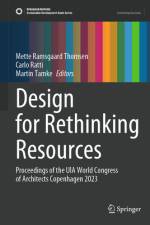
The book provides new perspectives from leading researchers accentuating and examining the central role of the built environment in conceiving and implementing multifaceted solutions for the complex challenges of our understanding of planetary resources and circularity, revealing critical potentials for architecture and design to contribute in more informed and long-term ways to the urgent transition of our society. The book offers a compilation of peer-reviewed papers that uniquely connects knowledge broadly across practice and academia; from the newest technologies and methods such as the role of digital modelling, analysis, and fabrication in circular design, i.e. material passports, cyber-physical augmentation, and LCA to the potentials of growing and harvesting biomass materials, engaging waste streams in material production and more, all in context of economic, social, and ecological potentials and consequences. The book is part of a series of six volumes that explore the agency of the built environment in relation to the SDGs through new research conducted by leading researchers. The series is led by editors Mette Ramsgaard Thomsen and Martin Tamke in collaboration with the theme editors: - Design for Climate Adaptation: Billie Faircloth and Maibritt Pedersen Zari- Design for Rethinking Resources: Carlo Ratti and Mette Ramsgaard Thomsen (Eds.)- Design for Resilient Communities: Anna Rubbo and Juan Du (Eds.)- Design for Health: Arif Hasan and Christian Benimana (Eds.)- Design for Inclusivity: Magda Mostafa and Ruth Baumeister (Eds.)- Design for Partnerships for Change: Sandi Hilal and Merve Bedir (Eds.)
The successful book of andrology now in a new edition! This book gives a complete, interdisciplinary overview of the central topics of andrology, infertility, hypogonadism, contraception and erectile dysfunction. It contains detailed information on the clinical practice of couple treatment, andrology-relevant gynecology and modern methods of assisted fertilization, psychological factors of infertility, endocrinology and reproductive functions of the aging man as well as on an important sub-area of andrology, the male contribution to contraception. In addition, the relevant scientific foundations (including molecular biology and genetics) are also covered. Completely revised and updated according to the latest scientific research, the new edition represents a reference for andrology, which no doctor who deals with the topic can miss. For andrologists, practitioners and residents, urologists, dermatologists and internists who deal with the area ofandrology and male reproductive medicine.
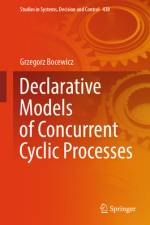
This monograph presents a new declarative approach dedicated to the analysis of behaviors and synthesis of structures of Systems of Cyclic Concurrent Multimodal Processes (SCCMP). These kinds of problems are some of the most difficult cyclic scheduling problems - both from the computational side and the complexity of the models used. SCCMP is understood as a set of processes (in particular, multimodal processes) that execute operations cyclically on a set of jointly used (shared) resources (processors, machines, means of transport, etc.). They model the functioning of numerous systems encountered in practical settings and which are characterized by cyclic (periodic) behavior. Typical examples are the passenger railway system, the manufacturing system, the transportation system, and etc.Considered problems, i.e., the behavior analysis problem, the structure prototyping problem, and the problem of mutual reachability of various SCCMP behaviors, are strongly NP-hard. Thisfeature implies that computationally-efficient algorithms need to be sought. They would enable the evaluation of selected aspects of the considered system's functions, such as service costs, transport time, etc., in real-time mode.In that context, the presented monograph fills the gap in the field of SCCMP modeling. Its aim is to present declarative models of systems of cyclic multimodal processes. Such models allow the development of computationally-efficient methods of analysis of the behavior and synthesis of the structure of SCCMP. The particular issues raised in this study concern: - Modeling of SCCMP with regular/fractal structures, i.e., structures composed of repeating fragments.- Determining the conditions of mutual reachability of various SCCMP behaviors.- Modeling of SCCMP described by fuzzy variables.The monograph is addressed to researchers, practitioners, and graduate students in operations management, operations research, computer science, and industrial engineering. Declarative models of concurrent cyclic processes will serve as an essential reference for professionals working on cyclic scheduling problems in computer science, manufacturing, communication, and transportation services, as well as in many other areas.
This book provides a fundamental understanding of the analytic process involved in solving complex problems, such as the influence of geometric nonlinearity on buckling, vibration, and second-order displacements. Because the book assumes linear behavior the solution can be evaluated using matrix math. Computer software, however, must be used to account for possible nonlinear material behavior due to the local yielding of the members that would result in changes to the elements of the stiffness matrix. Hence the computer solution must be iterative. The number of iterations and the iteration interval may be set manually by the user or internally by the software which can affect the solution.
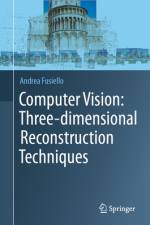
From facial recognition to self-driving cars, the applications of computer vision are vast and ever-expanding. Geometry plays a fundamental role in this discipline, providing the necessary mathematical framework to understand the underlying principles of how we perceive and interpret visual information in the world around us. This text explores the theories and computational techniques used to determine the geometric properties of solid objects through images. It covers the basic concepts and provides the necessary mathematical background for more advanced studies. The book is divided into clear and concise chapters covering a wide range of topics including image formation, camera models, feature detection and 3D reconstruction. Each chapter includes detailed explanations of the theory as well as practical examples to help the reader understand and apply the concepts presented. The book has been written with the intention of being used as a primary resource for students on university courses in computer vision, particularly final year undergraduate or postgraduate computer science or engineering courses. It is also useful for self-study and for those who, outside the academic field, find themselves applying computer vision to solve practical problems. The aim of the book is to strike a balance between the complexity of the theory and its practical applicability in terms of implementation. Rather than providing a comprehensive overview of the current state of the art, it offers a selection of specific methods with enough detail to enable the reader to implement them.
History and early investigation on mode of action of peroxi- dizing herbicides; Structural evolution and synthesis of di- phenyl ethers, cyclic imides and related compounds; Recent advances in peroxidizing herbicides (patent overview); Structure/activity relationship and molecular design of her- bicides with cyclic imide and related structures; Structure /activity relationship of diphenyl ethers and other oxygen- bridged protoporphyrinogen oxidase inhibitors; General phy- siological characteristics and mode of action of peroxidi- zing herbicides; Metabolic modification of isoimide-type per oxidizing compounds; The metabolic pathway of tetrapyrrole biosynthesis; Characteristics of protoporphyrinogen oxidase; Assay systems for peroxidizing herbicides; Herbicidal effi- cacy of protoporphyrinogen oxidase inhibitors; Antagonizing peroxidizing herbicides; Strategy for peroxidizing herbicide resistant crops; Metabolism and degradation of porphyrin biosynthesis inhibitor herbicides; Toxicology of peroxidi- zing herbicides to mammals and non-target organisms
This book is the first on Smart Grid 3.0.The book presents literature reviews of recent computational and communication technologies and their application in the evolution of smart grids to Smart Grid 3.0. It offers new control solutions, architectures and energy management strategies that are based on artificial intelligence and deep learning techniques.The book details the hardware and software implementation of fault identification or detection based on synchrophasor data and machine learning. It also discusses blockchain architectures for smart grid applications such as electric vehicles, home automation and automatic metering infrastructure.
Challenges to Achieving Accurate Three-Dimensional Process Simulation.- Modeling Nano-Structure Devices.- About Boltzmann Equations for Transport Modeling in Semiconductors.- Applied TCAD in Mega-Bits Memory Design.- Process Flow Representation within the VISTA Framework.- A Powerful TCAD System Including Advanced RSM Techniques for Various Engineering Optimization Problems.- Modeling of VLSI MOSFET Characteristics Using Neural Networks.- Coupling a Statistical Process-Device Simulator with a Circuit Layout Extractor for a Realistic Circuit Simulation of VLSI Circuits.- Simulation of Self-Heating Effects in a Power p-i-n Diode.- Impact of Cell Geometries and Electrothermal Effects on IGBT Latch-Up in 2D-Simulation.- On the Influence of Thermal Diffusion and Heat Flux on Bipolar Device and Circuit Performance.- 2-D Electrothermal Simulation and Failure Analysis of GTO Turn-off with Complete Chopper Circuit Parasitics.- 3D Thermal/Electrical Simulation of Breakdown in a BJT Using a Circuit Simulator and a Layout-to-Circuit Extraction Tool.- Nonlocal Oxide Injection Models.- Electron Transport in Silicon Dioxide at Intermediate and High Electric Fields.- Efficient and Accurate Simulation of EEPROM Write Time and its Degradation Using MINIMOS.- Influence of Oxide-Damage on Degradation-Effects in Bipolar-Transistors.- The Application of Sparse Supernodal Factorization Algorithms for Structurally Symmetric Linear Systems in Semiconductor Device Simulation.- Newton-GMRES Method for Coupled Nonlinear Systems Arising in Semiconductor Device Simulation.- Practical Use of a Hierarchical Linear Solver Concept for 3D MOS Device Simulation.- Further Improvements in Nonsymmetric Hybrid Iterative Methods.- Rigorous Microscopic Drift-Diffusion Theory and its Applications to Nanostructures.- Atomistic Evaluation of Diffusion Theories for the Diffusion of Dopants in Vacancy Gradients.- Self Diffusion in Silicon Using the Ackland Potential.- Three-Dimensional Numerical Simulation for Low Dopant Diffusion in Silicon.- 3-D Diffusion Models for Chemically-Amplified Resists Using Massively Parallel Processors.- Improvement of Initial Solution Projection in Solving General Semiconductor Equations Including Engery Transport.- A Numerical Implementation of the Energy Balance Equations Based on Physical Considerations.- Construction of Stable Discretization Schemes for the Hydrodynamic Device Model.- Three-Dimensional Implementation of a Unified Transport Model.- Mixed-Mode Multi-Dimensional Device and Circuit Simulation.- Modeling High Concentration Boron Diffusion with Dynamic Clustering: Influence of the Initial Conditions.- Simulation of High-Dose Ion Implantation-Induced Transient Diffusion and of Electrical Activation of Boron in Crystalline Silicon.- Physical Modeling of the Enhanced Diffusion of Boron Due to Ion Implantation in Thin Base npn Bipolar Transistors.- Simulation of Denuded Zone Formation in CZ Silicon.- A Closed Hydrodynamic Model for Hot-Carrier Transport in Submicron Semiconductor Devices.- Critical Assessment of Different Hydrodynamical Models for Avalanche Multiplication Calculation in Silicon Bipolar Transistors.- Dual Energy Transport Model with Coupled Lattice and Carrier Temperatures.- Inclusion of Electron-Electron Scattering in the Spherical Harmonics Expansion Treatment of the Boltzmann Transport Equation.- Quantitative 2D Stress Dependent Oxidation with Viscoelastic Model.- Oxidation Simulation and Growth Kinetics of Thin SiO2 in Pure N2O.- Accurate Simulation of Mechanical Stresses in Silicon During Thermal Oxidation.- Mechanical Stress Simulation During Gate Formation of MOS Devices Considering Crystallization-Induced Stress of p-Doped Silicon Thin Films.- Monte Carlo Simulation of Carrier-Carrier Interaction for Silicon Devices.- Monte Carlo MOSFET Simulator Including Inversion Layer Quantization.- Three-Dimensional Monte Carlo Simulation of Submicronic Devices.- Monte Carlo Analysis of Voltage Fluctuations in Two-Te...
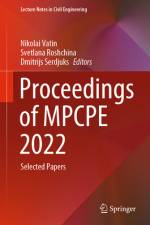
This book gathers selected contributions in the field of civil and structural engineering, as presented by international researchers and engineers at the International Conference on Materials Physics, Building Structures and Technologies in Construction, Industrial and Production Engineering (MPCPE), held in Vladimir, Russia, on April 26¿28, 2022. The book covers a wide range of topics including the theory and design of capital construction facilities, engineering, and hydraulic structures; development of innovative solutions in the field of modeling and testing of reinforced concrete, metal, and wooden structures, as well as composite structures based on them; investigation of complex dynamic effects on construction objects, and many others directions. Intended for professional builders, designers, and researchers. The contributions, which were selected by means of a rigorous international peer-review process, highlight numerous exciting ideas that will spur novel research directions and foster multidisciplinary collaborations.
This book explores the profound and ancient relationship between music and astronomy. Throughout history, Music has occupied a significant place among the disciplines of the Quadrivium, which also include Geometry, Arithmetic, and Astronomy. The captivating bond between these two realms has not only inspired eminent scientists like Kepler, Newton, and Einstein, but has also captured the imagination of NASA and astronauts in modern times. The author delves into various aspects of the intersection between music and astronomy, encompassing everything from ancient cosmological beliefs to groundbreaking discoveries such as the cosmic background radiation and gravitational waves. This enthralling theme has not only stimulated renowned artists like David Bowie and Elton John, but has also served as a muse for movies like Close Encounters of the Third Kind. Within the book, readers will find an extensive photo gallery and a specially curated soundtrack that enhances the reading experience. It caters to a broad audience, appealing to those with a general interest in both music and astronomy, as well as to specialized individuals in either field of study.
This book provides knowledge on the diversity of disease-causing microbes including bacteria, viruses, fungi and protozoans--the major diseases they cause and the environmental factors that influence the occurrence, transmission and spread of microbes along with the epidemiological factors determining the occurrence of disease. The book mainly covers a broad spectrum of diseases infecting different organs of human and describes the microorganisms involved in the process. The diseases caused by parasites and helminths are also included in the text since the infective stages of parasites as well as helminths are microscopic in nature and need to be distinguished from bacterial infections by appropriate diagnosis.
This book presents a comprehensive review of how acoustic waves are processed by the auditory system into structured sounds such as musical melodies, speech utterances, or environmental sounds. After an introduction, an overview is given of how the ears distribute acoustic information over a large array of frequency channels that contain the auditory information used by the central nervous system to generate a mental image of what is happening around the listener. This process, called auditory scene analysis, consists of two stages. In the first stage, auditory units are formed such as musical tones and speech syllables. Each auditory unit is perceived at a well-defined moment in time, the beat location of that auditory unit. Moreover, from this process of auditory-unit formation, the auditory attributes of these auditory units emerge, such as their timbre, their pitch, their loudness, and their perceived location. Each of these attributes is discussed in the corresponding chapter. In the second stage of auditory scene analysis, auditory-stream formation, the successive auditory units are integrated into auditory streams, i.e., temporally structured sequences of auditory units that are perceived as emanating from one and the same sound source. Examples of such auditory streams are musical melodies and the utterances of one speaker. The temporal structure of an auditory stream, its rhythm, is determined by the beat locations of its auditory units. The role played by the auditory attributes of the consecutive auditory units is discussed. The melodies of musical streams and the intonation contours of spoken utterances emerge from this process. In music, the beats of parallel streams generally fit into a metric pattern, and, depending on harmony, simultaneous tones can be perceived as consonant or dissonant.Finally, the book contains many sound examples including the MATLAB scripts with which they are generated.
Micro fabrication for process intensification.- Microstructures for smart reactors: Precision performance in industrial production.- Microfluidics and microtechnology for microreactor systems.- Micromachined straight-through silicon microchannel array for mono-dispersed microspheres.- Development of a cooled microreactor for platinum catalyzed ammonia oxidation.- Microchemical systems for direct fluorination of aromatics.- Design, fabrication and experimental study of new compact mini heat-exchangers.- Development of a self-heating catalytic microreactor.- Preparation of microchannel palladium membranes by electrolysis.- Heating concepts for ceramic microreactors.- Design and fabrication of zeolite-containing microstructures.- New process for manufacturing ceramic microfluidic devices for microreactor and bioanalytical applications.- Macroscale production of microsystems.- Prediction of the potential of microreactors for heterogeneously catalysed gas phase reactions.- Microchannel reactors for kinetic measurement: Influence of diffusion and dispersion on experimental accuracy.- A vertically-averaged formulation of wall catalytic reactions in microchannel flows: single isothermal & non-isothermal reactions.- Intensification in microstructured unit operations: Performance comparison between mega and microscale.- A new microstructure device for fast temperature cycling for chemical reactions.- Photochemical reactions and online product detection in microfabricated reactors.- Chaotic mixing in electrokinetically and pressure driven micro flows.- Filamentous catalytic beds for the design of a membrane microreactor: Propane dehydrogenation as a case study.- Characterization of a gas/liquid microreactor, the micro bubble column: Determination of specific interfacial area.- Visualization of flow patterns and chemical synthesis in transparent Micromixers.- Forced periodic temperature oscillations in microchannel reactors.- Comparison of Ag/AI- and Ag/?-AI2O3 catalytic surfaces for the partial oxidation of ethene in microchannel reactors.- Monodispersed droplet formation caused by interfacial tension from microfabricated channel array.- Investigation of microfluidics and heat transferability inside a microreactor array made of glass.- Sub-watt power using an integrated fuel processor and fuel cell.- Catalytic microreactor systems for hydrogen generation.- Palladium based micro-membrane for water gas shift reaction and hydrogen gas separation.- Demonstration of energy efficient steam reforming in microchannels for automotive fuel processing.- A microstructure reactor system for the controlled oxidation of hydrogen for possible application in space.- Catalyst coating in microreactors for methanol steam reforming: Kinetics.- A microreactor for in-situ hydrogen production by catalytic methanol Reforming.- Applications for micro chemical and thermal systems.- Mixing simulation of a zigzag microchannel: A step towards the methoxylation of methyl-2-furoate.- Fuel processor development for a soldier-portable fuel cell system.- MiRTH-e: Micro reactor technology for hydrogen and electricity.- Microreactors as tools in chemical research.- MicroChannel reactor for the partial oxidation of isoprene.- Selective oxidation of 1 -butene to maleic anhydride - comparison of the performance between microchannel reactors and a fixed bed reactor.- Application of a micromixer for the high throughput screening of fluid-liquid Molecular catalysis.- A novel cross-flow microreactor for kinetic studies of catalytic processes.- A new microreactor for the solution-phase synthesis of potential drugs.- Investigation, analysis and optimization of exothermic nitrations in Microreactor processes.- Development of a microreactor for solid phase synthesis.- Catalysts and reaction conditions screening by microreactor devices for exhaust gas purification.- Liquid phase hydrogenation of p-nitrotoluene in microchannel reactors.- Monitoring of chemical processes in microreact...
This textbook provides a starter's guide to VHDL. This book can be used in conjunction with a one-semester course in Digital Systems Design or on its own for designers who only need an introduction to the language. This book is designed to provide a bottoms-up approach to learning the VHDL language. This design supports a course in which foundational knowledge is covered before moving into advanced topics. However, this design also supports use as a reference manual. The author has designed the presentation with learning goals and assessment at its core. Each section addresses a specific learning outcome that the student should be able to "do" after its completion. The concept checks and exercise problems provide a rich set of assessment tools to measure student performance on each outcome.
This edited book proposes a collection of recently undertaken technical work on topics from various aspects of power engineering, energy systems as well as integrated smart technologies and related challenges. The scientific nature of the topics to be discussed in this book ranges from novel concepts to innovative implementations of smart technologies for promoting sustainable economic growth and development. Furthermore, this book substantially contributes to the relevant literature¿s advancement and possibly serves as a platform for future research endeavors and publications. In addition, knowledge enrichment and expansion of power engineering and energy systems in the context of the Fourth Industrial Revolution, such as to be portrayed in this book, fundamentally appeal to researchers, power system engineers, energy specialists, data scientists, decision-makers as well as professionals involved in the various sectors that constitute the United Nations Sustainable Development Goals.
This open access book constitutes the proceedings of the 29th International Conference on Automated Deduction, CADE 29, which took place in Rome, Italy, during July 2023. The 28 full papers and 5 short papers presented were carefully reviewed and selected from 77 submissions. CADE is the major forum for the presentation of research in all aspects of automated deduction, including foundations, applications, implementations, and practical experience. The papers are organized in the following topics: Logical foundations; theory and principles; implementation and application; ATP and AI; and system descriptions.
1.1 Was ist Typographie?.- 1.2 Typographie als Handwerk.- 1.3 Die Schrift.- Schrift.- 2.1 Das Schriftzeichen.- 2.2 ZeichenmaÃe.- 2.3 Serifen.- 2.4 Das einzelne Zeichen (die Letter).- 2.5 Schrifteneinteilung.- 2.6 Schriftnamen innerhalb einer Schnittfamilie.- 2.7 Spezialzeichen und Spezialschnitte.- 2.8 Laufweiten, Zeichenabstände.- 2.8.1 Unterschneiden.- 2.8.2 Ligaturen.- 2.9 Schriftauszeichnung.- 2.10 Wortabstände.- 2.11 Zeilenabstand und DurchschuÃ.- 2.12 Satzausrichtung.- 2.13 Initialen.- 2.14 Formsatz.- MaÃangaben in der Typographie.- 3.1 Typographische MaÃeinheiten.- 3.1.1 Kegel- und Versalhöhen.- 3.1.2 MaÃangaben im DTP.- 3.1.3 Weitere typographische MaÃe.- Der Satzspiegel.- 4.1 Proportionen der Seite.- 4.2 Festlegen des Satzspiegels.- 4.2.1 Stege beim Satzspiegel.- 4.2.2 Gestaltungsraster.- 4.3 Stilelemente im Satzspiegel.- 4.3.1 SchriftgröÃen.- 4.3.2 Absatzuntergliederung.- 4.3.3 Grauwert einer Seite.- 4.3.4 FuÃnoten und Marginalien.- 4.4 Feinkorrekturen.- 4.4.1 Absatzumbruch.- 4.4.2 Worttrennungen.- 4.4.3 Ãsthetikprogramme.- Die Schrift zum Text.- 5.1 Aussage einer Schrift.- 5.2 Werkschriften.- 5.3 Ãberschriften / Headlines.- 5.4 Welche Schrift zu welchem Zweck?.- 5.5 Mischen von Schriften.- 5.6 Ausnahmen.- Schreibregeln.- 6.1 Zahlensatz.- 6.2 Absatz-Numerierung.- 6.3 Abkürzungen.- 6.4 Unterschiedliche Anführungszeichen.- 6.5 Zwischenräume.- 6.6 Verschiedene Textstriche.- Tabellensatz.- 7.1 Reihensatz oder Tabelle.- 7.2 Tabellenkomponenten.- 7.3 Tabellenkonzeption.- 7.4 Tabellengliederung.- 7.5 Besondere Situationen.- 7.6 Diagramm statt Tabelle.- 7.7 Tabelle statt Liste.- Abbildungen.- 8.1 Anordnung von Abbildungen.- 8.2 Linienstärken.- 8.3 Geeigneter Detaillierungsgrad.- 8.4 Schrift in Abbildungen.- 8.5 Randbeschnitt.- 8.6 Halbtonbilder und Raster.- 8.6.1 Rasterzerlegung.- 8.6.2 Bildqualität in Farbtiefe.- 8.6.3 Technische Raster.- 8.6.4 Tonwertzuwachs.- 8.7 Komprimieren - aber richtig.- 8.8 Farbe in Dokumenten.- 8.8.1 Der Einsatz von Farben.- 8.8.2 Stimmung und Wirkung von Farben.- 8.8.3 Farben im Farbkreis.- 8.8.4 Farbharmonie.- 8.8.5 Farben in Diagrammen und Graphiken.- 8.8.6 Farben an das Ausgabemedium adaptieren.- Von Zahlen zu Diagrammen.- 9.1 Verschiedene Diagrammarten.- 9.1.1 Kreisdiagramme.- 9.1.2 Balkendiagramme.- 9.1.3 Stabdiagramme.- 9.1.4 Figurendiagramme.- 9.1.5 Liniendiagramme.- 9.1.6 Netzdiagramme.- 9.2 Dreidimensionale Diagramme.- 9.3 Skalen.- 9.4 Weitere Regeln bei Diagrammen.- Präsentationen.- 10.1 Vorüberlegungen zu Präsentationen.- 10.2 Von der Information zur Präsentation.- 10.3 Präsentationsmedien.- 10.4 Gliederung der Folien.- 10.5 Schrift in Folien.- 10.6 Makro- und Mikrotypographic in Präsentationen.- 10.6.1 Typo-Orthographie - Schreibregeln.- 10.6.2 Eine sorgfältige Vorlage ist die halbe Arbeit.- 10.7 Graphiken in Folien.- 10.7.1 Bilder als symbolischer Hintergrund.- 10.7.2 Funktionsgraphiken.- 10.7.3 Weitere Prinzipien bei Graphiken.- 10.8 Ãberblendeffekte und Animationen.- 10.9 Weitere Tips für Präsentationen.- Der Standardbrief.- 11.1 DIN-Brief.- 11.2 Umschläge und Falzarten.- Von der Seite zum Buch.- 12.1 Arbeitsablauf einer Publikation.- 12.2 Die Teile eines Buchs.- 12.3 Titelei.- 12.3.1 Der Schmutztitel.- 12.3.2 Der Haupttitel.- 12.3.3 Impressum.- 12.3.4 Inhaltsverzeichnis.- 12.3.5 Vor- oder Geleitwort.- 12.4 Anhang.- 12.4.1 Bibliographie.- 12.4.2 Glossar.- 12.4.3 Register.- 12.5 Einband.- Satz und Korrektur.- 13.1 Satzanweisungen.- 13.2 Korrekturen, Korrekturzeichen.- Das Belichten.- 14.1 Die Belichtung.- 14.2 PostScript, PDF oder Dokument?.- 14.2.1 PostScript-Dateien.- 14.2.2 Adobe Acrobat - PDF.- 14.2.3 Dokumenten-Dateien.- 14.3 Schriften beim Belichten.- 14.4 Graphiken und Bilder.- 14.5 Angaben zum Belichten.- 14.6 Raster beim Belichten.- 14.7 Belichten von Farben.- 14.8 Belichtungsformular.- 14.9 Proof - Probedruck.- Drucken und Binden.- 15.1 Verschiedene Druckverfahren.- 15.2 Druck-Vorbereitungen.- 15.2.1 Belichten des Films.- 15.2.2 AusschieÃen.-
The French School of Programming is a collection of insightful discussions of programming and software engineering topics, by some of the most prestigious names of French computer science. The authors include several of the originators of such widely acclaimed inventions as abstract interpretation, the Caml, OCaml and Eiffel programming languages, the Coq proof assistant, agents and modern testing techniques.The book is divided into four parts: Software Engineering (A), Programming Language Mechanisms and Type Systems (B), Theory (C), and Language Design and Programming Methodology (D). They are preceded by a Foreword by Bertrand Meyer, the editor of the volume, a Preface by Jim Woodcock providing an outsider¿s appraisal of the French school¿s contribution, and an overview chapter by Gérard Berry, recalling his own intellectual journey. Chapter 2, by Marie-Claude Gaudel, presents a 30-year perspective on the evolution of testing starting with her own seminal work. In chapter 3, Michel Raynal covers distributed computing with an emphasis on simplicity. Chapter 4, by Jean-Marc Jézéquel, former director of IRISA, presents the evolution of modeling, from CASE tools to SLE and Machine Learning. Chapter 5, by Joëlle Coutaz, is a comprehensive review of the evolution of Human-Computer Interaction. In part B, chapter 6, by Jean-Pierre Briot, describes the sequence of abstractions that led to the concept of agent. Chapter 7, by Pierre-Louis Curien, is a personal account of a journey through fundamental concepts of semantics, syntax and types. In chapter 8, Thierry Coquand presents ¿some remarks on dependent type theory¿. Part C begins with Patrick Cousot¿s personal historical perspective on his well-known creation, abstract interpretation, in chapter 9. Chapter 10, by Jean-Jacques Lévy, is devoted to tracking redexes in the Lambda Calculus. The final chapter of that part, chapter 11 by Jean-Pierre Jouannaud, presents advances in rewriting systems, specifically the confluence of terminating rewriting computations. Part D contains two longer contributions. Chapter 12 is a review by Giuseppe Castagna of a broad range of programming topics relying on union, intersection and negation types. In the final chapter, Bertrand Meyer covers ¿ten choices in language design¿ for object-oriented programming, distinguishing between ¿right¿ and ¿wrong¿ resolutions of these issues and explaining the rationale behind Eiffel¿s decisions.This book will be of special interest to anyone with an interest in modern views of programming ¿ on such topics as programming language design, the relationship between programming and type theory, object-oriented principles, distributed systems, testing techniques, rewriting systems, human-computer interaction, software verification¿ ¿ and in the insights of a brilliant group of innovators in the field.
This open access book focuses on of the impact of endocrine disrupting chemicals (EDCs) on human reproduction. It comprehensively discusses the three most important topics in the field: the basic biology of EDCs; the effects of EDCs on human reproduction and human reproductive systems; and potential interventions and practical advice for dealing with the problems caused by EDCs.Presenting a translational approach to endocrine disrupting chemicals research, spanning both basic biology and clinical applications, the book provides a critical link between laboratory investigations and clinical practice. Written by international experts in the field, it is a valuable reference resource for gynaecologists, obstetricians, endocrinologists and experts in reproductive medicine, and a useful tool for anyone interested in the impact of the environment on human reproduction.
This Open access book provides a survey of the economic, health, and somatic progress of Baltic countries during the period 1918-2018, framed by the outline of the historical-sociological theory of modern social restorations, as originally conceived by the Austrian-American comparative historian Robert A. Kann. The author reworks Kann's theory to analyse post-communist transformations in the Baltic region. The book argues that the purpose of modern social restorations is to make restoration societies safe against a recurrence of revolution. There were two waves of modern social restorations: post-Napoleonic and post-communist. Most post-Napoleonic restorations were brief, because they failed to economically and socially outperform the pre-revolutionary and post-revolutionary systems. It considers Baltic restorations as laboratory cases of second-wave modern social restorations, because they encompass a triple restoration of the nation-state, capitalism, and democracy. The book assesses the performance success of Baltic restorations by comparing economic and social progress of Baltic countries during the periods of original independence (1918-1940), foreign-imposed state socialism (1940-1990), and restored independence (since 1990). It then elaborates the criteria to assess the ultimate performance success of these restorations by 2040, when restored Baltic states may endure longer than their ancestors in 1918-1940 and the complete foreign occupations era (1940-1990). The author, an expert in historical sociology, uses extensive historical-statistical data in cross-time comparisons to develop his analysis and create future projections. This book is of wide interest to sociologists, social demographers, political scientists, and economists studying the Baltic region. This is an open access book.
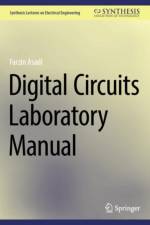
Digital systems are an important part of modern life. This book introduces the basic building blocks of digital systems and how these blocks can be used to design a digital system. It can be used as a laboratory manual for courses such as Digital Logic and Digital Electronics. All of the experiments in this book can be done in a simulation environment like: Proteus(R) or NI(R) MultiSim(R) or on the breadboard in a real laboratory environment.
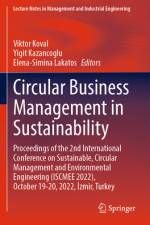
This book gathers research and best-practices concerning the achievement of sustainable development goals in both community generation and business growth. It highlights the organizational aspects relating to the realization of green innovation. It covers models for optimizing the use of both natural and human resources. It reports on assessment methods and advanced models to analyze community and business performance in the context of sustainable development. Further, it proposes solutions to reduce the effects of environmental pollution, increase energy efficiency, and managing resources and waste, to foster sustainable development. Gathering the proceedings of the 2nd International Conference on Sustainable, Circular Management and Environmental Engineering (ISCMEE 2022), held on October 19-20, 2022, as a hybrid event from ¿zmir, Turkey, this book offers a timely snapshot on circular business management knowledge and methods for both researchers and professionals in the field of engineering management, business and economics, and energy and environment.
Abonner på vårt nyhetsbrev og få rabatter og inspirasjon til din neste leseopplevelse.
Ved å abonnere godtar du vår personvernerklæring.