






Gjør som tusenvis av andre bokelskere
Abonner på vårt nyhetsbrev og få rabatter og inspirasjon til din neste leseopplevelse.
Ved å abonnere godtar du vår personvernerklæring.Du kan når som helst melde deg av våre nyhetsbrev.

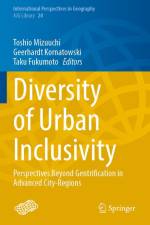
This book engages readers in an enlightening exploration of cities' identities, sustainability, and urban development. Delving into the intricate interplay between art, architecture, and the urban landscape, it offers a compelling analysis of the factors that shape cities and their distinct personalities. The volume uncovers captivating stories of cities as they navigate the delicate balance between heritage conservation and modernity. It highlights innovative strategies employed to preserve historical sites while adapting to the demands of a rapidly changing world. Full of insightful discussions on the impact of cultural lifestyles, the fusion of architectural styles, and the challenges and triumphs of sustainable urban development, it draws upon a diverse range of perspectives and research, inviting architects, urban planners, and scholars to delve into the intricate nuances of cities' identities in the process.With its informative and engaging narrative, this book providesa fresh perspective on cities' identities and offers practical insights into shaping vibrant, livable urban landscapes.
This book, endorsed by EuSoMII, provides clinicians, researchers and scientists a useful handbook to navigate the intricate landscape of data harmonization, as we embark on a journey to improve the reproducibility, robustness and generalizability of multi-centric real-world data radiomic studies. In these pages, the authors delve into the foundational principles of radiomics and its far-reaching implications for precision medicine. They describe the different methodologies used in extracting quantitative features from medical images, the building blocks that enable the transformation of images into actionable predictions. This book sweeps from understanding the basis of harmonization to the implementation of all the knowledge acquired to date, with the aim of conveying the importance of harmonizing medical data and providing a useful guidance to enable its applicability and the future use of advanced radiomics-based models in routine clinical practice. As authors embark on this exploration of data harmonization in radiomics, they hope to ignite discussions, foster new ideas, and inspire researchers, clinicians, and scientists alike to embrace the challenges and opportunities that lie ahead. Together, they elevate radiomics as a reproducible technology and establish it as an indispensable and actionable tool in the quest for improved cancer diagnosis and treatment.
Unlocking the Future of Infectious Disease Research ResponseIn a world where emerging infectious diseases constantly threaten humanity, advances in science and technology promise defense against future pathogens before they cause pandemics. The field of emergency research response and preparedness remains in its infancy, however. Not until the 2014 West African Ebola outbreak was accelerated research broadly recognized as a crucial component of emergency response. Many outbreaks and one global pandemic later, it is clear the world must be prepared to launch accelerated research responses to prevent or mitigate infectious disease outbreaks, epidemics, and pandemics. Yet this nascent field is rife with critical scientific, ethical, and policy questions. How can local, national, and global systems collaborate across disciplines and political boundaries to protect health security? How can we conduct rigorous research in fragile or failed nation-states? What is needed for equitable distribution of vaccines and therapeutic medicines in short supply? How can we accelerate trials of vaccines and therapeutics during an emergency without compromising scientific rigor or ethical standards? How do we integrate communities and stakeholders into research preparedness and response? The editors bring decades of experience to their collaboration with renowned research scientists and health policy experts. Together they have crafted a compendium that proposes normative standards and offers practical guidance for preparedness and rapid research response. This pioneering, open access textbook presents principles and practices forged from experience in health emergencies - insights that illuminate a path forward for research response and preparedness. The goal is to stop outbreaks from becoming avoidable pandemics, and to mitigate illness, death, and social disruption if they cannot be stopped. Principles and Practice of Emergency Research Response merges historical understanding with insights into possible futures. It will serve as an indispensable compass for curtailing infectious disease threats through research, global health policy changes, and research capacity improvements where they are most needed. The editors hope that this book will be an ongoing reference for governments, health organizations, development agencies, researchers, policy experts, ethicists, and social scientists. To facilitate focused and enhanced learning, it incorporates pedagogical tools such as abstracts, learning objectives, discussion questions, real-life examples, and learning tracks. Robust global health security requires effective preparation for and response to emerging and re-emerging pathogens. This volume should help guide us towards a more resilient future.
This book describes the most important contributions of Italian astronomers to the development of planetary astronomy during the nineteenth century and the early part of the twentieth century. This journey through what may be regarded as the golden era of Italian astronomy commences with the discovery of Ceres, the first asteroid, now classified as a dwarf planet, and culminates in the role played by the Padua Observatory in calculating Pluto's orbit in the 1930s. Along the way, a wealth of information is provided on the discovery of many comets and asteroids, early spectroscopic observations, drawings of planets and comets, calculations of orbits and ephemerides, and much more. The contributions of such famous figures as Giovanni Schiaparelli, Giovanni Battista Donati, Angelo Secchi, and Annibale De Gasparis are fully explained. Many of the described results are still of interest for modern astronomy, and the book appeals to a wide readership, including scholars, historians, astronomers, and the general public.
This open access book is about spontaneous symmetry breaking, which is a classic area of theoretical physics that lies at the core of many fascinating phenomena such as ferromagnetism, superfluidity, superconductivity, or the Higgs mechanism. The book brings an up-to-date overview of spontaneous symmetry breaking and of modern effective field theory description thereof. The topics covered include the classification of NambüGoldstone bosons, nonlinear realization of internal and spacetime symmetries and the construction of the corresponding effective actions, and selected applications. With in-depth exposition of conceptual foundations and numerous illustrative examples, the book is accessible to anybody having taken a basic course on quantum field theory. It serves as a self-contained text for graduate students and junior researchers in diverse areas of physics, but also as a useful reference for experts.
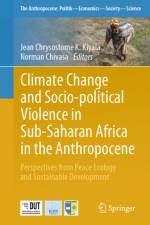
This book explores the theoretical contribution of peace ecology to the understanding and practice of environmental and conventional peacebuilding. It integrates environmental questions and factors that drive socio-political violence and climate change-induced violence in Sub-Saharan Africa in the Anthropocene.· It demonstrates how international peace and global security are no longer solely grounded in conventional peacebuilding that has evolved from liberal to democratic peace theories, but rather in the complex, critical and synergic relations between peace studies and environmental studies.· It provides a pluridisciplinary body of knowledge that emphasises the need for food security, social climate, social good, social capital and sustainable development at the age of climate change and climate wars.· It underscores the potential of peace ecology to reduce the Earth systems' vulnerability, to mitigate anthropogenic global warming's consequences on humanity, the ecosystem and biodiversity.· It yields various models of peacebuilding, conflict-sensitive and climate-sensitive adaptation strategies to enhance the African Region's security and stability.Finally, this volume argues that planetary boundaries framework remains the safer space within which human and sustainable development can be pursued and attained, and future generations to thrive. A comprehensive and international response to socio-political violence and climate-change induced violence should take into account the vulnerability of individual countries, regions and the global world in order to achieve the dreams of a better future; that makes this book a cutting-edge scholarly work.
This book presents fundamental concepts and technologies to tackle interoperability between information systems. It details interoperability at the data, service, and process level, and combines theoretical foundations with hands-on presentation of technologies to enable the development of sound and practical integration. Chapter 1 details general interoperability challenges and describes the structure of the book. To start with, Chapter 2 presents technologies for the exchange of data between two selected and highly relevant data formats, i.e., relational databases and XML. Next, Chapter 3 explains concepts for schema matching and mapping and data integration as well as the technological basis for implementing them based on query and transformation languages like XPath and XSLT. Chapter 4 then turns to service interoperability and explains two related technologies - REST and GraphQL - in detail. In Chapter 5, fundamentals for designing process orchestrations at the conceptual level are presented, focusing on how to model process orchestrations and how to verify their correctness and soundness, and showing BPMN as the de facto modeling standard. Chapter 6 then details the concepts and languages for the implementation of process orchestrations, including the presentation of execution languages for process orchestrations that are equipped with a formal semantics, e.g., Workflow Nets, the Refined Process Structure Tree, and CPEE Trees. Subsequently, Chapter 7 focuses on the growing number of distributed, loosely coupled, and often non-interoperable applications through the concepts of enterprise application integration and explains these by an implementation in CPN Tools and by two case studies. Eventually, Chapter 8 is lifting the orchestration and integration concepts and technologies to the choreography level by dealing with the interoperability between different process orchestrations. Chapter 9 concludes the book by featuring success factors for interoperability projects. It also provides a range of open research directions for interoperability such as compliance, sensor fusion, and blockchain technologies. The book is mainly intended as a textbook to be used for developing and teaching courses on interoperability and integration. To this end, it is accompanied by a Web site with additional teaching materials. It also spans a bridge from researchers to graduate students and practitioners by providing a deep understanding on practical interoperability challenges and solutions. The focus here is put on de facto standards and open-source systems and tools to enable interoperability solutions at low cost.
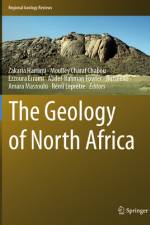
This richly illustrated book reviews the geology, tectonics, sedimentary basins and strategic resources of North Africa in 16 chapters. Chapter 1 is a regional synthesis. Chapter 2 examines the deep crustal and upper mantle structure. Chapter 3 compares the West African Craton. Chapters 4,5,6,7 deal with Pan-African-, Variscan (Hercynian)- and Alpine-Belts. Precambrian Geology of Hoggar Shield, north Central Africa will be addressed in Chapter 8. The North African Neoproterozoic and Phanerozoic sedimentary basins are the topic of Chapter 9. Phanerozoic magmatism and geodynamic framework of North Africa are addressed in Chapter 10. Chapters 11,12 deal with petroleum geology and water resources. Important non-metallic- and metallic- ore deposits are presented in Chapter 13,14,15,16. Chapters 17,18 explore geothermal energy and other strategic resources. Chapters 19,20 discuss seismicity, seismotectonics and Neotectonics, and Advances of exploration geophysics in North Africa. The lasttwo chapters (21, 22) focus on meteoric impact craters, geoheritage, geoparks and geotourism in North Africa.
This open access book, the Community of Practice led by the VPH Institute, the Avicenna Alliance, and the In Silico World consortium has brought together 138 experts in In Silico Trials working in academia, the medical industry, regulatory bodies, hospitals, and consulting firms. Through a consensus process, these experts produced the first attempt to define some Good Simulation Practices on how to develop, evaluate, and use In Silico Trials. Good Simulation Practice constitutes an indispensable guide for anyone who is planning to engage at any title with In Silico Trials.
This 4-volume set, IFIP AICT 689-692, constitutes the refereed proceedings of the International IFIP WG 5.7 Conference on Advances in Production Management Systems, APMS 2023, held in Trondheim, Norway, during September 17-21, 2023. The 213 full papers presented in these volumes were carefully reviewed and selected from a total of 224 submissions. They were organized in topical sections as follows: Part I: Lean Management in the Industry 4.0 Era; Crossroads and Paradoxes in the Digital Lean Manufacturing World; Digital Transformation Approaches in Production Management; Managing Digitalization of Production Systems; Workforce Evolutionary Pathways in Smart Manufacturing Systems; Next Generation Human-Centered Manufacturing and Logistics Systems for the Operator 5.0; and SME 5.0: Exploring Pathways to the Next Level of Intelligent, Sustainable, and Human-Centered SMEs. Part II: Digitally Enabled and Sustainable Service and Operations Management in PSS Lifecycle; Exploring Digital Servitization in Manufacturing; Everything-as-a-Service (XaaS) Business Models in the Manufacturing Industry; Digital Twin Concepts in Production and Services; Experiential Learning in Engineering Education; Lean in Healthcare; Additive Manufacturing in Operations and Supply Chain Management; and Applications of Artificial Intelligence in Manufacturing. Part III: Towards Next-Generation Production and SCM in Yard and Construction Industries; Transforming Engineer-to-Order Projects, Supply Chains and Ecosystems; Modelling Supply Chain and Production Systems; Advances in Dynamic Scheduling Technologies for Smart Manufacturing; and Smart Production Planning and Control. Part IV: Circular Manufacturing and Industrial Eco-Efficiency; Smart Manufacturing to Support Circular Economy; Product Information Management and Extended Producer Responsibility; Product and Asset Life Cycle Management for Sustainable and Resilient Manufacturing Systems; Sustainable Mass Customization in the Era of Industry 5.0; Food and Bio-Manufacturing; Battery Production Development and Management; Operations and SCM in Energy-Intensive Production for a Sustainable Future; and Resilience Management in Supply Chains.
This 4-volume set, IFIP AICT 689-692, constitutes the refereed proceedings of the International IFIP WG 5.7 Conference on Advances in Production Management Systems, APMS 2023, held in Trondheim, Norway, during September 17-21, 2023. The 213 full papers presented in these volumes were carefully reviewed and selected from a total of 224 submissions. They were organized in topical sections as follows: Part I: Lean Management in the Industry 4.0 Era; Crossroads and Paradoxes in the Digital Lean Manufacturing World; Digital Transformation Approaches in Production Management; Managing Digitalization of Production Systems; Workforce Evolutionary Pathways in Smart Manufacturing Systems; Next Generation Human-Centered Manufacturing and Logistics Systems for the Operator 5.0; and SME 5.0: Exploring Pathways to the Next Level of Intelligent, Sustainable, and Human-Centered SMEs. Part II: Digitally Enabled and Sustainable Service and Operations Management in PSS Lifecycle; Exploring Digital Servitization in Manufacturing; Everything-as-a-Service (XaaS) Business Models in the Manufacturing Industry; Digital Twin Concepts in Production and Services; Experiential Learning in Engineering Education; Lean in Healthcare; Additive Manufacturing in Operations and Supply Chain Management; and Applications of Artificial Intelligence in Manufacturing. Part III: Towards Next-Generation Production and SCM in Yard and Construction Industries; Transforming Engineer-to-Order Projects, Supply Chains and Ecosystems; Modelling Supply Chain and Production Systems; Advances in Dynamic Scheduling Technologies for Smart Manufacturing; and Smart Production Planning and Control. Part IV: Circular Manufacturing and Industrial Eco-Efficiency; Smart Manufacturing to Support Circular Economy; Product Information Management and Extended Producer Responsibility; Product and Asset Life Cycle Management for Sustainable and Resilient Manufacturing Systems; Sustainable Mass Customization in the Era of Industry 5.0; Food and Bio-Manufacturing; Battery Production Development and Management; Operations and SCM in Energy-Intensive Production for a Sustainable Future; and Resilience Management in Supply Chains.
This open access book examines how families and other social institutions interact to shape outcomes over the life course. It considers how to use research evidence to reduce social disadvantage through translation of evidence to support public policies and programs. The chapters focus on key life course stages such as early child development, adolescence, emerging adulthood, parenting, marriage, relationships and ageing, as well as examining experiences and outcomes for selected social groups such as Indigenous children, migrants and refugees, and gay, lesbian and bisexual groups. The book presents evidence using high-quality and recent data. With a focus on Australia, the volume provides new insights into how context shapes life course pathways and outcomes and a contrast to work that typically focuses on Europe and the United States. It will be of value to anyone interested in understanding how family background and life course pathways influence social disadvantage.
This unique collection of chapters from world experts on person-centered outcome (PCO) measures addresses the following critical questions: Can individual experiences be represented in measurements that do not reduce unique differences to meaningless uniformity? How person-centric are PCO measures? Are PCO measurements capable of delivering the kind of quality assured quantification required for high-stakes decision making? Are PCO measures likely to support improved health care delivery? Have pivotal clinical studies failed to deliver treatments for diseases because of shortcomings in the PCO measures used? Are these shortcomings primarily matters of precision and meaningfulness? Or is the lack of common languages for communicating outcomes also debilitating to quality improvement, research, and the health care economy? Three key issues form an urgent basis for further investigation. First, the numbers generated by PCO measures are increasingly used as the central dependent variables upon which high stakes decisions are made. The rising profile of PCO measures places new demands for higher quality information from scale and test construction, evaluation, selection, and interpretation. Second, PCO measurement science has well-established lessons to be learned from those who have built and established the science over many decades. Finally, the goal in making a PCO measurement is to inform outcome management. As such, it is vitally important that key stakeholders understand that, over the last half century, developments in psychometrics have refocused measurement on illuminating clinically important individual differences in the context of widely reproduced patterns of variation in health and functioning, comparable scale values for quality improvement, and practical explanatory models.This book's audience includes anyone interested in person-centered care, including healthcare researchers and practitioners, policy makers, pharmaceutical industry representatives, clinicians, patient advocates, and metrologists.This is an open access book.
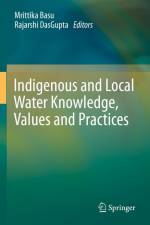
This book provides a knowledge base of the existing indigenous and local water knowledge, values, and practices, and how this water knowledge can be mainstreamed into the decision-making process. The book not only demonstrates the perks of using indigenous knowledge but also illustrates the barriers and gaps that should be considered while planning for mainstreaming traditional knowledge and values at a local scale. The chapters incorporate case studies from various parts of the world demonstrating how indigenous, and religious and cultural values of water have translated into water use and conservation behavior among indigenous people ensuring resource sustainability over a long period of time. There has been global attention towards combining indigenous and local knowledge with new information and innovation to attain future water security. In this regard, this book is timely, relevant, and significant as it is the first attempt, as per the best of our knowledge, to publish a book that solely addresses indigenous and local knowledge, values, and practices regarding water management, quality monitoring, use, and conservation. With increasing emphasis on the inclusion of indigenous and local knowledge into natural resource governance and conservation by international agencies like the Intergovernmental Science-Policy Platform on Biodiversity and Ecosystem Services (IPBES), the proposed book will significantly contribute to the existing knowledge base and demonstrate the importance of mainstreaming indigenous water knowledge and practices into water governance and decision making. The UN SDGs, recognizing the significance of indigenous knowledge systems, emphasized its inclusion in most aspects and principles of SDGs. Apart from direct links with SDGs like zero hunger (SDG 2), no poverty (SDG 1), and climate action (SDG 13), indigenous and local knowledge system is considered to be directly connected to clean water and sanitation (SDG 6). The book will be useful to researchers and students in the field of indigenous knowledge and education, water governance, community-level planning, and water sustainability. The book can be referred to for postgraduate courses and beyond, as well as policymakers, conservationists, non-governmental organizations, development practitioners, and local government officials.
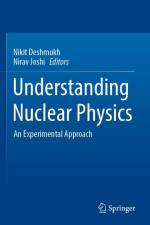
This book provides a unique approach to understand the Nuclear Physics, especially from the experimental end. The highlight of this book is that special care has been taken to provide more experimental information, considering real experimental data which has been published in several journals. Special experimental focus is given to methodologies involving: offline gamma counting and online particle detection. The book provides information about recent developments in accelerators, overview of the detectors and concise information of associated electronics, data acquisition systems and computers for data analysis.
This book highlights recent advances in the area of machine learning and robotics-based soft computing applications. The book covers various artificial intelligence, machine learning, and mechanics, a mix of mechanical computational engineering work. The current computing era has a huge market/potential for machine learning, robotics, and soft computing techniques and their applications. With this in view, the book shares latest research and cutting-edge applications useful for professionals and researchers in these areas.¿
This book sheds light on systems that learn extensively, with purpose and naturally interact with humans. Improving operations and increasing competitive differentiation among manufacturing organizations by harnessing the power of cognitive abilities, IoT can help build and influence the flow of information¿making the shop floor more cognitive through effective processing, analysis, and operational optimization. Now we are seeing the first-hand potential of cognitive computing¿its ability to transform businesses, governments, and society. The real potential of the cognitive age can be realized by combining data analysis and statistical reasoning of machines with uniquely human qualities, such as self-directed goals, common sense, and moral values, improving operations and increasing competitive differentiation among manufacturing organizations. By harnessing the power of cognitive abilities, IoT can help build and influence the flow of information¿making the shop floor more cognitive through effective processing, analysis, and operational optimization. Cognitive initiatives come in all shapes and sizes, from change to strategy and everything in between. What most successful projects have in common, no matter how ambitious, is they start with a clear view of what technology can do. Therefore, the first job of a cognitive scientists is to gain a firm understanding of cognitive abilities, as presented in this book.
The aim of this book is to explain this new technology and its advantages over previous imaging devices and to illustrate how it may be used in to define eye diseases, and in their treatment and facilitate treatment options. This atlas introduces the technical principles of SS-OCT imaging, OCTA stratification algorithm, and blood flow quantization. Through a collection of images and annotation of the microstructures of both the normal fundus and diseased eyes (for example, vitreous related disease, retinal diseased and choroidal disease) captured on SS-OCT to deepen the understanding of this new technology, as well as the interpretation of images. This atlas serves as a practical guide and is written for retinal specialist and clinicians with an interest in retinal diseases.
This self-contained textbook takes readers on a comprehensive journey through the intricate realm of physics in structurally disordered condensed materials. Tailored for advanced undergraduate and graduate students, this book unfolds the complexities step by step.In this updated 3rd edition, fundamental building blocks serve as the foundation for constructing structural models of disordered solids, delving into their geometry and symmetry. The scope of the book encompasses the phenomenology and various models of the glass transition, elucidating the characteristics of bulk metallic glasses. Structural analysis techniques for amorphous solids, the role of atomic clusters in structure evolution, quasicrystals, nanometer-sized disordered solids, cluster-assembled materials, and the synthesis and assembly of nanoparticles are explored. The text also navigates through the intricacies of transport and localization in heavily disordered materials, offering insights into controlled growth of thin films. Throughout, the narrative is enriched with references to recent and pertinent results, both experimental and theoretical, providing readers with a gateway to the latest and most dynamic research areas in the field.
The value of implementing nature-based solutions (NbS) for water treatment in urban environments is increasingly recognized due to the multiple ecosystem services and societal benefits they provide. The successful implementation of NbS for urban water treatment, however, depends on a range of diverse technical and societal factors that need to be taken into account. Those vary by the type of NbS implemented, the societal challenges the NbS are designed to address and the local ecological, socio-economic and political context, in which the solutions are implemented. This book provides a collection of guidelines for the implementation of three types of NbS for water treatment in urban environments across cities in South/Southeast Asia, namely constructed wetlands, green roofs and floating treatment wetlands. The guides were developed based on existing experiences with the establishment, operation, and maintenance of those three types of NbS in three different countriesin South/Southeast Asia and the lessons learnt from their implementation. They provide detailed outlines of suggested steps for ensuring successful implementation in the respective local contexts. Those include overall planning schemes, surveys for socio-economic evaluations, suggested methods for construction and associated costs, required maintenance as well as a range of operational monitoring parameters. It also includes examples of approaches for the scaling of the three types of NbS discussed in the book in their respective local contexts. This book is expected to benefit local government units and contractors, and other stakeholders involved in NbS implementation and up-scaling, as well as researchers and postgraduate students who plan to conduct pilot-scale studies on NbS.
This book deals with the use of the hodograph equation in phase transformations in condensed matter, especially, for crystallization and solidification processes. The main focus of the book is the interpretation of the phase-field equations for isotropic and anisotropic interfaces based on the advanced Gibbs-Thomson and Herring conditions, respectively. Beginning with the basic ideas behind the extended irreversible thermodynamics, the kinetic phase-field model for slow and arbitrarily fast phase transformations is derived where the unified hodograph equation follows from: - the sharp interface limit of the diffuse interface or- the traveling wave solution of the propagating phase field.Under the example of solute trapping and disorder trapping effects, comparing theoretical results with molecular dynamics simulations, and with the analysis of experimental data, the concrete workability of the developed hodograph equation is demonstrated for widest range of driving force in phase transformations.
This book provides for the first time an integrative analysis of the major drivers of decline and threats of insects and related arthropods in the Neotropical region. Thus, it is an urgent first step towards filling an information gap in this region. It identifies the main causes of decline, provides and discusses examples from the better-studied insect faunas to develop and advance principles and practical conservation management for the rich Neotropical insect faunas. The book is aimed at students, naturalists, environmental managers, and others who have training in entomology/insect ecology and can apply the results of surveys of key insect faunas to assess their vulnerability to environmental change and establish guidelines for their conservation.
Abonner på vårt nyhetsbrev og få rabatter og inspirasjon til din neste leseopplevelse.
Ved å abonnere godtar du vår personvernerklæring.