













Gjør som tusenvis av andre bokelskere
Abonner på vårt nyhetsbrev og få rabatter og inspirasjon til din neste leseopplevelse.
Ved å abonnere godtar du vår personvernerklæring.Du kan når som helst melde deg av våre nyhetsbrev.

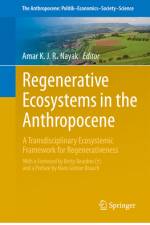
The book offers a transdisciplinary eco-systemic framework for analysis of ecosystems. It uses eight dimensions (economic-social-political-environmen-tal) and 40 factors to diagnose degenerating ecosystems and to synthesize regenerative ecosystems amid growing uncertainty, and inequality in the Anthropocene. Chapter 1 broadly defines the `all interacting evolving systems science' (AIESS) approach in terms of its eco-systemic and transdisciplinary action research methodology. Chapter 2 provides a detailed explanation of the AIESS approach through the four concepts of interconnectedness, interdependence, interactions, and intent to diagnose degeneration and synthesize regenerative systems. Part 1 of the book discusses the issues and approaches to Regenerativeness. Part 2, 3, 4, and 5 illustrate cases of regenerative systems in different ecosystems viz. natural, rural-indigenous, urban, and industrial ecosystems.Not only the researchers and scholarsin systems science, systems dynamics, systems design, and sustainable transition strategies but also the policy makers, corporate leaders, and development experts will greatly benefit from this book.1. Presents a ground breaking explanation of the science of change in the Anthropocene and in epochs prior to it through its all interacting evolving systems science framework. 2. Provides a unique transdisciplinary eco-systemic framework as a methodology to diagnose the complex degenerating ecosystems and to synthesize regenerative ecosystems in different geographies of the world. 3. Through various cases from different ecosystems viz., natural ecosystems, rural-indigenous ecosystems, urban ecosystems, and industrial ecosystems, the book presents the challenges as well as the steps and processes to synthesize regenerative ecosystems.
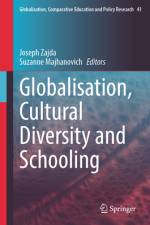
This book analyses dominant discourses of globalisation, cultural diversity and schooling. The collection in this volume advance further the discussions on the phenomenon of globalisation, and its far-reaching effects on our world, and consider cultural diversity in its broadest sense, as it manifests itself in a globalised world. Zajda has argued that globalisation represents a synthesis of technology, ideology and organisation, specifically related to border crossings of people, global finance and trade, IT convergence as well as cross-cultural communication. The reality of cultural diversity has been brought into stronger focus because of globalisation. Cultural diversity, always present in society is more evident today because of globalisation. The ways society copes with cultural diversity have changed such that the embrace of cultural diversity as part of identity is encouraged in liberal democracies. Cultural diversity, as presented in this volume is seen in a broad contextand includes factors such as race, ethnicity, gender, sexual orientations, socio-economic status, culture, age, and physical ability as well as a variety of beliefs and values. The book contributes in a very scholarly way, to a more holistic understanding of the nexus between globalisation, cultural diversity, democracy, and equality for all.
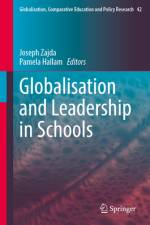
This book analyses dominant discourses of globalisation and leadership in schools. The chapters in this volume advance further the discussions of the nexus between globalisation and leadership in schools. The politics of education reforms, governance and school leadership in the 21st century reflect a new emerging paradigm of standards-driven and outcomes-defined educational policy change. This ethos of academic performance has affected the nature and the role of school leadership in the 21st century, and emerging educational challenges and strategies. Academic achievement, standards, and educational results overall, depend on the nature and quality of school leadership, teachers and school¿s culture. Another emerging change affecting school leadership is autonomy in schools in designing curricula and managing resources, where the role of the school leader has grown far beyond that of administrator. School autonomy has also affected the changing role of school leadership. The other key role of effective leadership is the focus on diagnosing the school¿s needs, and supporting, evaluating and developing teacher quality. Developing school leaders in the 21st century requires clearly defining their key leadership roles and responsibilities for leading and inspiring teachers to achieve high academic standards, and the quality of the curriculum, and acknowledging, and accepting their significant role in improving school¿s image, as a standards-driven and academically performing institution.The book contributes in a very scholarly way, to a more holistic understanding of the nexus between globalisation, and dominant discourses of leadership in schools.
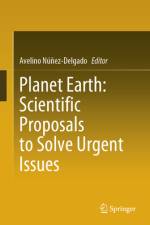
This book represents the most comprehensive overview of issues affecting our planet and the forefront solutions, including climate change, air, water, soil pollution, demography, and access to food and water. This edited book, led by Prof. Núñez-Delgado, counts with the participation of leading researchers across a wide range of disciplines to be an inspiring and motivating document to promote sustainability and biodiversity. Those of you asking for trustworthy analyses about sustainability and climate change and the vanguard solutions will find this book fascinating.
This book is open access book. The collaborative Pilot Project, titled "Comparison of Thermo-Hydro-Mechanical-Chemical (THMC) Processes in Bentonite Barrier Systems", aims to investigate the fundamentals, conduct laboratory and field experiments, and develop numerical models for barrier systems that ensure the safe isolation of radioactive waste in deep geological repositories. This book compares methodologies and technologies used in experimental laboratory and field research, as well as systems analysis, in a collaborative work of German and Chinese scientists. Both parties have access to exceptional experimental and modelling research capabilities. The Beishan underground research laboratory (URL) is currently under construction in Gansu, China. It will serve as an international collaboration platform for URL research in the future. International cooperation is essential for excellent research and development due to the high cost of scientific programmes and technical operation of URLs, making it a precondition for providing secure solutions. This is important not only for deep geological repositories for radioactive waste disposal but also for other geoenergy applications, such as energy storage and geothermal energy utilization.
This volume contributes to the construction of a multi-voice mosaic on the theme of Nature and the relationship between Man (understood as designer) and Nature by emphasizing the innovative and sustainable proposals coming from the discipline of design, in its many facets and interdisciplinary contributions. Since it isn't discussed the creative and economic effort that designers, institutions and companies have been leading for years to improve human living conditions, preference will be given to scientific contributions (unpublished or not yet fully known case studies, projects of strategies, products, systems and services, theoretical contributions, communication) that are an expression of a new approach to Nature, seen as our ally and object of an ethics of care. The focus is the design both in its role as innovation driver and interpreter of social evolution, that must be considered within the human-nature relationship. The topics identify some of the most relevant fields of development in which "Design Driven Innovation" can be developed in the respect of perspective of a new relationship with nature.
This volume comprises selected contributions by the participants of the second "Functor Categories, Model Theory, Algebraic Analysis and Constructive Methods" conference, which took place at the University of AlmerÃa, Spain, in July 2022.The conference was devoted to several seemingly unrelated fields: functor categories, model theory of modules, algebraic analysis (including linear control systems), and constructive category theory, to mention just a few. The fact that these fields are actually related is a very recent realization. The connections between these disciplines are changing in real time, and the goal of this volume is to provide an initial reference point for this emerging interdisciplinary field.Besides research articles, the volume includes two extended lectures: one on constructive methods in algebraic analysis and the other on the functorial approach to algebraic systems theory. Hence, in addition to its interestfor researchers, the volume will also be an invaluable resource for newcomers.
This book presents the Fifth International Conference on Safety and Security with IoT (SaSeIoT 2023), which took place Bratislava, Slovakia, October 24-26, 2023. The conference aims to explore not only IoT and its related critical applications but also IoT towards Security and Safety. The conference solicits original and inspiring research contributions from experts, researchers, designers, and practitioners in academia, industry and related fields and provides a common platform to share knowledge, experience and best practices in various domains of IoT.
This open access book provides a historical treatment of scientific control in experimentation in the longue durée. The introduction distinguishes four related strands in the history of experimental control: the development of practices to stabilize experimental conditions; the career of the comparative design; the unfolding of methodological discussions about control practices and designs; and the history of the term "control". Each chapter brings these distinctions to bear on specific historical episodes. The focus is on experiments with complex, elusive phenomena such as perception and learning, irregular movements, and unobservable elements. Such experiments bring control issues to the fore because they are difficult to design and stabilize and often controversial. Together, the chapters show that the local context shapes what exactly is controlled, how control can be accomplished, and how controls are justified. They also show that control strategies and methodological ideas often remain stable for a long time and change only gradually. This book, as well as the volume on analysis and synthesis in experimentation by the same editors, contains contributions by an array of experts from multiple disciplines, making it suitable for historians and philosophers of science and students alike.
It is wrong when someone cannot exercise their rights in a court of law because they have no money to pay for a good lawyer, because they are too scared of the possible consequences, or because they simply don¿t know that the law protects them. But does that mean governments have an obligation to intervene? And if so, how?This book provides the first systematic philosophical theory of equal access to justice. It begins by identifying the content of claims to equal access to justice. Then, it reviews traditional political and legal arguments on the right of access to justice, which it argues are both illuminating and insufficient. The best comparative way to approach equal access to justice, the book argues, is to think through the requirements of a moral, pre-political, duty to ¿ at times and provisionally ¿ pause, cool down and listen: in other words, we ought to demand that governments step in and protect access rights, because we have a moral and pre-political interest in cultivating our ability to comply with this duty. It is the recognition of this duty which best explains both law¿s potential for promoting, as well as its potential for endangering, equal justice. In closing, the book tests this novel theory of equal access to justice against contemporary trends and reforms in procedural law.
This manual provides a quick reference guide to assist educators in providing authentic feedback, how to address feedback in pre-clinical and clinical situations, and the benefits of two-way feedback in improving instruction. This manual is a collective effort between medical educators designed to ensure authentic feedback is structured for both the learner and the learning environment.This manual enables medical educators to move from theory to practical application in both the preclinical and clinical settings. Through theory, the practical application of authentic feedback becomes a concrete application rather than a profound concept. Educators gain knowledge regarding how theoretical concepts become a reality leading to student success and self-directed learning. The manual guides the educator through the various modalities in which feedback is required to drive student success, such as formative practice, learning environments, small group learning, multiple-choice assessments, and clinical settings. Finally, the manual ends with two-way communication and describes the steps medical educators can take to become reflective professionals. Supported by experienced and evidence-based recommendations, medical educators, administrators, and institutions are presented with checklists, strategies, and best practices for providing authentic feedback.
This book reports on new concepts and methods to design network functions on programmable hardware to accelerate connectivity. First, it introduces the host bypassing concept for improved integration of hardware accelerators in computer systems operating 5G radio access networks. This novel concept bypassed the system's main memory and established direct connectivity between the accelerator and network interface card. This concept leads to improved throughput and significantly lowered latency jitter compared to existing methods. Second, the book analyzes different programmable hardware technologies for hardware-accelerated Internet subscriber handling, including three P4-programmable platforms and FPGAs. It shows that all the approaches have excellent performance and are suitable for Internet access creation. In turn, it presents a fully-fledged accelerated User Plane Function (UPF) designed upon these concepts and its testing in an end-to-end 5G standalone network. Third, it analyses and demonstrates the usability of Active Queue Management (AQM) algorithms on programmable hardware as an expansion to the access edge. It shows the feasibility of the CoDel AQM algorithm and discusses the challenges and constraints to be considered when limited hardware is used, resulting in significant improvements in the Quality of Service. Furthermore, the P4STA measurement framework is introduced, a network function benchmarking concept combing precise hardware-based time measurement methods with software-based load generation to simultaneously ensure high measurement accuracy and flexibility. Researchers and professionals will find in this book new solutions to improve both fixed and mobile internet access networks, offering an informative and inspiring reading for researchers and professionals involved in building the next generation of access edge networks and underlying technology.
This open access book presents the state-of-the-art environmental governance research and practices in Indonesia. It offers a wide scope, covering different sectors (e.g., forestry, mining) and geographical landscapes (e.g., inland and coastal areas). This book engages with existing theories and frameworks, including Earth System Governance, Adaptive and Interactive Governance, among others to trigger a debate regarding the operationalization of such concepts, which are mostly developed for the Global North context. It is also our ambition to incorporate more empirical knowledge from local contexts to indicate research gaps and future directions for environmental governance research agenda to be more diverse, inclusive, and facilitate the incorporation of inter-and transdisciplinary knowledge. This book will be useful for researchers, students, practitioners, and policymakers who are interested in the field of environmental governance, especially in Indonesia. Indonesia is one of the countries with the fastest-growing economies in Asia. Indonesia is rich in natural resources but also suffers from overexploitation and environmental threats exacerbated by climate and human pressures. Along with the growing global ambitions for achieving sustainable development and capacity to adapt to current and future threats, including climate change impacts and disaster risk, Indonesia's commitments to balance development while safeguarding a good environmental status are also increasing. The challenge is on how to govern complex and systemic natural, social and governance systems while adhering to the principle of equity and justice? As it will require more than traditional hierarchical modes of governance and current regulatory instruments (i.e., law and regulations).This is an open access book.
The Lean Six Sigma Workshop describes important and practically relevant methods and tools for optimizing industrial production structures. In addition to theoretical foundations, the book provides extensive hands-on exercise materials with solutions for each method, ensuring application-oriented knowledge transfer. The book particularly assists educators and learners in preparing and conducting entire teaching units, which can be deepened and practically applied through 13 workshops as group activities.The playful application of theory over multiple game rounds enables learners to use the methods in practice and apply gained insights in an industrial setting.
The book provides an introduction to the differential diagnosis and decision-making in pediatric rheumatological diseases through typical and real cases. One of the aspects in the discussion of various case scenarios is the avoidance of errors and error management. The casebook is useful for specialists and trainees in pediatrics, young doctors, and anyone on the path to specialization in pediatric rheumatology. The translation was done with the help of artificial intelligence. A subsequent human revision was done primarily in terms of content.
This practical guide provides essential foundations for the treatment of pediatric hand deformities in occupational therapy and physical therapy. How is the function of the deformed hand assessed? When does the intensive manual treatment and splint therapy begin for congenital flexion contractures? From when must manual therapy commence after pollicization? The experts provide you with the answers! From the Content: Anatomical and Motor Development of the HandHand Deformities, including radial longitudinal reduction defect, camptodactyly, and arthrogryposisScar TreatmentOrthotic Care Plus: Additional chapter on tips, tricks, and further informationEmpower your littlest patients for increased independence and quality of life!
This book shows how managers at all levels of the company can master the challenges of sustainable corporate management with confidence. Concrete action plans are presented for this purpose. Climate change and the finite nature of natural resources are already taking their toll worldwide. A rethink towards ecological sustainability is not only urgently needed at a global level. The orientation of corporate strategies is also increasingly determined by the socio-political morals of customers and other stakeholders, where economic and socio-political interests must be in harmony with social and ecological challenges. Using the three-pillar model for sustainability (Triple Bottom Line) and further topics (such as supply chain law and ESG criteria), the author shows in a practical way how companies can successfully meet these major challenges in the long term. The key to success lies in a change in values towards ecological, social and economic sustainability that is defined and practiced at all levels of the company. Nicola Oudejans, Course Director Chief Digital Officer at the University for Continuing Education Krems/Danube University Krems
This volume analyses the energy industry for the following geographical units: America - divided into North America (Canada + USA) and Central and South America -, the Middle East and South Asia, East Asia and Oceania. The key energy-economic indicators for each region and country and their development, are illustrated in numerous graphs and energy flow diagrams. Based on this analysis, the author recommends a distribution of emission reductions necessary to limit climate change (for the 2°C and 1.5°C climate goals, with a perspective up to 2050).The continents covered in this volume collectively account for 77% of emissions. Europe + Eurasia and Africa will be addressed in volume I.
This textbook deals with the Middle East conflict as a key element of international relations. The origins of the conflict and its international dimensions, the major Israeli-Arab wars, attempts at a solution, peace plans and visions for the future are presented in a concise manner. Extensive map material illustrates the findings.The English translation of this book, originally in German, was facilitated by artificial intelligence. The content was later revised by the author for accuracy.
Since the publication of the Handbook of Experimental Pharmacology Vol. 197 in 2010 there have been important advances in drug development, drug delivery and - more recently - drug targeting. This is in particular relevant with the new generation of drugs acting on the immune system and tumors. These are quite often accompanied by major adverse reactions. Safe therapy is, therefore, an important area of research, in particular in chronic diseases and in persons of old age. In addition, the Covid-19 pandemic has brought renewed attention to vaccinations against viral infections, and mRNA vaccines have been tested for vaccination in tumor therapy, too. Vaccine delivery has stimulated important research on carriers which may pave the way for other applications and enhance a path to e.g. CRISPR-cas therapy.
This book addresses the pressing problem of drug resistance in the treatment of breast cancer. It provides a comprehensive understanding of the complex mechanisms underlying drug resistance and presents the latest advances in therapeutic approaches to overcome this enormous challenge. The book begins with an introduction to the biology of breast cancer, treatment modalities and the mechanisms of drug resistance. This includes the principles of drug resistance in targeted, immune-, endocrine and chemotherapy. In the following sections, the authors present innovative strategies to overcome drug resistance and new research directions, among others the role of the microbiome in drug resistance, molecular profiling of patients for personalized medical care, and new drug delivery systems. Finally, the book concludes with a discussion of the differences in the prevalence and treatment success of breast cancer between high- and low-income countries. This book is an informative resource for students, researchers, and clinicians in the field of breast cancer research and oncology in general.
This comprehensive resource explains the FDA's classification of devices and provides expert guidance on differentiating between significant risk and non-significant risk medical device studies. The book is divided into two parts: Significant Risk Medical Devices and Non-Significant Risk Medical Devices. Each chapter includes a general introduction and overview of the device, along with guidance on its working principles, beneficial and toxicological effects, and potential risks to the health and safety of a patient/subject. The coverage also includes reports of prior investigations on the basics of risk determination and the nature of potential harm associated with using individual devices.Significant and Non-Significant Risk Medical Devices is designed to assist practicing engineers, academic researchers, and clinical investigators in navigating the complex regulatory environment associated with medical device research and development.
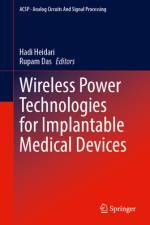
This book will addresses the recent advances on range of wireless powering and energy harvesting techniques for different medical devices such as leadless pacemakers, smart stents, implantable brain devices, cardiovascular devices, etc.
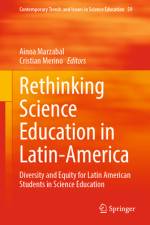
This edited volume presents an integrated vision around the processes of science teaching and learning in Latin American schools. Existing scientific literacy findings varies greatly between students, influenced by gender, ethnicity, and socio-economic status, as well as location. This book provides systematic and cohesive insights, grounded in the existing literature, to move towards equitable science education.It critically analysis existing literature, from the field to guide future research. It discusses various research projects developed in Latin America as examples for researchers and educators. It provides guidelines to improve science teaching and learning processes at school level. By bringing together the main contributions of the region to this project, it allows findings to be accessible to non-Spanish speaking readers.This book provides contextualized insight into the main topics in the field, rethinking science education in Latin-America and identifyingreform efforts. It is of interest to teachers, teacher educators, researchers, and policy makers.
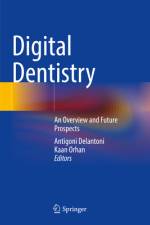
This book focuses on recent technological advances in digital dentistry. It provides information on digital aspects in all dental fields including digital caries detection systems, digital color matching, and digital applications in periodontology, surgical implant placement, oral histopathology and pediatric dentistry. Training in emerging and new digital techniques is inevitable in the dental profession. This book contains detailed digital procedures, their basics and their applications. It is divided into three parts: Basic Digital Systems in Dentistry, Novelties and Advances in Digital Dentistry, The Future of Digital Dentistry and Applications. Readers will learn about Artificial Intelligence in dentistry, tissue engineering applications and dental education tools in digital dentistry. The book is a must have for all dental practitioners who would like to deepen their knowledge and understanding of digital systems in dentistry.
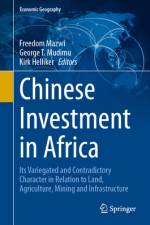
This edited volume systematically interrogates the Chinese investment presence in Africa, focusing on land and agriculture, mining and other infrastructural projects. In doing so, the form and extent of Chinese debt will be brought into perspective, with comparisons made to investments in Africa emanating from metropolitan capitalism. The volume examines the development potential of these investments by focusing on the labour regimes created and the effects of investments on the land-based agricultural livelihoods of the African peasantry. This entails the use of a political economy approach which incorporates the state, international actors and local communities into the analysis, with gender dynamics also of great significance. Overall, the contributions in this volume focus on an array of African nations (with a specific focus on Zimbabwe) and they deploy a large wealth of primary field-based data collected over a number of years by established and emerging scholars living andworking on the continent.
This book provides guidelines for using a new approach of resampling the Cs-137 radionuclide tracer which is used to estimate soil erosion rates. The Cs-137 resampling approach will improve significantly the use of the Cs-137 method for assessment of soil erosion, because resampling the radionuclide repeatedly (at least two times, but more sampling campaigns are possible) allows to avoid several methodological difficulties associated with Cs-137 method, namely the problems with small-scale spatial heterogeneity, the question of representativeness of reference site, reference samples, and inappropriate time extent of evaluated period. All these methodological problems are very important for reliability and accuracy of erosion rates estimated by Cs-137 method. If using single sampling approach, the small-scale spatial heterogeneity can be overcome by high number of sampling points, but this is time and labour demanding solution increasing the expenses of the erosion research. The representativeness of reference site is evaluated usually on the basis of expert judgement and knowledge of land use history of studied area, but this approach is often uncertain because the expert judgement can be subjective and the data on land use history is often not sufficient. Further, in many areas an appropriate reference site is not available, what limits the territorial extent of using Cs-137 method. The resampling approach offers its second sampling to be done in a proximate vicinity of the same points sampled during the first sampling campaign. A great advantage is the possibility to decide how long time windows should be investigated. Choosing the time schedule of first and second sampling allows to shorten the time window and adjust it to the study objectives. This is a great improvement of the Cs-137 method, because the time period since the Cs-137 fallout is still growing and thus if using the single sampling approach the results refer to still longer and longer time window(since the Cs-137 fallout until the sampling time), and this period (recently ca 60 years assuming the maximum Cs-137 fallout in 1963) is too long to represent stable land use, because land uses are changing over the time and having the same land use over six decades is rather rare. The improvement of Cs-137 method achieved by resampling approach is significantly contributing to understanding the erosion dynamics and estimating its rates under changing environmental conditions (such as land uses, weather), and it will bring a significant benefit to soil conservation programmes, because Cs-137 method is indispensable for assessing the medium and long term soil erosion rates, and this information is among the basic inputs needed for planning and designing soil conservation measures.
The 2024 U.S. presidential election is likely to hinge on two very different basic approaches to domestic and foreign policy, two very different sets of underlying premises, and two very different types of presidential and high-level official personalities at the administrative helm putting them into effect. This volume comparatively analyzes the choices of presidential doctrine that are likely to foreshadow alternatives concerning the principles, beliefs, and nature of U.S. foreign policy in the years following the election.
This book comprehensively describes the tip streaming in simple fluids and those containing surfactants and polymeric molecules. It summarizes the theoretical models and approximations commonly adopted to analyze this phenomenon. It provides relevant experimental results and presents the scaling laws for rationalizing those results. The stability of the flows leading to tip streaming is analyzed theoretically and experimentally. Attention is paid to the effects of surfactant monolayers and viscoelasticity, including solutocapillarity, interfacial elasticity, surface viscosity, and extensional thickening caused by the polymer coil-stretch transition.It also offers an overall perspective of the numerous technological applications of the tip-streaming phenomenon. Remarkable examples are the production of microemulsions and microencapsulation of active agents for the food and pharmacy industries, the atomization of charged liquids for analytical chemistry, and the ejection of ultra-fast and ultra-thin jets for crystallography. Physical mechanisms responsible for the onset of tip streaming driven by hydrodynamic and electrohydrodynamic forces are described. Relevant theoretical and experimental results of the periodic microdripping and continuous microjetting modes of tip streaming produced with microfluidic configurations such as electrospray, flow focusing, coflowing, and selective withdrawal are discussed. The physical mechanisms responsible for the instability of the microjetting mode are studied in detail.The book collects the scaling laws used to predict the outcome of the microfluidic configurations mentioned above. The author combines state-of-the-art experimental results and linear stability analysis to identify the instability mechanisms limiting the applicability of the above-mentioned microfluidic configurations. In this way, the book connects experimental observations with fundamental aspects of tip streaming, bridging the microfluidic and fluid dynamicist communities. The connection between results obtained from the theoretical and experimental approaches will help experimentalists to understand the fundamental aspects of their practical problems. A useful guide for researchers working on hydrodynamic focusing and electrospray.
Life Cycle Assessment in Aviation: Theory and Applications provides readers with a comprehensive analysis that examines various elements within the aviation sector, including aircraft operations, maintenance and repair activities, aircraft gas turbine engine processes, airport auxiliary vehicles, airport operations, airport construction, airport access traffic, and airport wastes. The book's content has been meticulously crafted to address the specific needs and interests of a diverse audience encompassing researchers, engineering students, and civil aviation organization officials. Readers will find valuable insights and up-to-date information about the latest developments in the aviation field, serving as a valuable resource for their investigations and studies.
Abonner på vårt nyhetsbrev og få rabatter og inspirasjon til din neste leseopplevelse.
Ved å abonnere godtar du vår personvernerklæring.