


























Gjør som tusenvis av andre bokelskere
Abonner på vårt nyhetsbrev og få rabatter og inspirasjon til din neste leseopplevelse.
Ved å abonnere godtar du vår personvernerklæring.Du kan når som helst melde deg av våre nyhetsbrev.

1. Chromatographic Processes.- Modelling Equilibrium and Kinetics in Chromatographic Processes.- Theory of Linear and Nonlinear Chromatography.- Hydrodynamics of Chromatographic Columns.- Cyclic Fixed Bed Sorption Processes for Bioseparations - Design Aspects.- Separations by Continuous Annular Chromatography.- Gradient Elution Chromatography.- Rate Processes in Supercritical Fluid Desorption and Extraction.- 2. Membrane Processes.- Fundamentals of Membrane Separation Processes.- Pressure-Driven Membrane Processes.- Ellectrically-Driven Membrane Processes.- Novel Membranes - Formation and Process Applications.- Cell Harvesting Using Cross-Flow Microfiltration.- Recovery of Intracellular Products.- Pervaporation in Biotechnology.- 3. Affinity Processes.- Affinity Chromatography: Principles and Applications.- Theory of Affinity Chromatography.- Affinity Partitioning.- Prediction of Partition Coefficients for Peptides in Aqueous Two-Phase Systems.- Membrane Affinity Filtration.- 4. Design of Separation Media.- Affinity Chromatography: Design of Biospecific Chromatographic Materials.- Membranes for Bioprocessing: Design Considerations.- 5. Scale-Up, Optimization and Process Integration.- Operating Modes, Scale-up and Optimization of Chromatographic Processes.- Scale-up and Optimization of Membrane Processes.- Simultaneous Reaction and Chromatography.- Membrane bioreactors.- Recombinant Human Tissue-Plasminogen Activator: Biochemistry, Pharmacology, and Process Development.- List of Contributors and Participants.
The topic of spiraling conflict and what happens to us when we are in conflict fascinates everyone equally. The reaction is then thoughtfulness and self-reflection. Everyone has their own conflicts and therefore the topic is close to us. Conflicts are usually stressful and therefore we wish for explanations and ways out.· What dynamics do conflicts take on and how do they develop?· What happens to us when we enter the spiral of conflict.· How does our thinking, our view of things and our interests change?· What does the conflict do to us and how do we get out of the vortex?That is what this book is about. It is based on scientific findings from psychology and conflict research.
Blockages to be solved with coaching are often the result of repressed traumatic experiences of a person or their ancestors. Pictorial models will guide the reader into the multi-layered landscape of the soul and its principles. Along the way, the book decodes traumas as the soul¿s fundamental building blocks and follows them back to their origins: existential limit-experiences and their common denominator, the splitting of the soul. The consequences of this autonomous survival mechanism affect all areas of life, starting from the unconscious. Therefore, they are not accessible by conventional methods working with the conscious mind. The presented integrative approach provides means and ways that significantly expand the potential of coaching.
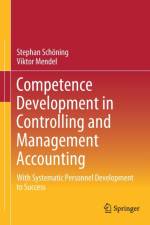
The book is considered a guideline for systemic personnel development in controlling of nationally and internationally active companies on the basis of a targeted development of competencies. In particular, the challenges posed by digitalization and globalization are considered and substantiated with the help of empirical studies. Employees and managers in controlling as well as HR managers in companies gain a deeper understanding of the necessity and the components of systematic personnel development. The goals are the formation of high-performance teams in controlling as well as the identification of personal career paths on the way to top management tasks as CFO. The focus of the personnel development model is on the transfer of the competence-oriented development approach, which, in addition to the traditionally considered technical and methodological competencies, also takes into account social and personal competencies as well as additional digital and intercultural competencies. The book is rounded off by a survey of the current situation, the definition of a target situation to be aimed at, the discussion of suitable further training measures and the monitoring of the level of competency achieved, and illustrates concrete career concepts.
1.1 Rationale.- 1.2 An Overview.- Soil Acidification: Fundamental Concepts.- The Sulfur System.- 3.1 The Sulfate Cycle.- 3.2 Sulfate Adsorption.- 3.3 The Biotic Component.- 3.4 Summary.- The Nitrogen System.- 4.1 Acid-Base Relationships of the Nitrogen Cycle.- 4.2 Acid-Base Relationships of Nitrogen Inputs.- 4.3 Ecosystem Effects.- Soil-Solution Interactions.- 5.1 Role of Anions.- 5.2 Ion Equilibria Model.- 5.3 Conceptualizing the Model.- 5.4 Solution Concentration Effects.- 5.5 Cation Removal, ?M/?H.- 5.6 Complexes and Precipitates.- 5.7 Organic Anions.- 5.8 Summary.- Forest Element Cycling.- 6.1 Definition of Terms.- 6.2 Effects of Acid Deposition on Base Cation Flux.- 6.3 Cation Nutrient Effects.- The Aquatic Interface.- 7.1 Alkalinity Concepts.- 7.2 Alkalinity in Soil Solution.- 7.3 Naturally Acid Waters.- 7.4 Sensitivity to Water Acidification.- 7.5 Capacity versus Intensity.- Soil Sensitivity.- Base Cation Depletion.- Sensitivity to pH Changes.- Sensitivity to Aluminum Mobilization.- Summary.- Conclusion.- 9.1 Summary.- 9.2 Concepts in Transition.- References.- Appendix: Model Documentation.- A.1 Model Description.- A.2 Program Operation.- A.3 Program Documentation.- A.4 Program Listings.
1. Introduction.- The origin of the lake.- The naming of the Madison lakes.- Ownership of Lake Mendota.- The regional setting.- 2. Physical Limnology.- Morphometry and Hydrography.- General Features of the Lake.- Hypsometry of Lake Mendota.- Climate of the Lake Mendota area.- Water budget of the lake.- Thermal structure and heat budget.- Water movement.- Summary. The four seasons in Lake Mendota.- 3. Chemistry and nutrient loading.- Chemistry of the lake water.- Nutrient loading studies.- Sediment composition and chemistry.- Recent sediments in Lake Mendota.- Oxygen in Lake Mendota.- Nitrogen in Lake Mendota.- Phosphorus in Lake Mendota.- Iron and manganese.- Sulfate.- Chloride.- Silica.- Inorganic carbon in Lake Mendota.- Summary.- 4. Phytoplankton.- Methodology for studying phytoplankton populations in Lake Mendota.- Annual cycles of phytoplankton.- Mean depth of chlorophyll.- Surface/volume ratios of phytoplankton cells.- Diatom blooms in Lake Mendota.- Blue-green algae of Lake Mendota.- Buoyancy of the blue-green algae of Lake Mendota.- Where do the algae go?.- Summary.- 5. Phytoplankton photosynthesis and primary production.- Methods.- Calculating whole lake productivity from incubator data.- Photosynthesis/light (P/I) relationship.- Photosynthetic efficiency of Lake Mendota phytoplankton 125.- Primary production in Lake Mendota.- A model for Lake Mendota production.- 6. Zooplankton.- Methods for studying Lake Mendota Zooplankton.- Species composition.- Zooplankton abundance.- Biomass of Zooplankton.- Conclusions.- 7. Bacteria, carbon cycling, and biogeochemical processes.- Methods.- Bacterial biomass and production in the water column.- The impact of Zooplankton feeding on bacteria.- Importance of bacterial attachment to particles.- A model for bacterioplankton growth and disappearance.- Significance of algal excretory products for epilimnetic bacteria.- Bacterial processes in the anaerobic deep-water sediments.- Sulfate reduction in Lake Mendota.- Conclusion.- 8. Higher Trophic Levels.- Bottom fauna.- Fish.- Summary.- 9. Long-term Change in Lake Mendota.- Chemistry and nutrient loading.- Oxygen in Lake Mendota.- Secchi transparency.- Phytoplankton.- Zooplankton.- Bacteria.- Fish.- Conclusion.- 10. Energy flow in the Lake Mendota ecosystem.- Appendix 1. Physical and chemical data.- Appendix 2. Phytoplankton data.
Why Math? is designed for a "general education" mathematics course. It helps develop the basic mathematical literacy now generally demanded of liberal arts students. Requiring only a little background knowledge of algebra and geometry - no more than the minimum entrance requirements at most colleges - the book emphasizes quantitative reasoning and critical thinking for real life problems.In a concrete and relevant way, using extensive motivation from everyday problems, Why Math? shows what one can do with elementary mathematics and how to do it.
Theoretical Background.- Genetic Approaches to Common Diseases.- A Candidate Gene Approach to the Genetics of Normal Lipid Variation: DNA Association Studies and Genotype by Environment Interaction.- Molecular Genetics Approach to Polygenic Disease - Initial Results from Atherosclerosis Research.- Diabetes.- Facilitative Glucose Transporters: Regulation and Possible Role in NIDDM.- Molecular Genetic Approach to Polygenic Disease: Dependent Diabetes Mellitus (NIDDM).- Lipids.- HDL and Reverse Transport of Cholesterol: Insights from Mutants.- Apolipoprotein E Polymorphisms and the Genetic Heterogeneity of Familial Dysbetalipoproteinaemia.- Abnormalities of Apolipoprotein B Metabolism in the Lipid Clinic.- Genetic Variation at the ApoA-I, CIII, A-IV Gene Complex: A Critical Review of the Associations between the Pst1 and Sst1 RFLPs at this Locus with Lipid Disorders.- The Molecular Basis of the Chylomicronemia Syndrome.- Lipoprotein Lipase Gene Variants in Subjects with Hypertriglyceridaemia and Coronary Atherosclerosis.- Atherosclerosis.- Atherosclerosis: The Genetic Analysis of a Multi-Factorial Disease.- RFLP Markers of Familial Coronary Heart Disease.- DNA Polymorphisms as Disease Markers.- Participants.
MINIATURE LASER SOURCE TECHNOLOGY: Properties of High Power Semiconductor Lasers (D.F. Welch). DiodePumped Miniature Solid State Lasers (R. Pratesi). LIGHTTISUE INTERACTIONS AND OPTICS OF TISSUES: Biophysical Bases of LaserTissue Interactions (J.L. Boulnois). Optical and Thermal Modeling of Tissues: Dosimetry (M.J.C. van Gemert et al.). DIAGNOSTIC TECHNIQUES: Holography in Medical Diagnostics (G. von Bally). Laser Reflectance Spectroscopy of tissue (B. Wilson et al.). Monitoring and Imaging of Tissue Blood Flow by Coherent Light Scattering (G.E. Nilsson et al.). Transillumination Imaging (P.C. Jackson et al.). THERAPEUTIC TECHNIQUES: Lamps: Ultraviolet Radiation Lamps for the Phototherapy of Psoriasis (B.L. Diffey). Phototherapy and Photochemotherapy of Psoriasis (T.B. Fitzpatrick). Light Therapy for Neonatal Jaundice (J.F. Ennever). The Hazards of Cosmetic Tanning with UVA Radiation (A.R. Young). Lasers: The Role of Neodymium Yttrium Aluminum Garnet (Nd: YAG) Laser in Medicine (H. Barr et al.). Diode Laser Photocoagulation in Opthamology (R. Brancato et al.). FUTURE DIRECTIONS: Initial Applications and Potential of Miniature Lasers in Medicine (R. Pratesi). Future Trends in Laser Medicine (J.A. Parrish). 8 additional articles. Index of Contributors. Subject Index.
Terminology in Biological Rhythms; M.A. Ali, et al. Introduction to the Analysis of Periodic Phenomena; P. Legendre, P. Dutilleul. Biological Rhythms; M.P. Gerkema. Behavior and Rhythms in Fishes; D.L.G. Noakes. Ultradian Rhythms in Fishes; R.C. Peters, R.J. Veeneklaas. Tidally-Synchronised Behavior in Marine Fishes; R.N. Gibson. Lunar and Semi-Lunar Rhythms in Fishes; J.F. Leatherland, et al. Circadian Basis for Neuroendocrine Regulation; A.H. Meier. Sleep, Inactivity, and Circadian Rhythms in Fish; S. Reebs. Feeding-Entrained Circadian Rhythms in Fishes; R.E. Spieler. Melatonin Rhythms in the Pineal Organ of Fishes and its Effects; A. Zachmann, et al. Regulation of the Rhythmic Melatonin Secretion by Fish Pineal Photoreceptor Cells; J. Falcón, et al. The Rainbow Trout Pineal Organ; W.A. Gern, et al. 6 additional articles. Index.
Inhoud.- Enige Grondlijnen van Abélard's theologie. (vervolg).- Toen het Bestand ten einde Hep. Moeilijkheden van ex- en interne aard voor de Hervormde Kerk in West-Brabant rond 1620.- Grenswachter Ludovicus.- Boekaankondiging.- Bericht.
How can one trust computation taking place at a remote site, particularly if a party at that site might have motivation to subvert this trust? In recent years, industrial efforts have advanced the notion of a trusted computing platform as a building block. Through a conspiracy of hardware and software magic, these platforms attempt to solve this remote trust problem, to preserve various critical properties against various types of adversaries. However, these current efforts are just points on a larger continuum, which ranges from earlier work on secure coprocessor design and applications, through TCPA/TCG, to recent academic developments. Without wading through stacks of theses and research literature, the general computer science reader cannot see this big picture. Trusted Computing Platforms: Design and Applications fills this gap. Starting with early prototypes and proposed applications, this book surveys the longer history of amplifying small amounts of hardware security into broader system security---and reports real case study experience with security architecture and applications on multiple types of platforms. The author examines the theory, design, implementation of the IBM 4758 secure coprocessor platform and discusses real case study applications that exploit the unique capabilities of this platform. The author discusses how these foundations grow into newer industrial designs, and discusses alternate architectures and case studies of applications that this newer hardware can enable. The author closes with an examination of more recent cutting-edge experimental work in this area. Trusted Computing Platforms: Design and Applications is written for security architects, application designers, and the general computer scientist interested in the evolution and uses of this emerging technology.
1 Meat lipids.- 1.1 Introduction.- 1.2 Coronary heart disease (CHD).- 1.2.1 Will dietary change decrease CHD?.- 1.2.2 Cholesterol consumption.- 1.2.3 Fat consumption.- 1.2.4 Meat lipids and plasma cholesterol.- 1.2.5 Lean meat.- 1.3 Triacylglycerols.- 1.3.1 Pigs.- 1.3.2 Effect of diet.- 1.3.3 Lean pigs.- 1.3.4 Cattle and sheep.- 1.3.5 Effect of diet.- 1.3.6 Effect of leanness.- 1.4 Lipid consistency.- 1.5 Organoleptic properties.- 1.5.1 Intramuscular triacylglycerols.- 1.5.2 Intramuscular phospholipids.- 1.5.3 Autocatalytic autooxidation.- 1.5.4 Haem iron and non-haem iron.- 1.5.5 Role of phospholipids in rancidity.- 1.6 Cholesterol.- 1.7 Conclusion.- References.- 2 Marine (n-3) polyunsaturated fatty acids.- 2.1 Introduction.- 2.2 Origins and composition of marine fish oils.- 2.3 Speciality marine oils rich in (n-3) PUFA.- 2.4 Concentration of (n-3) PUFA from marine oils.- 2.5 Concluding remarks.- References.- 3 Confectionery fats.- 3.1 Introduction.- 3.2 Cocoa butter.- 3.3 Confectionary fats.- 3.4 Hard butters.- 3.4.1 Lauric cocoa butter substitutes.- 3.4.2 Non-lauric cocoa butter substitutes.- 3.4.3 Cocoa butter equivalents.- 3.5 Availability of raw materials.- References.- 4 Derivatives or long-chain ratty acids.- 4.1 Introduction.- 4.2 Testing methods.- 4.2.1 Test method for corrosion resistance.- 4.2.2 Surface tension.- 4.2.3 Friction coefficients.- 4.2.4 Welding load.- 4.2.5 Practical tests.- 4.2.6 Microbial activity tests.- 4.3 Results and discussion.- 4.3.1 Additives from higher fatty acids.- 4.3.2 Additives from dibasic acids.- 4.3.3 Additives from aromatic carboxylic acids.- 4.3.4 Fluorine compounds from hydroxyl fatty acids and related compounds.- 4.3.5 Practical tests.- 4.3.6 Antimicrobial properties.- 4.4 Experimental.- 4.4.1 Reaction of undecylenic acid (I) with cycIohexanone (II).- 4.4.2 Reaction of 2-(1-hydroxy-l-cycIohexyl)-10-undecenoic acid (III) with p-toluenesulfonic acid.- 4.4.3 Reaction of undecylenic acid (I) with mecaptoacetic acid.- 4.4.4 10, 11-Dichloromethylene undecanoic acid (VII).- 4.4.5 Reaction of linoleic acid (VIII) with maleic anhydride.- 4.4.6 12-Isovaleroyloxy stearic acid (XI).- 4.4.7 Monoethylester (XIII) of sebacic acid (XII) (1,8-octanedicarboxylic acid).- 4.4.8 Aromatic carboxylic acid derivatives.- 4.4.9 Reaction of methyl ricinolate (XIV) with PPDA.- 4.4.10 Reaction of2,3-dibromo-l-propanol (XVII) with PPDA.- 4.4.11 Reaction of glycerol ?-monoallylether (XIX) with PPDA.- 4.4.12 Preparation of adducts of amino alcohols with boric anhydride.- 4.4.13 Preparation of a sample solution for a water-soluble cutting fluid.- Acknowledgements.- References.- Further reading.- 5 Sunflowerseed oil.- 5.1 History.- 5.2 Sunflower breeding.- 5.3 Oil composition.- 5.4 Waxes.- 5.5 Phospholipids.- 5.6 Tocopherols.- 5.7 Food use.- 5.8 Sunflower oil as an alternative fuel.- 5.9 Oleochemicals.- References.- 6 Developments in palm oil.- 6.1 Introduction.- 6.2 Biological aspects.- 6.3 Palm oil quality.- 6.4 Characteristics of palm oil.- 6.4.1 Physical characteristics.- 6.4.2 Chemical characteristics.- 6.5 Characteristics of palm kernel oil and palm oil fractions.- 6.5.1 Palm kernel oils.- 6.5.2 Fraction of palm oil.- 6.6 Production of palm oil and palm oil products.- 6.6.1 Milling.- 6.6.2 Refining and processing.- 6.7 Uses of palm oil and its products.- 6.7.1 Food uses of palm oil.- 6.7.2 Non-food uses.- 6.8 Nutritional aspects of palm oil.- 6.9 Effluent in the palm oil industry.- 6.9.1 Palm oil mill effluent.- 6.9.2 Palm oil refinery waste.- 6.9.3 Waste from the oleochemical industry.- 6.9.4 Future developments.- References.- 7 Lipids and oxygen: is rancidity avoidable in practice?.- 7.1 Introduction.- 7.2 Guidelines.- 7.2.1 Antioxidants.- 7.2.2 Effect of temperature.- 7.2.3 Reduction of access of air.- 7.2.4 Use of metal deactivators and antioxidants.- 8 Crystallisation of fats.- 8.1 Introduction.- 8.2 Basic principles.- 8.3 Supersaturation.- 8.4 Nucleation.- 8.5 Growth.- 8.6 Crystal size, habit and po...
1. Disease risks of obesity.- The fallacy of ideal body weight standards.- Obesity and diabetes: many as yet unanswered questions.- Present public health issues on obesity.- References.- 2. Are all calories equal?.- Possible mechanisms by which calories from macronutrients might not be equal.- Are all calories equal for slimmers?.- 'Are all calories equal?'.- References.- 3. Metabolic risk factors for the development of obesity.- Determinants of energy expenditure.- Low metabolic rate as a risk factor.- The effect of dietary fat/carbohydrate on energy expenditure.- Oxidative autoregulation.- Diet composition and obesity.- Conclusion.- References.- 4. Metabolic response to slimming.- Short-term consequences of slimming.- Long-term consequences of slimming.- Conclusions.- References.- 5. Health effects of weight cycling.- The metabolic hypothesis.- Weight cycling and health.- Interpretation of epidemiological findings.- Psychological factors.- Conclusions and implications.- References.- 6. Food preferences and body weight control.- Food preferences and obesity.- Fat intake and fat preference in the genesis of obesity.- Genetic predisposition.- References.- 7. Psychological aspects of obesity.- Early psychological theories.- Emergence of the restrained eater.- Restrained eating and obesity.- Bulimia nervosa.- Strict control and the disturbance of eating behaviour.- Counter-regulation.- Individual variability.- Dietary macronutrient selection and body weight control.- Successful and unsuccessful weight control strategies.- References.- 8. Realistic expectations of obesity treatments.- No new treatment principles.- A pessimistic view.- Why so little success?.- Realistic strategies.- The definition of success.- An optimistic view.- References.- 9. Health professional approach to weight control.- Hypocaloric diet.- Exercise.- Pharmacotherapy.- Very low-calorie diets.- Surgery.- References.
1 Maintenance policies.- 2 Organization of maintenance operations.- 3 Behaviour of physical equipment in service.- 4 Management of maintenance operations.- 5 Mathematics for maintenance: basic concepts and tools.- 6 Applications: case studies.- Exercises.- Annexe.- Maintenance software suppliers.
I. Sex Differences: Facts and Myths.- 1. Gender Segregation in the Workplace: Continuities and Discontinuities from Childhood to Adulthood.- The Prevalence of Gender Segregation in Childhood.- Causal Factors Underlying Gender Segregation.- Distinctive Cultures in Boys' and Girls' Groups.- Group Membership and In-Group Loyalties.- Adolescence and Cross-Sex Attraction.- References.- 2. Effects of Labor Force Participation on Sex Differences in Mortality and Morbidity.- Sex Differences in Mortality and Morbidity.- Contributions of Occupational Hazards to Sex Differences in Health.- Health-Related Behavior: A Possible Link between Labor Force Participation and Sex Differences in Health.- Effects of Labor Force Participation on Women's and Men's Health.- Labor Force Participation Rates and Sex Differences in Mortality Rates: Ecological Analyses.- Conclusions.- References.- 3. The Psychophysiology of Sex Differences as Related to Occupational Status.- A Biopsychosocial Framework.- Changing Patterns of Sex Differences in Reactivity.- Stress On and Off the Job in White-Collar Workers at Volvo.- Reactivity and "Unwinding".- Concluding Remarks.- References.- II. Work and Family: Multiple Roles.- 4. The Forms of Women's Work.- The Forms of Work.- Patterns of Productive Behavior in the United States.- Causes and Consequences of Productive Work.- Implications for Policy.- References.- 5. Coping with Role Overload.- Theoretical Basis for the Proposed Work.- Overview of Research Program.- Study 1: Role Strain and Conflict in Married Women Professionals with Young Children.- Findings of the Study.- Sex Differences in Combining Work and Family: Preliminary Analyses of Data from the Physician Study.- Future Research Directions.- References.- 6. The Relationship between Women's Work and Family Roles and Their Subjective Well-Being and Psychological Distress.- Overview.- The Study.- I. Which Aspects of Work Are Related to Mental-Health Measures?.- II. Does Family-Role Occupancy Affect the Relationship between the Mental-Health Measures and the Work-Reward and Work-Concern Factors?.- III. Does Family-Role Quality Affect the Relationship between Mental-Health Measures and Work-Reward and Work-Concern Factors?.- Discussion and Conclusions.- References.- III. Work Load and Cardiovascular Health.- 7. Women, Work-Related Stress, and Smoking.- Prevalence of Cigarette Smoking among Women.- Health Consequences of Smoking.- Smoking and Work.- The Women and Health Study.- Stress and Smoking.- Smoking and Affect Regulation.- A Model of Stress, Distress, and Smoking.- Implications for Smoking Cessation Programs.- References.- 8. The Effect of Job Demands, Job Control, and New Technologies on the Health of Employed Women: A Review.- Empirical Support for the Job Strain Model in Women.- Health Effects of Clerical Employment.- Health Effects of VDT Work.- Health Effects of Nursing Occupations.- Future Research.- References.- 9. Occupational Stress and Blood Pressure: Studies in Working Men and Women.- Use of Ambulatory Blood Pressure Monitoring to Study Psychosocial Influences on Blood Pressure.- Use of Echocardiography for Studying the Influence of Psychological Factors on the Heart.- The Role of Occupational Stress in Raising Blood Pressure.- Are There Gender Differences in the Associations between Stress and Blood Pressure?.- Conclusions.- References.- 10. On Cardiovascular Health in Women: Results from Epidemiological and Psychosocial Studies in Sweden.- International Trends in Coronary Heart Disease Mortality for Men and Women.- Job Characteristics of Different Occupations: Associations on an Aggregated Level.- Comparison of Risk Factors between Men and Women in the Same Occupations.- Personality Characteristics and Coronary Heart Disease in Women.- References.- IV. Interaction Between Women's Work and Reproductive Issues.- 11. Reproductive Technologies, Women's Health, and Career Choices.- Control of Fertility.- Contraceptive Practice.- Infertility.- Co...
Abonner på vårt nyhetsbrev og få rabatter og inspirasjon til din neste leseopplevelse.
Ved å abonnere godtar du vår personvernerklæring.