
























Gjør som tusenvis av andre bokelskere
Abonner på vårt nyhetsbrev og få rabatter og inspirasjon til din neste leseopplevelse.
Ved å abonnere godtar du vår personvernerklæring.Du kan når som helst melde deg av våre nyhetsbrev.

Dit boek is een praktische handleiding bij het diagnosticeren en behandelen van seksuele problemen. De probleemgerichte en uniforme hoofdstukopbouw geeft houvast aan allen die in de klinische praktijk werken met mensen met seksuele problematiek. Stapsgewijs wordt onderscheiden welke interventies bij welke klacht passend zijn. Het boek biedt de seksuologische hulpverlener een praktisch naslagwerk in aanvulling op bekend veronderstelde kennis die zoveel mogelijk is geactualiseerd. Voor de niet-seksuologische professional biedt het boek een compact overzicht van noodzakelijke kennis om te kunnen diagnosticeren en vormt het een basis voor eenvoudige interventies en voor het adequaat verwijzen naar de seksuologische hulpverlening. Het boek is een herziening van het in 2010 gepubliceerde boek Seksuele disfuncties. Diagnostiek en behandeling. De hoofdstukken over seksuele disfuncties zijn geactualiseerd en drie hoofdstukken zijn toegevoegd: Hyperseksualiteit, Parafilie en Genderdysforie. De toegenomen inzichten in definitie, concept, diagnostiek en behandeling van deze problematiek, en de behoefte vanuit de klinische praktijk om meer houvast en eenduidigheid, zette ons tot deze uitbreiding aan. Tevens zijn vignetten aan elk hoofdstuk toegevoegd om de klinische toepassing te illustreren. Naast de tekst bevat elk hoofdstuk een beslismatrix waarin de te volgen strategieën in diagnostiek en behandeling beknopt worden weergegeven. De matrix duidt aan welke interventies bruikbaar zijn, mede afhankelijk van de complexiteit van het probleem en van de competenties waarover de clinicus beschikt. Diverse interventies zijn online beschikbaar. Redactie Dr. P. (Peter) Leusink, huisarts, seksuoloog NVVS, supervisor NVVS, docent, werkzaam bij de Seksuele Zaak, Utrecht Drs. G. (Gertruud) Borst, GZ-psycholoog/psychotherapeut, seksuoloog NVVS, systeemtherapeut NVRG, supervisor NVVS en NVRG, docent, werkzaam bij GGZ PsyQ Beverwijk Drs. Y. (Yvonne) Merkies, klinisch psycholoog/psychotherapeut, supervisor EMDR en VGCt, docent, manager behandelzaken bij Sinai Centrum
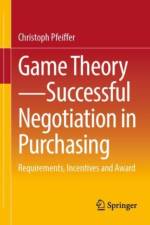
Applied game theory in purchasing has become an important tool in many companies for systematically achieving success in negotiations. The central building block of game-theoretically optimized awards are purchasing auctions. A basic knowledge of auctions and game theory is therefore particularly important for purchasers.This book describes very clearly many helpful methods as well as their application in practice. Procurement situations which have a high volume, which are interesting for suppliers and whose performance can be well specified are particularly suitable for the use of game theory in purchasing. It also shows how cartels or restrained competition between suppliers can be identified using a purely data-based method.Every purchase involves a sale. The book is therefore not only aimed at buyers. Auctions in procurement and the underlying game-theoretical principles also play an equally significant role for sellers.Applied game theory in purchasing has become an important tool in many companies for systematically achieving success in negotiations. The central building block of game-theoretically optimized awards are purchasing auctions. A basic knowledge of auctions and game theory is therefore particularly important for purchasers.This book describes very clearly many helpful methods as well as their application in practice. Procurement situations which have a high volume, which are interesting for suppliers and whose performance can be well specified are particularly suitable for the use of game theory in purchasing. It also shows how cartels or restrained competition between suppliers can be identified using a purely data-based method.Every purchase involves a sale. The book is therefore not only aimed at buyers. Auctions in procurement and the underlying game-theoretic principles also play an equally significant role for sellers.
This textbook contains the mathematics needed to study computer science in application-oriented computer science courses. The content is based on the author's many years of teaching experience.The translation of the original German 7th edition Mathematik für Informatiker by Peter Hartmann was done with the help of artificial intelligence. A subsequent human revision was done primarily in terms of content.Textbook FeaturesYou will always find applications to computer science in this book.Not only will you learn mathematical methods, you will gain insights into the ways of mathematical thinking to form a foundation for understanding computer science.Proofs are given when they help you learn something, not for the sake of proving.Mathematics is initially a necessary evil for many students. The author explains in each lesson how students can apply what they have learned by giving many real world examples, and by constantly cross-referencing math and computer science. Students will see how math is not only useful, but can be interesting and sometimes fun.The ContentSets, logic, number theory, algebraic structures, cryptography, vector spaces, matrices, linear equations and mappings, eigenvalues, graph theory.Sequences and series, continuous functions, differential and integral calculus, differential equations, numerics.Probability theory and statistics.The Target AudiencesStudents in all computer science-related coursework, and independent learners.
The transfer of theoretical learning content to the practical application of previously unregulated bio-based building materials is the focus of this technical book. To this end, planning and design principles of thermal, moisture and sound insulation are presented and demonstrated using new types of natural fibre-reinforced plastics (NFK) in façade applications. Results from current research on LFPs and in particular on wood-plastic composites (WPC) are explained in a comprehensible way and presented graphically. It is aimed at students of architecture and civil engineering and offers numerous exam-like exercises and sample solutions to reinforce the contents. Students learn the basics of building physics and practise their application to concrete problems in building design. In addition, they can repeat and consolidate their acquired knowledge in a variety of exercises with a high level of practical relevance. Specialist planners will gain new perspectives on the selection of materials and their use in building components with the potential for more sustainability in the building industry.
In this book, basic statistical knowledge is conveyed in an understandable and application-oriented manner. The readers should be enabled to carry out their own empirical evaluations and to understand or critically reflect on existing analyses.The third edition is extended by a detailed chapter on the logic of significance tests.A replication syntax for the statistical program Stata is provided online as supplementary material.
1 Introduction to process design.- 1.1 Material requirements and flows.- 1.2 Energy balances.- 1.3 Process economics.- Appendix 1.A: Some basic definitions.- Conclusions.- Further reading.- 2 Newtonian fluid mechanics.- 2.1 Laminar and turbulent flow.- 2.2 Ideal fluids.- 2.3 Laminar flows.- 2.4 Dimensional analysis.- 2.5 Turbulent flow.- Conclusions.- Further reading.- 3 Introduction to heat transfer.- 3.1 Heat conduction.- 3.2 Heat transfer in flowing systems.- 3.3 Heat exchange: more practical aspects.- Conclusions.- Further reading.- 4 Mass transfer in food and bioprocesses.- 4.1 Why does transfer occur?.- 4.2 Mechanisms.- 4.3 Equilibrium.- 4.4 Diffusion.- 4.5 Transient behaviour.- 4.6 Flowing systems.- 4.7 Interphase transfer.- 4.8 Aeration.- 4.9 Mass transfer limitations.- Conclusions.- Further reading.- 5 Food rheology.- 5.1 Characteristics of non-Newtonian fluids.- 5.2 Viscometric flows.- 5.3 Application to engineering problems.- Appendix 5.A: Linear viscoelastic Maxwell element.- Appendix 5.B: Concentric cylinder viscometer.- Appendix 5.C: Cone and plate viscometer.- Conclusions.- References and further reading.- 6 Process design: heat integration.- 6.1 Design of process plant.- 6.2 Second-law analysis: heat integration.- 6.3 Heat and process integration in the food industry.- Conclusions.- 7 Process control.- 7.1 What is the control problem?.- 7.2 Block diagrams.- 7.3 Process dynamics.- 7.4 multiple inputs and linearization.- 7.5 Frequency response.- 7.6 Feedforward and feedback control.- 7.7 Types of controller action.- 7.8 Control system design for complete plants.- Conclusions.- Further reading.- 8 Reactors and reactions in food processing.- 8.1 Reactor types.- 8.2 Physical chemistry of food reactions.- 8.3 Analysis of isothermal 'ideal' reactor systems.- 8.4 Non-isothermal reactions.- 8.5 Non-ideal flow and mixing in continuous reactors.- Conclusions.- References and further reading.- 9 Thermal treatment of foods.- 9.1 Engineering principles.- 9.2 Continuous processing: problems and solutions.- 9.3 Fouling and cleaning in food process plant.- Conclusions.- References and further reading.- 10 Mixing in food processing.- 10.1 Fundamentals of mixing.- 10.2 Fluid-mixing equipment.- 10.3 Power consumption in stirred tanks.- 10.4 Miscible liquid blending operations.- 10.5 Gas-liquid mixing.- 10.6 Liquid-liquid dispersions and the creation of emulsions.- 10.7 Solids suspension and solid-liquid mass transfer.- 10.8 Scale-up of mixers from pilot trials.- 10.9 Alternative mixing devices.- 10.10 Mixing of particulate materials.- Conclusions.- References and further reading.- 11 Process design: an exercise and simulation examples.- 11.1 An integrated cheese plant: a design exercise.- 11.2 Computer simulations.- Conclusions.- Overall conclusions.
1 Predicting acceptability from flavour data.- Abstract.- 1.1 Introduction.- 1.1.1 Procedure considerations.- 1.1.2 Design considerations.- 1.1.3 Analysis considerations.- 1.1.4 Practical considerations.- 1.2 Examples of the multiple regression approach.- 1.2.1 Predicting hedonic values of raw carrot texture from sensory descriptive attributes.- 1.2.2 Predicting hedonic values of cooked rice from sensory descriptive attributes.- 1.2.3 Predicting strawberry jam preference from sensory and analytical variables.- 1.3 Conclusion.- References.- 2 Sensory analysis of flavours.- Abstract.- 2.1 Introduction.- 2.1.1 Definition.- 2.1.2 Quality: two sources of variables.- 2.2 The sensory instruments.- 2.3 Psychology.- 2.4 Psychophysics.- 2.5 Physiology: oral, nasal, retronasal and trigeminal perception.- 2.6 Sensory analysis.- 2.6.1 The possibilities.- 2.6.2 The tool box.- 2.6.3 Quality of judgement.- 2.6.4 Scales.- 2.6.5 Methods.- 2.6.6 Sensory technique.- References.- 3 Food acceptability.- Abstract.- 3.1 Introduction.- 3.2 Tools for measuring and understanding product acceptance and perception.- 3.3 Measuring acceptance.- 3.3.1 Environment and context.- 3.3.2 Products being considered.- 3.3.3 Product associations.- 3.3.4 Availability and familiarity.- 3.3.5 Variety.- 3.3.6 Interviewer influence.- 3.4 Methods for exploring underlying causes of acceptance.- 3.4.1 Regression modelling.- 3.4.2 Trade-off modelling and conjoint analysis.- 3.4.3 Behavioural modelling.- 3.4.4 Information-processing-network approaches.- 3.5 Conclusions.- References.- 4 Psychology and psychophysiological measurements of flavour.- Abstract.- 4.1 Introduction.- 4.2 The physiological study of eating behaviours.- 4.3 Psychophysiological techniques.- 4.4 R. W. Moncrieff.- 4.5 Averaged evoked potentials.- 4.6 Psychophysiology, EEG and brain electrical activity mapping.- 4.7 Neuropsychology and the cerebral cortex.- 4.8 The Warwick olfaction research methodology.- 4.8.1 The quantification of BEAM maps.- 4.9 A BEAM investigation using infants and a longitudinal adult study.- 4.10 Event-related potentials and food odours.- 4.11 Conclusions.- References.- 5 Matching sensory and instrumental analyses.- Abstract.- 5.1 Introduction.- 5.2 Goals.- 5.2.1 Understanding causal relationships.- 5.2.2 Finding calibration and prediction models.- 5.2.3 Application in quality assurance and management.- 5.3 Methods.- 5.3.1 Sensory methods.- 5.3.2 Instrumental methods.- 5.3.3 Computers and data analytical methods.- 5.4 Philosophy.- 5.4.1 To what extent can flavour be measured?.- 5.4.2 Philosophical concepts of relevance in flavour assessment.- 5.5 Qualimetrics.- 5.5.1 Why qualimetrics?.- 5.5.2 Definitions.- 5.5.3 Multivariate psychophysics.- 5.5.4 Multivariate data analysis.- 5.5.5 Multivariate calibration and prediction.- 5.6 Examples.- 5.6.1 Goals.- 5.6.2 Materials and methods.- 5.6.3 Results: rapid, relevant and reliable methods (goal 1).- 5.6.4 Results: use of prior knowledge (goal 2).- 5.6.5 Discussion.- 5.7 Conclusions.- Acknowledgement.- References.- 6 Product optimization.- Abstract.- 6.1 Introduction.- 6.1.1 Optimization procedure.- 6.1.2 Definition of the desired response.- 6.2 Applications of response surface optimization.- 6.2.1 Thiamine and SO2 content in quality white wine production.- 6.2.2 Optimization of wine fermentation by using immobilized yeast cells.- 6.2.3 Optimization of Provolone cheese quality (preference) by sensory descriptive analysis.- 6.3 Conclusion.- References.- 7 Software for data collection and processing.- Abstract.- 7.1 Introduction.- 7.2 Software for data collection.- 7.3 Software for data analysis (traditional statistical analysis).- 7.4 Software for data exploration.- 7.5 The future.- Acknowledgements.- References.- 8 Citrus breeding and flavour.- Abstract.- 8.1 Introduction.- 8.2 Botanical considerations.- 8.2.1 Taxonomic systems.- 8.2.2 Breeding problems.- 8.3 Breeding of citrus flavours.- 8.3.1 Sensory analysis.- 8.3.2 Nonvolatile flavours.-...
Processing of Vocalization Signals in Neurons of the Inferior Colliculus and Medial Geniculate Body; J. Syka, et al. Coding of FM and AM Sounds at the Auditory Midbrain; P.W.F. Poon, et al. Inhibition and Inhibitory Plasticity in the Mammalian Auditory Midbrain; M.B. Calford, Y. Saalmann. Neuronal Periodicity Coding and Pitch Effects; G. Langner. Specialization's of the Auditory System for the Analysis of Natural Sounds; I. Nelken, et al. The Processing of Species-Specific Complex Sounds by the Ascending and Descending Auditory Systems; N. Suga, et al. A Connected Mandarin Speech Recognition System Using Dynamic Programming Bayesian Neural Networks; C.-C. Huang, et al. A computational Model of Birdsong Learning by Auditory Experience and Auditory Feedback; K. Doya, T.J. Sejnowski. On Recent Results in Modeling of Sensory Neurons; P. Lánsky. Interneurons Which Shape Response Properties in Dorsal Cochlear Nucleus; E.D. Young, I. Nelken. Behavioral and Physiological Studies of Sound Localization in the Cat; T.C.T. Yin, L.C. Populin. The Processing of Auditory Stimuli for Eye Movements in the Posterior Parietal Cortex of Monkeys; R.A. Andersen, et al. 9 Additional Chapters. Poster Abstracts of the Conference. Index.
The Use of Silver Stains in the Identification of Neuroendocrine Cell Types (L. Grimelius et al.). Quantitative Immunohistochemistry for the Investigation of Regulatory Peptides in Health and Disease (G. Terenghi, J.M. Polak). Immunogold-Silver Staining (IGSS) for Detection of Antigenic Sites and DNA Sequences (G.W. Hacker et al.). Single and Multiple Immunofluorescence: An Overview (C. HauserKronberger, G.W. Hacker). Immunocytochemistry of Wholemount Preparations (G.L. Ferri, R.M. Gaudio). Microwave Immunocytochemistry (J. Gu). Basic Principles of Immunohistopathology (G.W. Hacker et al.). Classification of Endocrine Tumors by Histochemical Techniques (E. Wilander). Cytology (S.K. Tang, A.S.Y. Leong). The Use of the Multiblock in Diagnostic Immunohistochemistry (W. Kraaz, L. Scheibenpflug). Immunohistochemical, Biochemical, and Physiological Characterization of Calciumbinding Proteins (A. Hermann, H.H. Kerschbaum). Preembedding Immunocytochemistry in Transmission Electron Microscopy (W. Kummer et al.). Postembedding Localization Methods for Electron Microscopy: Basic Approach and Protocols (P.M. Lackie, J. Roth). 12 additional articles. Index.
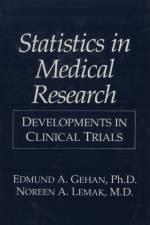
This fascinating book chronicles the fundamental events that shaped the advancement of the study of statistics and development of clinical trials. It reviews statistics from the birth of probability theories around the gambling tables, through the introduction of statistics into medicine, and up to the latest clinical trials. Interweaving a comprehensive history of clinical research over the centuries, the authors include lively bibliographies of the people responsible for the innovative concepts that constitute the foundation of modern statistics.
Basic Properties of the Actin Molecule and Actin-Based Microfilament Systems.- Vibrational Modes of G-Actin.- Combining Electron Microscopy and X-Ray Crystallography Data to Study the Structure of F-Actin and its Implications for Thin-Filament Regulation in Muscle.- Evidence for an F-Actin Like Conformation in the Actin: DNase I Complex.- Actin-Bound Nucleotide/Divalent Cation Interactions.- Influence of the High Affinity Divalent Cation on Actin Tryptophan Fluorescence.- C-Terminus on Actin: Spectroscopic and Immunochemical Examination of its Role in Actinomycin Interactions.- Actin Polymerization: Regulation by Divalent Metal Ion and Nucleotide Binding, ATP Hydrolysis and Binding of Myosin.- Actin-Associated Proteins and Control of Filament-Based Assembly-Disassembly.- Structural Requirements of Tropomyosin for Binding to Filamentous Actin.- Actin-Gelsolin Interaction.- Actin Regulation and Surface Catalysis.- Caldesmon: Possible Functions in Microfilament Reorganization During Mitosis and Cell Transformation.- Cytoskeleton, Motile Structures and Macromolecular Crowding.- Cellular Functions of the Microfilament System.- Actin Filament Dynamics in Cell Motility.- Changes in Adhesion Plaque Protein Levels Regulate Cell Motility and Tumorigenicity.- Induction of Collagen Synthesis in Response to Adhesion and TGF? is Dependent on the Actin-Containing Cytoskeleton.- Gelsolin Expression in Normal Human Keratinocytes is a Function of Induced Differentiation.- Actin Filaments and the Spatial Positioning of mRNA.- Redistribution of p52(PAI-l) mRNA to the Cytoskeletal Framework Accompanies Increased p52(PAI-l) Expression in Cytochalasin D-Stimulated Rat Kidney Cells.- Brush Border Myosin I Has a Calmodulin/Phosphatidylserine Switch and Tail Actin-Binding.- Control of p52(PAI-l) Gene Expression in Normal and Transformed Rat Kidney Cells: Relationship Between p52(PAI-l) Induction and Actin Cytoarchitecture.- Contributors.
Three-Dimensional Structure of Lactoferrin in Various Functional States.- Characterization of Two Kinds of Lactotransferrin (Lactoferrin) Receptors on Different Target Cells.- Primary and Three-Dimensional Structure of Lactotransferrin (Lactoferrin) Glycans.- Synergism and Substitution in the Lactoferrins.- Salt Effects on the Physical Properties of the Transferrins.- Interaction of Lactoferrin with Sequestered Transition Metal Ions.- Bactericidal Activity of Different Forms of Lactoferrin.- The Effects of Lactoferrin on Gram-Negative Bacteria.- Faecal Flora in the Newborn: Effect of Lactoferrin and Related Nutrients.- The Monocytic Receptor for Lactoferrin and Its Involvement in Lactoferrin-Mediated Iron Transport.- Study on the Binding of Lactotransferrin (Lactoferrin) to Human PHA-Activated Lymphocytes and Non-Activated Platelets: Localisation and Description of the Receptor-Binding Site.- Physical Characteristics and Polymerization during Iron Saturation of Lactoferrin, a Myelopoietic Regulatory Molecule with Suppressor Activity.- Lactoferrin and the Inflammatory Response.- The Role of Lactoferrin as an Anti-inflammatory Molecule.- Interaction of Lactoferrin with Mononuclear and Colon Carcinoma Cells.- Lactoferrin Receptors in Intestinal Brush Border Membranes.- Maternal Lactoferrin in the Urine of Preterm Infants: Evidence for Retention of Structure and function.- Lactoferrin Gene Promoter in Human and Mouse: Analogous and Dissimilar Characteristics.- Lactoferrin cDNA: Expression and In Vitro Mutagenesis.- Antimicrobial Peptides of Lactoferrin.- Physicochemical and Antibacterial Properties of Lactoferrin and Its Hydrolysate Produced by Heat Treatment at Acidic pH.- A Comparison of the Three-Dimensional Structures of Human Lactoferrin in Its Iron Free and Iron Saturated Forms.- Bovine Lactoferrin: Isolation and Characterisation of Genomic Regulatory Sequences.- X-Ray Structural Analysis of Bovine Lactoferrin at 2.5 Å Resolution.- Binding of Porcine Milk Lactoferrin to Piglet Intestinal Lactoferrin Receptor.- Lactoferrin-Receptor Interaction: Effect of Surface Exposed Histidine Residues.- Kinetic Parameters for the Heat Denaturation of Bovine Lactoferrin in Milk, and Its Effect on Interaction with Monocytes.- Cloning and Expression of the C-Terminal Lobe of Human Lactoferrin.- Crystallographic Studies on Metal and Anion Substituted Human Lactoferrin.- Proposed Mechanisms for the Involvement of Lactoferrin in the Hydrolysis of Nucleic Acids.- Lactoferrin Promotes Nerve Growth Factor Synthesis/Secretion in Mouse Fibroblast L-M Cells.- Summary Chapter: Lactoferrin Structure and Function: Remaining Questions, Methodological Considerations and Future Directions.
I. Prostatic Cancer Bone Metastasis: An International Perspective.- Clinical Dilemmas and Problems in Assessing Prostatic Metastasis to Bone: The Scientific Challenge.- Comparative Study of Prostatic Carcinoma Bone Metastasis among Japanese in Japan and Japanese Americans and Whites in Hawaii.- Prostate Cancer in the United States and Japan.- Analysis of Survival of Prostate Cancer Patients in Japan and the USA.- II. Biology.- The Cellular Basis for Prostate Cancer Metastasis.- Cytogenetic and Molecular Genetic Aspects of Human Prostate Cancer: Primary and Metastatic.- Hemodynamics of Prostate Bone Metastases.- Role of the Vertebral Venous System in Metastatic Spread of Cancer Cells to the Bone.- Clinical Significance of the Vertebral Vein in Prostate Cancer Metastasis.- Effects of Various Growth Factors on a Chondrocyte Differentiation Model.- Potential Role of HBGF (FGF) and TGF-Beta on Prostate Growth.- Hormone Refractory Prostatic Cancer: The Role of Radiolabelled Diphosphonates and Growth Factor Inhibitors.- III. Models.- Localization of Basic Fibroblast Growth Factor (bFGF) in a Metastatic Cell Line (AT-3) Established from the Dunning Prostatic Carcinoma of Rat: Application of a Specific Monoclonal Antibody.- Use of a Reconstituted Basement Membrane to Study the Invasiveness of Tumor Cells.- Animal Prostate Carcinoma Models: Limited Potential for Vertebral Metastasis.- A Model for Studies on Human Prostatic Carcinoma.- IV. Pathology.- Studies on the Pathogenesis of Osteoblastic Metastases by Prostate Cancer.- Analysis of Bone Metastasis of Prostatic Adenocarcinoma in 137 Autopsy Cases.- Nucleolar Organizer Regions in Prostate Cancer.- Flow Cytometric Analysis of Prostatic Carcinoma with and without Bone Marrow Metastasis.- V. Evaluation.- Evaluation of the Response of Bone Metastases to Therapy.- Computed Tomographic Evaluation of Bone Metastases in Prostatic Cancer Patients.- Magnetic Resonance Imaging of Bone Metastases.- Bone Marrow MRI in Prostate Cancer.- Bone Mineral Density for Patients with Bone Metastasis of Prostate Cancer: A Preliminary Report.- Quantification of Changes in Bone Scans of Patients with Osseous Metastases of Prostatic Carcinoma.- The Usefulness of Serum Acid Phosphatase in Monitoring Patients with Advanced Prostate Carcinoma.- VI. Treatment.- Radiation Treatment of Prostate Bone Metastases and the Biological Considerations.- Clinical Course of Bone Metastasis from Prostatic Cancer Following Endocrine Therapy: Examination with Bone X-Ray.- Palliative Radiotherapy of Bone Metastasis.- Clinical Study of Bone-Related Relapse in Prostate Carcinoma.- Surgical Treatment of Metastatic Tumors of Long Bones and the Spine.- Hormone Therapy of Prostatic Bone Metastases.
Phospholipases A2: Brain Phospholipases and their Role in Signal Transduction; A.A. Farooqui, et al. Cell Signaling and Essential Fatty Acids: Reciprocal Regulation of Fatty Acid Release in the Brain by GABA and Glutamate; D.L. Birkle Metabolites of Essential Fatty Acids and Other MembraneDerived Second Messengers in Cell Signaling: A Role for the Arachidonic Acid Cascade in Fast Synaptic Modulation A. Volterra, et al. Dietary Supply of Essential Fatty Acids, Synaptogenesis, and Photoreceptor Biogenesis: Network of Signal Transduction Pathways Involving Lipids; R. Bell et al. Essential Fatty Acids, Excitable Membrane Phospholipids, and Pathophysiology: Conservation of Docosahexaenoic Acid in the Retina; R.E. Anderson, et al. Essential Fatty Acids and Excitable Membrane Phospholipids: Disposition Kinetics of Phospholipid Liposomes; P. Palatini 32 additional articles. Index.
In this volume leading international authorities present the results of their original scientific studies of aggressive behavior. Written in honor of the eminent Polish psychologist, Adam Fraczec, for this work in this area, the contributed chapters highlight the similarities and differences in the findings provided by investigators working in diverse cultural settings.
In this textbook, governance aspects are presented and explained in a comprehensible way at different levels: After a look at the roots of the governance discussion in economics and political science, political and economic negotiation and problem-solving processes are discussed on the macro level "Orders of Governance" and institutional and normative framework conditions are considered; on the meso level "Cooperation", forms of steering and control as well as cooperation and coordination of social economy enterprises are dealt with; and on the micro level "Interactions", governance is dealt with from the perspective of the actors and their interactions.
The world of steel is constantly evolving and has become astonishingly diverse, indeed so complex that it is not easy to keep track of it in practice. The aim is to give readers an understanding of this world, from steelmaking, ingot and continuous casting, forming and machining to finishing, testing and packaging of the products, the processes and equipment predominantly used throughout, including the environmentally compatible recycling and disposal of waste.
This volume deals with the American production "Spartacus" and the British-American-Italian co-production Rome. In the examination of the present, a turn to Greek or Roman antiquity can be observed again and again. To find there the roots of Western society for politics, economics or philosophy, or to derive comparative arguments for expansionist efforts or decline, is not just part of the rhetorical commonplace. So it is not surprising that the TV series format also takes up this period. Whereas in Rome the attempt is made to work through the historical guidelines in great detail, in Spartacus, apart from the rough sketch of the plot, one can speak of a far-reaching neglect of the historical situation. From a (media) ethical perspective, specific approaches to responsibility, the transmission of values, loyalty, education, self-discipline, and religion can be identified in the series, which can be interpreted as self-statements of the present or the producers.
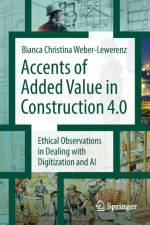
The book wants to do justiceto the complexity surrounding the Digital Transformation and AI in the Construction Industry. User practice experiences show how digital change can be shaped sensibly and constructively, what kind of methods and technologies do exist or can be developed, which fields of application can be explored, by keeping an eye on risks and opportunities.The book works out key factors and core competencies at all levels, which are decisive both for sustainably using innovative technologies and for setting the Seal of Quality of the Construction Industry at home and abroad.
Communication theories and terrorism - how can a connection be made here? Terrorism is a dominant topic in today's world: It sometimes dominates public political discussion as well as private conversations. Communication studies can help to further penetrate the phenomenon of terrorism and provide important pieces of the puzzle to grasp it in its entirety. The development of media skills among some terrorist groups makes it imperative that the "social problem of terrorism" be approached with the help of a "communications science lens.
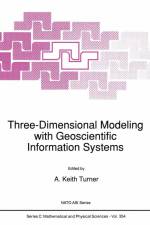
A: Preface and Achievements of the Workshop.- 1. Preface.- 2. Achievements of the Workshop.- B: Definition of the Problem.- 3. Spatial data handling in the geosciences.- 4. 3-D modelling with geoscientific information systems: The problem.- 5. Geologic data handling.- 6. The role of the conceptual datamodel in software application integration.- C: Existing Three-Dimensional Geoscientific Information Systems.- 7. A spatial information system with advanced modeling capabilities.- 8. The DASDBS geokernal - an extensible database system for GIS.- 9. Three-dimensional solid modeling of geo-objects using non-uniform rational B-splines (NURBS).- 10. A mapping approach to three-dimensional modeling.- 11. GOCAD: a computer aided design program for geological applications.- D: Three-Dimensional Data Structures and Display Methods.- 12. Modeling natural objects via octrees.- 13. 3-D structures for the encoding of geometry and internal properties.- 14. Methods for the efficient storage of spatial geologic data.- 15. Key 3D modelling concepts for geoscientific analysis.- 16. Geometry for three-dimensional GIS in geoscientific applications.- 17. GIDBS: a database system for hierarchically represented gray-scale images.- E: Applications of Three-Dimensional Geoscientific Modeling.- 18. Applications of 3-D geoscientific modeling for hydrocarbon exploration.- 19. Two major problems in representing geological well data and seismic data in petroleum-bearing regions via 3-D geographic information systems.- 20. The application of new 3-D computer modelling techniques to mining.- 21. Applications of three-dimensional geoscientific mapping and modeling systems to hydrogeological studies.- F: Transcriptions of Conference Committee Discussions.- 22. Report of discussions by the computer scientists.- 23. Report of discussions by the geoscientists.- 24. Report of discussions by the members of national geological surveys.- 25. Report of discussions by the hydrocarbon interest group.- 26. Report of discussions by the minerals exploration interest group.- 27. Report of discussions by the environmental sciences interest group.- 28. Report of closing discussions.- Glossary of Terms.- Survey of Participants.- List of Participants.
One: Environmental Externalities.- 1. Nature in Pigouvian oriented economics.- 2. Correcting national income for environmental losses.- 3. The mirror of cleanliness.- 4. Land use externalities in national accounting.- 5. Taxes versus regulation.- 6. Efficiency in transboundary pollution abatement.- Two: Environment, Growth and Steady State.- 7. Economic growth, technology and the environment.- 8. The steady state economy.- 9. Entropy, synergy and economic change.- 10. The neo-classical and steady state approaches.
Abonner på vårt nyhetsbrev og få rabatter og inspirasjon til din neste leseopplevelse.
Ved å abonnere godtar du vår personvernerklæring.