

















Gjør som tusenvis av andre bokelskere
Abonner på vårt nyhetsbrev og få rabatter og inspirasjon til din neste leseopplevelse.
Ved å abonnere godtar du vår personvernerklæring.Du kan når som helst melde deg av våre nyhetsbrev.

This book focuses on the theoretical side of temporal network research and gives an overview of the state of the art in the field. Curated by two pioneers in the field who have helped to shape it, the book contains contributions from many leading researchers. Temporal networks fill the border area between network science and time-series analysis and are relevant for epidemic modeling, optimization of transportation and logistics, as well as understanding biological phenomena.Over the past 20 years, network theory has proven to be one of the most powerful tools for studying and analyzing complex systems. Temporal network theory is perhaps the most recent significant development in the field in recent years, with direct applications to many of the ¿big datä sets. This book appeals to students, researchers, and professionals interested in theory and temporal networks¿a field that has grown tremendously over the last decade.This second edition of Temporal Network Theory extends the first with three chapters highlighting recent developments in the interface with machine learning.
The book gathers several contributions by historians of physics, philosophers of science and scientists as new essays in the history of physics ranging across the entire field, related in most instances to the works of Salvo D'Agostino (1921-2020), one of the field's most prominent scholars since the second half of the past century. A phenomenon is an observable measurable fact, including data modelling, assumptions/laws. A mechanical phenomenon is associated to equilibrium/motion. Are all mechanisms mechanisms of a phenomenon? Scholars with different backgrounds discuss mechanism/phenomena from an historical point of view. The book is also devoted to understanding of causations of disequilibrium (shock, gravitational, attraction/repulsion, inertia, entropy, etc.), including changes/interaction in the framework of irregular cases of modern physics as well. The book is an accessible avenue to understanding phenomena, ideas and mechanisms by leading authorities who offer much-needed historical insights into the field and on the relationship Physics-Mathematics. It provides an absorbing and revealing read for historians, philosophers and scientists alike.
This book proposes the foundation of the relational approach to biology, rejecting the deterministic and reductionist approach of molecular biology. Although biology has made enormous progress in the last seventy years, onto genesis is still conceived as a "revelation" of information (DNA). Recovering the geometric tradition, relational biology conceives scientific and epistemological tools (cause, probability, space etc.) of science in a new way. If probabilistic biology and organicism still proposes a biology based on physics, with a fundamental invariant, relational biology is based on variation: its fundamental invariant is variation, one of the most important elements of life. This is an indispensable book for academics who consider biology from a new theoretical approach, in particular for those working in the domains of cancer, ontogenesis and evolution.
The aim of this book, part of the European Society of Intensive Care Medicine (ESICM) textbook series and designed by the NEXT Committee of the European Society of Intensive Care Medicine, is to provide the readers with a unique review of the main syndromes in Intensive Care Medicine by means of a collection of clinical cases. The book is structured in six sections (severe infections and sepsis, respiratory medicine, cardiovascular medicine, neurocritical care and severe trauma, severe endocrine and metabolic disorders, and severe inflammatory disorders), that allow the reader to focus on a specific area. Each section begins with an ¿introductory chapter¿ to maintain cohesion. Within each section, every chapter corresponds to a clinical case covering different aspects of a relevant disease. All the chapters have a uniform design: introduction/background, case presentation, investigations, differential diagnosis, treatment, evolution, outcome and follow-up, and discussion. The target audience of this work includes university students, fellows of intensive care medicine, critical care and emergency medicine residents, and experienced physicians aiming to review the most relevant syndromes of the specialty.
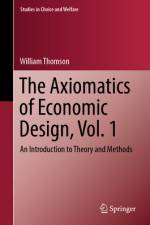
This textbook is Volume 1 of a two-volume set on the axiomatics of economic design. Its central argument is that economic institutions are not God-given: they are man-made. Their ultimate goal is to promote social welfare. The book describes the axiomatic approach to design. It consists in the formulation of criteria of desirability of solution mappings, and of the examination of their logical implications when imposed in various combinations. Its goal is to identify as precisely as possible the line that separates those combinations of desiderata that are compatible and those that are not. The end product of axiomatic work are menus of choices for practitioners to choose from when they have to make a decision.The first volume offers pedagogical coverage of the axiomatic approach to economic design, in the form of answers to questions posed by a young person curious about it. It introduces readers to what motivates economic design. It continues with the mathematical representation of a class of allocation problems. The bulk of the volume is to present structured inventories of the field of axioms, arranged by format first, and content next. These chapters are followed by a user's manual on the axiomatic method. Lastly, the volume discusses how economic design can be aided by other disciplines, in particular philosophy, mathematics, and computer science.
This book comprehensively covers ultrashort echo time (UTE), zero echo time (ZTE), and other magnetic resonance imaging (MRI) acquisition techniques for imaging of short and ultrashort-T2 tissues. MRI uses a large magnet and radio waves to generate images of tissues in the body. The MRI signal is characterized by two time constants, spin-lattice relaxation time (T1) which describes how fast the longitudinal magnetization recovers to its initial value after tipping to the transverse plane, and spin-spin relaxation time (T2) which describes how fast the transverse magnetization decays. Conventional MRI techniques have been developed to image and quantify tissues with relatively long T2s. However, the body also contains many tissues and tissue components such as cortical bone, menisci, ligaments, tendons, the osteochondral junction, calcified tissues, lung parenchyma, iron containing tissues, and myelin, which have short or ultrashort-T2s. These tissues are "invisible" with conventional MRI, and their MR and tissue properties are not measurable. UTE and ZTE type sequences resolve these challenges and make these tissues visible and quantifiable.This book first introduces the basic physics of conventional MRI as well as UTE and ZTE type MRI, including radiofrequency excitation, data acquisition, and image reconstruction. A series of contrast mechanisms are then introduced and these provide high resolution, high contrast imaging of short and ultrashort-T2 tissues. A series of quantitative UTE imaging techniques are described for measurement of MR tissue properties (proton density, T1, T2, T2*, T1p,magnetization transfer, susceptibility, perfusion and diffusion). Finally, clinical applications in the musculoskeletal, neurological, pulmonary and cardiovascular systems are described.This is an ideal guide for physicists and radiologists interested in learning more about the use of UTE and ZTE type techniques for MRI of short and ultrashort-T2 tissues.
This Handbook provides in one volume rich, comprehensive and rigorous coverage of specific subject areas and thematic concerns in the ever-evolving academic discipline of African philosophy. This Handbook is unique in its focus on central and emerging areas within African philosophy such as Afro-communitarian philosophy, ethics, epistemology, social and political philosophy, existentialism, philosophy of religion, gender philosophy, philosophy of education, phenomenology, transhumanism, African philosophy futures, and philosophy of the non-human. The thirty-two chapters in this Handbook explore the rich textual and non-textual forms of philosophical knowledge in Africa and adequately represent the broad and diverse scope of African philosophy, showing the richness and depth of the philosophical tradition. This reference work is indispensable to students and researchers in African philosophy, comparative philosophy and world philosophies.
This book describes the advantages of a high level of integration between product and sales management. It explains how highly integrated product and sales management can be achieved. Claus Tintelnot depicts the classic organizational models and provides examples of how these can be supplemented, fundamentally adapted and supported by digitalization. Best and worst practice examples indicate where classic management fails and show how integrated management can do better. Managers can only act as role models for an integrated team if they share the same attitude to leadership and pursue a common strategy. Business goals that need to be achieved can only be shared by integrated product and sales management and one avoids employees being worn down by the hurdles caused by inter-departmental boundaries. The book is aimed at practitioners in the fields of corporate management, strategy, product management, sales and interested readers from other areas of the supply chain. Without an adequate supply chain and fitting communication to the customers, B2B businesses cannot be successful and profitable. Students of business administration, economics, industrial engineering, business engineering, computer science for IT/ OT and other engineering disciplines will have a worthwhile read as well.
This atlas discusses a variety of common through to complex clinical presentations in Rhinoplasty. Simple methods of handling fractured, finesse, secondary, ethnic and special clinical cases are covered throughout the book. It contains over 2,000 full-colour surgical photographs of both rare and routine cases in Rhinoplasty with all aesthetic challenges examined in detail. The display of the pre- and post-operative photographs is made simple and easy for the eyes to see. Pre-operative photographic assessment, surgical planning and post-operative analysis is included in each case in an easy to follow format so that photographs and texts can be seen and read at a glance. A well-informed, clear guide is written at the beginning of the Atlas. Atlas of Clinical Cases in Rhinoplasty: Volume 2 is aimed at those who are planning to take Rhinoplasty as a career and experienced surgeons who wish to expand their knowledge and skills. It will be an essential resource for all those seeking a clear, highly visual guide to new developments in Rhinoplasty.
I. Die Objekte der Pharmakognosie.- II. Einführung in die phytochemischen Grundlagen der Pharmakognosie.- III. Pflanzensäuren als Hauptwirkstoffe.- IV. Kohlenhydratdrogen.- V. Glykosiddrog0n.- VI. Gerbstoûdrogen.- VII. EiweiÃe und Enzyme.- VIII. Alkaloiddrogen.- IX. Fette, Ãle und weitere Lipoide.- X. Ãtherische Ãle, Harze und Balsame.- XI. Arzneimittel aus Mikroorganismen.- XII. Drogen, deren spezifische Wirkstoffe nicht oder nur ungenügend bekannt sind Volksmedizinisch verwendete Drogen und Arzneipfianzen.
This book serves as a valuable aid for scientists and engineers who seek to discover and disseminate knowledge so that it can be used to improve the human condition. This book can be used as a textbook for undergraduate or graduate courses on technical communication and ethics, a reference book for senior design courses, or a handbook for young investigators and beginning faculty members.In addition to presenting methods for writing clearly and concisely and improving oral or poster presentations, this compact book provides practical guidelines for preparing theses, dissertations, journal papers for publication, and proposals for research funding. Issues of authorship, peer review, plagiarism, recordkeeping, transparency, and copyright are addressed in detail, and case studies of research misconduct highlight the need for proactive attention to scientific integrity. Ample exercises cause the reader to stop and think. The authors motivate the reader to develop an effective, individual style of communication and a personal commitment to integrity, each of which are essential to success in the workplace.
This book presents a cohesive collection of contributions representing an African scholarly voice on some of the most burning and emerging topics and experiences regarding the implementation of REDD+ in Africa from a human rights perspective. It addresses the international human rights obligations of states and non-state actors in the context of REDD+ implementation in Africa; how current practices in various African states reinforce or affect human rights standards; and critical issues concerning the rights of vulnerable groups such as women, Indigenous populations, and forest dwellers in the implementation of REDD+ in Africa. Further, it investigates potential gaps in the existing laws, and how they can be addressed from a comparative point of view. The book also sheds light on the roles that different actors can play in fostering change and identifies best practices in the implementation of REDD+ in Africa.The book offers a rich intellectual resource for various actors in the environmental science, climate and environmental law fields who are often confronted with the challenge of how to manage the delicate balance of forests as a development resource; forests as a climate-change mitigation resource; and forests as a catalyst for the rights of vulnerable populations. The book responds to the imbalance and gaps in REDD+ scholarship. Addressing such lacuna in an edited volume of this nature is essential to the present and future work of practitioners, academics and other actors with a sustained interest in REDD+ in Africa.
1 Zur Geschichte der Gynäkopathologie.- 2 Entwicklung des Uterus, der Scheide und des äuÃeren Genitales.- 3 Entwicklungsstörungen.- 4 Vulva.- 5 Vagina.- 6 Uterus.- 7 Zervix: Physiologie und Anatomie.- 8 Zervizitis (und Zervikovaginitis).- 9 Proliferations- und Reifungsstörung der Portio und Metaplasiezone.- 10 Proliferations- und Reifungsstörung im Zervixdrüsenfeld.- 11 Tumorartige Läsionen der Ektozervix und des Zervixdrüsenfeldes.- 12 Benigne Tumoren der Zervix.- 13 Dysplasien und Neoplasien des Plattenepithels der Zervix.- 14 Zervixkarzinom.- 15 Zervixmetastasen.- 16 Lymphome.- 17 Granulozytäre Sarkome.- 18 Spezielle Tumoren des Kindesalters und junger Frauen.- 19 Endokrinologie, Orthologie, Funktionsdiagnostik und funktionelle Störungen des Endometriums.- 20 Endometritis.- 21 Endometriummetaplasie.- 22 Endometriumpolyp.- 23 Endometriumhyperplasie.- 24 Endometriumkarzinom.- 25 Metastasen des Uteruskörpers.- 26 Mesenchymale Tumoren und verwandte Läsionen.- 27 Funktionelle Morphologie und Pathologie des Myometriums.- 28 GefäÃe: Anatomie und Pathologie.- 29 Parakolpium, Parametrium, pelviperitoneales Weichgewebe.
Unites and interweaves the various evidences from astronomy, geology, chemistry, and biology to more thoroughly explore the beginning and first evolutionary steps of life Argues that life most likely arose in four, interconnected hierarchical stages of increasing complexity--cosmic, geological, chemical, and biological Contends that the most likely crucible for biosynthesis was a hydrothermal crater lake, where life began to brew
1 Für wen und wozu dieses Buch?.- 2 Rahmenbedingungen familienrechtlicher Begutachtung.- 3 Entscheidungsorientierte Diagnostik im Familienrecht.- 4 Planung eines psychologischen Gutachtens für das Familiengericht.- 5 Durchführung und Auswertung.- 6 Psychologischer Befund und Empfehlung des Sachverständigen.- 7 Darstellung und Beurteilung psychologischer Gutachten.- 8 Beispielgutachten zur Frage des persönlichen Umgangs.- 9 Checklisten mit den gesammelten Leitfragen.- Literatur.- Namenverzeichnis.
This book deals with every aspect of oceanography in detail including various aspects of physical, chemical, geological, and biological discourse. ¿Earth and Planetary Science¿ is perhaps the oldest, dynamic, and ever-evolving subject. Oceanography is one of its domains, which has become important in the present date, given the ubiquitous and undeniable climate change that we are experiencing. The subject domain of oceanography encompasses several environmental issues, which need serious attention from the present scientific community. Despite the ocean¿s significant role in the collective well-being of the human race, a multitude of anthropogenic activities has drastically polluted and degraded several crucial oceanic ecosystems within a short span. This book aims to present a concise yet succinct introduction to Oceanography as a subject and at the same time highlight the cutting-edge topics of research encompassing marine pollution, coastal processes, and many other associated phenomena. Oceanography is an interdisciplinary emerging subject and students all over the world who come from varied disciplines are pursuing it as higher studies. Long sections are devoted to ocean¿atmosphere interaction, tides, waves, and related coastal processes. The book represents a comprehensive idea of human activities bestowing the ocean with particular reference to Indian examples. This book helps to understand marine pollution and the behavior of oil, plastic, and other agents in the light of real-world examples and empirical models. Harnessing electricity from waves and tides is a technological advancement in the field of unconventional energy. The vast resources of the ocean like oil, mineral, methane hydrate, and their proper estimation and exploitation is the topic of discussion in the third part of the book. This book is designated to meet the essential needs of the students studying oceanography and marine science. It may be helpful to professional oceanographers also.
The book provides a comprehensive overview of the medical implications, pathophysiology, and treatment of Obstructive Sleep Apnea (OSA), a disease that creates increased health risks, most notably those related to the cardiovascular and cerebrovascular systems.The opening chapters are dedicated to the definition of OSA, its diagnosis, and the treatment options. The following chapters address primary forms of disease presentation in each medical field, with the latest evidence.Given its characteristics, the book will enable the reader to adopt a broad strategy for evaluating and managing OSA patients. In addition, it will be a valuable resource for all the clinicians who treat sleep-disordered breathing, including otolaryngologists, pulmonologists, cardiologists, neurologists, etc.
Foreword: Economics in a mathematics colloquium.- Menger's Ergebnisse - a biographical introduction.- Logical contributions to the Menger colloquium.- Topology in the Ergebnisse.- An exposition of Wald's existence proof.- On the direction of ideas and the principal tendencies of the Vienna Mathematical Colloquium.- Editorial notices.- Afterword by Franz Alt.
The new edited volume on phytomelatonin and its diverse roles in plants under a challenging environment shall be an important reference book with updated information and future perspectives on the involvement of this biomolecule in stress resilience in plants. Investigations on different aspects of melatonin in plants have undergone a prolific surge in the last decade. In view of such a considerable volume of investigations in melatonin, the proposed new volume will collate its role in different aspects of plants signaling, growth and metabolism. In this context, it has been important to understand its function as a stress priming molecule that executes associative synergistic relation with various other plant growth regulators (viz. nitric oxide, hydrogen sulfide, inorganic ions, and enzymes). Thus, crop management under diverse stressful environments can be better achieved by elucidating our current understanding of the role of melatonin and its interplay with various plant metabolites. The book shall provide a collation of recent advancements in genomic, transcriptomic, and metabolomic approaches to decipher the molecular mechanisms of melatonin signaling and its agronomic importance in plants.
This book deals with neurotrophins (NGF, BDNF, NT3, NT4), which can decrease cell death, induce differentiation, as well as sustain the structure and function of neurons. This makes neurotrophins potential therapeutic agents for the treatment of neurodegenerative disorders. However, these proteins have so far been ineffective in clinical trials mostly because they cannot pass the blood-brain barrier owing to their high-molecular weights. Consequently, small molecules that mimic neurotrophins and stimulate the synthesis of endogenous neurotrophins or enhance their neurotrophic actions are expected to be promising alternatives. Small-molecule natural products, which have been used in dietary functional foods or in traditional medicine over the course of human history, have potential to be developed as new therapeutic agents against neurodegenerative conditions such as Alzheimer's disease. In this book, the authors introduce a variety of natural products possessing neurotrophic properties such as neurogenesis, neurite outgrowth promotion (neuritogenesis), and neuroprotection and focus on the chemistry and biology of several neurotrophic natural products.
1. Introduction: Bioassays--Past Uses and Future Potential. Section I: Classical Pharmacology and Isolated Tissue Systems. 1.Human Vascular Receptors in Disease: Pharmacodynamic Analyses in Isolated Tissue. 2. Problems in Assigning Mechanisms: Reconciling the Molecular and Functional Pathways in Alpha-Adrenoceptor-Mediated Vasoconstriction. 3. Gs Protein-Coupled Receptors in Human Heart. Section II: New Theoretical Concepts and Molecular Mechanisms of Receptor Function. 4. Kinetic Modeling Approaches to Understanding Ligand Efficacy. 5. The Evolution of Drug-Receptor Models: The Cubic Ternary-Complex Model for G Protein-Coupled Receptors. 6. Inverse Agonism. 7. Efficacy: Molecular Mechanisms and Operational Methods of Measurement. A New Algorithm for the Prediction of Side Effects. 8. A Look at Receptor Efficacy. From the Signalling Network of the Cell to the Intramolecular Motion of the Receptor. 9. Mechanisms of Non-Competitive Antagonism and Co-Agonism. 10. Mechanisms of Receptor Activation and the Relationship to Receptor Structure. Section III: New Technologies for the Study of Drug Receptor Interaction. 11. The Assembly of Recombinant Receptor Systems and Their Use to Investigate Signalling Dynamics. 12. Insect Cell Systems to Study the Communication of Mammalian Receptors and G Proteins. 13. Altering the Relative Stoichiometry of Receptors, G Proteins and Effectors: Effects on Agonist Function. 14. The Study of Drug-Receptor Interaction Using Reporter Gene Systems in Mammalian Cells. 15. Melanophore Recombinant Receptors Systems.
A. Worum es sich handelt.- B. Vom Autismus in Behandlung und Vorbeugung.- C. Vom Autismus in Begriffsbildung, Ãtiologie und Pathologie.- D. Vom medizinischen Autismus in der Alkoholfrage.- E. Von verschiedenen Arten des Denkens.- F. Forderungen für die Zukunft.- G. Mediziner und Quacksalber.- H. Die Präzision in der Praxis.- I. Von den Schwierigkeiten der ausschlieÃlichen Anwendung des disziplinierten Denkens.- K. Vom disziplinierten Denken im medizinischen Unterricht.- Zusammenfassung.
For many people, thoughts of the United Arab Emirates conjure images of ultramodern skyscrapers and rolling sand dunes. However, the Emirates are a rich mosaic of ecosystems and habitats that support surprisingly diverse communities of organisms, and there is growing awareness of the importance of these previously underappreciated natural assets. A Natural History of the Emirates provides a comprehensive overview of the unusual environmental setting of this young nation, and surveys the major ecosystems and the marine and terrestrial organisms occurring across the nation. From freshwater streams in the hyperarid Hajar Mountains to the world's most temperature-tolerant coral reefs, the UAE is home to an astounding variety of uniquely adapted organisms that are providing insights into climate change and how organisms cope with and respond to extreme environmental conditions. The book closes with a section on human interactions with this unique environment, and proposes initiatives to ensure the protection of these unique natural assets into the future. This is an open access book.
This Handbook presents a complete and rigorous overview of the fundamentals, methods and applications of the multidisciplinary field of Global Navigation Satellite Systems (GNSS), providing an exhaustive, one-stop reference work and a state-of-the-art description of GNSS as a key technology for science and society at large. All global and regional satellite navigation systems, both those currently in operation and those under development (GPS, GLONASS, Galileo, BeiDou, QZSS, IRNSS/NAVIC, SBAS), are examined in detail. The functional principles of receivers and antennas, as well as the advanced algorithms and models for GNSS parameter estimation, are rigorously discussed. The book covers the broad and diverse range of land, marine, air and space applications, from everyday GNSS to high-precision scientific applications and provides detailed descriptions of the most widely used GNSS format standards, covering receiver formats as well as IGS product and meta-data formats.The full coverage of the field of GNSS is presented in seven parts, from its fundamentals, through the treatment of global and regional navigation satellite systems, of receivers and antennas, and of algorithms and models, up to the broad and diverse range of applications in the areas of positioning and navigation, surveying, geodesy and geodynamics, and remote sensing and timing. Each chapter is written by international experts and amply illustrated with figures and photographs, making the book an invaluable resource for scientists, engineers, students and institutions alike.
This book offers a detailed narrative of Dalit migrants' everyday experience in urban areas with regard to the availability and accessibility of welfare services and state institutions. It discusses caste, specifically the identity of integration for Dalit migrants and the social work profession to integrate a marginalized community. Further, the book also highlights social, political, cultural, and economic changes among Dalit migrants in cities.The book traces the trajectory of Dalit migrants and captures their mobility from rural to urban areas, which is a complex economic and social phenomenon. In consideration of this complexity, the author explores the process of migration in its finer details through a focus on lived experiences of Dalit migrants in cities. Dalits often migrate to cities in search of better employment and livelihood opportunities because their occupations are invariably associated with their caste in villages. This book investigates the role of caste-based identity in Dalit migrants' emancipation and integration in cities. In addition, the book examines the role of caste in the exclusion of Dalit migrants in cities and explains the dynamic nature of the 'state' and Dalit migrants' assertion.Among the topics covered in the book's seven chapters: Mumbai/Bombay: Migration, Caste, and DalitsCaste and Migration: The City--A Site for 'Inclusion' and EmancipationEntitlement, Deprivation, and Basic Services: Everyday Experience of Dalit Migrants with the StateDalit Migrants: Assertion, Emancipation, and Social Change is intended for students, academicians, and researchers in social work, migration studies, labour studies, development studies, population science, and economics. Developmental professionals also will be keen to read the book.
I. Visualizing Mathematics.- The Minimax Sphere Eversion.- Exploring Plane Hyperbolic Geometry.- Visualizing Nonlinear Electrodynamics.- The Use of Computer Graphics for Solving Problems in Singularity Theory.- What Should a Surface in 4-Space Look Like?.- Animation of Algebraic Surfaces.- II. Geometric Algorithms and Experiments.- Using Symmetry Features of the Surface Evolver to Study Foams.- Constant Mean Curvature Surfaces Derived from Delaunay's and Wente's Examples.- Visualization of Periodic Tilings.- An Algorithm for Discrete Constant Mean Curvature Surfaces.- III. Visualization Algorithms and Data Structures.- Efficient Calculation of Subdivision Surfaces for Visualization.- Fast Line Integral Convolution for Arbitrary Surfaces in 3D.- Visualization of Parallel Data based on Procedural Access.- IV. Visualization Environments.- A new 3D Graphics Library: Concepts, Implementation, and Examples.- A Generic Approach to Computer Graphics.- MRT - A Visualization Tool Addressing Problems 'outside' the Classical Rendering Domain.- Oorange: A Virtual Laboratory for Experimental Mathematics.- Linear Inductive Reductive Dataflow System for ViSC.- See what I mean? Using Graphics Toolkits to Visualise Numerical Data.- V. Visualization and Simulation Techniques.- Numerical Algorithms and Visualization in Medical Treatment Planning.- Level Set Methods for Curvature Flow, Image Enchancement, and Shape Recovery in Medical Images.- Numerical Methods, Simulations and Visualization for Compressible Flows.- Appendix: Color Plates.
The book covers the chemistry of various nanosponges, as well as the methods for synthesizing them and altering them chemically, as well as their characterization and uses in environmental remediation. Sensors, adaptable materials for oil clean-up in the sea, the removal of dangerous organic and inorganic pollutants from wastewater, the adsorption of various poisonous and greenhouse gases from the air, and more are just a few of the environmental uses for nanosponges. This book aims to provide broad coverage of recent research progress or up-to-date knowledge addressing various aspects in this field. With this book, we aim to provide the readers with the opportunity to learn about different facets of environmental remediation using nanosponges. Thus, this book scrutinizes the state-of-the-art research and discovery in the use of nanosponges in environmental applications, highlighting the scope to which these novel materials have been incorporated by the community. Beyond bestowing asummary of recent research by major groups in the field, the book presents the approaches behind recent developments, providing a long-lasting situation for experienced researchers and novices in the field. This book also emphasizes the challenges with previous signs of progress and way for further research, details relating to the current pioneering technology, and future perspectives with a multidisciplinary approach. Furthermore, it presents up-to-date information on the economics, toxicity, and regulations related to these novel materials. This book is of interest to those in environmental science and applications, particularly graduate students, young faculty, and others exploring nanosponges.
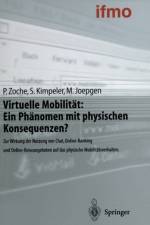
1 Einführung.- 1.1 Ausgangslage.- 1.2 Zielsetzung.- 1.3 Aufbau der Arbeit.- 2 Mobilität.- 2.1 Vorbemerkungen zum Verständnis von Mobilität.- 2.2 Mikro- oder Individualebene.- 2.3 Systemansätze.- 2.4 Telekommunikationsgestützte Mobilität.- 3 Delphi.- 3.1 Mobilität der Zukunft: Welchen Weg weist das Orakel?.- 3.2 Zum Stellenwert IuK-basierter Innovationen für die Mobilität der Zukunft.- 3.3 Typisierung unterschiedlicher Mobilitätsfelder.- 3.4 Mobilitätseffekte IuK-basierter Anwendungen.- 3.5 Realisierungszeiträume mobilitäsbezogenener Innovationen.- 3.6 Resümee für den weiteren Gang der Untersuchung.- 4 Online-Reisen.- 4.1 Nutzermerkmale.- 4.1.1 Demographie.- 4.1.1.1 Geschlecht.- 4.1.1.2 Alter.- 4.1.1.3 Haushalte mit Kindern unter 14 Jahren.- 4.1.1.4 Bildung.- 4.1.1.5 Berufstätigkeit.- 4.1.1.6 Tätigkeit nichtberufstätiger Personen.- 4.1.1.7 Berufsstellung berufstätiger Personen.- 4.1.1.8 Nettohaushaltseinkommen.- 4.1.1.9 Zwischenresümee.- 4.1.2 Internetnutzungsmerkmale.- 4.1.2.1 Nutzung eines privaten Internetanschlusses.- 4.1.2.2 Erfahrung mit dem Internet (Nutzungszeitraum).- 4.1.2.3 Internetnutzung in Tagen pro Woche (beruflich und privat).- 4.1.2.4 Private Internetnutzung unter der Woche (Mo-Fr) und am Wochenende (Sa-So).- 4.1.2.5 Zwischenresümee.- 4.1.3 Reisemerkmale.- 4.1.3.1 Anzahl der Reisen in den letzten 3 Jahren mit Dauer von mindestens 13 Tagen.- 4.1.3.2 Anzahl der privaten Reisen in den letzten 12 Monaten.- 4.1.3.3 Dauer der längsten privaten Reise in den letzen 12 Monaten (Tage).- 4.1.3.4 Ziele der längsten Reise innerhalb der letzten 12 Monate.- 4.1.3.5 Benutzte Verkehrsmittel bei der längsten privaten Reise innerhalb der letzten 12 Monate.- 4.1.4 Bindung an Stammreisebüro.- 4.1.4.1 Anzahl der Besuche eines Reisebüros.- 4.1.4.2 Reisebuchungen.- 4.1.4.3 Zwischenresümee.- 4.2 Nutzungsmotivation.- 4.2.1 Anlässe der Nutzung.- 4.2.2 Wahrnehmung möglicher Vorteile von Online-Reiseangeboten.- 4.2.3 Wahrnehmung möglicher Nachteile von Online-Reiseangeboten.- 4.2.4 Zwischenresümee.- 4.3 Hinweise auf zukünftige Nutzung.- 4.3.1 Nutzung von Online-Reiseangeboten unter Idealbedingungen.- 4.3.1.1 Nutzungspotenziale und gegenwärtiger Auslastungsgrad.- 4.3.1.2 Veränderung der Nutzungshäufigkeit.- 4.3.2 Zwischenresümee.- 4.4 Mobilitätseffekte.- 4.4.1 Motivationssteigerung.- 4.4.2 Günstige Reisen gefunden/Geld gespart.- 4.4.3 Anregung zur Ãnderung des Reisemittels.- 4.4.4 Reduzierung der Besuche im Reisebüro.- 4.4.5 Ãnderung des ursprünglichen Reiseziels.- 4.4.6 Induzierung von Reiseverkehr (spontane Kurzreisen).- 4.4.7 Induzierung von Reiseverkehr (mehr Reisen unternommen).- 4.4.8 Häufiger unternommene Reisetypen bei idealem Angebot.- 4.4.9 Zwischenresümee.- 5 Online-Banking.- 5.1 Nutzermerkmale.- 5.1.1 Demographie.- 5.1.1.1 Geschlecht.- 5.1.1.2 Alter.- 5.1.1.3 Haushalte mit Kindern unter 14 Jahren.- 5.1.1.4 Bildung.- 5.1.1.5 Berufstätigkeit.- 5.1.1.6 Tätigkeit nicht-berufstätiger Personen.- 5.1.1.7 Berufsstellung berufstätiger Personen.- 5.1.1.8 Nettohaushaltseinkommen.- 5.1.1.9 Zwischenresümee.- 5.1.2 Internetnutzungsmerkmale.- 5.1.2.1 Nutzung eines privaten Internetanschlusses.- 5.1.2.1 Erfahrung mit dem Internet (Nutzungszeitraum).- 5.1.2.2 Internetnutzung pro Woche (beruflichund privat).- 5.1.2.3 Private Internetnutzung unter der Woche (Mo-Fr) und am Wochenende (Sa-So).- 5.1.2.4 Hinweise auf Nutzungsmuster von Online-Bankkunden.- 5.1.2.5 Zwischenresümee.- 5.2 Nutzungsmotivation.- 5.2.1 Bewertung der Bankservices.- 5.2.2 Bedeutung der Vorteile von Online-Banking fur die Befragten.- 5.2.2.1 Räumliche Nähe zur Bank.- 5.2.3 Motivationshemmende Faktoren: Einschätzung der Probleme von Online-Banking.- 5.2.4 Nutzungsbarrieren.- 5.2.5 Zwischenresümee.- 5.3 Hinweise auf zukünftige Nutzung.- 5.3.1 Online-Banking unter "ldealbedingungen".- 5.3.1.1 Nutzungspotenziale und gegenwärtiger Auslastungsgrad.- 5.3.1.2 Veränderung der Nutzungshäufigkeit.- 5.3.1.3 Internet-Nutzung in Jah
This book offers a comprehensive examination of the Cramér¿Lundberg model, which is the most extensively researched model in ruin theory. It covers the fundamental dynamics of an insurance company's surplus level in great detail, presenting a thorough analysis of the ruin probability and related measures for both the standard model and its variants.Providing a systematic and self-contained approach to evaluate the crucial quantities found in the Cramér¿Lundberg model, the book makes use of connections with related queueing models when appropriate, and its emphasis on clean transform-based techniques sets it apart from other works. In addition to consolidating a wealth of existing results, the book also derives several new outcomes using the same methodology.This material is complemented by a thoughtfully chosen collection of exercises. The book's primary target audience is master's and starting PhD students in applied mathematics, operations research, and actuarial science, although it also serves as a useful methodological resource for more advanced researchers. The material is self-contained, requiring only a basic grounding in probability theory and some knowledge of transform techniques.
Abonner på vårt nyhetsbrev og få rabatter og inspirasjon til din neste leseopplevelse.
Ved å abonnere godtar du vår personvernerklæring.