













Gjør som tusenvis av andre bokelskere
Abonner på vårt nyhetsbrev og få rabatter og inspirasjon til din neste leseopplevelse.
Ved å abonnere godtar du vår personvernerklæring.Du kan når som helst melde deg av våre nyhetsbrev.

This handbook highlights the relevance of the social sciences in global public health and their significantly crucial role in the explanation of health and illness in different population groups, the improvement of health, and the prevention of illnesses around the world. Knowledge generated via social science theories and research methodologies allows healthcare providers, policy-makers, and politicians to understand and appreciate the lived experience of their people, and to provide sensitive health and social care to them at a time of most need. Social sciences, such as medical sociology, medical anthropology, social psychology, and public health are the disciplines that examine the sociocultural causes and consequences of health and illness. It is evident that biomedicine cannot be the only answer to improving the health of people. What makes social sciences important in global public health is the critical role social, cultural, economic, and political factors play in determining or influencing the health of individuals, communities, and the larger society and nation. This handbook is comprehensive in its nature and contents, which range from a more disciplinary-based approach and theoretical and methodological frameworks to different aspects of global public health. It covers: Discussions of the social science disciplines and their essence, concepts, and theories relating to global public health Theoretical frameworks in social sciences that can be used to explain health and illness in populations Methodological inquiries that social science researchers can use to examine global public health issues and understand social issues relating to health in different population groups and regionsExamples of social science research in global public health areas and concerns as well as population groups The Handbook of Social Sciences and Global Public Health is a useful reference for students, researchers, lecturers, practitioners, and policymakers in global health, public health, and social science disciplines; and libraries in universities and health and social care institutions. It offers readers a good understanding of the issues that can impact the health and well-being of people in society, which may lead to culturally sensitive health and social care for people that ultimately will lead to a more equitable society worldwide.
This volume is the first attempt to explicitly investigate how the multiplicity of religions and forms of spirituality interconnect with the multiplicities of language, such as digital lingo and the language of science. This book analyzes how religious and linguistic multiplicities become a pluralism, that is, how they enter into polyphonic relations, as well as how they interconnect, grow together, and why they often clash. The contributors are renown international scholars working in interreligious dialogue, philosophy and sociology of religion, history of religious arts, and the crossroads of religion and science. This text provides the setting for a dialogue on a rich variety of religious languages and traditions, such as Hinduism, Buddhism, Judaism, Islam, Jainism, and Christianity. Each chapter connects these traditions either in profound interreligious means, or with linguistic codes such as: vernacular speeches, sacred dialects and technological language. Some linguist examples are the impact of Artificial Intelligence on religious beliefs, the synergy between science and religion in the alchemist tradition and in magic, as well as the relationship between the COVID-19 pandemic and current religious practices. This volume contributes to interfaith studies and teaching, to sociology and philosophy of religion, and finally to the history and anthropology of religion and the sacred arts. It is intended for students, researchers, instructors and professionals alike.
This reference work covers general concepts of anti-viral metabolites, classifications, ethnopharmacology, chemistry, clinical and preclinical studies focusing on different medicinal plants against various types of viral infections. Various plants have been used in medicine since ancient times and are known for their strong therapeutic effects. The book will describe potential antiviral properties of medicinal plants against a diverse group of viruses, and provide an insight to the potential plants possess for broad-spectrum antiviral effects against emerging viral infections. The book aims to target a broad audience including virologists, molecular biologist, microbiologist and scientists working with natural products as well as researchers, students, healthcare experts involved in pharmaceutical and medical field.
Environmental impacts created by the textiles and fashion sector are well known and acknowledged by various stakeholders involved in the entire supply chain. The lifecycle of textile products creates various impacts to the environment and any attempts to alleviate them are highly welcomed. The whole sector is keen to investigate novel sustainable alternatives in terms of raw materials, processes, approaches to make the entire textiles and fashion sector more sustainable. This broad category of novel sustainable alternatives can be split into three subtopics: novel raw material alternatives, novel process alternative and novel alternative approaches. This volume provides cases describing novel sustainable process alternatives for the textiles and fashion industry.
Funktionsbegriff, einfache Funktionen, trigonometrische Funktionen.- Potenzen Logarithmus Umkehrfunktion.- Differentialrechnung.- Integralrechnung.- Vektorrechnung I.- Vektorrechnung II Skalarprodukt, Vektorprodukt.- Taylorreihe und Potenzreihenentwicklung.- Komplexe Zahlen.- Differentialgleichungen.- Funktionen mehrerer Veränderlicher, skalare Felder und Vektorfelder.- Partielle Ableitung, totales Differential und Gradient.
This book summarizes approaches that integrate the environmental, economic, and physical domains with the values, and needs of the population are necessary to develop sustainable strategies that will enhance the resilience of small islands, within the context of inter-island differences in geology, ecology, societal attitudes, governance, and human and economic resources. The impacts of coastal damage and flooding are predicted to worsen during this century due to rising sea levels and increases in the frequency and intensity of storms. The usual approach to coastal protection in Small Island Developing States (SIDS) in the Caribbean is to view both the hazards and the solutions from the "Ocean Side" perspective and to react with "hard" engineering solutions. These structural engineering approaches prevent damage and disruptions to services associated with predictable events but leave communities vulnerable to future events that do not follow historical trends. Furthermore, engineered structures do not adequately address the systemic nature of climate change nor account for compounding threats (e.g., coincidence of hurricane season and global pandemics). To move from this traditional strategy for managing risks from coastal hazards, we need to consider a portfolio of solutions that enhance island protection and community resilience. Nature-Based Solutions (NBS) are gaining attention as practical and cost-effective approaches for mitigating climate-based stressors. However, deployment of NBS strategies requires spatial coordination within the context of "ridge to reef" or integrated water resource management (IWRM) approaches that include the creation of conditions for social acceptance, equity, effective governance, and financial incentives.
This collection of chapters, written by prominent scholars in their respective fields, re-examines the nature of self-awareness in both Western and Eastern philosophy, inquires into its diverse and variable modes, and significantly broadens the framework of its analysis. The chapters collected focus on reflective and pre-reflective forms of self-awareness, as well as the relation between self-awareness and the awareness of things and the world. Included are examinations of the affective and embodied dimensions of self-awareness, the distinct forms of self-awareness in memory, phantasy, and dreams, as well as the temporal and spatial nature of self-awareness. This edited volume appeals to students and researchers working in phenomenology and on the philosophy of self-awareness.
This book is the first book in the field of robotics in skull-base surgery. It uncovers the pioneering realm of robotics in skull-base surgery through this remarkable compendium. With a comprehensive exploration from neurosurgical and otolaryngological perspectives, it delves into the diverse applications of robotics, accompanied by a thorough literature review.The chapters run the gamut from using robotics for approaches to the anterior and lateral skull base to using this technology for more specific approaches such as transoral methods and radiosurgery.The major advantage of this work is its organization and systematic delivery of information, which makes it a reliable and comprehensible source for the medical professional. It is a "go-to" resource for all researchers, clinicians, and medical doctors who are interested in the most recent trends in robotics in skull-base in Neurosurgery and ENT surgery.
This open access book synthesizes important advances in the assessment and management of soil and groundwater systems contaminated with petroleum hydrocarbons, especially in the form of light non-aqueous phase liquids (LNAPLs). LNAPL characterization and remediation is challenging due to the multi-phase, multi-component nature of the problem and the various physical, chemical, and biological processes involved in a dynamic and heterogeneous hydrogeological setting. This book focuses on the current state of practice of LNAPL characterization and remediation and seeks to provide information and a framework that would allow some of these complexities to be better addressed by contaminated land practitioners, researchers, and regulators.
1 Einleitung.- 2 Grundlagen der Kapillarelektrophorese.- 3 Theoretische Grundlagen und ihr Einfluà auf das analytische Ergebnis.- 3.1 Elektrophoretische Wanderung.- 3.2 Leitfähigkeit.- 3.3 Elektroosmotischer FluÃ.- 3.4 Bandenverbreiterung.- 3.4.1 Effizienzverluste durch Diffusion.- 3.4.2 Effizienzverluste durch Temperatureffekte.- 3.4.3 Effizienzverluste durch Elektrodispersion.- 3.4.4 Effizienzverluste durch Wandadsorption.- 3.4.5 Effizienzverluste durch Ãberladung des Trennsystems.- 3.4.6 Effizienzverluste durch Ãberlagerung von Strömungsprofilen.- 3.4.7 Zusammenfassung.- 4 Apparatur.- 4.1 Spannungsquelle.- 4.2 Kapillaren.- 4.3 Probenaufgabe.- 4.3.1 Druck-Injektion.- 4.3.2 Hydrostatische Injektion.- 4.3.3 Elektrokinetische Injektion.- 4.3.4 Probensplitsysteme.- 4.3.5 Anreicherungseffekte bei der Probenaufgabe (Sample Stacking).- 4.4 Thermostatisierung.- 4.5 Detektion.- 4.5.1 UV-Detektion.- 4.5.2 Fluoreszenzdetektion.- 4.5.3 Weitere Detektionsmethoden.- 4.6 Spezielle Probleme der quantitativen Analyse in der CE.- 5 Kapillarzonenelektrophorese (CZE).- 5.1 Grundlagen der Optimierung in der CZE.- 5.1.1 Einfluà des pH-Wertes.- 5.1.2 Einfluà der Pufferkonzentration.- 5.1.3 Auswahl des Puffers.- 5.1.4 Anwendungen.- 5.2 Indirekte Detektionsmethoden in der CE.- 5.2.1 Grundlagen indirekter Detektionstechniken.- 5.2.2 Trennung von Kationen mit indirekter UV-Detektion.- 5.2.3 Trennung von Anionen mit indirekter UV-Detektion.- 5.2.4 Analyse von Kationen und Anionen mit indirekter Fluoreszenzdetektion.- 5.3 Kapillarzonenelektrophorese von Proteinen.- 5.3.1 Trennungen in unbeschichteten Kapillaren.- 5.3.1.1 Auswahl des pH-Wertes.- 5.3.1.2 Zugabe von Salzen zum Puffer.- 5.3.1.3 Verwendung von Pufferzusätzen zur Trennung von Proteinen.- 5.3.1.4 Dynamische Belegung von Kapillaren.- 5.3.2 Proteintrennungen mit oberflächenmodifizierten Kapillaren.- 5.3.2.1 Beschichtungen für die Kapillarelektrophorese.- 5.3.3 Ãberblick über wichtige chemische Beschichtungen für die Proteintrennung.- 5.3.3.1 Konventionelle Beschichtungen.- 5.3.3.2 Polymere Beschichtungen.- 5.3.4 Zusammenfassung.- 6 Micellare Elektrokinetische Chromatographie (MEKC).- 7 Trennung von Enantiomeren in der CE.- 7.1 Enantiomerentrennungen mit Hilfe von Cyclodextrinen als chirale Selektoren.- 7.1.1 Neutrale Cyclodextrine.- 7.1.2 Ionische Cyclodextrine.- 7.2 Andere Trennsysteme.- 8 Kapillar-Gelelektrophorese (CGE).- 8.1 Gele auf Acrylamid-Basis.- 8.1.1 Herstellung und Handhabung gelgefüllter Kapillaren.- 8.1.2 Quervernetzte Polyacrylamidgele.- 8.1.3 Lineare Polyacrylamidgele (LPA).- 8.1.3.1 Trennung von DNA-Fragmenten mit LPA.- 8.1.3.2 SDS PAGE (Polyacrylamid-Gelelektrophorese) von Proteinen.- 8.2 Gele auf Polysaccharidbasis und anderen Polymeren.- 8.3 Migrationsmodelle von Biopolymeren in Polymerlösungen.- 9 Isoelektrische Fokussierung in Kapillaren (CIEF).- 10 Andere Trenntechniken in der CE.- 10.1 Isotachophorese (ITP).- 10.2 Elektrochromatographie (EC).- 11 Anleitung zur Fehlersuche in der CE.- 11.1 Bestimmung der Fehlerursache.- Test 1: Aufnahme einer Durchbruchskurve unter Spüldruck.- Test 2: Aufnahme einer Durchbruchskurve mit Injektionsdruck.- Test 3: Ãberprüfung der Spannungsquelle.- 11.2 Störfallszenarien: "Was tun, wenn...".- 12 Literaturverzeichnis.- 12.1 Zitierte Literatur.- 12.2 Weiterführende Literatur.- 12.3 Bezugsquellenverzeichnis.- 13 Danksagung.- Sachwortverzeichnis.
This volume focuses on the history of research on hearing from comparative approaches. Each chapters examines the most formative studies that led to current understanding of hearing across taxa and still influence hearing research in general. Much of the early work on hearing, which goes back to Aristotle, as well as the classic work of 16th to early 20th century scientists (e.g., Spellanzani, Retzius, Ramón y Cajal, and Helmholtz) is not well known to modern investigators. Similarly, work in the first 75 years of the 20th century is also unknown or, in some cases, dismissed because it is "old." Much of the earlier work describes research approaches and results fundamental to our understanding of hearing as well as the beauty of observation and synthesis. The pioneering work on hearing contains ideas and questions that are still germane today. Thus, the goal of this volume isto introduce, review, and put into perspective, older but exemplary, extraordinary studies by investigators that form the basis of our knowledge as well as questions being asked today.Each chapter includes the first significant observations and approaches to hearing in the taxa and/or hearing type that is the focus of the chapter with some of the most important earlier papers discussed in some detail, including the theories, formative experiments, results, and conclusions. Each chapter provides briefer notations and citations of additional important papers that are outgrowths of the founding research - or correlate and even reverse the original works. This volume is a departure from the classic approach established for the SHAR books in which the focus has been on a single topic, and on the most recent and exciting discoveries. One difference in this volume from past SHAR volumes is that we have a more coordinated approach for the chapters to ensure that this volume is, indeed, a documentation of hearing research history, not a review of the latest status of the topic. A second difference is that the focus of the volume is on the historical value of studies. In that sense, the volume maintains the tutorial value for which SHAR books are famous, but it explores the ancestry of modern research in order to help new researchers to gain perspective on important questions and on fundamental information they may not fully appreciate - to their loss. Our interest in doing this volume comes from phenomena familiar to most senior investigators - that younger investigators often have little or no sense of the history of their discipline, and they often do not know that their "hot" new idea was not only pursued, and often solved, but further that it was solved in an elegant way. We believe it is important to bring the methodologies and discoveries on hearing done before the advent of the internet to light, for the benefit and growth of new research.In deciding on the chapter divisions for this book, we considered a number of different organizational schemes, and particularly using as a focus methodological approaches (e.g., psychoacoustics, low to high frequency types, physiology, anatomy). However, we came to the conclusion that most investigators tend to be more focused on working within a particular taxonomic group, settling on particular taxa, in many cases driven by the special hearing abilities. We also concluded that that this approach is more naturally related to the evolution not only of hearing, but also to the evolution of ideas, as much of hearing science was part of the "natural philosopher" approach that was a core element of historical discoveries.
This volume gathers selected, peer-reviewed works presented at the 7th International Conference on Optimization, Simulation and Control, ICOSC 2022, held at the National University of Mongolia, Ulaanbaatar, June 20-22, 2022. Topics covered include (but are not limited to) mathematical programming; network, global, linear, nonlinear, parametric, stochastic, and multi-objective optimization; control theory; biomathematics; and deep and machine learning, to name a few. Held every three years since 2002, the ICOSC conference has become a traditional gathering for experienced and young researchers in optimization and control to share recent findings in these fields and discuss novel applications in myriad sectors. Researchers and graduate students in the fields of mathematics, engineering, and computer science can greatly benefit from this book, which can also be enjoyed by advanced practitioners in research laboratories and the industry. The 2022 edition of the ICOSC conference was sponsored by the Mongolian Academy of Sciences, the National University of Mongolia and the German-Mongolian Institute for Resources and Technology.
The book is unique in highlighting the issue of wastewater as one of the important environmental issues. The uniqueness also lies in exploring the concepts of converting waste into resources in the form of bioenergy, biofertilizers through various biological methods. Given the international scenario, the chapters of this book are designed to include both anaerobic and aerobic methods of resource recovery from the industrial wastewater. The book is a step toward design with nature and the concept of green chemistry.Waste menace is one of the most voiced and unsolved problems in the entire world. The whole world is facing the threat of water pollution, soil pollution/ land pollution, odour pollution from the growing waste. Though we find many missions and programs at international, national, and regional level to solve the waste associated issues, this is mostly in context with the solid fraction of the waste. Very little is being done to manage the liquid part of the waste orwhat we call the wastewater.The conversion of wastewater has the potential to be converted to energy in the form bioenergy, bio-fertilizers, electricity, nutrient recovery, etc. The use of sludge as biofertilizers solves the problem of sludge management on the one hand and production of organic crops on the other. The biological treatment methods like sludge treatment gives the farmers the source of biofertilizers and organic manure for the plants. In the present scenario, energy crisis is also one of the issues that we are facing particularly in context with the thermal power plants which are environmentally highly polluting. Through various techniques like microbial fuel cells or biohydrogen, we get a source of cleaner energy. So, through this book, we try to produce the content and information to give the audience an understanding of the waste water as one of the environmental and health issues and mitigation strategies. The book gives a sufficient understanding of how wastecan be turned into a resource.
0. Parallele Welten.- 1. Die Wirklichkeit und was dahinter steht.- 2. Wie wird die Wirklichkeit sichtbar?.- 3. Die Verschiedengestaltigkeit der Wirklichkeit.- 4. Vom Spielen in der Wirklichkeit.- 5. Wer projiziert die Welt, in der wir leben?.- Verzeichnisse.- Schrifttum.
This fully updated second edition outlines the currently available clinical, epidemiological and experimental data on Clostridioides difficile infections(CDI) with special emphasis on studies and results achieved in Europe. The incidence and severity of CDI has increased significantly over the last decade, and the book explains why C. difficile, recently reclassified as Clostridioides difficile, remains a significant challenge, also from economic perspective, to health care systems all over the world. The different reservoirs of this ubiquitous microorganism are reviewed as well as the different factors contributing to its virulence, such as toxins and biofilm formation. The rapid evolution of antibiotic resistance is clearly a concern and in a specific way can influence the CDI epidemiology. Additionally, new emerging strains and comparative genomics studies are taken into consideration for their relevance from epidemiological and evolutionary point of view. The book also gives an overview on diagnostics, therapy and surveillance, all of which are still challenging. Therefore, a closer look is taken on the effect of probiotics as an alternative to antibiotics, for prevention and treatment of CDI. Fecal transplantation from healthy donors, passive immunotherapies and vaccines for patients with recurrences are also discussed in dedicated chapters. New topics included sporulation and membrane vesicles in C. difficile. The book closes with a summary of the history and the achievements of the European Society of Clinical Microbiology and Infectious Diseases Study Group for Clostridium difficile (ESGCD) written by the current and past presidents of the Society. It is the aim of this book to raise awareness on CDI and to disseminate updated information on its prevention, diagnosis and treatment.
Kleine Sammlungen von Wassermilben (Hydrachnellae und Porohalacaridae) aus Ãsterreich.
Röntgenstrahlenwirkungen auf Commelinaceen-Stecklinge.
This book delves into the realm of Chemical Reaction Engineering (CRE) by showcasing the practical application of multiple-reaction stoichiometry. The authors critically assess various approaches commonly taught in undergraduate CRE courses to establish the relationships between changes in chemical species. In doing so, they propose an innovative conceptual alternative that is specifically tailored for undergraduate lectures. The book carefully selects composition measures that effectively harness the power of stoichiometric relationships in elementary reacting systems and models, which are typically covered in these courses. Going beyond the basics, it also offers a profound discussion on the value of chemical stoichiometry for tackling more intricate reaction systems and detailed models. Moreover, the book presents a simplified procedure that minimizes the reliance on complex linear algebra techniques, making the book accessible to a wider range of readers.
I. Einleitung.- II. Die Finanzgewalt.- III. Die finanzpolitische Willensbildung.- IV. Die Ausgabenpolitik.- V. Die Politik der Mittelbeschaffung.- VI. Finanzielle Stabilität als MaB und Ziel der Finanzpolitik.- Namenverzeichnis.
This edited volume provides mental health clinicians with knowledge to effectively work with current and former first responders. It provides strategies on how to best develop and adapt clinical assessment procedures and therapeutic interventions to better meet the unique needs found in these settings. Chapters synthesize existing literature to introduce the reader to profession-specific factors issues that exist in these contexts and describe the challenges that can present when working with police, firefighters, EMS, emergency communications operators, crime scene investigators, and corrections personnel. The book covers a range of topics that clinicians and trainees need to understand the relevant issues, develop effective treatment plans, and deliver appropriate psychological services in public safety settings. First Responder Mental Health: A Clinician's Guide will be essential reading for mental health professionals working with first responders, as well as those in training.
Natural resources and associated biological diversity provide the basis of livelihood for humans, particularly in rural areas and mountain regions around the world. Over centuries, indigenous peoples, traditional societies and local communities have developed their own specific knowledge regarding plant use, management, and conservation. The history of plant use by humans as food and to treat diverse ailments dates back to ancient civilizations. Even though the advent of allopathic medicine has somehow minimized the role of medicinal plants in favor of synthetic drugs, a number of modern drug discoveries have been based on medicinal plants used by indigenous peoples. Ethnobiology is the burgeoning interdisciplinary scientific field which covers all sorts of interactions between plants and people, and Central Asia is recognized as a plant diversity hot spot. The mountains and valleys of this region are rich in unique medicinal and food plant species. Local communities residing in the mountain regions of Central Asia possess unique knowledge of surrounding resources, which is the result of many years of interaction with and selection of the most desirable and pervasive plant species present. In this context, this book provides comprehensive information on cross-culture variation in the traditional uses of plants, fungi, and animal species as food, medicine, and for cultural purposes among the diverse communities of Uzbekistan. The key areas of focus include plant diversity in Uzbekistan, cross cultural variation in traditional uses of plant species, high-value medicinal and food plant species, and threats and conservation status of plant species and traditional knowledge
This is a text in methods of applied statistics for researchers who design and conduct experiments, perform statistical inference, and write technical reports. These research activities rely on an adequate knowledge of applied statistics. The reader both builds on basic statistics skills and learns to apply it to applicable scenarios without over-emphasis on the technical aspects. Demonstrations are a very important part of this text. Mathematical expressions are exhibited only if they are defined or intuitively comprehensible. This text may be used as a self review guidebook for applied researchers or as an introductory statistical methods textbook for students not majoring in statistics. Discussion includes essential probability models, inference of means, proportions, correlations and regressions, methods for censored survival time data analysis, and sample size determination.The author has over twenty years of experience on applying statistical methods to study design and data analysis in collaborative medical research setting as well as on teaching. He received his PhD from University of Southern California Department of Preventive Medicine, received a post-doctoral training at Harvard Department of Biostatistics, has held faculty appointments at UCLA School of Medicine and Harvard Medical School, and currently a biostatistics faculty member at Massachusetts General Hospital and Harvard Medical School in Boston, Massachusetts, USA.
This book addresses the phenomenon of biological autoluminescence (also known as ultraweak photon emission, UPE, biochemiluminescence, or biophotons) and deals with a very broad spectrum of subjects, ranging from basic observational studies to molecular mechanisms, free-radical processes, physics of electron excitation and photon emission, as well as detection techniques. The chapter topics include UPE in plants, animals, and the human body; microorganisms and subcellular structures; and model systems, illustrating its high prevalence. Several sections of the book provide some backstory, with emphasis on methodology, unresolved questions, and existing controversies. The authors raise and discuss complex, potentially divisive aspects: Are there any reasons to assume the existence of non-chemical interaction in biological systems? Can research results in the field of mitogenetic radiation, delayed luminescence, and oxychemiluminescence of model systems, be correctly interpreted? What does the future hold for this area of research? Altogether, this publication gives the reader a thorough overview of biological autoluminescence (UPE, biophotonics) research, making it ideal for students and researchers who are new to the area as well as those who are specializing in it.
This book provides a holistic review of the environmental status of Lake Urmia in terms of its hydrodynamic, chemical, and ecological properties. Lake Urmia is a shallow landlocked hypersaline water body located in the northwest part of Iran, and it is known as one of the largest continental salt lakes in the world. Divided into 16 chapters, the book gathers leading experts from various scientific disciplines, and it covers past and current characteristics of the lake and traces projections on how the water quantity, quality, chemical, and ecological state of Lake Urmia Basin can develop in the future. The book outcomes are based on the analyses of the data of observations and unique models that were elaborated for the Lake Urmia system development studies. Particular attention is given to the basin drought in response to anthropogenic drivers and environmental pressures such as climate variability and climate change and their impact on the aquatic environment. The impact of water conveyance on Lake Urmia to improve the physical, chemical, and biological natural state is also discussed in this book, where an intensive and challenging observation plan in this harsh environment is combined with uniquely coupled and adopted hydrodynamical-biogeochemical models. Given its scope, the book offers an invaluable source of information for researchers, students, and environmental managers interested in the Lake Urmia environment.
This book provides the conceptual framework and a comprehensive guide to the principles, methods and tools for managing organizations. The authors introduce "New Knowledge" by presenting a methodology, 'The Decalogue', that portrays a genuinely systemic approach for managing complexity in organizations and Value Chains through focusing on the management of a leverage point called constraint (Theory of Constraints) and the understanding of variation (Theory of Profound Knowledge). This systemic approach leverages the intrinsic process and project-based nature of the work of organizations. Functional hierarchy is replaced by a network-like structure, driven by the goal of the system and governed by a new design of the organization called "Network of Projects". The transition towards the Network of Projects requires a cognitive shift in the way we view and put to good use human talent and ingenuity as well as a powerful algorithm to orchestrate and synchronize individual competencies.The authors discuss at length this algorithm, how the Theory of Constraints helps in the cognitive challenges of this shift and also how technology can be used fruitfully to assist with the operational implications. The target audience for this book is made up of leaders and managers of organizations as well as researchers and practitioners in the field of management and organizational design.
Physics.- Universal Fluctuations of Dirac Spectra.- Computations of Convection Driven Spherical Dynamos.- Dynamical Behaviour of Persistent Spins in the Triangular Potts Model A Large-Scale Monte Carlo Study.- Dynamical Localization in the Paul Trap - the Influence of the Internal Strucutre of the Atom.- Interacting Particle-Liquid Systems.- Finite Difference Modeling of Earthquakes.- Parallel Seismic Data Processing.- Parallel computing on Near-field Scanning Optical Microscopy (NSOM).- Solid State Physics.- Quantum Monte Carlo Simulations of one Hole in the t-J Model.- SU (2)-spin Invariant Auxiliary Field Quantum Monte-Carlo Algorithm for Hubbard Models.- Temperature Dependent Band Structure of the Kondo insulator.- Numerical study of spin-charge separation in one dimension.- The interplay between d-wave superconductivity and antiferromagnetic fluctuations: a quantum Monte Carlo study.- Towards a Time-Dependent Density-Functional Description of Multiple Multiphoton-Ionization of Helium in Strong Laser Fields.- Chemistry and High-Performance Computing.- Hydrogen Molecule in a Magnetic Field: The Global Ground State of the Parallel Configuration.- Interfaces in immiscible polymer blends: A Monte Carlo simulation approach on the CRAY T3E.- Computer Simulations of the Dynamics of Amorphous Silica.- Computational Fluid Dynamics.- Direct Numerical Simulations of Turbulent Boundary Layers on High Performance Computers.- DNS of Point-Source Induced Transition in an Airfoil Boundary-Layer Flow.- CFD-Applications on NEC SX-4.- High Performance Computing of Turbulent Flow in Complex Pipe Geometries.- Parallelization of the CFD Code KAPPA for Distributed Memory Computers.- Numerical simulation of the fluid flow and the separation behaviour in a disc stack centrifuge.- Unsteady Flow Simulation in an Axial Flow Turbine Using a Parallel Implicit Navier-Stokes Method.- Navier-Stokes-Calculations of the Flow around a Helicopter Fuselage.- Parallel multilevel algorithms for solving the incompressible Navier-Stokes equations.- A Parallel Software-Platform for Solving Problems of Partial Differential Equations Using Unstructured Grids and Adaptive Multigrid Methods.- Reacting Flows.- Detailed Simulations of Turbulent Flames Using Parallel Supercomputers.- Towards a reliable and efficient furnace simulation tool for coal fired utility boilers.- Engineering and Computer-Science.- Parallel Computation of Electromagnetic Fields Based on Integral Equations.- Numerical Simulation of Mechanical Behaviour of Dynamically Stressed Fencing Mask.- Parallel SPH on CRAY T3E and NEC SX-4 Using DTS.- PISA - Parallel Image Segmentation Algorithms.- Interactive Parallel Visualization of Large Scale Computer Simulations in Physics.- Construction of Large Permutation Representations for Matrix Groups.
One: Research Question, Terminology and Methodology.- 1: Introduction.- 1. An Introduction to the Basic Problems.- 2. Objectives of Research.- 2.1. Motivation.- 2.2. Legal Comparison.- 2.3. Delimitation.- 3. Practical Significance of Research.- 4. Inquiry Outline.- 2: Terminology.- 1. Possible Terminological Difficulties.- 2. Ownership and Property.- 2.1. Ideological Concept.- 2.2. Legal Concept.- 2.2.1. Private Law Terminology.- 2.2.2. Terminology of the Constitution.- 2.2.3. Terminology of Reform.- 2.2.4. Polarisation of the Private Law Property and Constitutional Property.- 3. Public Interest, Common Weal and Public Purposes.- 3.1. Public Interest and Common Weal in the Constitutional Context.- 3.2. Public Interest, Public Purposes and the Property Clauses.- 3.2.1. Public Interest, Public Purposes and Expropriation.- 3.2.2. Public Interest, Public Purposes and Land Reform.- 4. The Relationship between Property and Public Interest.- 3: Legal Comparison and the Course of Inquiry.- 1. Legal Comparison as Method of Analysis.- 2. Comparative Analysis as Constitutional Directive.- 3. Possibilities for Legal Comparison.- 4. Similarities in the German and South African Property Orders.- 4.1. Bases of the Legal Systems and their Material Law.- 4.2. Corresponding Legal Problems.- 4.3. Comparable Legal Methods.- 4.4. Constitutional Principles.- 5. Differences between the German and South African Systems of Property Law.- 5.1. Drafting Circumstances.- 5.2. Wording of South African and German Property Clauses.- 6. Course of Inquiry.- Two: Background to the Constitutional Protection of Property in Germany and South Africa.- 4: The Drafting Histories of the South African and German Constitutional Property Clauses.- 1. Relevance of an Historical Inquiry.- 2. Germany: Development of Property Protection Under a Constitution.- 2.1. Historical Background of article 14 GG.- 2.1.1. First Attempts at Constitutional Protection of Property.- 2.1.2. Property Protection in the Weimar Republic and Under National-Socialism.- 2.1.3. Circumstances Influencing the Drafting of article 14 GG.- 2.1.4. Constitutional Property Protection in a Reunified Germany.- 2.2. Relevance of article 14 GG for the German Property Order.- 3. South Africa: Negotiating a Constitutional Property Clause.- 3.1. Historical Background to the Property Clauses.- 3.1.1. The Inclusion of a Property Guarantee in the Constitution.- 3.1.2. Compromises Incorporated in Section 28 IC and Section 25 FC.- 3.1.3 Certification of Section 25 FC.- 3.2. Relevance of the Constitutional Property Clauses for the South African Property Order.- 4. Constitutionalism and Socio-economic Needs.- 5: Structure of the Constitutional Protection and Regulation of Property in Germany and South Africa.- 1. External Aspects of the Constitutional Property Clauses.- 2. "Positive" and "Negative" Guarantees.- 2.1. The German Property Guarantee.- 2.2 The South African Property Guarantees.- 2.2.1. Section 28 IC.- 2.2.2. Section 25 FC.- 2.3. Legal-comparative Evaluation.- 3. Basic Structure of an Inquiry into the Constitutional Property Clause.- 3.1. Structure of Human Rights Litigation in General.- 3.2. Substantive Issues Relating to the Property Clause.- 3.2.1. Claims Arising from the Constitutional Property Clause.- 3.2.1.1. The Claim to Have Property.- 3.2.1.2. Eligibility to Hold Property.- 3.2.1.3. Insulation of Private Property from State Interference.- 3.2.1.4. Immunity against Uncompensated Expropriation.- 3.2.2. Stages of Inquiries Based on the Constitutional Property Clause.- 3.2.2.1. Inquiries into the Constitutional Validity of an Interference with Property.- 3.2.2.1.1. "Threshold Question".- 3.2.2.1.2. Infringement Question.- 3.2.2.1.3. Justifiability.- 3.2.2.2. Inquiries Regarding the Payment of Compensation.- 3.2.3. Summary: Object of Protection and Nature of Limitation.- 3.3. The Structure of the Judicial System and its Relevance for a Constitutional Property Inquiry.- 3.3.1. The South African Judicia...
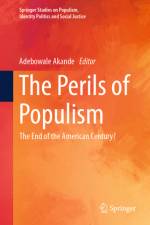
In today's evolving democratic landscape, "The Perils of Populism: The End of the American Century" offers an extensive investigation into the phenomenon of populism and its potential threats to U.S. democracy. Esteemed contributors and long-time populism observers provide historical and analytical insights, delving into the personalization of political conflicts, the cultivation of populist politics, and the propensity for insults and violence within the realm of American politics.This thought-provoking volume presents a comprehensive analysis of the American system of government and presidency, shedding light on the influence of tribalism, cronyism, nepotism, and the utilization of masculinist identity politics. Through illuminating examples and incisive narratives, the book explores key principles, highlights the complexities of the American political landscape, and offers constructive recommendations to address the challenges posed by plutocratic or authoritarian populism. The book serves as an invaluable resource for researchers, scholars, and practitioners worldwide, transcending geographical boundaries. It uncovers the interplay between populist forces and anti-democratic tendencies, providing a deeper understanding of the current state of democracy and the urgent need for political reforms. In an era marked by deep divisions and racial tensions, this book provides an essential framework for comprehending the complex dynamics at play within the American political sphere.
Abonner på vårt nyhetsbrev og få rabatter og inspirasjon til din neste leseopplevelse.
Ved å abonnere godtar du vår personvernerklæring.