



Gjør som tusenvis av andre bokelskere
Abonner på vårt nyhetsbrev og få rabatter og inspirasjon til din neste leseopplevelse.
Ved å abonnere godtar du vår personvernerklæring.Du kan når som helst melde deg av våre nyhetsbrev.

Deep reinforcement learning (DRL) is the combination of reinforcement learning (RL) and deep learning. It has been able to solve a wide range of complex decision-making tasks that were previously out of reach for a machine, and famously contributed to the success of AlphaGo. Furthermore, it opens up numerous new applications in domains such as healthcare, robotics, smart grids and finance. Divided into three main parts, this book provides a comprehensive and self-contained introduction to DRL. The first part introduces the foundations of deep learning, reinforcement learning (RL) and widely used deep RL methods and discusses their implementation. The second part covers selected DRL research topics, which are useful for those wanting to specialize in DRL research. To help readers gain a deep understanding of DRL and quickly apply the techniques in practice, the third part presents mass applications, such as the intelligent transportation system and learning to run, with detailedexplanations. The book is intended for computer science students, both undergraduate and postgraduate, who would like to learn DRL from scratch, practice its implementation, and explore the research topics. It also appeals to engineers and practitioners who do not have strong machine learning background, but want to quickly understand how DRL works and use the techniques in their applications.
Deep reinforcement learning (DRL) is the combination of reinforcement learning (RL) and deep learning. It has been able to solve a wide range of complex decision-making tasks that were previously out of reach for a machine, and famously contributed to the success of AlphaGo. Furthermore, it opens up numerous new applications in domains such as healthcare, robotics, smart grids and finance. Divided into three main parts, this book provides a comprehensive and self-contained introduction to DRL. The first part introduces the foundations of deep learning, reinforcement learning (RL) and widely used deep RL methods and discusses their implementation. The second part covers selected DRL research topics, which are useful for those wanting to specialize in DRL research. To help readers gain a deep understanding of DRL and quickly apply the techniques in practice, the third part presents mass applications, such as the intelligent transportation system and learning to run, with detailed explanations. The book is intended for computer science students, both undergraduate and postgraduate, who would like to learn DRL from scratch, practice its implementation, and explore the research topics. It also appeals to engineers and practitioners who do not have strong machine learning background, but want to quickly understand how DRL works and use the techniques in their applications.
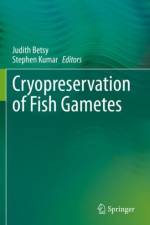
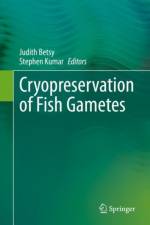
Understanding the reproductive physiology and endocrinology of fishes is essential for captive maturation and seed production in the field of aquaculture. Studying the spermatology of fishes is a comparatively new focus in aquaculture, which has emerged as an important area of fish research over the past two decades. In this regard, the cryopreservation of fish gametes is a crucial aspect. Moreover, energetics studies of gametes have become essential, considering the loss of vigour in the spermatozoa after cryopreservation.The latest development in this context is the cryopreservation of spermatogonial stem cell, which is also covered in the book, along with detailed information on embryo cryopreservation in fishes and crustaceans. The role of cryopreservation in conservation programmes is another important aspect, one that will especially interest biologists.This book addresses central issues in fish gamete cryopreservation and breeding, while also reviewingthe history of cryopreservation. Its most unique feature is the breadth of its coverage, from basic information on reproduction in fishes, to such advanced topics as embryo cryopreservation. Chiefly intended as a handy troubleshooting guide, the book represents a valuable resource for research students in related fields.
Understanding the reproductive physiology and endocrinology of fishes is essential for captive maturation and seed production in the field of aquaculture. Studying the spermatology of fishes is a comparatively new focus in aquaculture, which has emerged as an important area of fish research over the past two decades. In this regard, the cryopreservation of fish gametes is a crucial aspect. Moreover, energetics studies of gametes have become essential, considering the loss of vigour in the spermatozoa after cryopreservation.The latest development in this context is the cryopreservation of spermatogonial stem cell, which is also covered in the book, along with detailed information on embryo cryopreservation in fishes and crustaceans. The role of cryopreservation in conservation programmes is another important aspect, one that will especially interest biologists.This book addresses central issues in fish gamete cryopreservation and breeding, while also reviewing the history of cryopreservation. Its most unique feature is the breadth of its coverage, from basic information on reproduction in fishes, to such advanced topics as embryo cryopreservation. Chiefly intended as a handy troubleshooting guide, the book represents a valuable resource for research students in related fields.
This book discusses and analyzes past and ongoing national urban policy development efforts from around the globe, particularly those that can lead the way toward smart and green cities. In view of the adoption of the UN¿s 2030 Agenda for Sustainable Development, especially the goal to have cities that are inclusive, safe, resilient and sustainable, urban policies that can help achieve this goal are urgently needed. The UN-Habitat (HABITAT III) puts national urban policies at the heart of implementing and rethinking the urban agenda, and identifies them as being integral to the equitable and sustainable development of nations. Against this background, this important book, which gathers contributions from academics, planners and urban specialists, reviews existing urban policies from developing and developed nations, discusses various countries¿ smart and green urban policies, and outlines the way forward. As such, it is essential reading for all social scientists, planners, designers,architects, and policymakers working on urban development around the world.
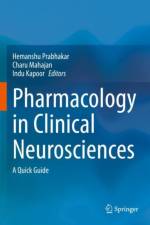
The pharmacodynamics and pharmacokinetics of several drugs is expected to be known to clinicians and researchers at all times. With advances in sciences and development of newer drugs very frequently, it is very important to keep your knowledge updated at all times. This title is a quick guide to researchers and clinicians for a quick reference. The title is also a vital resource for all streams of neurosciences (neuroanesthesia and neurointensive care) and is much different from a conventional pharmacology titles, being more reader friendly and to the point facilitated with numerous flowcharts and algorithms with each chapter being prepared in a standard structured manner.
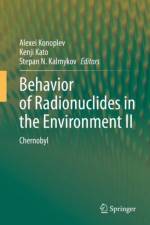
This is Volume II in a three-volume set on the Behavior of Radionuclides in the Environment, focusing on Chernobyl. Now, so many years after the Chernobyl accident, new data is emerging and important new findings are being made. The book reviews major research achievements concerning the behavior of Chernobyl-derived radionuclides, including their air transport and resuspension, mobility and bioavailability in the soil-water environment, vertical and lateral migration in soils and sediments, soil-to-plant and soil-to-animal transfer, and water-to-aqueous biota transfer. The long-term dynamics of radionuclides in aquatic ecosystems are also discussed, in particular, the heavily contaminated cooling pond of the Chernobyl Nuclear Power Plant, which is in the process of being decommissioned.Lessons learned from long-term research on the environmental behavior of radionuclides can help us understand the pathways of environmental contamination, which, in turn, will allow us to improve methods for modeling and predicting the long-term effects of pollution.This book features a wealth of original data and findings, many of which have never been published before, or were not available internationally. The contributing authors are experts from Ukraine, Russia and Belarus with more than 30 years of experience investigating Chernobyl-derived radionuclides in the environment.The content presented here can help to predict the evolution of environmental contamination following a nuclear accident, and specifically the Fukushima Dai-ichi nuclear power plant accident.
Abonner på vårt nyhetsbrev og få rabatter og inspirasjon til din neste leseopplevelse.
Ved å abonnere godtar du vår personvernerklæring.