

Gjør som tusenvis av andre bokelskere
Abonner på vårt nyhetsbrev og få rabatter og inspirasjon til din neste leseopplevelse.
Ved å abonnere godtar du vår personvernerklæring.Du kan når som helst melde deg av våre nyhetsbrev.

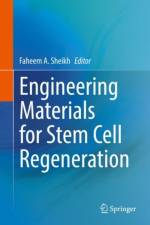
This book reviews the interface of stem cell biology and biomaterials for regenerative medicine. It presents the applications of biomaterials to support stem cell growth and regeneration. The book discusses the stem cell interactions¿ with nanofiber, gradient biomaterial, polymer- and ceramic biomaterials, integrating top-down and bottom-up approaches, adhesive properties of stem cells on materials, cell-laden hydrogels, micro-and nanospheres, de-cellularization techniques, and use of porous scaffolds. Further, this book provides a basic introduction to the fabrication techniques for creating various biomaterials that can be used for stem cell differentiation. It also elucidates the properties of stem cells, their characteristic features, tissue culture technology, properties of pluripotency, osteogenesis, and biomaterial interaction with de-cellularized organs, cell lineage in vivo and in vitro, gene expression, embryonic development, and cell differentiation.Further, the book reviews the latest applications of bio-instructive scaffold for supporting stem cell differentiation and tissue regeneration. The book also presents stem cell for dental, alveolar bone and cardiac regeneration. Lastly, it introduces engineered stem cells for delivering small molecule therapeutics and their potential biomedical applications.
This book features extended versions of selected papers that were presented and discussed at the 8th International Doctoral Symposium on Applied Computation and Security Systems (ACSS 2021), held in Kolkata, India, on April 9¿10, 2021. Organized by the Departments of Computer Science & Engineering and A. K. Choudhury School of Information Technology at the University of Calcutta, the symposium¿s international partners were Ca' Foscari University of Venice, Italy, and Bialystok University of Technology, Poland. The topics covered include biometrics, image processing, pattern recognition, algorithms, cloud computing, wireless sensor networks, and security systems, reflecting the various symposium sessions.
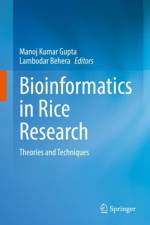
This book summarizes the advanced computational methods for mapping high-density linkages and quantitative trait loci in the rice genome. It also discusses the tools for analyzing metabolomics, identifying complex polyploidy genomes, and decoding the extrachromosomal genome in rice.Further, the book highlights the application of CRISPR-Cas technology and methods for understanding the evolutionary development and the de novo evolution of genes in rice.Lastly, it discusses the role of artificial intelligence and machine learning in rice research and computational tools to analyze plant-pathogen co-evolution in rice crops.
This book provides an up-to-date review of classic and advanced bioinformatics approaches and their utility in rice research. It summarizes databases and tools for analyzing DNA, proteins and gene expression profiles, mapping genetic variations, annotation of protein and RNA molecules, phylogenetic analysis, and pathway enrichment.In addition, it presents high-throughput technologies that are widely used to provide deep insights into the genetic architecture of important traits in the rice genome. The book subsequently discusses techniques for identifying RNA-protein, DNA-protein interactions, and molecular markers, including SNP and microsatellites, in the contexts of rice breeding and genetics.Lastly, it explores various tools that are used to identify and characterize non-coding RNA in rice and their potential role in rice research.
This book presents state-of-the-art technologies, trends and applications with a focus on the healthcare domain for ultra-wideband (3.1¿10.6 GHz) and 60 GHz (57¿66 GHz) wireless communication systems. Due to various key features such as miniaturized antenna design, low power, high data rate, less effects on the human body, relatively less crowded spectrum, these technologies are becoming popular in various fields of biomedical applications and day-to-day life. The book highlights various aspects of these technologies related to body-centric communication, including antenna design requirements, channel modeling and characterization for WBANs, current fabrication and antenna design strategies for textile, flexible and implanted antennas. Apart from the general requirements and study related to these frequency bands, various application specific topics such as localization and tracking, physical activity recognition and assessment, vital sign monitoring and medical imaging are covered indetail. The book concludes with the glimpses of future aspects of the UWB and 60 GHz technology which includes IoT for healthcare and smart living, novel antenna materials and application of machine learning algorithms for overall performance enhancement.
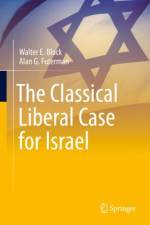
This book offers a unique perspective on the State of Israel based on classical liberalism, both on a historical and theoretical level. Specifically, it makes a classical liberal and libertarian analysis based upon homesteading and private property rights to defend the State of Israel. As such, this work explores the history of the Jewish State, both to provide a positive case for its right to exist, and to clarify the myths surrounding its origin and development. At the same time, it deals with other relevant related subjects, such as the complex situation between Israel and the Palestinian Arabs, the military campaigns against the Jewish State, the connection between anti-Zionism and anti-Semitism, and Israel¿s economic miracle. The thorough analysis presented in this work intends to show not only why the voices and movements against Israel are wrong (including the Boycott, Divestment and Sanctions movement, BDS), but more importantly, why Israel is an example of human flourishing and freedom that every advocate for liberty should celebrate. The Classical Liberal Case for Israel makes the practical and moral case for Israel. It is based on truths and facts that need to be repeated over and over. Block & Futerman understand that the only way to defeat a big lie is with a big truth. Benjamin Netanyahu, Prime Minister of the State of Israel, Jerusalem, Israel Classical Liberalism, often associated with the spread West from Northern Europe in creating free nations, is argued here as applying to Israel, with ancient roots in the principles of human freedom. Vernon L. Smith, Ph.D. Nobel Prize in Economic Sciences (2002), and Professor, George L. Argyros Endowed Chair in Finance and Economics, Professor of Economics and Law, Smith Institute for Political Economy and Philosophy, at Chapman University.
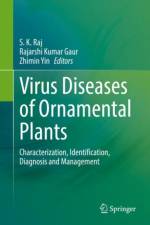
This edited book elucidates the evolution of plant virus, genomic structure, diversity, plant-virus interaction, subcellular movement etc. The book reviews the biological machineries which allow the emergence of virus populations adapted by plant. The main objective of this book is the demonstration of a clear synergistic effect of plant viruses, an effect that was unexpectedly as important as applied alone.Ornamental plants are very popular and economically important worldwide. The international market of ornamentals is constantly expanding. Viruses and viroids can significantly reduce both decorative value and quality of propagated material of ornamentals. Due to the wide range of ornamental plant species and cultivars and their wide geographical distribution, the diversity of viruses that infect them is also high. The new emerging viruses are the causal agent for the economic loss of many important ornamental plants. Therefore, this book also adds value to current knowledge of virus stress response in ornamental plants and will provide the groundwork necessary for building future strategies for product enhancement. This book is of interest to teachers, researchers, capacity builders and policymakers. It can serve as additional reading material for undergraduate and graduate students of virology, agriculture and plant sciences.
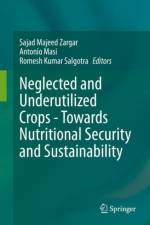
This book covers important topics on various neglected and underutilised crops (vegetables, cereals, fruit crops). It gives an overview of the potential, availability of genetic and genomic resources, and the future prospects of these food crops. The book presents different chapters on the importance of underutilised crops with respect to sustainable agriculture and describes the approaches that must be followed for improving the yield and production of these crops. It covers a wide range of food crops such as millet, buckwheat, underutilised spices, underutilised vegetables and underutilised fruit crops. It also provides insights on what smart foods are? And, whether these neglected crops qualify as smart foods?This up-to-date and informative book is meant for food scientists, geneticists, breeders and biotechnologists. It is of interest to students, researchers and course instructors in these fields.
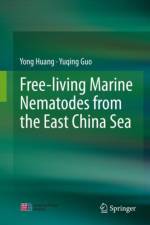
This book describes and illustrates 300 species of free-living marine nematodes from the East China Sea and includes eighteen new species. Free-living marine nematode is the most dominant and diverse meiofaunal group in marine benthic habitats. It has strong adaptability and wide distribution, and plays a very important role in the material circulation and energy flow of benthic ecosystem. Up to now, about 7,000 species of free-living marine forms (attached to 2 Class, 8 Order, 86 Family, 662 genera) have been recorded around the world. Some 500 species have so far been reported from the sea areas of China. Among them, more than 300 species were identified from the East China Sea. The book will provide basic data and information of free-living marine nematodes for ecosystem management, protection and utilization of marine biological resources in the East China Sea.
This book gathers selected high-impact articles from the 2nd International Conference on Data Science, Machine Learning & Applications 2020. It highlights the latest developments in the areas of artificial intelligence, machine learning, soft computing, human¿computer interaction and various data science and machine learning applications. It brings together scientists and researchers from different universities and industries around the world to showcase a broad range of perspectives, practices and technical expertise.
¿This book examines the impacts of radionuclides released from the 2011 Fukushima Daiichi Nuclear Power Plant (FDNPP) accident on inland aquatic environments. The focus is on the dynamics of radiocesium in inland aquatic environments.The book comprises three parts: migration behavior of radiocesium in river and lake environment, accumulation of radiocesium into organisms in freshwater, and integrated environmental analysis in a lake system and a forest-freshwater system. Many studies on the dynamics of radionuclides have been published after the FDNPP accident, especially of radiocesium (134Cs 137Cs) in land and marine environment. The key features of this book are the new data of freshwater environment including transport of radionuclides in river and lake watershed, and accumulation of radiocesium in freshwater fishes and insects. Another feature of this book is that it summarizes the dataset of a model lake, Lake Akagi-Onuma, from geochemical and biological approaches.Readers will learn the actual dispersion behavior of radionuclides released from the Fukushima accident and their impacts on freshwater environments since the accident in 2011. The book presents valuable information for assessing the impacts of the FDNPP accident on ecosystem and human health, which are also useful in developing countermeasures for similar accidents and environmental contaminations.
Abonner på vårt nyhetsbrev og få rabatter og inspirasjon til din neste leseopplevelse.
Ved å abonnere godtar du vår personvernerklæring.