














Gjør som tusenvis av andre bokelskere
Abonner på vårt nyhetsbrev og få rabatter og inspirasjon til din neste leseopplevelse.
Ved å abonnere godtar du vår personvernerklæring.Du kan når som helst melde deg av våre nyhetsbrev.

This book focuses on historical and current data to examine racism in Australia. Employing innovative analytical methods, the book provides students and researchers with a current and up-to-date analytical framework, and benchmark empirical evidence on race relations.
This book shows the push and pull effects between resources, human security and conflicts in Africa. It recognizes the need for resources in Africa to be processed into finished goods in order to influence global market and redefine the pattern of trade relations with powerful countries of Asia, America and Europe in shaping the destiny and future of African countries. The achievement of this laudable objective is plagued by the security challenges which are directly or indirectly linked to resource-related conflicts rocking most of the resource endowed countries in the continent, thereby threatening global peace and security. To deal with this menace in the continent, it requires global co-operation and support of foreign governments, international organizations, international non-government organizations, governments of host countries and its citizens.The book presents the cases and experiences of countries that are endowed with resource, as well as have experienced different forms of human insecurity and have witnessed environmental conflicts in its analysis, which make the discourse interesting and quite educating.
This book provides evidence as to how human resources management practices influence the knowledge management processes and the influence of knowledge management processes on innovation in higher educational institutes.The book suggests means to reinforce the human resource management practices and knowledge management processes in encouraging the innovativeness in Higher Education. The knowledge management-based innovation model developed which can be directly applied in the higher educational institutes.
The book argues that an increasing corporatisation of agriculture in India that is enabled by its neoliberal State, in the name of ¿development¿, is contributing towards deepening of inequality in the rural India.It says that Contract Farming (CF) acts as a conduit that enables the coming together of myriad production relations (mercantile, finance, productive) to sell agri-commodities to the capitalist peasant. It is an accumulation strategy that brings together various factions of domestic and foreign capital together. It shows that CF as an accumulation strategy is enabled by an active interventionist state and this neoliberal Indian state mediates the relation between the agri-capital and Indian peasantry. The book further analyzes contract farming as a part of the totality of the capitalist mode of production in context of developing countries with a large agrarian base--- asking three fundamental questions ¿ what is CF, how and why is it done and what are the implications of it.
This book analyses why is it that the different actors, namely the GoB, the Hill people and the international community, hold different views about the CHT Peace Agreement and the question of its implementation. The author scrutinizes the underlying facts regarding the implementation politics (or interest) of the CHT Peace Agreement.
This book provides an overview of preventing and countering violent extremism (P/CVE) to assist readers in developing a more complete understanding of P/CVE and the issues of radicalisation, disengagement and rehabilitation.
In his critical study of Australian imperialism, Erik Paul analyses the making, character and contours of the geopolitical state from the time of the British invasion and colonisation to the present, expanding the country's continental political and economic power.
This book examines the experiences of migrant peasant workers in China who care for parents diagnosed with cancer and explores to what extent contextual changes after the economic reform initiated in 1978 affected practices and experiences of caring.
This book looks at how young people get attracted to the Far Right, especially young white men. Second, supporting the Far Right is a decision often made by digitally-networked 15-25 year olds looking for answers and wanting to express their anger.
This book explores for the first time the world of micro-finance, Chinese startups, and the digitalization of the Chinese economy. Through the cases such as the Ant Financial Services Group, CFPA Microfinance, micro-financial projects of China Minsheng Bank, Meixing in Nanchong, and more, this book introduces the practical exploration in the recent years from the perspectives of microfinance, financing of small and medium sized enterprises, digital inclusive finance, and credit.From the perspective of management, it especially integrates an enterprise¿s task, vision, and value into the design of organization process, deeply explores how to realized the double bottom lines of social and financial performances, manifests how microfinance¿s marginal cost is reduced by digital finance such as data, internet, cloud computing, artificial intelligence and the advantages of digital finance in providing convenient, low-cost, and touchable service, and discusses its huge technological bonus to small-amount, decentralized, and large-quantity microfinance. This book will be of value to journalists, economists and researchers.
This book illustrates the importance effective cost management systems inproviding a supportive environment in which reliable and relevant managementinformation can be generated.
This study focuses on Empires, from an economic historical perspective. In doing so, it relates current debates in international relations (IR) and politics to the vexed legacy of empires in the past.The book includes analyses of the comparative scholarly literature on Empire in Antiquity, and Empire in the Early Modern and Modern Ages, asking the question if the United Sates is an Empire, and if China an emerging Empire.It contributes to the field given its interdisciplinarity, bringing together both historical and IR insights into world systems in times past. In addition it draws out four key points of separateness between pre-modern and modern empires, and emphases specific economic data. Further to that, the book advances the notion of the emergence of ¿empires from within¿ in the 21st century, that is nation-states becoming more multi-ethnic while often stepping back from globalization. And finally it offers future scenarios for the evolution of empires in a Schumpeterian post-industrial world.
This volume explores the complex interrelation between risk, identity and conflictand focuses specifically on ethnicity, culture, religion and gender as modes ofidentity that are often associated with conflict in the contemporary world.
This book addresses how Covid-19 has damaged businesses and how businesses can adapt to the new normal. In doing so, the book contributes to theories associated with the marketing management, by assessing opportunities and challenges associated with the implementation of technology and marketing management during and post Covid-19.Although there is increasing research in consumer or business management acceptance of new technologies and digital marketing, the impact of these on marketing management during the Covid-19 are not adequately investigated, leading to overstated hypothetical predictions of its future potential. Chapters in the book therefore focus on new economic models such as sharing economy and business structures such as omnichannel, where advancements have enabled firms to build a one-on-one relationship with customers by collecting, storing, aggregating and analysing customer information across various touchpoints. Contributions in the book also focus on new technologies such as blockchain, automation solution, information technology management, and customer relationship management (CRM) in highlighting connections between these new technologies and marketing management.The book will be useful for anyone aiming to gain a better understanding of the current and future technologies that may play a role or have a robust impact on marketing management during Covid-19.
The book refutes the dominant understanding about caste panchayats as mere dispute resolution bodies that are vestiges of the past. In tracing the long career and evolution of intra-caste governance from 300 BC to the present, it challenges several orthodoxies in the caste scholarship. Most prominently, it questions the assumptions of modernization theory that became internalized in the very definition of caste-based political organisations as caste became a subject of study in politics in the 1960s and 70s. In doing this, the book reflects in some detail on the uncomfortable question of the persistence of caste-based conservatism despite the current dominance, so to say, of caste-based democratization in the Indian polity. It tries to make visible the limitations of ¿caste politics from below¿, as it is being imagined today, making a plea for a radical re-imagination of caste as an identity that does not require a self-perpetuation of the primordial aspects of caste to pursethe opportunities offered by modern democracy, but one that can facilitate the empowerment of caste through the pursuit of the ameliorations on offer as well as the annihilation of caste, as eventually mutual goals.
This book provides an insightful overview of the social-economical trends in modern China, their global influence, and the disrupting consequences for businesses and countries all over the world.
This book brings together three recent talks given by John Dunn in China: two full lectures, and one shorter talk followed by the transcription of an extended Q&A session with some eminent Chinese political philosophers and historians of political thought.
The book discusses the issue of autonomy in Indiäs federal system and its precision and focused nature. It inquires into the various aspects of the problem autonomy of the states and its emerging trends with special reference of Jammu and Kashmir State autonomy.The book addresses many controversial unanswered question like ¿ Should India adopt and opt for ¿dual¿ or ¿competitive¿ model of federalism, which has long since been discarded even in the land of its origin or should we evolve robust indigenous solutions to our problem of autonomy of States? To change the metaphor, do we choose a ¿regression model¿ or a ¿development model¿ of our federal polity? All these discussions which deserve sustained citizen interest and national debate, have been answered in the present book.
This Handbook represents an unprecedented exploration of the positive peace platform. It permits a comprehensive appreciation of the breadth of positive peace that engages with nonviolence, environmental sustainability, social justice and positive relationships scholarship.The work serves as a one-stop shop for scholar/practitioners interested in locating their inquiry and outputs in the field of positive peace and provides readers from a multitude of disciplines and academic departments with a comprehensive overview of the multiplicity of positive peace research in one location. In doing so, the Handbook of Positive Peace securely demarcates and recognizes the positive peace platform in social scientific and humanities academic disciplines.
Particularly related to these 'softer' disciplines, we make some unexplored yet topical contributions to the literature, with a focus on the GCC (but by no means limited to it), including AI and implications for women, Islamic schools of thought on AI, and the power of AI to help deliver wellbeing and happiness in cities and urban spaces.
This book brings together a set of incisive essays that interrogate Malaysian history and social relations which began during pre-colonial times, and extended to colonial and post-colonial Malaysia.
This project offers a comprehensive look at aging policies across East Asia, where a demographic dividend fuelled rapid growth and is now aging into a lower-speed economy.
This book provides a comprehensive assessment of the various dimensions of the relationship between the European Union and the Gulf Cooperation Council, and highlights how relations are yet to reach their full potential.
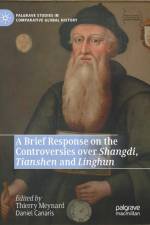
This book represents the first critical edition and scholarly annotated translation of a pioneering report on the predicament of cross-cultural understanding at the dawn of globalization, titled ¿A Brief Response on the Controversies over Shangdi, Tianshen and Linghun¿ (¿Resposta breve sobre as Controversias do Xámtý, Tien Xîn, Lîm hoên¿), which was written in China by the Sicilian Jesuit missionary Niccolò Longobardo (1565¿1654) in the 1620s and profoundly influenced Enlightenment understandings of Asian philosophy. The book restores the focus on Longobardös own intellectual concerns, while also reproducing and analyzing all the Chinese-language annotations on the previously unpublished Portuguese and Latin manuscripts. Moreover, it meticulously modernizes all romanizations with standard Hanyu pinyin and identifies, on the basis of archival research, most of Longobardös Chinese interlocutors, thus providing new insights into how the Jesuits networked with Chinese scholars in the late Ming. In this way, it opens up this seminal text to Sinologists and global historians exploring Europe¿s first intellectual exchanges with China. In addition, the book presents four introductory essays, written by the editors and two prominent scholars on the Jesuit China mission. These essays comprehensively reconstruct the historical and intellectual context of Longobardös report, stressing that it cannot be viewed purely as a product of Sino-European cultural exchange, but also as an outgrowth of both exegetic debates within Europe and of European experiences across Asia, especially in Japan. Hence this critical edition will greatly contribute to a more globalized view of the Jesuit China mission.
Introduction: Corruption, Empire and Colonialism in the Modern Era: Towards a Global Perspective.- PART I. Corruption and Narratives of Imperial Decline and Reform during the Age of Revolutions, c. 1800.- Reflections of an Early-Modern Historian on the Modern History of Corruption and Empire.- Corruption, Empire and State-Building: An Entangled History of the British and French "Imperial Nation States" and Hyderabad, c.1760 to 1800.- The East India Company and the Regulation of Corruption in Early-Nineteenth-Century India.- Corrupt and Rapacious: Colonial Spanish-American past through the Eyes of Early-Nineteenth-Century Contemporaries. A Contribution from the History of Emotions.- Bribery in Baroda: The Politics of Corruption in Nineteenth-Century India.- PART II. Civilizing Missions and "Oriental" Corruption during the Age of Modern Imperialism, c. 1900.- Colonial Normativity? Corruption in the Dutch-Indonesian Relationship in the Nineteenth and Early-Twentieth Centuries.- Land, State and Favour in Colonial Algeria. Why the Bruat Case (1877) did not become a Scandal.- "There''s nothing like having good influence in Madrid!". Fraud and Immorality in Cuba, the "Pearl of the Antilles".- "Putting an end to the Slander that Stains Everything". Víctor Balaguer and Anticorruption Strategies in Late-Nineteenth-Century Cuba.- Paperwork as Commodity, Corruption as Accumulation. Land Records and Licences in Colonial Myanmar, c.1900.- The Entrenchment of Corruption in a Colonial Context: the Case of the Philippines c.1900.- Conclusions: Colonial and Corruption History: Future Research Perspectives.
Introduction: Constructing and Negotiating Chineseness in the Age of Globalisation.- Yellow Peril or Yellow Revival? Ethnicity, Race and Nation in Late Qing Chinese Utopianism (1902-1911).- Shaolin, Wuxia Novels, Kung Fu Movies and National Identity.- Social Network Service Platforms and China''s Cyber Nationalism in the Web 2.0 Age.- Fostered Idols and Chinese Identity.- Chinese National Identity and National Image in the Age of Globalisation.- A New Chinese National Identity: The Role of Nationalism in Chinese Foreign Policy.- Identity Narratives in China and the EU''s Economic Diplomacy - Comparing the BRI and the EU Connectivity Strategy for Asia.- Nationhood and Ethnicity at the Frontiers: A Study of Hmong Identity in Western Hunan.- ''The People are God'' Third World Internationalism and Chinese Muslims in the Making of the National Identity in the 1950s.- From ''Small'' to ''Big'' Nationalism: National Identity among China''s Hui Minority in the Twenty-First Century.- The Complexity of Nationalism and National Identity in Twenty-First Century Xinjiang.- Leveraging Mega-events to Embrace Chinese National Identity: The Politics of Hong Kong''s Participation in the Beijing 2008 Olympics and the Shanghai 2010 World Expo.- The Evolution and Recognition of Self-identity in Food and Foodways of the Overseas Chinese.- Temples and Huiguan: Negotiating Chineseness in Ho Chi Minh City.- National identity, Religious Identity and Their Impacts on Subjective Well-being - A Case Study on Chinese Catholics in Ireland.- Identity Reconstruction of Chinese Migrant Women in Ireland.
Disasters in Australia and New Zealand brings together a collection of essays on the history of disasters in both countries. Rich in oral history and archival research, Disasters in Australia and New Zealand offers practical and illuminating insights that will appeal to historians and disaster scholars across multiple disciplines.
This book celebrates and captures examples of the excellent scholarship that Palgrave's Health, Technology, and Society Series has published since 2006, and reflects on how the field has developed over this time.
Abonner på vårt nyhetsbrev og få rabatter og inspirasjon til din neste leseopplevelse.
Ved å abonnere godtar du vår personvernerklæring.