






Gjør som tusenvis av andre bokelskere
Abonner på vårt nyhetsbrev og få rabatter og inspirasjon til din neste leseopplevelse.
Ved å abonnere godtar du vår personvernerklæring.Du kan når som helst melde deg av våre nyhetsbrev.

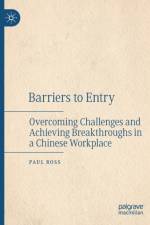
This book offers a unique perspective on the challenges that non-Chinese employed by Chinese companies face and provides insight into the issues foreign employees working for Chinese management encounter.
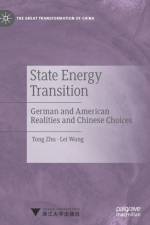
This book places a current topic-energy transition-within the historical background of human social development and explores the value and significance of energy transition for economic transition in the course of economic growth.
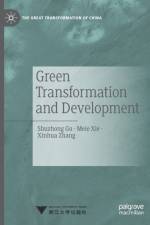
This book offers an insiders' view into Chinese plans for a green transformation of the economy of China. Analyzing the pressures, drive, and resistance to this green transformation in China, the book explores the key fields, from green finance and green banking to green consumption and green urbanization.
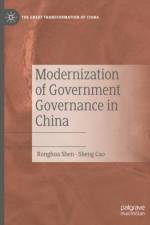
This book provides an all-round analysis and exploration of the course, status quo and future of the Chinese Government's governance reform under the framework of government governance modernization.
Dr Faruk Shah offers an anthropological critique of biomedicine in rural Bangladesh that explains how the existing social inequalities and disparities in healthcare are intensified by the practices undertaken in biomedical health centres through the healthcare bureaucracy and local gendered politics.
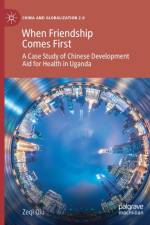
This inspiring book looks at the theory and practice of China's foreign aid in Africa, especially in the area of healthcare in Uganda.
This book provides an in-depth investigation of two Japanese men's magazines, ChokiChoki and Men's egg, analysed as representative examples of the genre of Japanese lifestyle magazines for young men.
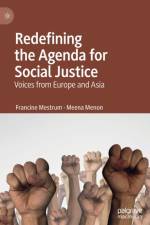
The book relates three years of history of social movements from Asia and Europe who work on social justice, as a rough overview.
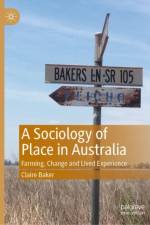
This book weaves a social, economic and cultural history of Australia with rare first-hand accounts of the lived experience of change related to farming and agriculture.
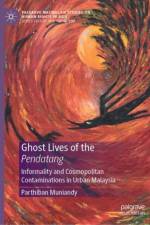
This book is an ethnographic study of migrants, refugees and ¿temporary¿ people in Malaysia, incorporating narratives, personal stories, and observations of everyday life in Kuala Lumpur and Georgetown, Penang. Rather than focusing on specific migrant communities or refugee ¿camps¿, the book takes subaltern cosmopolitanism as its central lens to look at how different and diverse communities of non-citizen ¿pendatang¿ (aliens) co-habit, work and live together in Malaysia. Urban centers in Malaysia offer the space for informality that allow stateless and undocumented people to seek out opportunities, while also finding ways to assimilate or even ¿disappear¿ into the fabric of society. The book focuses on the notion of ¿contaminations¿, rather than migration or migrants, to underscore one of the most important findings of the ethnographic study ¿ that migrant life in Malaysia is critically integral, embedded and interwoven into the everyday life in the city - shaping and affecting all aspects of daily life from production and supply chains, food service networks, cultural and religious practices, waste and recycling work, to more intimate and private contexts such as romantic relationships, family life and sex-work. Hybridity, inter-mixing and bastardization are part and parcel of everyday urbanism in KL and Penang ¿ these ¿contaminating elements¿ challenge and disrupt categories of the ¿national¿ and categories such as insider/outsider, national purity, and politically constructed divisions between ethnic and racial groups. The book thus relies upon detailed ethnographic narratives curated over a decade of study, offering students interested in fieldwork research insights into the types of engagements and commitments necessary for helping build the complex, uneasy and destabilizing knowledge that characterizes critical ethnography.
This book weaves together disparate worlds of crafting, social justice, and digital technologies around The Partnership Quilt. It crafts a manifesto for meaningful action and design processes in charitable organizations through participatory sewing and its digital augmentation. The book charts a history of how sewing has been used to voice concerns of oppression, and how digital technologies can be embedded into textiles to tell stories more powerfully. It explores the relationship between quilting and research, looking beyond the seams of The Partnership Quilt to shed light on the importance of invisible work behind such participatory, justice-oriented design projects. It concludes with a discussion of the impacts and potential future avenues for research on digitally quilting social justice."This book is an excellent offering that highlights ways in which visual approaches to research and community work can serve as a canvas for the outpouring of oppression, anger, hope, resilience and reimagining of a socially just future. It is a great gift and valuable resource for academics, activists and students interested in social justice, participatory action research, and digital technologies."-Puleng Segalo, Professor, University of South Africa, SA "This expansive undertaking exhibits Strohmayer's force as a thinker, author, and partner in design. From the soldering of electrodes through the review on craft-based activism, Strohmayer generously takes us through a design process from start to finish to examines the relationships that shift along the way. She shows us how worlds of textiles partake in the making of collective futures-nurturing forms of connection as a means of creative expression, self-determination, and remembrance." -Daniela Rosner, Associate Professor, Human Centered Design & Engineering, University of Washington, USA "This book is a highlight for the courageous minds to break the circle and re-think artistic practices as a more justice-oriented, connected and collaborative mechanisms for our futures. You will have a journey to face who and what forms of designs were privileged or silenced in the global history of quilting. You will be inspired and provoked by the making of the Partnership Quilt. The quilt piece is the materialized example that embodies the many ways of touchy-feely conversations and the possibilities to weave, stitch -or this time to quilt new worlds together. This book is about the making of artistic hope. It is about what is possible, once we see the beauty of equity instead of privileges in design."-Özge Subasi, Futurewell, Assistant Professor, Department of Media and Visual Arts, Koç University, Turkey "The Partnership Quilt is a powerful example of the transformative power of craftivism. In this book Dr Angelika Strohmayer pragmatically illustrates how carefully considered participatory craft based projects empower those involved, value-add to the important work being done by NGO's and provide researchers with a methodology that supports and promotes social justice outcomes."-Dr Tal Fitzpatrick, Artist, Craftivist and Disability Support Worker, Naarm (Melbourne), Australia ''The Partnership Quilt, as a model of participatory textile making, draws together relational expertise from the distinct worlds of communication technologies, crafting and ecologies of care. With a focus on collaboration, Strohmayer experiments with the quilt as a metaphor for a layered, interdisciplinary research process as well as a material expression of carefully crafted relationships between makers, researchers, charitable organisations and a marginalised group of sex workers. This richly detailed and insightful book is a timely addition to a growing literature around participatory textile making advocating for interdisciplinary practices that address the care and maintenance of people's lived experiences.''-Dr Emma Shercliff, Arts University Bournemouth, UK
Why politics and international relations "seem" to be driven by power/strategies in some conditions but "seem" to be attached to values/beliefs in other situations?
This book examines Electronic Dance Music (EDM) scenes in 18 cities across Africa, the Middle East, Europe, Asia, North America and Australia.
The book presents a comprehensive and incisive analysis of Structural transformation which is among the most relevant and crucial themes of contemporary economics.
This book provides a focus on some of the main markers and challenges that are at the core of the study of structural transformations in contemporary capitalism and their implications for labour in the Global South.
This book examines the economic, political and security interests of India, Europe and the European Union towards Asia. It evaluates Indian and European/EU policy towards West Asia, the Iran Imbroglio, the Indo-Pacific and South Asia (Afghanistan, Myanmar and Kashmir).
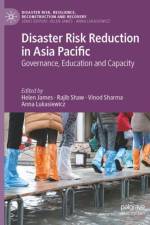
This book is a joint endeavour of the three partner universities to develop a book with in-depth and state-of-art analysis for the academic community of East Asia and the world. Past disasters, like the 2008 Great Sichuan Earthquake in China and the 2011 Great East Japan Earthquake, saw good efforts of East Asian countries in helping each other.
In alignment with Indigenous Politics, an emerging sub-field of Politics and IR, this book considers West Papuan Indigenous nationhood. Combining Settler Colonial Studies and Critical Indigenous Theory, the research opens up sovereignty as a political category of analysis to reveal an embedded nation within Indonesia.In June 2000 the Second Papuan People¿s Congress in Jayapura rejected the basis on which West Papua had been incorporated into Indonesia and resolved that the ¿people of Papua have been sovereign as a nation and a state since 1 December 1962¿. Indonesian president Wahid firmly opposed this resolution and state officials posted historical narratives on the Australian Embassy website that legitimated Indonesiäs incorporation of the once non-self-governing territory.A mapping and analysis of these narratives demonstrate a settler colonial present within Southeast Asia. It is argued that the US¿s appeasement of Indonesiäs takeover in the 1960s was based on the Great Power¿s concern to promote its strategic and economic status in the region.¿This is a timely intervention that contributes to a growing debate on settler colonialism as a mode of domination that characterises the global present and involves locales not normally seen as settler colonial. West Papua fits the bill¿. -Associate Professor Lorenzo Veracini, author of Settler Colonial Studies: A Theoretical overview.
Therefore, conducting deep diagnostics of the federal legislature as the custodian of popular mandate and the anchor of accountability offered immense opportunity for learning that would catalyze further institutional reforms and democratic consolidation.
This book examines the diversity of practice in regional research and its contribution to local, national and global issues.
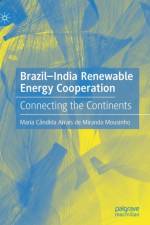
The book is a study of the cooperation of Brazil and India on renewable energy. It is based on a research project on the energy sector of both the countries. It discusses the agreements in the energy sector between the two countries and the renewable energy policies developed in four decades. A scientific and technological mapping, a brief study of competitiveness and a primary research were carried out in order to find out the weaknesses and the opportunities for cooperation in renewable energies.This Publication will undoubtedly provoke the reader to reflect on the importance of cooperation given the growing protectionism not only in terms of energy security, but also in terms of investments in new technologies considering energy transition scenario. For Brazil and India, intensifying the dialogue is more than a strategy of visibility and the search for greater space in worldwide geopolitics.
This open access book shines a light on how and why academic work became entwined with air travel, and what can be done to change academia's flying habit.
This book brings together interdisciplinary perspectives from across the Asia Pacific region, covering four main sections: 1) Governance, 2) Education and Capacity, 3) Science, Technology, Risk Assessment and Communities, and 4) Recovery.
This book deals with the dynamics of local-level politics in China and India. The new local power structure includes state-sponsored institutions like Villagers Committees and the traditional civil society organizations (CSOs) and non-government organizations (NGOs).
This book explores the emergent concept of 'human security' within the political context of COVID-19 Chinese politics.
This book brings together writing from activists and scholars that examine leftist and decolonial forms of resistance that have emerged from Hong Kong's contemporary era of protests.
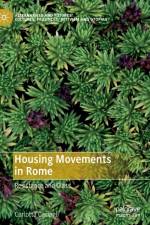
Most notably, three main conceptual tools are introduced to disentangle the relationship between the recomposed precarious class and space: "the spatial opportunity structure", "configurations of strategies" and "educational sites of resistance".
Abonner på vårt nyhetsbrev og få rabatter og inspirasjon til din neste leseopplevelse.
Ved å abonnere godtar du vår personvernerklæring.