



Gjør som tusenvis av andre bokelskere
Abonner på vårt nyhetsbrev og få rabatter og inspirasjon til din neste leseopplevelse.
Ved å abonnere godtar du vår personvernerklæring.Du kan når som helst melde deg av våre nyhetsbrev.

The book covers the essential practical techniques of flow cytometry in detail. It is divided into two sections: The first section includes the basic practical techniques of flow cytometry in cytology samples. Chapters under this section provide detailed description of the sampling technique, processing, acquisition of the sample, instrumentation and basic principles of flow cytometry. The second section elucidates clinical applications of flow cytometry. Chapters cover the flow cytometry applications in various haematolymphoid neoplasms, tumors of solid organs and body fluid samples. The flow cytometry findings of different tumors are described with the help of multiple colored cytology microphotographs, flow cytometry graphs, boxes, and tables. In addition, it also describes other ancillary techniques in those neoplastic lesions. The book helps practicing pathologists, technical staff and post graduate students to understand flow cytometry findings of the haematolymphoid neoplasms and solid tumor with special emphasis on cytology along with advanced technique. This book will help the students to interpret flow cytometry graphs.
This book covers interpretation of visual fields by Humphrey and Octopus perimeters and discussion of Humphrey visual fields in a variety of ocular disorders.It examines dilemmas faced by an ophthalmologist while evaluating visual fields which do not match with the clinical picture. Glaucoma, the commonest condition for visual field investigation is discussed in detail. Logical reasoningfor incorporating perimetry in glaucoma management with a clear understanding of the challenges in its interpretation is delved into. The book progresses to advanced glaucoma and glaucoma progression. It discusses a systematic evaluation of various parts of the visual field so that the reader can make a calculated management plan for their patient. Each chapter attempts to clearly enunciate factors that help in the diagnosis and features which may be confused with other conditions. Fields which help diagnosing early, advanced glaucoma and glaucoma progression with images and methods of ensuring reasonable diagnostic accuracy are included. The book incorporates separate chapters on ocular conditions which also mimic visual field defects of glaucoma with detailed modes of correct diagnosis, diagnostic dilemmas arising from retinal, macular, vascular, visual pathway lesions mimicking visual field defects of glaucoma or while coexisting with glaucoma, supported by algorithms to achieve a quick diagnosis in a busy OPD without missing the clinical findings and by using minimal investigative modalities. This book helps clinicians to prevent over diagnosis or under diagnosis of glaucoma and helps diagnose cases with morbidities causing visual field defects.
Each racial and ethnic population has their own nasal characteristics, which need to be considered when planning rhinoplasty surgery. This book is probably the first of its kind in the Indian context highlighting the goal of maintaining ethnic identity congruent with the patient¿s facial features and establishing Indian standards for gauging the success of the surgery. This is important as most of the rhinoplasty books have addressed these issues of the Caucasian or southeast Asian population and Caucasian normative standards of facial analysis. This book provides a broader understanding of ethnically specific features. It highlights the regional variations within India and their implications for rhinoplasty Surgery, thereby filling the void of lack of knowledge of the intricacies of surgery on Indian noses. It deals with important topics such as preoperative evaluations, determining factors such as thickness and texture of skin along with the various complications that may be encountered. It simplifies and facilitates learning with numerous pre-operative, intra-operative, and postoperative photographs. This book provides a systematic approach to Rhinoplasty surgery in Indian patients with an emphasis on addressing the functional aspects along with the cosmetic aspects.This book is a must-have for trainees in rhinoplasty and plastic surgery courses along with facial plastic surgeons, maxillofacial surgeons, and aesthetic surgeons operating on the Indian population across the globe.
This book offers a comprehensive overview of the latest standard medical procedures and surgical techniques for biliary atresia (BA), as well as the perioperative care, long-term follow-up and transitions. Experts on pediatrics in such fields as hepatology, surgery, pathology, and liver transplantation present their research findings and analyses of this rare and intractable disease of unknown etiology. In Japan, shared experience and sound understanding based on conferences and guidelines have led to standardization of management and clinical care and, as a result, better outcomes. Providing insights into improving surgical outcomes, and including special chapters focusing on social support systems for patients and families as well as recent advances in early diagnosis, this book a valuable resource for medical professionals around the globe who are involved in treating biliary atresia. It is especially useful for pediatric hepatologists, pediatric surgeons and transplant surgeons.
This book provides practitioners with comprehensive guidance on the application of 3D printing technology in the bone reconstruction. The 3D printed implants need to be able to maximize function and minimize complications by reinforcing strength and changing shape beyond anatomically identical design. Many of the clinical cases in this book, including pre-operative images, surgical planning, design and fabrication, 3D printing implants and guides, surgery and postoperative images, will suffice to capture the sensation of the 3D printing bone reconstruction. This book is composed of photos with minimum descriptions so that the readers can develop their imaginative view.
This Atlas covers various types of lip and nose deformities and introduces individualized surgical plan for patients. The surgical techniques are classified according to the various types of deformities. Schematic diagrams, pre-operative and post-operative photographs are supplemented by detailed explanations. It consists of four parts: anatomical structure of lips and nose; cosmetic surgery of lips and nose; plastic surgery of nasolabial congenital deformity; plastic surgery of acquired nasolabial defect and deformities.The management of nasolabial deformities and defects crosses many surgical disciplines, and therefore, this book recommended to be read by surgeons of different backgrounds i.e. oral and maxillofacial surgery, plastic surgery, cosmetic surgery, otorhinolaryngology, etc. It can also be used as a reference for anatomy, developmental biology, physiology, linguistics, aesthetics and other basic medical sciences.
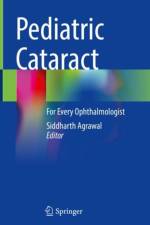
The book covers all clinical aspects of pediatric cataract surgery. Chapters cover basic sciences, etiology, pre-operative evaluation, choice of intraocular lenses, steps of surgery, complications, considerations in traumatic cataract and post-operative rehabilitation. It includes photographs, diagrams, flow charts and tables for easy memorization and understanding. Multiple choice questions at the end of each chapter help to evaluate the understanding and reinforce important concepts.The book aims to encourage ophthalmic surgeons to successfully treat children with cataract as all of them perform adult cataract surgeries but usually avoid managing pediatric cases. This hesitation is primarily due to exhaustive pre-operative evaluation and long term follow up. As a result the back log of this disease in the developing world is significant and many such children are unable to receive timely intervention during their crucial period of visual development. The chapters primarily focus on the clinically relevant issues to keep the reader interested. The book includes contributions from some of the most talented and experienced pediatric cataract surgeons.The book is relevant for ophthalmologists not commonly practicing pediatric cataract surgery and post graduate students.
This book presents the epidemiology of birth defects and their public health and social implications in India. As neglected childhood disorders, birth defects remain invisible in global maternal and child health dialogues. Birth defects services are emerging in India. This book approaches birth defects from a public health perspective, identifying the core functions of a birth defects service. Keeping in mind the complex task of providing multidisciplinary services for children with disabilities and complex medical conditions, the book examines the basic public health activities that have been put in place to address these conditions in India. The book describes birth defects surveillance and the challenges of acquiring accurate and timely data on birth defects against the background of Indiäs mixed health system. It discusses opportunities for prevention of birth defects and describes the structure and function of an emergent genetic service. It explores issues related to an integrated service for children with special healthcare needs, such as screening, early intervention, and rehabilitation. Furthermore, it describes the impact of these conditions on caregivers, including birth defects stigma. This book not only addresses a knowledge gap in the field of public health in India, but also explores the broader issues of services for children with disabilities and disabling conditions in low and low-middle income settings where access to health care is not universal. Given the depth and breadth of its coverage, the book offers an essential resource for birth defects researchers, researchers in the field of maternal and child health, public health/ global health, disability researchers, and researchers from the fields of rehabilitation sciences, nursing and anthropology. This book will be a valuable read for social medicine/community medicine departments, global health courses, and public health schools in India and other low middle-income countries.
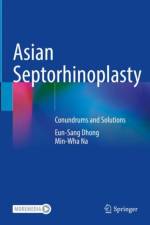
This book explains the challenging problems often encountered by surgeons when performing septorhinoplasty and secondary rhinoplasty in Asian patients and identifies solutions based on the best available evidence. The opening chapter discusses issues relating to the longevity of alloplastic implants. Various dilemmas in Asian septorhinoplasty are then addressed, including in relation to resorption of autogenous grafts and various aspects of technique. The aim here is to enable surgeons to achieve consistent high-end results. In the case of secondary rhinoplasty, the coverage includes conundrums relating to the distinction between infection and delayed inflammation, the choice of graft materials, correction of the contracted nose, and key decisions, including in patients in whom the septum has been previously resected. A separate chapter provides guidance on the approach to specific difficult cases encountered in Asian populations, including tip deformity,columellar necrosis, nostril asymmetry, and recurrent nasal deviation. Finally, advice is given on best practice in the use of alloplastic materials.
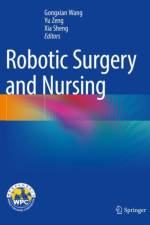
Written in readable format and rich with clinical cases, this book systematically introduces surgical nursing during robotic surgery. The first part introduces the history of robotic surgery, operating room management, quality control of robotic surgical nursing, management of safety, infection, and anaesthesia. The second part introduces key points of nursing during robotic surgery in urology, general surgery, gynaecology, heart, chest and otorhinolaryngology. It will be a helpful reference for practitioners those in the process of implanting or about to implant robotic surgery.
This book introduces the principle, main parameters, acquisition mode and operation procedure of Optical Quality Analysis System II (OQAS II) based on double-pass technology. OQAS II is increasingly used in the diagnosis and assessment of ocular diseases, especially for cataract. In this book, the clinical practice of OQAS II in the field of refractive cataract surgery is emphasized, including the preoperative/postoperative evaluation of visual quality, the timing of cataract surgery, the prediction of the visual quality after cataract surgery and doctor-patient communication. We hope the book provides a reference for the clinical application of the OQAS II in the field of cataract and helps to form the worldwide standard specification to a certain extent.
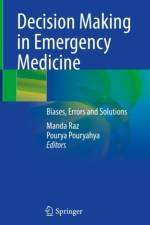
The book covers various scenarios when errors, biases and systemic barriers prevail in emergency medicine, discusses their impact, and then offers solutions to mitigate their undesired outcomes. The process of clinical reasoning in emergency medicine is a complex exercise in cognition, judgment and problem-solving that is prone to mistakes. The book presents various cases written by a team of emergency specialists and trainees in an engaging format that is helpful for the practicing and teaching emergency doctor and trainees.The book discusses 60 different types of biases and errors with clinical cases, and knowledge of strategies to mitigate them-a concept known as 'cognitive debiasing' that has the potential to reduce diagnostic error, and therefore, morbidity and mortality. It aims to help the readers during assessment of patients in the emergency department. Each chapter includes 4 cases illustrating the bias, error or barrier discussed, followed by a potential solution.This book helps in polishing the thinking and behavior of the readers so to potentially enhance their clinical competence in emergency department.
The book covers all aspects of vascular malformations including classification, embryology, genetics, clinical approach, investigations, management, controversies and key points to remember. Chapters cover recent changes in detail in various aspects, such as classification, genetic decoding, minimal intervention, selective approach and investigations for different types. It offers clear guidance on diagnostic protocol and surgical decision making with changing scenario leading to evolving endovascular and radiological interventions.The book is useful for vascular surgeon, pediatric surgeon, general surgeon, plastic surgeon and intervention radiologist as well as clinical research scholars, surgical oncologists and radiologists.
This book aims to compile an expert text on the multidisciplinary approach to treating sarcoma at a sarcoma centre. Separate chapters and sections highlight the specialist diagnostic and therapeutic approaches employed in treating bone and soft tissue sarcoma. This comprehensive book covers sarcoma and its management across specialties. It brings together the experience of the editor at a major centre for sarcoma management in Australia along with chapter contributions from various experts on the topic. The real-life, pragmatic approach is a distillation of the evidence and intends to make much of what is written translatable. This book serves as a reference for managing this tumour type and as an indispensable guide for daily use across the spectrum of providers.
This book covers novel innovations in the field of gastrointestinal endoscopy. The procedures included in the book are related to procedures relating to Esophagus, Stomach, Duodenum, Biliary Tract, Pancreas and Colon. The chapters are based on novel techniques which are Gastric Peroral Endoscopic Myotomy, Endoscopic Gastrojejunostomy, Tunnel Endoscopic Submucosal Dissection, Endoscopic Ultrasound Guided Biliary and Gall Bladder Drainage, Endoscopic Esophageal Plication, Submucosal Tunneling Endoscopic Resection, Anti-reflux Mucosectomy, Radiofrequency Ablation of Biliary Tract, Esophagus. It also covers Endoscopic Gastric Sleeve, Full Thickness Resection, Endoscopic Mucosal Resection of Colon, Esophagus and Stomach, Duodenal Mucosal Resurfacing, Electronic Chromoendoscopy, Stenting for Pancreatic Walled Off Necrosis, Esophageal Cryotherapy and Gastric Balloons. All the procedures are explained by an expert in the field with succinct drawings and images.This collection is to enhance learning interface for newly trained gastroenterologists, experienced gastroenterologist and endoscopists in general who want to know about these procedures.
Abonner på vårt nyhetsbrev og få rabatter og inspirasjon til din neste leseopplevelse.
Ved å abonnere godtar du vår personvernerklæring.