















Gjør som tusenvis av andre bokelskere
Abonner på vårt nyhetsbrev og få rabatter og inspirasjon til din neste leseopplevelse.
Ved å abonnere godtar du vår personvernerklæring.Du kan når som helst melde deg av våre nyhetsbrev.

This book presents selected papers from the 11th International Symposium on Heating, Ventilation and Air Conditioning (ISHVAC 2019), with a focus on HVAC techniques for improving indoor environment quality and the energy efficiency of heating and cooling systems. Presenting inspiration for implementing more efficient and safer HVAC systems, the book is a valuable resource for academic researchers, engineers in industry, and government regulators.
This book presents selected papers from the 11th International Symposium on Heating, Ventilation and Air Conditioning (ISHVAC 2019), with a focus on HVAC techniques for improving indoor environment quality and the energy efficiency of heating and cooling systems. Presenting inspiration for implementing more efficient and safer HVAC systems, the book is a valuable resource for academic researchers, engineers in industry, and government regulators.
As renewable energy sources, biofuels have tremendous potential to replace fossil fuels in future energy scenarios, offering green alternative energy sources. However, though such fuels could mean a significant reduction in environmental pollution, they are still far from practical implementation due to their high production costs and technical issues.Consequently, efforts are being made around the globe to achieve the cost-effective production of biofuels. In this context, the use of nanomaterials to improve biofuels production efficiency is a vital, emerging area. Nanomaterials are attracting attention due to their versatile physicochemical properties and may improve the production process for various biofuels by acting as catalysts. However, this area is still in its infancy. To improve the practical viability of the biofuels production process, it is essential to focus on the specific type of nanomaterial used, its synthesis, and its specific effectson the process parameters. This book explores the potential advantages and feasibility of various aspects of nanomaterials with regard to improving the current biofuels production process, making it a valuable resource for a broad readership.
This book brings together papers from the 2018 International Conference on Communications, Signal Processing, and Systems, which was held in Dalian, China on July 14-16, 2018. Presenting the latest developments and discussing the interactions and links between these multidisciplinary fields, the book spans topics ranging from communications, signal processing and systems. It is aimed at undergraduate and graduate electrical engineering, computer science and mathematics students, researchers and engineers from academia and industry as well as government employees.
This book provides a brief overview of single-cell analysis using recent advanced technologies. The different sections cover different aspect of single cell analysis and applications with their advantages, limitations, and future challenges. The book has covered how different physical energies such as optical, electrical, and mechanical energy have been applied for single cell therapy and analysis. The recent advanced micro/nanofluidic devices have been employed for single-cell counting, manipulation, cultivation, separation, isolation, lysis, printing and patterning and host-viral interaction at single-cell level. Various chemical approaches for single-cell analysis have been discussed, such as liposome mediated materials transfer at single-cell and their analysis, discovery of antibody via single-cell, high-throughput screening of antigen-specific antibody-secreting cells, and biomolecular secretion analysis of individual cells. Moreover, different single-cell omics such as genomics, proteomics and transcriptomics have been discussed using microfluidic technologies as well as conventional approaches.The role of single cell analysis in system biology and biocatalysis have been discussed in detail. The book describes single-cell phenotyping of heterogeneous tissue, stimulation, and instant reaction quenching technology for biochemical kinetic analysis, large scale single-cell assay for the identification of biocatalysts and analytical techniques for single-cell studies in microbiology. The role of single-cell analysis in cancer, such as single-cell adhesion and cancer progression, single-cell technologies for cancer therapy, analytical technology for single cancer cell analysis, and biophysical markers for cancer cell analysis have been discussed. The flow cytometry based high throughput single-cell analysis have been well emphasized. Finally this book has covered single-cell electrophysiology, single-cell sensing and size measurement using mechanical and microwave resonators, molecular force spectroscopy for cell adhesion measurement, micro-tweezers and force microscopy techniques for single-cell mechanobiological analysis, mass spectrometry and acoustic tweezers for single-cell manipulation and analysis. This book is intended for academic and industrial researchers, undergraduate and graduate students in the fields of biomedical engineering, bio-micro/nanoengineering, and bio-micro/nano fabrication for single-cell analysis. It can be used for courses on bio-MEMS/bio-NEMS, biomicrofluidics, bio-micro/nanofabrications, micro/nanofluidics, biophysics, single cell analysis, bionanotechnology, drug delivery systems and biomedical microdevices. Collective contributions from respected experts, have brought diverse aspects of single-cell technologies in a single hand book. This will benefit researchers and practitioners in the biotechnology industry for different diseases analysis, therapeutics, diagnostics, drug discovery, drug screening etc.In addition to hard copies, the book will be available online and will often be updated by the authors.
This book systematically assesses the risk of 21 major infectious diseases threatening BRI countries. It consists of 14 chapters. Chapter 1 is an overview. Chapter 2 introduces the history of health cooperation between China and other BRI countries. Chapters 3-14 introduce the prevalence of major infectious diseases threatening BRI countries such as cholera, vaccine preventable diseases (polio, measles, meningitis, Japanese encephalitis, diphtheria, hepatitis A), tuberculosis, influenza, and insect-borne diseases (Dengue fever, Zika virus disease, yellow fever, Chikungunya, Rift Valley fever), plague, malaria, Ebola virus disease, MERS, schistosomiasis, COVID-19 and AIDS, and risk factors, principles and cases of their prevention and control. It is a useful reference book in the research of infectious disease control and prevention, and provides historical experience and lessons learned. It also provides decision support for international cooperation among BRI countries in the field of epidemic prevention and control in the future.
The book provides a detailed description in color format of the optic nerve head changes that occur in glaucoma. It explains the normal and variant anatomy of an optic nerve head and why certain discs are more or less likely to develop glaucomatous changes.This book attempts to explain the anatomical basis of common and not so common signs seen in optic nerve head and retinal nerve fibre layer as captured by a digital fundus imaging system and optical coherence tomography. It also includes optic nerve head conditions mimicking glaucoma. The book is relevant for practicing ophthalmologists, vision science researchers, clinical optometrists, postgraduate residents in ophthalmology, sub-specialty fellows as well as general ophthalmologists, neurologists and neurosurgeons.
This book amalgamates the basic concepts in understanding the science of maxillofacial skeleton with the clinical skills required towards managing complex facial fractures. The book is presented in two sections. The first section introduces the readers with the introduction to maxillofacial trauma, biomechanics of maxillofacial skeleton, the principle of internal fixation, medicolegal aspects of maxillofacial trauma, and preoperative workup which provides a brief outline towards an understanding of the basic concepts about the anatomy and physiology of facial skeleton. The second section is oriented clinically with case-based discussions that start from the emergency management of facial trauma including the recent protocols of basic life support and advanced trauma life support, emergency airway management followed by definitive management guidelines in stabilizing and fixing the fractured facial bones. The clinical cases have been discussed in a way to provide practical knowledgeand skills to the postgraduate students and clinicians who will enhance their knowledge and facilitate the decision-making process. This book would be a valuable read for clinicians in oral & maxillofacial surgery, ENT surgery, plastic surgery and allied trauma specialists dealing with maxillofacial trauma.
This book introduces the surgical suture techniques in orthopaedics. These techniques have been recognized as a crucial part for wound care and surgery-related prognosis. Training of fellows on suture techniques is of great importance. This book provides a standard tutorial on how to be proficient in surgical suture performance. The history and basic concepts are introduced. Important issues when considering suture methods, including site infections, suturing materials, room setups, cosmetics and drainage are also discussed fully. Different types of suture techniques applying to orthopaedic surgeries are presented with illustrations.The author strives to implement the principle that orthopaedic theory should be connected with clinical practice, highlight the application of theoretical knowledge, strengthen the pertinence and practicality of suture techniques, and reflect domestic and international development trends to the greatest extend.
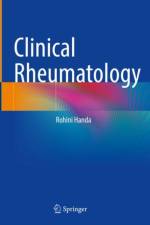
Clinical Rheumatology is a book written by a clinician for clinicians. It covers all the essential clinical aspects of Rheumatology in an engaging, clear, and concise manner, thereby fulfilling an unmet need. The focus of this book is to cover clinically pertinent and practically relevant issues while pruning unnecessary detail. Patient photographs, tables, and boxes enhance readability. The bedside clinical and investigative approach is discussed in a lucid fashion illustrated by clinical photographs, flowcharts, and algorithms. The evidence-based treatment is spelt out in an easy to comprehend fashion. Key messages have been listed at the beginning of each chapter. The book is intended for undergraduate and postgraduate medical students, residents, fellows, and clinicians who want to gain practical knowledge and clinical insight into rheumatic diseases. The book is likely to appeal to internists, rheumatologists, physiatrists, physiotherapists, occupationaltherapists, as well as orthopaedic surgeons. They will find their day to day questions answered in a knowledge format that can be applied straight away. Senior clinicians will find it a ready reckoner and a handy manual to refresh and update their knowledge. Basic scientists will find it useful to gain clinical insight into the rheumatic diseases they research without being intimidated by the size of the text. Teachers will find it full of helpful teaching messages. Clinical Rheumatology is a must-have book for all those who deal with rheumatic musculoskeletal diseases.
This book covers the entire spectrum of gestational trophoblastic disease from the most benign to the most malignant form. It addresses etiopathogenesis, molecular basis of the disease, risk assessment, management and follow-up. Management in the form of surgical, medical and supportive care is discussed in detail to help the practitioner in making treatment decisions. Special and rare varieties of the disease are dealt separately. A separate section in each chapter covers critical conditions arising from the disease. Case based discussions make the chapters more lively and interesting. The recent trials and studies are also covered in the book. Topics such as fertility preservation, gestational trophoblastic diseases registry and development of voluntary organizations for supporting patients are value additions to this book. This book is meant for the general obstetrician and gynecologist and for the gynecologic oncologist as well.
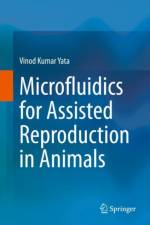
This book describes the fundamentals of microfluidics and fabrication methods of microfluidic devices that can be adopted for animal-assisted reproduction. It presents microfluidic methods for sorting highly fertile spermatozoa. This book also describes the application of microfluidics in vitro fertilization and embryo culture. It discusses the use of microfluidics in sperm sexing and the cryopreservation of animal gametes and embryos. Lastly, the book examines the potential opportunities of microfluidics in infertility diagnosis, sperm selection and guidance, oocyte selection, insemination, and embryo monitoring.
Abonner på vårt nyhetsbrev og få rabatter og inspirasjon til din neste leseopplevelse.
Ved å abonnere godtar du vår personvernerklæring.