

























Gjør som tusenvis av andre bokelskere
Abonner på vårt nyhetsbrev og få rabatter og inspirasjon til din neste leseopplevelse.
Ved å abonnere godtar du vår personvernerklæring.Du kan når som helst melde deg av våre nyhetsbrev.

This text provides a clear, reproducible, step-by-step guide for each colorectal surgery operation. The format follows that of both a ¿how tö manual as well as an algorithm-based guide to allow the reader to understand the thought process behind the proposed treatment strategy. Each chapter includes both operative technical details as well as perioperative ¿tips and tricks¿ that the authors utilize in the management of these complex surgical patients. In addition, it addresses the optimal ¿next step¿ in dealing with more challenging situations such as pregnancy, emergent surgery, the elderly, and the obese patient. Throughout the text, each author provides an ongoing narrative of his/her individual surgical techniques along with color illustrations and diagrams to ¿personally¿ take the reader through the crucial steps of the procedure, as well as key points of patient care inherent to that topic. Additionally, where appropriate, links to online or downloadable videos will givethe reader an up-front look into technical aspects of traditional straight laparoscopic and hand-assisted minimally invasive surgery, as well as NOTES, transanal, robotic, single incision colectomy and combined laparoscopic-endoscopic resection.Minimally Invasive Approaches to Colon and Rectal Disease: Technique and Best Practices will be of great utility to colorectal, general and oncologic surgeons who want to learn or improve their minimally invasive skills in colorectal surgery. Furthermore, this text will be of particular interest to the surgeons-in-training, and the general and colorectal surgeon who is often called upon to manage a variety of colorectal surgery conditions through a minimally invasive approach.
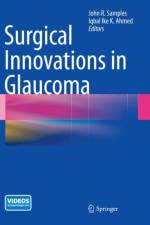
This book walks the reader through the what, where, when, and how of the new glaucoma surgical tools-written by the top experts in the field, from inventors, clinical trial investigators, and top specialists experienced with the new devices.
By exposing students to a variety of applications in a variety of areas and explaining how they can be modeled and solved, the book helps students develop the skills needed for modeling and solving problems that they may face in the workplace.
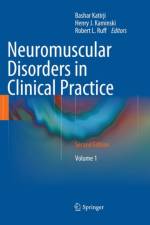
Comprehensive, thoroughly updated, and expanded, Neuromuscular Disorders in Clinical Practice, Second Edition encompasses all disorders of the peripheral nervous system, covering all aspects of neuromuscular diseases from diagnosis to treatment.
Since the inaugural publication of Pediatric Dialysis in 2004, a wide range of advances have taken place in dialysis-related care, leading to a wealth of new knowledge in the field.
This book offers surgeons the most up-to-date information related to non-surgical techniques specific to periorbital rejuvenation. This easy-to-use reference guide is for ophthalmologists, oculoplastic surgeons, dermatologists, plastic surgeons, maxillofacial and plastic surgery residents, as well as ENT facial plastic fellows.
This volume presents multiple idiographic, archaeological studies of vernacular watercraft from North America and the Caribbean. This collection of case studies, including many examples from cultural resource management and graduate student theses, presents a thematic exploration of cultural adaptation as expressed through ship construction.
The proposed book focuses on one of the most important issues affecting humankind in this century - Peak Oil or the declining availability of abundant, cheap energy-and its effects on our industrialized economy and wildlife conservation.
This volume contains a collection of writings from the leaders in the fields of Molecular Biology and Melanoma Research which will begin to tell the ever-expanding story of the most recent findings, discoveries, and potential of BRAF-directed targets in melanoma.
They are key components of a protein quality machinery in the cell which insures that the folding process of any newly-synthesized polypeptide chain results in the formation of a properly folded protein and that the folded protein is maintained in an active conformation throughout its functional lifetime.
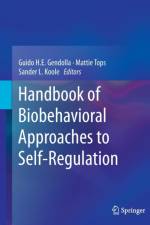
¿How can people master their own thoughts, feelings, and actions? This question is central to the scientific study of self-regulation. The behavioral side of self-regulation has been extensively investigated over the last decades, but the biological machinery that allows people to self-regulate has mostly remained vague and unspecified. Handbook of Biobehavioral Approaches to Self-Regulation corrects this imbalance. Moving beyond traditional mind-body dualities, the various contributions in the book examine how self-regulation becomes established in cardiovascular, hormonal, and central nervous systems. Particular attention is given to the dynamic interplay between affect and cognition in self-regulation. The book also addresses the psychobiology of effort, the impact of depression on self-regulation, the development of self-regulation, and the question what causes self-regulation to succeed or fail. These novel perspectives provide readers with a new, biologically informed understanding of self-awareness and self-agency. Among the topics being covered are:Self-regulation in an evolutionary perspective.The muscle metaphor in self-regulation in the light of current theorizing on muscle physiology.From distraction to mindfulness: psychological and neural mechanisms of attention strategies in self-regulation.Self-regulation in social decision-making: a neurobiological perspective.Mental effort: brain and autonomic correlates in health and disease.A basic and applied model of the body-mind system.Handbook of Biobehavioral Approaches to Self-Regulation provides a wealth of theoretical insights into self-regulation, with great potential for future applications for improving self-regulation in everyday life settings, including education, work, health, and interpersonal relationships. The book highlights a host of exciting new ideas and directions and is sure to provoke a greatdeal of thought and discussion among researchers, practitioners, and graduate-level students in psychology, education, neuroscience, medicine, and behavioral economics.
This book is devoted to nanomicrobiology and the nanosystems of bacteria. Information about the activities of outer membrane vesicles produced by Gram-negative bacteria is discussed as a benefit to bacteria that produce it and some potential industrial applications are presented.
This handbook explores imbalance in the criminal justice system and how police interact with minorities. It addresses seven substantive areas: economics, education, criminal justice, race relations, health, mental health, families, youth and the elderly.
Plastids are the sites of conversion of solar energy into the chemical energy usable to sustain life. This is followed by an in depth look at biogenesis and assembly of plastid proteins and protein complexes and then by the important metabolic functions in plastids.
Many of the conditions that are AIDS-defining illnesses have their own entries or are cross-referenced to a generic entry in which several related conditions are discussed (such as enteric diseases and fungal infections). Typically, the treatment of any given form of pathology is briefly discussed in the entry that covers that illness.
This book underscores the re-emergence of the ozone hole problem and deals with it in its current context of exacerbating global warming.
This ambitious reference surveys worldwide efforts at controlling the spread of tuberculosis, with special emphasis on the developing world. Case studies from China, Pakistan, Nigeria, Indonesia, and other frontline countries demonstrate a wealth of information on clinical, cultural, socioeconomic, and other relevant factors. This compilation provides a valuable resource for creating successful intervention and prevention strategies. State-of-the-science snapshots pinpoint where short- and long-term initiatives stand today, from early detection and vaccination programs to new genetic technologies and drug therapies. This diverse group of perspectives and approaches offers innovative paths toward control and realistic odds for containing the threat, especially in the face of current co-epidemics and new drug-resistant strains.Among the topics in the Handbook:Diagnosis of tuberculosis: current pipeline, unmet needs, and new developmentsConcurrence of tuberculosis and other major diseasesThe tuberculosis outbreak response, investigation, and controlThe promise of new TB vaccinesDNA fingerprinting of Mycobacterium tuberculosis: a rich source of fundamental and daily applicable knowledgeGlobal tuberculosis surveillanceThe Handbook of Global Tuberculosis Control is urgent reading for leadership and staff of non-governmental organizations, government agencies, academic institutions, research centers, hospitals, and potentially businesses with interests in tuberculosis control. Additionally, the book's focus on TB in developing countries will attract a wider audience of practitioners, particularly those working in the broader fields of global public health, epidemiology, international development, and the socioeconomics of infectious diseases.
Due to the fact that Restless Legs Syndrome/Willis-Ekbom Disease is usually a chronic condition, this book aims to provide physicians with the necessary tools for the long-term management of patients with RLS.
This concise text mirrors the content of the Epilepsy Board as distributed by the American Board of Psychiatry and Neurology. Epilepsy diagnosis, classification and treatment are thoroughly covered, along with seizure classification, epidemiology, normal and abnormal EEG, and treatment with antiepileptic medications and other modalities.
Pathophysiological states, neurological and psychiatric diseases are almost universally considered from the neurocentric point of view, with neurons being the principal cellular element of pathological process.
Editors hope that Regenerative Biology of the Spine and Spinal Cord appeals to the nostalgic sentiments of investigators and intellectuals in that it can be held in hand and provide a broad survey of leading edge science.
The second part focuses on the elucidation of key target proteins that could be exploited for cancer prevention, an the role of phytochemicals in cancer prevention, updates on basic research related to phytochemicals action critical for cancer prevention, and updates on translational knowledge on cancer prevention by phytochemicals.
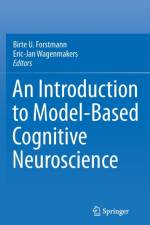
Two recent innovations, the emergence of formal cognitive models and the addition of cognitive neuroscience data to the traditional behavioral data, have resulted in the birth of a new, interdisciplinary field of study: model-based cognitive neuroscience.
USDA Forest Service Experimental Forests and Ranges (EFRs) are scientific treasures, providing secure, protected research sites where complex and diverse ecological processes are studied over the long term.
Pediatric and Adolescent Urologic Imaging provides a comprehensive reference for health care providers of children and adolescents with urologic conditions.
Abonner på vårt nyhetsbrev og få rabatter og inspirasjon til din neste leseopplevelse.
Ved å abonnere godtar du vår personvernerklæring.