









Gjør som tusenvis av andre bokelskere
Abonner på vårt nyhetsbrev og få rabatter og inspirasjon til din neste leseopplevelse.
Ved å abonnere godtar du vår personvernerklæring.Du kan når som helst melde deg av våre nyhetsbrev.

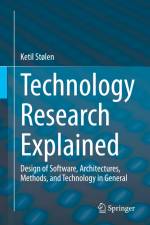
This book aims to help research practitioners in technology science avoid some of the most common pitfalls or at least make them easier to overcome. Many technology scientists put too little weight on how they conduct their work and should be able to become significantly better at what they do by being more aware of methodological issues. The book differs from other related works in two main respects: First, by focusing on creating, producing, or inventing new artifacts ¿ in other words, technology science. Second, by describing a general approach to technology science linking together specialized research methods.The book consists of 14 chapters. Following the first introductory chapter are two chapters providing the foundation for the rest of the book. These chapters clarify the meaning of key concepts and describe an overall process for technology science. The subsequent chapters 4¿11 are about this process. Chapters 4, 5, and 6 concern problem analysis, research planning, and hypothesis formulation. The following five chapters then aim at evaluation. Chapter 7 introduces the concept of prediction, which plays a fundamental role in evaluating hypotheses. Chapters 8¿10 address the evaluation of universal, existential, and statistical hypotheses. Chapter 11 concerns quality assurance and introduces the concepts of validity and reliability. Next, in chapters 12 and 13, we address publishing with an emphasis on the specifics of technology science. Eventually the last chapter, chapter 14, briefly introduces the philosophy of science.The book systematically collects in the form of suggestions, recommendations, and guidelines the author¿s 35-year experience as a researcher, author and reviewer in technology science. It is written for anyone working in technology science, from master¿s students to researchers and supervisors.
The book's objective is to present the energy transition process in Brazil over time and offer new perspectives on this process in the eyes of a sustainable future. The book unfolds over 15 chapters covering historical, geopolitical, technological, and economical aspects, as well as aspects conceptually familiar to the energy transition such as public perception, low-carbon technologies, digitalization, Sustainable Development Goals, and even recent topics such as the pandemic of COVID-19. The Brazilian electricity and transport sectors and climate change governance are the main focus of this book. The paths taken throughout this book demonstrate the particularities of Brazil and present this country in a unique and differentiated way in terms of the various approaches to the energy transition. It is a book that brings a multidisciplinary, innovative vision and information published for the first time.
The monograph examines the sources of Polish social divisions. It explains their emergence and discusses the mechanisms behind their evolution from 1945-2022. The findings corroborate the idea that divisions were formed irrespective of the current state of social hierarchy, or the accepted interpretation of justice, and that they existed both in totalitarian and democratic systems alike. The book distinguishes the category of divisions from the practices of repartition, and demonstrates that the repartitions discussed in a political discourse do not generate divisions, but constitute the politicization of the latter. Repartitions are understood as discursive, dichotomic juxtapositions that result from the existence of divisions and can be used as political tools. It has been demonstrated that they can also function as analytical categories used with a view to determining the state of social inequalities. The notions of divisions and repartitions discussed in this volume confirm theexistence of the continuity of changes and describe the evolution of Polish society has a consequence.
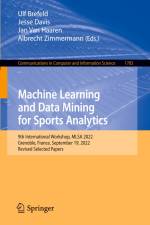
This book constitutes the refereed proceedings of the 9th International Workshop on Machine Learning and Data Mining for Sports Analytics, MLSA 2022, held in Grenoble, France, during September 19, 2022. The 10 full papers included in this book were carefully reviewed and selected from 18 submissions. They were organized in topical sections as follows: Football, Racket sports, Cycling.
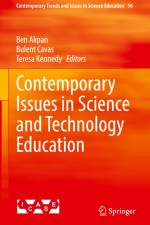
This edited volume discusses major issues in present-day science and technology education (STE). It is divided into three thematic sections: philosophical foundations and curriculum development; sustainable development, technology and society; and the learning sciences and 21st century skills. Section I examines the history and future of STE curriculum development, along with specific issues within this dynamic area. Section II explores sustainable development in three important aspects: economic development, social development, and environmental protection. Section III covers the 21st century skills that are of overarching importance to the success of learners in school and the world of work.Anchoring each chapter is an assemblage of veteran science and technology education specialists selected from across the world. The book¿s target is a worldwide audience of undergraduate / post-graduate students and their teachers, as well as researchers. This book¿s exploration of the ever-increasing advances in STE and its narrative writing style will be of interest to a broad range of readers.
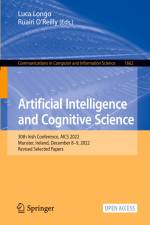
This open access book constitutes selected papers presented during the 30th Irish Conference on Artificial Intelligence and Cognitive Science, held in Munster, Ireland, in December 2022. The 41 presented papers were thoroughly reviewed and selected from the 102 submissions. They are organized in topical sections on ¿machine learning, deep learning and applications; responsible and trustworthy artificial intelligence; natural language processing and recommender systems; knowledge representation, reasoning, optimisation and intelligent applications.
The European Union is one of the most outward-oriented economies in the world, and free trade is one of its founding principles. As such, instruments intended to ensure that international trade is conducted on a level playing field have been part of the EU¿s policy toolbox since the beginning of European integration. Adapting to the current changes in international trade, these instruments have since undergone major reforms. This work provides an overview of the EU¿s legal framework on the use of its trade defence instruments, in particular measures under the Trade Barriers Regulation, the Basic Anti-Dumping Regulation and the Basic-Anti Subsidy Regulation. The book shares valuable insights into how EU institutions currently apply these instruments and places their application in the broader political context in which international trade takes place, which has been shaped e.g. by developments related to the United Kingdom¿s withdrawal from the EU and the ongoing blockade of the WTO Appellate Body.
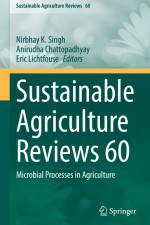
In the context of rising adverse effects of climate change on agriculture, there is a need for advanced methods and practices to manage soils for production of food and energy. This book presents the latest advances in microbial processes that control plant growth, with focus on genomic tools, microbial interactions with the plant and soils habitats, mobilization of plant nutrients, agricultural waste management, biodegradation, bioremediation, carbon sequestration, land reclamation, plant growth promotion, suppression of plant pathogens, induced systemic resistance and tolerance against biotic and abiotic stresses.
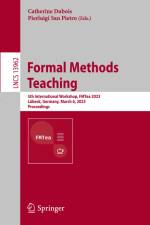
This book constitutes the proceedings of the 5th International Workshop on Formal Methods Teaching, FMTea 2023, which was held in Lübeck, Germany, in March 2023.The 7 full papers presented in this volume were carefully reviewed and selected from 10 submissions. FMTea 2023 aim is to support a worldwide improvement in learning Formal Methods, mainly by teaching but also via self-learning.
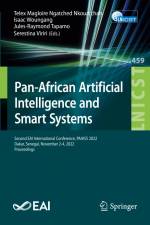
This book constitutes the refereed post-conference proceedings of the Second International Conference on Pan-African Intelligence and Smart Systems, PAAISS 2022, which was held in Dakar, Senegal, in November 2022. The 27 revised full papers presented were carefully selected from 70 submissions. The theme of PAAISS 2022 was: ¿IoT and Enabling Smart System Technologies, Special Topics of African Interest, Artificial Intelligence Theory and Methods, Artificial Intelligence Applications in Medicine, Remote sensing and AI in Agriculture, AI applications and Smart Systems technologies, Affective Computing, Intelligent Transportation systems.
This book presents the theory of plates and shells on the basis of the three-dimensional parent theory. The authors explore the thinness of the structure to represent the mechanics of the actual thin three-dimensional body under consideration by a more tractable two-dimensional theory associated with an interior surface. In this way, the relatively complex three-dimensional continuum mechanics of the thin body is replaced by a far more tractable two-dimensional theory. To ensure that the resulting model is predictive, it is necessary to compensate for this ¿dimension reduction¿ by assigning additional kinematical and dynamical descriptors to the surface whose deformations are modelled by the simpler two-dimensional theory. The authors avoid the various ad hoc assumptions made in the historical development of the subject, most notably the classical Kirchhoff¿Love hypothesis requiring that material lines initially normal to the shell surface remain so after deformation. Instead, suchconditions, when appropriate, are here derived rather than postulated.
This book constitutes the refereed proceedings of the 12th International Conference on Evolutionary Multi-Criterion Optimization, EMO 2022 held in Leiden, The Netherlands, during March 20-24, 2023.The 44 regular papers presented in this book were carefully reviewed and selected from 65 submissions.The papers are divided into the following topical sections: Algorithm Design and Engineering; Machine Learning and Multi-criterion Optimization; Benchmarking and Performance Assessment; Indicator Design and Complexity Analysis; Applications in Real World Domains; and Multi-Criteria Decision Making and Interactive Algorithms..
Additive manufacturing is considered a key technology for digital production. However, several barriers towards the broad industrial application exist, e.g. the associated cost and the required experience regarding the manufacturing process. To eradicate these barriers, the complete digitalization of the value creation process is needed. In this thesis, a digital, automated support structuredesign procedure is developed. Topology optimization is used for design rule determination, and the space colonization algorithm is adapted for the automated design. The validity of the procedure is proven experimentally, revealing sufficient mechanical performance alongside cost reduction at medium to large production scales.
This book constitutes the refereed proceedings of the 18th International Conference on Information Security and Cryptology, Inscrypt 2022, held in Beijing, China during December 11¿13, 2022. The 23 full papers and 3 short papers included in this book were carefully reviewed and selected from 68 submissions. They were organized in topical sections as follows: Block Ciphers, Public key Encryption & Signature, Quantum, MPC, Cryptanalysis, Mathematical aspects of Crypto, Stream ciphers, Malware, Lattices.
This book constitutes the proceedings of the 17th International Conference and Workshops on Algorithms and Computation, WALCOM 2023, which took place in Hsinchu, Taiwan, in March 2023.The 30 full papers presented together with 2 invited papers were carefully reviewed and selected from 75 submissions. They cover topics such as: computational geometry; string algorithm; optimization; graph algorithm; approximation algorithm; and parameterized complexity.
This book examines issues of improving the efficiency of the control technological parameters of textile materials through with computerized systems with the application of non-contact methods as only they allow to react quickly to changes of technological parameters during production. The original models, algorithms, software and hardware of the developed system for the control technological parameters of textile materials are presented. Also, the book presents new methods for measuring the technological parameters of textile materials, which do not need require taking into account the constant readjustment of the system to controlled samples of materials with different structure and porosity. The developed model of the computerized system allows contactless control of basis weight and porosity of fabrics in the course of their production. This book contains six chapters, for researchers, engineers, as well as lecturers and postgraduates of higher education institutions dealing with ultrasonic control engineering equipment.
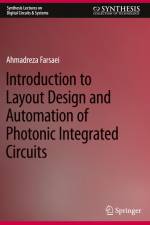
This book introduces readers to the physical design (layout) and design automation of Photonic Integrated Ciruicts (PICs) which is an essential building block of Electronic-Photonic Design Automation (EPDA). Proper PIC design automation and implementation of complex curvilinear shapes play a critical role in reliability, quality, and time-to-market of complex PIC products. The author starts by introducing some basic mathematical concepts used in implementation of photonic components, followed by a deep dive into implementation details of parameterized PIC components. The book introduces the industry-standard schematic driven layout flow and tries to simplify the concepts and implementations. The author conveys difficult concepts and advanced EPDA scripting/programming methodologies, using a simple language and coding examples.
This book constitutes the refereed post-conference proceedings of the 15th International Conference on Wireless Internet, WiCON 2022, held in November 2022. Due to COVID-19 pandemic the conference was held virtually. The 16 full papers were selected from 45 submissions and are grouped into the following topics: Security and privacy; blockchain and wireless networks; Resource management, routing, and internet computing; social networks and learning.
This book examines the evolution of schooling from bureaucracy and hierarchy to post-industrial schools, and places teachers¿ leadership on center stage at the same time. That is, it asks teachers to deepen leadership in their classrooms and with other teachers. The book carries education and schooling from formal control to a social influence process and addresses the deeply rooted difficulty of focusing too much energy on content. It reveals the strong power of internal and external context and helps educators implant the idea of the school not as a fixed, immutable home, but as a relatively deep social process. It shows how co-leadership comes alive in schools.Communities of schooling is one of the three most critical developments in education in the last 140 years. When it is linked with the two other fundamental reorientations in schooling - ¿dispersed ownership¿ and ¿constructivist work¿ - it becomes the most powerful force in education since the 1700s. This book shows how communities of schooling replace the earlier pillars of ¿learning as telling,¿ ¿hierarchy of control,¿ and ¿non-democratic influence.¿ The work also explains the meaning and understanding of school work as a social influence process where all school-based educators exert power, but at different levels. The idea of enhancing individual and collective capacity through interdependency, shared work, and collective responsibility is unpacked.
This book constitutes the refereed proceedings of the 6th IFIP TC 10 International Embedded Systems Symposium, IESS 2019, which took place in Friedrichshafen, Germany, in September 2019.The 16 full papers and 4 short papers presented in this book were carefully reviewed and selected from 32 submissions. The papers were organized in topical sections on embedded real-time systems; estimations; architecture and applications; algorithms and System C; and analysis.
Edited in collaboration with FoLLI, this book constitutes the refereed proceedings of the 10th Indian Conference on Logic and Its Applications, ICLA 2023, which was held in Indore, India, in March 2023.Besides 6 invited papers presented in this volume, there are 9 contributed full papers which were carefully reviewed and selected from 18 submissions. The volume covers a wide range of topics. These topics are related to modal and temporal logics, intuitionistic connexive and imperative logics, systems for reasoning with vagueness and rough concepts, topological quasi-Boolean logic and quasi-Boolean based rough set models, and first-order definability of path functions of graphs.
Abonner på vårt nyhetsbrev og få rabatter og inspirasjon til din neste leseopplevelse.
Ved å abonnere godtar du vår personvernerklæring.