







Gjør som tusenvis av andre bokelskere
Abonner på vårt nyhetsbrev og få rabatter og inspirasjon til din neste leseopplevelse.
Ved å abonnere godtar du vår personvernerklæring.Du kan når som helst melde deg av våre nyhetsbrev.

In the last 25 years, information systems have had a disruptive effect on society and business. Up until recently though, the majority of passengers and goods were transported by sea in many ways similar to the way they were at the turn of the previous century. Gradually, advanced information technologies are being introduced, in an attempt to make shipping safer, greener, more efficient, and transparent. The emerging field of Maritime Informatics studies the application of information technology and information systems to maritime transportation.Maritime Informatics can be considered as both a field of study and domain of application. As an application domain, it is the outlet of innovations originating from data science and artificial intelligence; as a field of study, it is positioned between computer science and marine engineering. This new field¿s complexity lies within this duality because it is faced with disciplinary barriers yet demands a systemic, transdisciplinary approach. At present, there is a growing body of knowledge that remains undocumented in a single source or textbook designed to assist students and practitioners.This highly useful textbook/reference starts by introducing required knowledge, algorithmic approaches, and technical details, before presenting real-world applications. The aim is to present interested audiences with an overview of the main technological innovations having a disruptive effect on the maritime industry, as well as to discuss principal ideas, methods of operation and applications, and future developments. The material in this unique volume provides requisite core knowledge for undergraduate or postgraduate students, employing an analytical approach with numerous real-world examples and case studies.
This edited book discusses various processes of feedstocks bioconversion such as bioconversion of food waste, human manure, industrial waste, beverage waste, kitchen waste, organic waste, fruit and vegetable, poultry waste, solid waste, agro-industrial waste, cow dung, steroid, lignocellulosic residue, biomass, natural gas etc.Nowadays, the industrial revolution and urbanization have made human life comfortable. However, this requires excess usage of natural resources starting from food and food products, to energy resources, materials as well as chemicals. The excess use of natural resources for human comfort is expected to high fuel prices, decline natural resources as well as cause a huge hike in the cost of raw materials. These factors are pushing researchers to grow environmentally friendly processes and techniques based on inexpensive and sustainable feedstock to accomplish such worldwide targets. Bioconversion, otherwise called biotransformation, is the change of natural materials, for example, plant or animal waste, into usable items or energy sources by microorganisms. Bioconversion is an environmentally friendly benevolent choice to supplant the well-established chemical procedures utilized these days for the production of chemicals and fuels. A variety of alternatives advancements are being considered and are directly accessible to acquire diverse valuable end-products through bioprocesses. This book discusses in detail the process and techniques of bioconversion by focusing on the organic feedstock of animal and plant origin. It brings solutions to the bioconversion of various feedstock into value-added products.
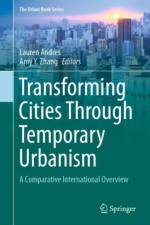
This book advances the reflexion into how temporary urbanism is shaping cities across the world. Temporary urbanism has become a core concept in urban development, and its application is increasingly crossing the borders of both the North and the Global South. There is a need to reflect upon the diverse ways of understanding and implementing the temporary in the production of space internationally and discuss what this means, for both research and practice. Divided into two sections, the book compiles and reflects upon the various attempts to reframe and reconceptualise temporary urbanism. The first section focuses on reframing and reconceptualising temporary urbanisms. It develops the argument that temporary urbanism allows a reinterrogation of the role of temporalities and non-permanence into the place-making process and hence in the production and reproduction of cities, including the adaptability of existing spaces and production of new spaces. While drawing upon different theoretical and conceptual framings (permeability, assemblage, rhythms, waiting, ¿), authors bring insights from various case studies: the Dublin Biennial (Ireland), temporary uses in Geneva (Switzerland), temporary urban settlements in sub-Saharan Africa, refugees¿ camp in Beirut (Lebanon) and political protests in Skopje (Republic of Macedonia). The second section looks at unwrapping the complexity and diversity of temporary urbanisms. It aims at securing a better understanding of the complexity and diversity of temporary urbanism, including a dialogue between various experiences both in the Global North and in the Global South. It looks at the implications of temporary urbanism in the delivery of planning and considers how and by whom cities are governed and transformed. Again, a range of examples are mobilised by contributors spanning from temporary uses and projects in London (UK), Santiago (Chile), Paris (France), Vancouver (Canada), Barcelona (Spain), Budapest (Hungary), Beijing (China), Sao Paulo (Brazil) and Milwaukee (USA). This book will be of interests to all researchers, practitioners, and students who want to gain a more thorough understanding of the topic of temporary urbanism, compare its diversity and similarities across different contexts, and reflect on the wider implications of temporary urbanisms for urban transformations.
This book presents recent results and envisages new solutions of the stabilization problem for infinite-dimensional control systems. Its content is based on the extended versions of presentations at the Thematic Minisymposium ¿Stabilization of Distributed Parameter Systems: Design Methods and Applications¿ at ICIAM 2019, held in Valencia from 15 to 19 July 2019. This volume aims at bringing together contributions on stabilizing control design for different classes of dynamical systems described by partial differential equations, functional-differential equations, delay equations, and dynamical systems in abstract spaces. This includes new results in the theory of nonlinear semigroups, port-Hamiltonian systems, turnpike phenomenon, and further developments of Lyapunov's direct method. The scope of the book also covers applications of these methods to mathematical models in continuum mechanics and chemical engineering. It is addressed to readers interested in control theory,differential equations, and dynamical systems.
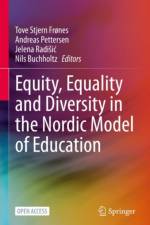
Does the Nordic model of education still stand by its original principles and safeguard education for all? This Open Access volume is a carefully crafted collection of chapters that investigate the different aspects of equity, equality and diversity across the education systems in the Nordic countries. Based on data from various national and international large-scale assessments, the volume provides a better understanding of both the functions and foundations of the Nordic model, along with how the concepts mentioned above are enacted in practice.Across the chapters, data from different national and international large-scale assessment studies are used for cross- and single-country analyses on a variety of issues related to equity, equality and inequality in diverse educational settings. The investigations address different subject domains (i.e., mathematics, science, reading), age and grade groups, but also issues related to teachers and the schools themselves. In addition to these empirical chapters, the book addresses the theoretical and methodological underpinnings of the ideas and tools embedded in the phenomena of equity and equality and how they have met in the Nordic model of education.
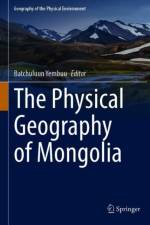
This book gives the most detailed and comprehensive physico-geographical overview of the very unique country of Mongolia. The country offers diverse geographical features and natural landscapes combined with a long history. This book offers integrated and systematical research on the geophysical characteristics of Mongolia with an academic orientation. It provides the readers with general knowledge of the physical geography of Mongolia as well as new results of the latest research. The volume consists of 11 chapters, each written by field experts, with contributions from scientific researchers from Mongolia.The topics covered: geological and geomorphological characteristics and processes, landscapes and landforms, climate and climate change, hydrology, glaciers and permafrost, soils, environmental changes, biodiversity and many other aspects of physical geography in Mongolia.The book appeals to researchers and students of geography and related fields and can serve as a guide for field trips to Mongolia or basic literature for research projects.
Stream Ecology: Structure and Function of Running Waters is designed to serve as a textbook for advanced undergraduate and graduate students, and as a reference source for specialists in stream ecology and related fields. This Third Edition is thoroughly updated and expanded to incorporate significant advances in our understanding of environmental factors, biological interactions, and ecosystem processes, and how these vary with hydrological, geomorphological, and landscape setting.The broad diversity of running waters - from torrential mountain brooks, to large, lowland rivers, to great river systems whose basins occupy sub-continents - makes river ecosystems appear overwhelming complex. A central theme of this book is that although the settings are often unique, the processes at work in running waters are general and increasingly well understood.Even as our scientific understanding of stream ecosystems rapidly advances, the pressures arising from diverse human activities continue to threaten the health of rivers worldwide. This book presents vital new findings concerning human impacts, and the advances in pollution control, flow management, restoration, and conservation planning that point to practical solutions.Reviews of the first edition:".. an unusually lucid and judicious reassessment of the state of stream ecology" Science Magazine"..provides an excellent introduction to the area for advanced undergraduates and graduate students..." Limnology & Oceanography"... a valuable reference for all those interested in the ecology of running waters." Transactions of the American Fisheries Society Reviews of the second edition:"Overall, a must for the field centre and a good starter text in stream ecology." (TEN News, October, 2007)"Highly recommended. Upper-division undergraduates through faculty." (P. R. Pinet, CHOICE, Vol. 45 (7), 2008) "... a very good, fluidly readable book which contains the latest key scientific knowledge of the ecology of running waters." (Daniel Graeber, International Review of Hydrobiology, Vol. 94 (2), 2009)
This book is part of a six-volume series on Disaster Risk Reduction and Resilience. The series aims to fill in gaps in theory and practice in the Sendai Framework, and provides additional resources, methodologies and communication strategies to enhance the plan for action and targets proposed by the Sendai Framework. The series will appeal to a broad range of researchers, academics, students, policy makers and practitioners in engineering, environmental science and geography, geoscience, emergency management, finance, community adaptation, atmospheric science and information technology. This volume discusses how to measure and build disaster resilience at society¿s capacity, drawing upon individual, institutional and collective resources to cope with and adapt to the demands and challenges of natural disaster occurrences. The book will serve as a guide, outlining the key indicators of disaster resilience in urban and rural settings, and the resources and strategies needed to build resilient communities in accordance with the targets of the Sendai Framework. Readers will learn about multi-risk reduction approaches using computational methods, data mining techniques, and System Thinking at various scales, as well as institutional and infrastructure resilience strategies based on several case studies.
This book is a part of ICL new book series ¿ICL Contribution to Landslide Disaster Risk Reduction¿ founded in 2019. Peer-reviewed papers submitted to the Fifth World Landslide Forum were published in six volumes of this book series. This book contains the following parts:¿ Impact of Large Ground Deformations near Seismic Faults on Critically Important Civil Infrastructures¿ Recent Progress in the Landslide Initiating Science¿ Earth Observation and Machine Learning in Landslide Science¿ General Landslide StudiesProfessor ¿eljko Arbanas is the Vice President of International Consortium on Landslides. He is a Professor of Faculty of Civil Engineering, University of Rijeka, Croatia. He is the Assistant Editor-in-Chief of International Journal Landslides.Professor Peter Bobrowsky is the President of International Consortium on Landslides. He is a Senior Scientist of Geological Survey of Canada, Ottawa, Canada.Professor Kazuo Konagai is Professor Emeritus at the University of Tokyo and Principal Researcher at the ICL Headquarters. He serves as the Secretary-General of the Fifth World Landslide Forum.Professor Kyoji Sassa is the Founding President and the Secretary-General of the International Consortium on Landslides (ICL). He has been the Editor-in-Chief of International Journal Landslides since its foundation in 2004.Professor Kaoru Takara is the Executive Director of International Consortium on Landslides. He is a Professor and Dean of Graduate School of Advanced Integrated Studies (GSAIS) in Human Survivability (Shishu-Kan), Kyoto University.
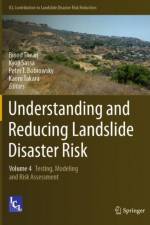
This book is a part of ICL new book series ¿ICL Contribution to Landslide Disaster Risk Reduction¿ founded in 2019. Peer-reviewed papers submitted to the Fifth World Landslide Forum were published in six volumes of this book series. This book contains the followings:¿ Five keynote lectures¿ Recent development in physical modeling of landslides¿ Recent development in numerical modeling of landslides¿ Recent development in soil and rock testing techniques, application and analysis methods¿ Recent advancements in the methods of slope stability and deformation analyses¿ Recent development in disaster risk assessmentProf. Binod Tiwari is a Vice President of the International Consortium on Landslides (ICL). He is the Associate Vice President for research and sponsored project and Professor of civil and environmental engineering at the California State University, Fullerton, California, USA.Prof. Kyoji Sassa is the Founding President and the Secretary-General of the International Consortium on Landslides (ICL). He has been the Editor-in-Chief of International Journal Landslides since its foundation in 2004.Prof. Peter Bobrowsky is the President of the International Consortium on Landslides. He is a Senior Scientist of Geological Survey of Canada, Ottawa, Canada.Prof. Kaoru Takara is the Executive Director of the International Consortium on Landslides. He is a Professor and Dean of Graduate School of Advanced Integrated Studies (GSAIS) in Human Survivability (Shishu-Kan), Kyoto University.
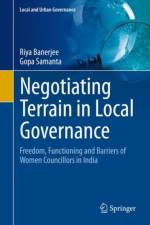
This book explores and analyses women¿s participation in local urban governance in West Bengal, India. It is developed from empirical research with in-depth understanding of ground situations of freedom, functioning and obstacles of women councilors in India. The central idea of this book revolves around two central research questions: 1. How are women¿s positions and spaces changing due to their political participation in the urban local governance? and 2. What are the major hurdles they face in their day to day lives barring their emancipation?The main strength of the book lies in the in-depth grounded research in four small cities (Darjiling, Balurghat, Raniganj and Hugli-Chinsurah) using both quantitative and qualitative research methods. This volume can be considered as a reference book for Gender Studies, Women¿s Studies, Urban Governance, Women and Policy Research, Gender Development Studies.
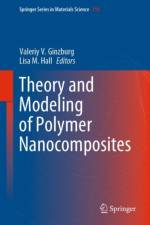
This edited volume brings together the state of the art in polymer nanocomposite theory and modeling, creating a roadmap for scientists and engineers seeking to design new advanced materials. The book opens with a review of molecular and mesoscale models predicting equilibrium and non-equilibrium nanoscale structure of hybrid materials as a function of composition and, especially, filler types. Subsequent chapters cover the methods and analyses used for describing the dynamics of nanocomposites and their mechanical and physical properties. Dedicated chapters present best practices for predicting materials properties of practical interest, including thermal and electrical conductivity, optical properties, barrier properties, and flammability. Each chapter is written by leading academic and industrial scientists working in each respective sub-field. The overview of modeling methodology combined with detailed examples of property predictions for specific systems will make this book usefulfor academic and industrial practitioners alike.
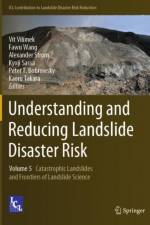
This book is a part of ICL new book series ¿ICL Contribution to Landslide Disaster Risk Reduction¿ founded in 2019. Peer-reviewed papers submitted to the Fifth World Landslide Forum were published in six volumes of this book series. This book contains the followings:Part I with topics is mainly about landslides and earthquakes; landslide dams and outburst floods; catastrophic large-scale landslides in mountainous regions.Part II with topics is mainly about impact of climate change; loess landslides; mapping, monitoring and modeling of landslides; stabilization and mitigation; application of new technology in landslide studies.Prof. Vít Vilímek is the vice-president of the International Consortium on Landslides (ICL) and a member of the evaluation committee, Editor-in-Chief of the university journal AUC Geographica and Associate Editor-in-Chief of the international journal Geoenvironmental Disasters. He is a Professor of Physical Geography at Charles University, Prague, Czech Republic.Prof. Fawu Wang is the President of the International Consortium on Geo-disaster Reduction (ICGdR) and the Editor-in-Chief of the international journal Geoenvironmental Disasters. He is a Professor at the School of Civil Engineering, Tongji University, China.Dr. Alexander Strom is a chief expert at the Geodynamics Research Center LLC, Moscow, Russia. He is also an Adjunct Professor at Chang¿an University, Xi¿an, China, Visiting Professor at SKLGP, Chengdu, China, and an alternative representative of the JSC ¿Hydroproject Institute¿ in ICL.Prof. Kyoji Sassa is the Founding President and the Secretary-General of the International Consortium on Landslides (ICL). He has been the Editor-in-Chief of International Journal Landslides since its foundation in 2004.Prof. Peter Bobrowsky is the President of the International Consortium on Landslides. He is a Senior Scientist of Geological Survey of Canada, Ottawa, Canada.Prof. Kaoru Takara is the Executive Director of the International Consortium on Landslides. He is a Professor and Dean of Graduate School of Advanced Integrated Studies (GSAIS) in Human Survivability (Shishu-Kan), Kyoto University.
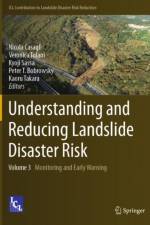
This book is a part of ICL new book series ¿ICL Contribution to Landslide Disaster Risk Reduction¿ founded in 2019. Peer-reviewed papers submitted to the Fifth World Landslide Forum were published in six volumes of this book series. This book contains the followings:¿ One theme lecture and one keynote lecture¿ Monitoring and remote sensing for landslide risk mitigation, including one keynote lecture¿ Landslide early warning systems, forecasting models and time prediction of landslidesProf. Nicola Casagli is a Vice President and President-elect of the International Consortium on Landslides (ICL) for 2021¿2023. He is Professor of engineering geology at the Department of Earth Sciences, University of Florence, and President of the National Institute of Oceanography and Applied Geophysics ¿ OGS, Trieste, Italy.Dr. Veronica Tofani is an Associate Professor at the Department of Earth Sciences, University of Florence, and Program Coordinator of the UNESCO Chair on Prevention and Sustainable Management of Geo-hydrological hazards, University of Florence.Prof. Kyoji Sassa is the Founding President and the Secretary-General of the International Consortium on Landslides (ICL). He has been the Editor-in-Chief of International Journal Landslides since its foundation in 2004.Prof. Peter Bobrowsky is the President of the International Consortium on Landslides. He is a Senior Scientist of Geological Survey of Canada, Ottawa, Canada.Prof. Kaoru Takara is the Executive Director of the International Consortium on Landslides. He is a Professor and Dean of Graduate School of Advanced Integrated Studies (GSAIS) in Human Survivability (Shishu-Kan), Kyoto University.
Abonner på vårt nyhetsbrev og få rabatter og inspirasjon til din neste leseopplevelse.
Ved å abonnere godtar du vår personvernerklæring.