













Gjør som tusenvis av andre bokelskere
Abonner på vårt nyhetsbrev og få rabatter og inspirasjon til din neste leseopplevelse.
Ved å abonnere godtar du vår personvernerklæring.Du kan når som helst melde deg av våre nyhetsbrev.

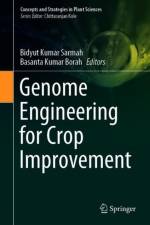
This book serves the teachers, researchers and the students as a handy and concise reference as well as guidebook while designing and planning for use of the advanced technologies for crop improvement.The content of the book is designed to cover the latest genome engineering techniques for crop improvement. The conventional breeding has got its limitations such as non-availability of desired genes within the genepool. In many cases, breeding has been highly used and it has nearly reached its highest limit so far as the productivity and production of crops are concerned. However, with increasing need of food and decreasing resources, including water, land, labour, etc., to feed the growing population, the alternative available ways of increasing crop productivity need to be explored and exploited. Genome engineering has a wide scope that includes technologies such as genetic engineering and transgenesis, RNA technologies, CRISPR, cisgenics and subgenics for better productivity and more efficient biotic and abiotic stress management. Therefore, the book is planned to enlighten the readers with the advanced technologies with examples and case studies, whenever possible. Efforts will be made to emphasize on general efforts on various major food crops; however, it would also be made clear that such efforts could be taken as proofs of concepts and that this could be extrapolated keeping the demand in mind.
The book also presents three special nonlinear inverse problems in detail: the inverse spectral problem, the inverse problem of electrical impedance tomography (EIT), and the inverse scattering problem.
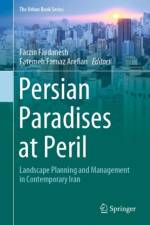
This book offers a resourceful collection of essays examining recent efforts to respond to the challenges of planning, management and conserving landscapes in contemporary Iran, the home of Persian gardens. Drawing on selected recent studies, the chapters discuss the following topics: The sphere of knowledge and theoretical bases, including a survey of recent and ongoing research;Persian gardens remaining from the 6th century BC to the 19th century AD, which have influenced garden design in a vast geographic domain extending from India to Spain;Management and conservation of cultural landscapes, historic urban landscapes (HUL), road landscapes, and natural landscapes in the face of changes in climatic conditions and livelihood practices affecting their delicate dynamic balance and functions essential to their distinctive character; and¿Historic Territorial Landscapes (HTL) formed and evolved along the Silk and Spice Roads as compositions of tangible and intangible elements resulting from movement, exchanges and dialogue in space and over time.The book is a useful resource for a range of academics and professionals, such as landscape architects and managers, landscape historians and conservationists, and urban planners and managers.
This book deals with issues and concerns for the human environment in the developing countries incorporating natural processes and systems, pollution removal technology, energy conservation, environmental impact assessment process, economics, culture, political structure and societal equity from a management point of view. Solutions to the emerging problems of the environment need a paradigmatic shift in approach from a process based model to a socio-political-economic model. Hence environmental management should involve equality and control over use of the finite natural resources and the balance between Earth¿s biocapacity and humanity¿s ecological footprint. Changes such as green technologies, human population stabilization and adoption of ecologically harmonious lifestyles are absolutely essential and will require redesigning of political institutions, policies and revisiting forgotten skills of sustainable practices of environmental management. These challenges should centre on environment governance using the concepts of common property, equity and security.This book is relevant for academics, professionals, administrators and policy makers who are concerned with various aspects of environment management and governance.
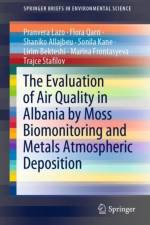
This book provides an overview of air quality in Albania evaluated by moss biomonitoring and metals atmospheric deposition. It is based on the concentration data onto 51 elements in moss samples collected during 2010/2011 moss biomonitoring survey conducted at the same time with European moss biomonitoring survey. The elements under investigation were determined by using ICP-AES and ENAA analytical techniques. Moss species Hypnum cupressiforme (Hedw) sps., a carpet-forming bryophyte, was used as bioindicator of trace metal atmospheric deposition. The goal of this study was to identify factors leading to the high levels of trace metals in at-mospheric deposition in Albania, to identify the risk factors and the origin of trace metals in atmos-pheric deposition. It may help the policy makers and regulators to take proper decisions to protect the public health and the environment. The distribution pattern of the elements was visualized by using the geographic information system, GIS 10.2.The predicted trends of the distribution were calculated by using time series (linear model) and the areas with high concentration of certain met-als were suggested for monitoring and to be under control.
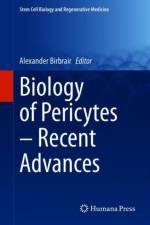
Pericytes were originally discovered and named more than hundred years ago as contractile cells around the blood vessel endothelial cells. Due to the lack of exclusive markers, pericytes are now defined by a combination of location, morphology and gene expression. Pericytes are attracting increasing attention as important regulators during development and during normal and disturbed organ function. In recent years, remarkable progress has been made in the identification and characterization of pericytes subpopulations and their amazing functions using state-of-art techniques. These advantages facilitated identification of molecular basis of interaction between these cells with several other more well studied cell types, and revealed key signals derived from pericytes involved in homeostasis, regeneration, and disease regulation. In the last ten years, several unexpected roles of pericytes have been discovered. It has been demonstrated that pericytes from different tissues differ in their properties as well as functions. Even more, pericytes are heterogeneous also within the same organ. This book is will describe the major contributions of pericytes to different organs biology in physiological and pathological conditions.The book will teach the readers about this so special cell type that 10 years ago was almost completely forgotten, and it was associated basically only with vascular stability. Recently, it become a very hot topic to work in. Several articles in Nature, Science and Cell have been and are being currently published about this cell type. These recent works are revealing how important those cells are for before unimaginable biological processes.Thus, this book will update us on what are the most novel functions attributed to these cells. Also, will introduce to the young generation all the history about these cells from when they were discovered in different organs till where we are now in this field. So it will be a great book for both cell biology students as well as researchers that will have an update on these cells biology in different organs.
This book focuses on the emerging role of ferroptosis in human diseases. It gives a detailed perspective on how to induce or suppress ferroptosis to treat challenging conditions such as infectious diseases, including COVID-19, tuberculosis, parasitic diseases and cancer. The book serves as a practical guide by providing a valuable collection of all currently known activators or inhibitors of ferroptosis. It will enable readers to choose molecules for experimental design for in vitro and in vivo studies of ferroptosis. Furthermore, this volume highlights the aspects of iron metabolism and its connection to ferritinophagy, a ferritin selective autophagy, with profound implications in neurodegenerative diseases such as Alzheimer, Parkinson, Huntington and ALS. Lastly, it describes necroptosis, another important form of cell death, along with its connections to human disorders and potential crosstalk with ferroptosis.While covering basic concepts, the book delvesinto mechanisms and modulation of ferroptosis for treating a wide variety of human diseases thus offering a valuable and informative resource for both, scientists and clinical researchers.
Abonner på vårt nyhetsbrev og få rabatter og inspirasjon til din neste leseopplevelse.
Ved å abonnere godtar du vår personvernerklæring.