














Gjør som tusenvis av andre bokelskere
Abonner på vårt nyhetsbrev og få rabatter og inspirasjon til din neste leseopplevelse.
Ved å abonnere godtar du vår personvernerklæring.Du kan når som helst melde deg av våre nyhetsbrev.

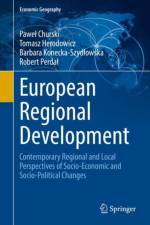
This book offers a comprehensive overview of contemporary issues of regional development. It places particular emphasis on its socio-economic and socio-political determinants which accompany the problem of existing and ever-widening differences in the level of regional development in various parts of Europe. In order to diagnose the scale of those differences and to indicate the main forces behind the divergence of development, the authors propose an original systematisation of regional development factors, drawing attention to the need to consider them within the framework of present-day socio-economic megatrends. The proposed approach to the development factors is also used for the author's operationalisation of the concept of territorial capital, which is at the centre of regional place-based policy.The wide spatial aspect of the analysis (national and local) and its extensive temporal scope (2004-2019) yields unique results and creates an important element of added value for this book, which shows the regularities of the process of regional development in Europe at three spatial levels - pan-European, national and intra-regional. Furthermore, it indicates the challenges faced by regionalists who attempt to carry out research on different territorial levels with a diverse number of units (205 EU regions, 16 Polish voivodeships, 2,478 Polish local units) and extended observation periods (2004-2017). The solutions proposed by the authors, who show the potential of overcoming the barriers resulting from limited access to complete and comparable statistical data series, should be inspiring for many researchers. The unique results of direct research carried out on a large sample of respondents and entrepreneurs via diverse field research techniques constitute a valuable source of information on local conditions that impact contemporary development processes in less developed regions. Their value is even greater because they were carried out in a unique laboratory created by the authors for testing the regularity of formation and impact of socio-economic development factors in various locally determined conditions of this process. It consists of purposefully selected test units (LAU2). Located in a less developed region, they represent all growth types and functional test units identified in the course of the research. Consequently, the results obtained may be generalised and applied to other areas showing similar features of territorial capital.The monograph is addressed primarily to a wide group of regionalists connected with economic and social sciences as well as to practitioners involved in the implementation of development policies at various levels.
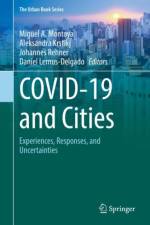
This book brings together the work of more than 25 scholars from different parts of the world who analyze the challenges posed by the new coronavirus and how it can transform the lives of the cities. Through 19 chapters organized into three sections - experiences, responses and uncertainties - the authors offer a novel perspective about the resilience of the metropolis to face the most important sanitary crisis in the twenty-first century.History shows that cities can innovate and change profoundly in a response to disasters or after suffering an intense crisis, such as a pandemic or dramatic local spread of infectious diseases. In many cases, cities evolve to better urban systems, as literature based on the resilience perspective suggests. From this perspective, this book is a unique contribution to the academic discussion offering a multidisciplinary approach to analyze the impact of COVID-19 in the cities.
Allergy is the most frequent chronic disease in the 21st century having severe negative effects on health and the economy. The challenge we therefore face in medicine and science incorporates all areas of society ¿ from politics to food industry, from schools to city planning, and many more. This volume informs the reader about continuously ongoing developments in allergy research and their implications for society. The chapter sections cover the immunological mechanisms in allergy on a molecular level, describe the triggers and cures for allergy in detail, entail clinical translation of lab findings on allergens, evaluate diagnostics for allergy markers, and provide solutions for future medical intervention or preventive strategies. Laboratory research, bioinformatics, climate modelling, patient treatment, intervention studies, epigenetics and multiple other disciplines are able to shed new light on this revolutionary field of healthcare.
This book analyzes the factors and mechanisms involved in the development and adaptation of children and adolescents to adverse and risky contexts in four Latin American countries: Argentina, Brazil, Chile and Mexico. The experience of growing up in contexts of poverty and social vulnerability is a risk factor for child and adolescent development which may produce a series of negative effects in their adulthood, including mental disorders. This is a global concern, but so far the majority of literature about the topic has focused on developed countries. This volume aims to enrich the international literature by presenting results of research carried out in developing countries, showing how children and adolescents deal with adverse and risky contexts and analyzing both negative outcomes and the development of resilience and coping strategies.The studies gathered in this volume are theoretically grounded on systemic and ecological models which analyze developmental trajectories and outcomes taking into account the interaction of different ecological systems, such as the individual, the family, the school and the wider society. Departing from this theoretical framework, the chapters in this volume analyze the risk factors posed to child and adolescent development by adverse and risky social contexts and present evidence-based interventions aimed at both preventing negative outcomes and helping children and adolescents develop coping strategies to deal with adverse situations, such as poverty and social marginalization.Child and Adolescent Development in Risky Adverse Contexts: A Latin American Perspective will be of interest to developmental, clinical, health, and educational psychologists, as well as social workers, directly working or doing research with children and adolescents in situations of social vulnerability.
This book presents some sufficient mathematical content with expressive result. The aim of JANO13 is to bring together scientists to discuss their research in all the aspects of mathematics and their applications to different scientific discipline. The main topics of the conference is partial differential equations, mathematical control, numerical analysis and computer science. The conference is interested in recent developments on numerical analysis and real applications in computer science. The latter is viewed as a dynamic branch on the interface of mathematics and informatics that has been growing rapidly over the past several decades. However, its mathematical modelling and interpretation are still not well-explained and need much more clarifications. The main contributions of this book are to give some sufficient mathematical content with expressive results. As a growing field, it is gaining a lot of attention both in media and in the industry world, which will attract the interest of readers from different scientist disciplines.
This book offers a comprehensive introduction to basic ecological and biological principles underlying modern agriculture, forestry, fisheries and aquaculture, and explains how these principles are used to increase the production of food and other raw materials (wood, biofuels, fibers and other materials). The book is translated into English, originally published in Czech by Karolinum Press, Charles University, and provides new updated information to discuss how the intensification of the production of these goods changes the structure of ecosystems concerning energy and nutrient flows, and how these changes affect the functioning of ecosystems and the subsequent provisions of other non-productive ecosystem services. Additionally, the authors describe the methods by which contemporary science and society strives to increase the sustainability of agriculture, forestry and fisheries to maintain not only the production of food and other goods, but also other ecosystem services. Although not a textbook on agriculture, forestry and fisheries, the book familiarizes readers with the principles of their technologies, because the impact on ecosystems is largely based on the technological processes used. The book is primarily focused on temperate ecosystems, but it contains a number of examples about marine and tropical ecosystems impacted by globalization and our consumer behavior. The book will be of interest to students and researchers with backgrounds in ecology and environmental science, as well as non-experts interested in ecology and environmental protection.
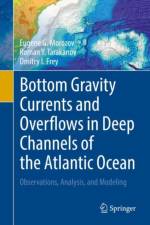
This book is dedicated to the analysis of bottom waters flows through underwater channels of the Atlantic Ocean. The study is based on recent observations of the authors, analysis of historical data, numerical modeling, and literature review. For example, studying both the measurements from the World Ocean Circulation experiment in the 1990s and recent measurements reveals the decadal variations of water properties in the ocean.Seawater is cooled at high latitudes, descends to the ocean bottom, and slowly flows to the tropical latitudes and further. This current is slow in the deep basins, but intensifies in the abyssal channels connecting the basins. The current overflows submarine topographic structures and sometimes forms deep cataracts when water descends over slopes by several hundred meters. The flow of Antarctic Bottom Water (AABW) is studied on the basis of CTD sections combined with Lowered Acoustic Doppler Profiling (LADCP) carried out annually, and long-term moored measurements of currents. This book is a collection of oceanographic data, interpretation, and analysis, which can be used by field oceanographers, specialists in numerical modeling, and students who specialize in oceanography.
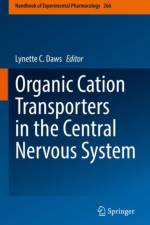
Rapidly growing interest in the role of organic cation transporters (OCTs) and plasma membrane monoamine transporter (PMAT) in central monoamine homeostasis makes this book especially timely, given its thematic alignment with the role of OCTs and PMAT in CNS. This book discusses latest insights into the field laying an emphasis on health, disease and therapeutics. The chapter, ¿General Overview of Organic Cation Transporters in Brain¿, of this book is available open access under a CC BY 4.0 license at link.springer.com
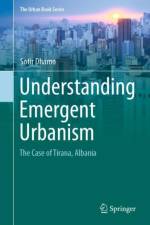
The ideas presented in this book are a conceptual leverage to correct the rigidity of top-down practices and bring the real city, or the city of everyday life, closer to the city of conventional planning. Considering self-organization as the starting point at the base of complex systems, this book tries to understand how specific qualities emerge and evolve from this behavior. For this, the book discusses new ways of looking at and understanding cities by applying holistic methods and approaches based on the conceptual grounds of quantum, fractal, and complexity theories. The book highlights the fact that the information on how to transform and build a city is contained within the city itself. In this regard, some methodological steps to unpack complexities and translate the essential qualities of space into potential generators for city design and planning are provided. The book urges courageous experimentation and proposes a methodology where the computational nature of urban phenomena goes along with historic anthropological ideas, thus emphasizing the characteristics of a specific reality in a model. They do not exclude each other; in fact, they are part of the unbroken web of wholeness. Importantly, the proposed methodology supports gradual and natural coevolution process in the city through combining planned and unplanned actions and the involving multiplicity of actors, impacting on Urban Planning and Design Practice.
Spices can be classified as major spices, like Black pepper, Cardamom, Turmeric, Ginger etc, and minor spices and condiments, and tree spices. This book will discuss exclusively minor spices and condiments.Spices constitute a very important group of agricultural products, which, since antiquity, have been considered indispensable in the culinary art of flavoring foods. The history of spices is very much entwined with the history of mankind. And, some spice crops like Black pepper predominates in the family of spices. In fact, colloquially, it is called ¿King¿of spices and, another, Cardamom, is called the ¿Queen¿of spices. There is worthwhile amount of published work, on these in addition to Turmeric and Ginger.Both ISO (International Organization for Standardization) and ISI (Indian Standards Institution) (now BIS (Bureau of Indian Standards)) experts concluded, after considerable deliberations, that there is no clear-cut division between ¿spices¿ and ¿çondiments¿, and, as such, they have been clubbed together. The term ¿Spices and Condiments¿ applies to such natural plant or vegetable products or mixtures, thereof, used in whole or ground form, mainly for imparting flavor, aroma and piquancy to foods and also for seasoning of foods and beverages like soups etc. A detailed survey of published literature proves that there are a number of minor spices, which have tremendous commercial potential, globally. And, an authentic book on these will not only serve as an important guide to the academic community, but, also provide a fillip to industry involved in value addition.
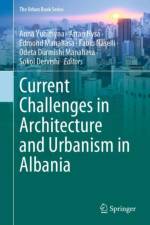
This book aims to provide a cross-sectorial assessment in a multidisciplinary and trans-cultural context onto the innovations in urban and architectural approaches in designing next human environments within the Albanian context. The continuous concentration of the world population in the urban areas and their consequent densification require even more quantity of quality spaces and places, integrated resources and energies, alternative modalities of mobility and transports, demand of social inclusion and need for a circular economy. These have become the major challenges for this 21st Century and some of the greatest problems facing humanity in most of current vision for the future. The main objective is to feed a debate about the emerging trans-cultural (and trans-national) approaches in the whole designing field, from Albanian context and its current good practices, attempts and faults, both formal and informal. Thus, the Albanian experience may represent an opportunity through which we all may reflect about how designing is evolving in the Mediterranean arena of ¿praxis and experiments¿ aimed to a better quality of life at the human scale and in expanding the concepts of ¿place and space¿ such as it has improved by the effects in designing innovations.This book represents a useful read of theories, experiences and case studies, which can help in enlarging reflection on how the designing practice is evolving in the arena of forthcoming development strategies and tactics, all addressed to improve the quality of life, places and spaces. Additionally, it provides a range of architecture and urban design rationales and strategies for reinforcing identities and creating memorable places within the quality of contemporary architecture and urbanism. It addresses the unique needs of architects and planners to deal with topics that cut across social, economic and environmental issues and shows readers how to explore methods, theoretical frameworks and techniques to address the complex needs of architecture, urban and cultural development.
This book helps readers comprehend the principles and fundamentals of defect engineering toward realization of an efficient photocatalyst. The volume consists of two parts, each of which addresses a particulate type of defects. The first, larger section provides a comprehensive and rigorous treatment of the behaviour and nature of intrinsic defects. The author describes how their controlled introduction and consequent manipulation over concentration, distribution, nature and diffusion is one of the most effective and practical methodologies to modify the properties and characteristics of target photocatalytic materials. The second part of the book explains the formation of extrinsic defects in the form of metallic and non-metallic dopants and gives a detailed description of their characteristics as this approach is also often used to fabricate an efficient photocatalyst. Filling the gap in knowledge on the correlation between introduction of defects in various semiconducting materials and their photocatalytic performance, the book is ideal for graduate students, academics and researchers interested in photocatalysts, defect engineering, clean energy, hydrogen production, nanoscale advanced functional materials, CO2 deactivation, and semiconductor engineering.
This book presents the micromechanics of random structure heterogeneous materials, a multidisciplinary research area that has experienced a revolutionary renascence at the overlap of various branches of materials science, mechanical engineering, applied mathematics, technical physics, geophysics, and biology. It demonstrates intriguing successes of unified rigorous theoretical methods of applied mathematics and statistical physics in material science of microheterogeneous media. The prediction of the behaviour of heterogeneous materials by the use of properties of constituents and their microstructure is a central problem of micromechanics. This book is the first in micromechanics where a successful effort of systematic and fundamental research of the microstructure of the wide class of heterogeneous materials of natural and synthetic nature is attempted. The uniqueness of the book lies in its development and expressive representation of statistical methods quantitatively describing random structures which are at most adopted for the forthcoming evaluation of a wide variety of macroscopic transport, electromagnetic, strength, and elastoplastic properties of heterogeneous materials.
The edited volume New Economies for Sustainability: Limits and Potentials for Possible Futures brings together a range of alternative views on economy and organization to illustrate different perspectives on how to work towards more sustainable solutions to production, consumptions and economic organization more generally. The book brings chapters from the most renowned scholars in the field, who bring their perspectives on how alternative schools theorize politics, society, organization, nature and ethics in their attempts to develop theories with a strong focus on sustainability. The book aims to contribute with a platform for gathering and collecting these theories in a pluralist economic framework, which can provide a strong alternative voice to mainstream economic theories in sustainability debates.
This book systematically presents the consolidated findings of the phenomenon of self-organization observed during the onset of thermoacoustic instability using approaches from dynamical systems and complex systems theory. Over the last decade, several complex dynamical states beyond limit cycle oscillations such as quasiperiodicity, frequency-locking, period-n, chaos, strange non-chaos, and intermittency have been discovered in thermoacoustic systems operated in laminar and turbulent flow regimes. During the onset of thermoacoustic instability in turbulent systems, an ordered acoustic field and large coherent vortices emerge from the background of turbulent combustion. This emergence of order from disorder in both temporal and spatiotemporal dynamics is explored in the contexts of synchronization, pattern formation, collective interaction, multifractality, and complex networks. For the past six decades, the spontaneous emergence of large amplitude, self-sustained, tonal oscillations in confined combustion systems, characterized as thermoacoustic instability, has remained one of the most challenging areas of research. The presence of such instabilities continues to hinder the development and deployment of high-performance combustion systems used in power generation and propulsion applications. Even with the advent of sophisticated measurement techniques to aid experimental investigations and vast improvements in computational power necessary to capture flow physics in high fidelity simulations, conventional reductionist approaches have not succeeded in explaining the plethora of dynamical behaviors and the associated complexities that arise in practical combustion systems. As a result, models and theories based on such approaches are limited in their application to mitigate or evade thermoacoustic instabilities, which continue to be among the biggest concerns for engine manufacturers today. This book helps to overcome these limitations by providing appropriate methodologies to deal with nonlinear thermoacoustic oscillations, and by developing control strategies that can mitigate and forewarn thermoacoustic instabilities.The book is also beneficial to scientists and engineers studying the occurrence of several other instabilities, such as flow-induced vibrations, compressor surge, aeroacoustics and aeroelastic instabilities in diverse fluid-mechanical environments, to graduate students who intend to apply dynamical systems and complex systems approach to their areas of research, and to physicists who look for experimental applications of their theoretical findings on nonlinear and complex systems.
This volume offers new insights into food and culture. Food habits, preferences, and taboos are partially regulated by ecological and material factors - in other words, all food systems are structured and given particular functioning mechanisms by specific societies and cultures, either according to totemic, sacrificial, hygienic-rationalist, aesthetic, or other symbolic logics. This provides much ¿food for thought¿. The famous expression has never been so appropriate: not only do cultures develop unique practices for the production, treatment and consumption of food, but such practices inevitably end up affecting food-related aspects and spheres that are generally perceived as objectively and materially defined. This book explores such dynamics drawing on various theoretical approaches and analytical methodologies, thus enhancing the cultural reflection on food and, at the same time, helping us see how the study of food itself can help us understand better what we call ¿culture¿. It will be of interest to anthropologists, philosophers, semioticians and historians of food.
Abonner på vårt nyhetsbrev og få rabatter og inspirasjon til din neste leseopplevelse.
Ved å abonnere godtar du vår personvernerklæring.