

















Gjør som tusenvis av andre bokelskere
Abonner på vårt nyhetsbrev og få rabatter og inspirasjon til din neste leseopplevelse.
Ved å abonnere godtar du vår personvernerklæring.Du kan når som helst melde deg av våre nyhetsbrev.

One of the prevailing issues regarding security to North America and more pointedly, the United States, gravitates on the topic of cyber threats confronting this nation. These threats are becoming more disruptive and destructive and many nations¿ infrastructure is vulnerable to them. This book makes use of a qualitative research methodology looking at a conventional understanding of the four instruments of power that include diplomacy, information, military and economic (D.I.M.E.) efforts through the use of the York Intelligence Red Team Model-Cyber (Modified) and seeing how adversaries are using them against the United States. Moreover, this project uses secondary data and makes use of the Federal Secondary Data Case Study Triangulation Model to ensure a balance of sources to dissect the problem.
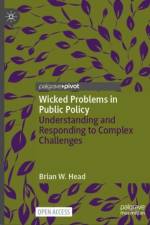
This is an open access book. This book offers the first overview of the ¿wicked problems¿ literature, often seen as complex, open-ended, and intractable, with both the nature of the ¿problem¿ and the preferred ¿solution¿ being strongly contested. It contextualises the debate using a wide range of relevant policy examples, explaining why these issues attract so much attention.There is an increasing interest in the conceptual and practical aspects of how ¿wicked problems¿ are identified, understood and managed by policy practitioners. The standard public management responses to complexity and uncertainty (including traditional regulation and market-based solutions) are insufficient. Leaders often advocate and implement ideological ¿quick fixes¿, but integrative and inclusive responses are increasingly being utilised to recognise the multiple interests and complex causes of these problems. This book uses examples from a wide range of social, economic and environmental fields in order to develop new insights about better solutions, and thus gain broad stakeholder acceptance for shared strategies for tackling ¿wicked problems¿.
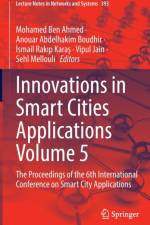
This book sets the innovative research contributions, works, and solutions for almost all the intelligent and smart applications in the smart cities. The smart city concept is a relevant topic for industrials, governments, and citizens. Due to this, the smart city, considered as a multi-domain context, attracts tremendously academics researchers and practitioners who provide efforts in theoretical proofs, approaches, architectures, and in applied researches. The importance of smart cities comes essentially from the significant growth of populations in the near future which conducts to a real need of smart applications that can support this evolution in the future cities.The main scope of this book covers new and original ideas for the next generations of cities using the new technologies. The book involves the application of the data science and AI, IoT technologies and architectures, smart earth and water management, smart education and E-learningsystems, smart modeling systems, smart mobility, and renewable energy. It also reports recent research works on big data technologies, image processing and recognition systems, and smart security and privacy.
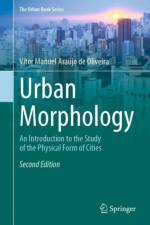
'This is a textbook about cities or, more precisely, about the physical form of cities. It provides an overview of the main elements of urban form¿streets, street blocks, plots and buildings¿structuring our cities and the fundamental agents and processes of transformation shaping these elements. It applies this analytical framework to describe the evolution of cities over history as well as to explain the functioning of contemporary cities. After the initial focus on the 'object' (cities), the book introduces how different schools of thought have been dealing with this object since the emergence of Urban Morphology, as the science of urban form, in the turning to the twentieth century. Finally, the book identifies the main contributions of urban morphology to cities, societies and economies. This second edition of the book offers updated and more accurate knowledge on several morphological issues, presents expanded contents, and it has a more explicit didactic nature, including a set of exercises in the end of each chapter, that will help teachers and students (in architecture, geography, planning, history, sociology and urban studies) in acquiring and consolidating their urban morphological knowledge.
This book gathers the latest advances and innovations in the field of quality control and improvement of bridges and structures, as presented by international researchers and engineers at the 1st Conference of the European Association on Quality Control of Bridges and Structures (EUROSTRUCT 2021), held in Padua, Italy on August 29 ¿ September 1, 2021. Contributions include a wide range of topics such as testing and advanced diagnostic techniques for damage detection; SHM and AI, IoT and machine learning for data analysis of bridges and structures; fiberoptics and smart sensors for long-term SHM; structural reliability, risk, robustness, redundancy and resilience for bridges; corrosion models, fatigue analysis and impact of hazards on infrastructure components; bridge and asset management systems, and decision-making models; Life-Cycle Analysis, retrofit and service-life extension, risk management protocols; quality control plans, sustainability and green materials.
This book covers the latest knowledge in structure, signaling, and biochemical pharmacology of KOR as well as preclinical research and clinical applications (including clinical phase studies and approved for human use) of KOR compounds. It is divided up into the three parts: Molecular aspects of KOR, Preclinical research on pharmacology of KOR agonists and antagonists in animals and KOR agonists and antagonists in clinical use and in past and present clinical trials.The chapters "Biosensors monitor ligand-selective effects at kappa opioid receptors" and "The role of dynorphin and the kappa opioid receptor in schizophrenia and major depressive disorder: a translational approach" of this book are available open access under a Creative Commons Attribution 4.0 International License via link.springer.com.
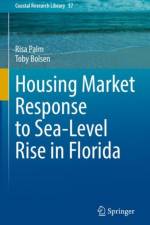
South Florida continues to attract new residents despite its susceptibility to sea-level rise. This book explores the views of real estate agent with respect to how prospective homebuyers assess the risk of flooding. It reports on their observations as to whether house prices are stagnant or falling in coastal areas vulnerable to flooding, and their conclusions after working with prospective homebuyers as to whether coastal south Florida is a good place to find a home or, alternatively, a risky investment in a place that will eventually be submerged by rising seas. The book reports on a 2020 survey of real estate agents and concludes that it is not clear that the housing market has integrated flood risk either into reduced demand for housing or in reduced prices for houses susceptible to flooding. These conclusions have important implications for understanding how the risks of climate change and sea-level rise are reflected in the housing market both now and in the near-term future.
Abonner på vårt nyhetsbrev og få rabatter og inspirasjon til din neste leseopplevelse.
Ved å abonnere godtar du vår personvernerklæring.