




















Gjør som tusenvis av andre bokelskere
Abonner på vårt nyhetsbrev og få rabatter og inspirasjon til din neste leseopplevelse.
Ved å abonnere godtar du vår personvernerklæring.Du kan når som helst melde deg av våre nyhetsbrev.

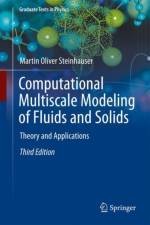
The expanded 3rd edition of this established textbook offers an updated overview and review of the computational physics techniques used in materials modelling over different length and time scales. It describes in detail the theory and application of some of the most important methods used to simulate materials across the various levels of spatial and temporal resolution. Quantum mechanical methods such as the Hartree-Fock approximation for solving the Schrödinger equation at the smallest spatial resolution are discussed as well as the Molecular Dynamics and Monte-Carlo methods on the micro- and meso-scale up to macroscopic methods used predominantly in the Engineering world such as Finite Elements (FE) or Smoothed Particle Hydrodynamics (SPH).Extensively updated throughout, this new edition includes additional sections on polymer theory, statistical physics and continuum theory, the latter being the basis of FE methods and SPH. Each chapter now first provides an overview ofthe key topics covered, with a new ¿key points¿ section at the end. The book is aimed at beginning or advanced graduate students who want to enter the field of computational science on multi-scales. It provides an in-depth overview of the basic physical, mathematical and numerical principles for modelling solids and fluids on the micro-, meso-, and macro-scale. With a set of exercises, selected solutions and several case studies, it is a suitable book for students in physics, engineering, and materials science, and a practical reference resource for those already using materials modelling and computational methods in their research.
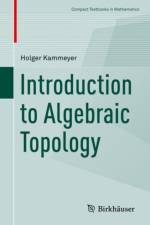
This textbook provides a succinct introduction to algebraic topology. It follows a modern categorical approach from the beginning and gives ample motivation throughout so that students will find this an ideal first encounter to the field. Topics are treated in a self-contained manner, making this a convenient resource for instructors searching for a comprehensive overview of the area.It begins with an outline of category theory, establishing the concepts of functors, natural transformations, adjunction, limits, and colimits. As a first application, van Kampen's theorem is proven in the groupoid version. Following this, an excursion to cofibrations and homotopy pushouts yields an alternative formulation of the theorem that puts the computation of fundamental groups of attaching spaces on firm ground. Simplicial homology is then defined, motivating the Eilenberg-Steenrod axioms, and the simplicial approximation theorem is proven. After verifying the axiomsfor singular homology, various versions of the Mayer-Vietoris sequence are derived and it is shown that homotopy classes of self-maps of spheres are classified by degree.The final chapter discusses cellular homology of CW complexes, culminating in the uniqueness theorem for ordinary homology.Introduction to Algebraic Topology is suitable for a single-semester graduate course on algebraic topology. It can also be used for self-study, with numerous examples, exercises, and motivating remarks included.
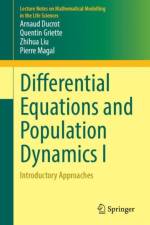
This book presents the basic theoretical concepts of dynamical systems with applications in population dynamics. Existence, uniqueness and stability of solutions, global attractors, bifurcations, center manifold and normal form theories are discussed with cutting-edge applications, including a Holling's predator-prey model with handling and searching predators and projecting the epidemic forward with varying level of public health interventions for COVID-19.As an interdisciplinary text, this book aims at bridging the gap between mathematics, biology and medicine by integrating relevant concepts from these subject areas, making it self-sufficient for the reader. It will be a valuable resource to graduate and advance undergraduate students for interdisciplinary research in the area of mathematics and population dynamics.
This volume explores the nature, philosophies and genres of indigenous African popular music, focusing on how indigenous African popular music artistes are seen as prophets and philosophers, and how indigenous African popular music depicts the world. Indigenous African popular music has long been under-appreciated in communication scholarship. However, understanding the nature and philosophies of indigenous African popular music reveals an untapped diversity which only be unraveled by knowledge of the myriad cultural backgrounds from which its genres originate. Indigenous African popular musicians have become repositories of indigenous cultural traditions and cosmologies.With a particular focus on scholarship from Nigeria, Zimbabwe and South Africa, this volume explores the work of these pioneering artists and their protégés who are resiliently sustaining, recreating and popularising indigenous popular music in their respective African communities, and at the same time propagatingthe communal views about African philosophies and the temporal and spiritual worlds in which they exist. ¿
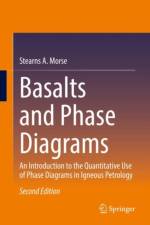
In this newly revised and expanded edition the reader finds both an introduction to igneous petrology and an exposition of the quantitative use of phase diagrams in understanding the origin and crystallization history of basic magmas. The book provides a step-by- step analysis of crystallization and melting in a limited number of geologically significant phase diagrams. The limiting processes of fractional and equilibrium melting and fractional and equilibrium crystallization are rigorously examined. Examples of the use of phase diagrams are drawn from the literature of layered intrusions, redox equilibria in iron-bearing systems, and the high pressure equilibria of melting in the mantle.
This book is about the harmonious synthesis of functional programming and numerical computation. It shows how the expressiveness of OCaml allows for fast and safe development of data science applications. Step by step, the authors build up to use cases drawn from many areas of Data Science, Machine Learning, and AI, and then delve into how to deploy at scale, using parallel, distributed, and accelerated frameworks to gain all the advantages of cloud computing environments.To this end, the book is divided into three parts, each focusing on a different area. Part I begins by introducing how basic numerical techniques are performed in OCaml, including classical mathematical topics (interpolation and quadrature), statistics, and linear algebra. It moves on from using only scalar values to multi-dimensional arrays, introducing the tensor and Ndarray, core data types in any numerical computing system. It concludes with two more classical numerical computing topics, the solution ofOrdinary Differential Equations (ODEs) and Signal Processing, as well as introducing the visualization module we use throughout this book. Part II is dedicated to advanced optimization techniques that are core to most current popular data science fields. We do not focus only on applications but also on the basic building blocks, starting with Algorithmic Differentiation, the most crucial building block that in turn enables Deep Neural Networks. We follow this with chapters on Optimization and Regression, also used in building Deep Neural Networks. We then introduce Deep Neural Networks as well as topic modelling in Natural Language Processing (NLP), two advanced and currently very active fields in both industry and academia. Part III collects a range of case studies demonstrating how you can build a complete numerical application quickly from scratch using Owl. The cases presented include computer vision and recommender systems. This book aims at anyone with a basic knowledge of functional programming and a desire to explore the world of scientific computing, whether to generally explore the field in the round, to build applications for particular topics, or to deep-dive into how numerical systems are constructed. It does not assume strict ordering in reading ¿ readers can simply jump to the topic that interests them most.
Abonner på vårt nyhetsbrev og få rabatter og inspirasjon til din neste leseopplevelse.
Ved å abonnere godtar du vår personvernerklæring.