
















Gjør som tusenvis av andre bokelskere
Abonner på vårt nyhetsbrev og få rabatter og inspirasjon til din neste leseopplevelse.
Ved å abonnere godtar du vår personvernerklæring.Du kan når som helst melde deg av våre nyhetsbrev.

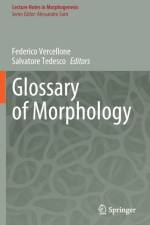
Creating a glossary and a culture of these intersections is the task of morphology, which thus enters into the boundaries between aesthetics, art, design, advertising, and sciences (from mathematics to computer science, to physics, and to biology), in order to provide the founding elements of a grammar and a syntax of the image.
This edited volume examines the relationship between collective intentionality and inferential theories of meaning. The final part consists of essays that offer a closer examination of themes from inferentialism and collective intentionality that arise in the work of Wilfrid Sellars.
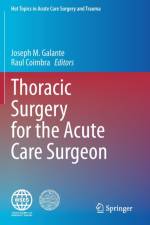
This volume is a "how-to guide" to treating thoracic trauma and emergencies for acute care surgeons. It highlights the diagnosis and management of thoracic disease and injuries, and each chapter includes algorithms that lead readers through the process of identifying and treating many common and some uncommon thoracic pathologies.
The contributed chapters consider operating models with important ecological, economic, and social objectives. The content will be valuable for researchers and postgraduate students in computer science, information technology, industrial engineering, and applied mathematics.
This book constitutes the refereed post-conference proceedings of the 16th IFIP WG 5.1 International Conference on Product Lifecycle Management, PLM 2019, held in Moscow, Russia, in July 2019. The 38 revised full papers presented were carefully reviewed and selected from 63 submissions. PLM maturity and industry 4.0;
This book describes and analyses the organisation, functions and development of national educational authorities and agencies and the influence they have on local schools in 20 countries around the world. How schools become successful is important for the individual students as well as the local community and the national state.
This book discusses how scientific and other types of cognition make use of models, abduction, and explanatory reasoning in order to produce important and innovative changes in theories and concepts.
The four-volume proceedings LNCS 13090, 13091, 13092, and 13093 constitutes the proceedings of the 27th International Conference on the Theory and Application of Cryptology and Information Security, ASIACRYPT 2021, which was held during December 6-10, 2021.
This book constitutes the revised selected papers of the 9th International Conference on Networked Systems, NETYS 2021, held virtually in May 2021.The 15 revised full papers and 2 short papers presented were carefully reviewed and selected from 32 submissions.
This book covers historical aspects and future directions of mechanical and industrial engineering. Chapters of this book include applied mechanics and design, tribology, machining, additive manufacturing and management of industrial technologies.
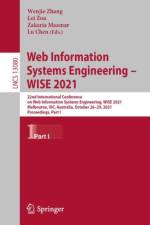
Spatial and Temporal Data Analysis. Part II: Deep Learning (1), Deep Learning (2), Recommender Systems (1), Recommender Systems (2), Text Mining (1), Text Mining (2), Service Computing and Cloud Computing (1), Service Computing and Cloud Computing (2), Tutorial and Demo.
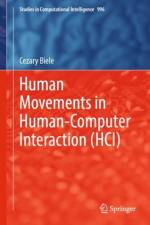
This book discusses human-computer interaction (HCI) which is a multidisciplinary field of study which aims at developing and implementing tools and techniques to attain an effective and efficient interaction between the humans (the users) and computers.
This book provides a comprehensive look at one-dimensional (1D) mesoporous inorganic nanomaterials.
Finally, it presents practical insights for international human resources managers by presenting several 'soft' approaches to managing international employee mobility, such as employer branding, prioritisation of favourable discourses and identities, and encouraging role hybridisation.
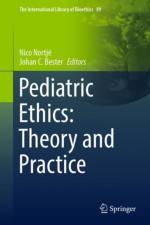
This book assists health care providers to understand the specific interplay of the roles and relationships currently forming the debates in pediatric clinical ethics. The book first focuses on setting the stage by introducing a theoretical framework and elaborating how pediatric ethics differ from non-pediatric ethics.
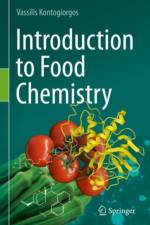
The complexity of food chemistry makes it a challenging subject for students studying in a food science course. Although there are excellent food chemistry books available in the market they have two major flaws: they are either encyclopedic or they are not pitched correctly to undergraduate food science students. The first problem creates difficulties for students to identify what is important and how much they need to know. The second problem arises when the book is written by authors that are not food scientists (e.g., chemists), they are not academics that are engaged with teaching or they are not sufficiently qualified to teach. In this case, it is difficult to find links between the chemistry of foods and its relevance to applications or, quite frequently, future employment prospects of the student. Introduction to Food Chemistry bridges this gap in the relevant literature, as it employs the latest pedagogical theories in textbook writing to present the subject to students with broad range of cognitive skills. This book presents specific learning objectives for each chapter and is self-contained so students will not need to search for essential information outside the textbook. To support learning, the book has:Didactic elements with information being conveyed with 3D-figures, color-coded schemes and graphs, annotations on figures that link it to the text descriptionsBuilt-in pedagogy and learning activities at the end of each chapter that are linked to the learning objectives.Keywords and concepts for online search to instigate curiosity for further studies.Conversational writing style without losing academic rigorTo support lecturers, the book has:Helps focus teaching preparation on key aspects of food chemistry relevant to both industry and modern research.Aids the preparation of exams, assignments and other types of assessment or learning activities.For lecturers in search of a singular source to aid in their introductory food chemistry courses, look no further than Introduction to Food Chemistry.
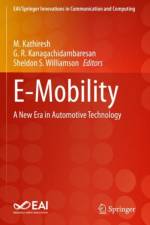
The book provides easy interpretable explanations for the key technologies involved in Electric Vehicles and Hybrid Electric Vehicles.
This volume reviews recent hydrological and environmental issues resulting from human-induced water pollution practices while providing case studies on the physical, chemical, and eco-biological techniques used to mitigate the impacts of river ecosystem pollution in South Asian countries.
They describe new learning technologies which range from smart school, smart class and smart learning at home and which have been developed from new technologies such as machine learning, multimedia and Internet of Things.
They describe new learning technologies which range from smart school, smart class and smart learning at home and which have been developed from new technologies such as machine learning, multimedia and Internet of Things.
Based on twenty case studies of universities worldwide, and on a survey administered to leaders in 101 universities, this open access book shows that, amidst the significant challenges caused by the COVID-19 pandemic, universities found ways to engage with schools to support them in sustaining educational opportunity.
Currently, researchers are actively investigating the following areas: p-adic dynamical systems, p-adic techniques in cryptography, p-adic reaction-diffusion equations and biological models, p-adic models in geophysics, stochastic processes in ultrametric spaces, applications of ultrametric spaces in data processing, and more.
It discusses the various changing elements of businesses such as the application of artificial intelligence (AI) and machine learning and how to cope with these unexpected business elements to maintain sustainable development.
This book highlights the opportunities and risks of digitalization and digital transformation for our global economy at both the micro and macro level. Experts from various fields, presenting both scientific and practice-oriented perspectives, identify and critically analyse areas of tension and development potential in connection with new business models and sustainability efforts in our society. It is divided into four parts, the first of which highlights new technological advances in areas such as blockchain, cryptocurrencies and fintechs, and discusses the challenges they pose for public regulation. The second part illustrates digitalization¿s effects on and potential advantages for public welfare, focusing on key areas such as education, health and smart cities. The third part focuses on challenges for corporate and public management, particularly for leadership and Corporate Social Responsibility, while the fourth part discusses new dimensions for analysis based on big data.The contributions gathered here are partly an outcome of the International Conference on Digitalization, Digital Transformation and Sustainability held in Budapest in October 2020 and generously supported by the Hanns Seidel Foundation.
This book presents the proceedings of the 1st International Conference on Water Energy Food and Sustainability ¿ ICoWEFS 2021, a major forum to foster innovation and exchange knowledge in the water-energy-food nexus, embracing the Sustainable Development Goals (SDGs) of the United Nations, bringing together leading academics, researchers and industrial experts. It contains the work of authors from 33 countries.
The first monograph to treat topological, group-theoretic, and geometric problems of ideal hydrodynamics and magnetohydrodynamics from a unified point of view. The book is accessible to graduates as well as pure and applied mathematicians working in hydrodynamics, Lie groups, dynamical systems, and differential geometry.
Abonner på vårt nyhetsbrev og få rabatter og inspirasjon til din neste leseopplevelse.
Ved å abonnere godtar du vår personvernerklæring.